

An arched window can define a Spanish-style room, so its treatment should complement the curve rather than conceal it. Distinctive window treatment ideas for Spanish style homes in Los Angeles include interior shutters shaped to fit arched frames, softly filtered shades, and drapery that echoes the home’s warm, earthy palette. The right choice balances the architecture with the room’s needs for light and privacy.
Standard rectangular treatments can feel out of place beside arches, stucco walls, exposed beams, and patterned tile. Begin with the window’s shape, then consider the daylight you want, the privacy each room needs, and the textures already in the space. Explore arched-window solutions, layered light control, Spanish-inspired colors, and understated hardware to find an approach that feels at home in Los Angeles.
Key Takeaways
- Choose roller shade opacity around each room’s needs: lighter-filtering options for daylight and greater light blockage for bedrooms.
- Use natural wood interior shutters to complement arched windows while preserving the shape that gives the room its character.
- Balance Spanish Revival details with a considered palette, pairing earthy terracotta, blue, or green accents with quieter neutrals.
- Compare shutters and woven shades by the effect you want: defined architectural structure or a softer, natural texture.
- Layer drapery with shades when you want to combine a finished decorative look with flexible light and privacy control.
1. Colorful roller shades and Mediterranean-inspired patterns
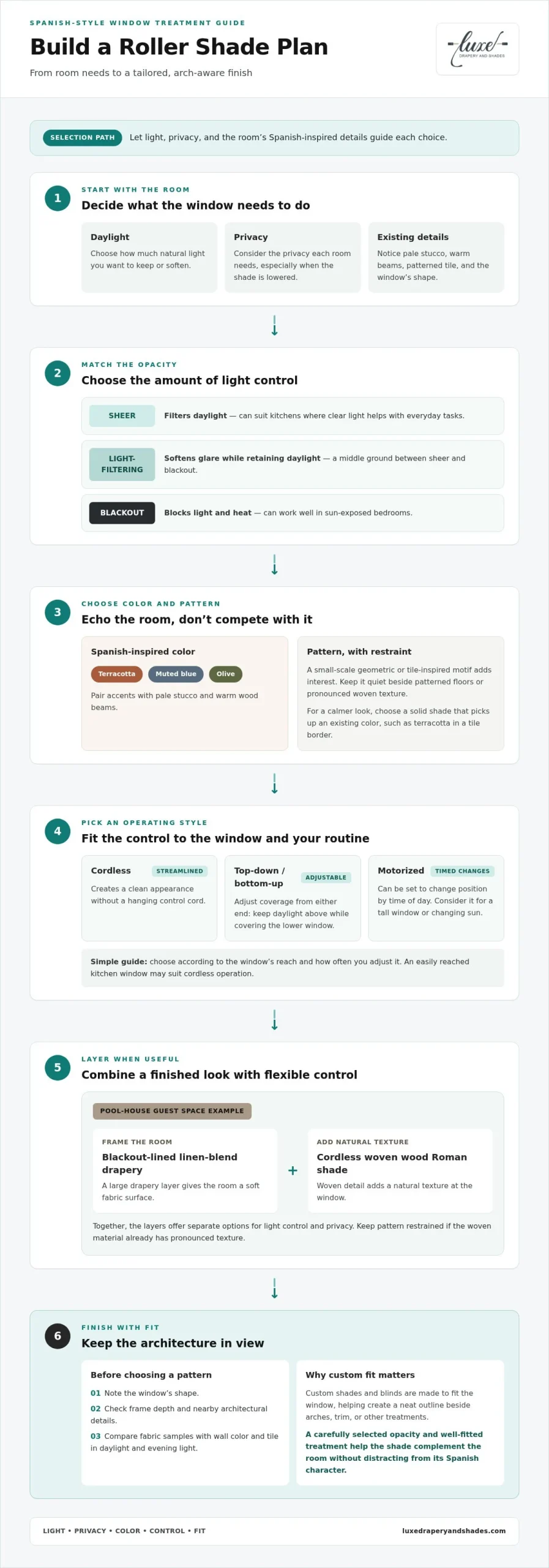
Roller shades give Spanish-style windows a clean, tailored look, while color and pattern can add a Mediterranean note. Consider terracotta, muted blue, or olive alongside pale stucco and warm wood beams. A small-scale geometric or tile-inspired motif adds interest without competing with patterned floors or decorative accents. For a quieter look, choose a solid shade that picks up an existing color, such as the terracotta in a tile border. This connects the window to the architecture rather than making it feel like a separate feature.
Start with the room’s light and privacy needs, then choose the shade opacity. Sheer roller shades filter daylight and can suit kitchens where clear light helps with everyday tasks. Blackout roller shades block light and heat, which can work well in sun-exposed bedrooms. A light-filtering shade offers a middle ground, softening glare while retaining daylight. In a street-facing living room, choose a considered color or pattern so the shade looks decorative when lowered.
Operating style also shapes the experience. Cordless shades create a streamlined appearance without a hanging control cord. Top-down/bottom-up roller shades let you adjust coverage from the top or bottom, useful when you want daylight above while keeping the lower window covered. Motorized shades can be set to change position by time of day, bringing a practical rhythm to bright mornings or late-afternoon sun. Choose the control style according to the window’s reach and how often you adjust it; a tall window may benefit from motorization, while an easily reached kitchen window may suit cordless operation.
For a pool house guest space, layer contrasting textures rather than relying on pattern alone. A large blackout-lined linen-blend drapery can frame the room, while a cordless woven wood Roman shade adds natural texture at the window. This combination balances a soft fabric surface with woven detail, and gives the guest area separate options for light control and privacy. Keep the pattern restrained if the woven material already has a pronounced texture.
Custom shades and blinds are made to fit the window, helping create a neat outline beside arches, trim, or other treatments. Before choosing a pattern, note the window’s shape, frame depth, and nearby architectural details. Compare fabric samples with the wall color and tile in daylight and evening light. A well-fitted treatment and carefully selected opacity help a patterned shade complement the room without distracting from its Spanish character.
2. Hardwood interior shutters and traditional Spanish-style decor
Wood shutters bring a defined, architectural presence to Spanish Colonial rooms. Their solid lines complement exposed ceiling beams, dark wood furniture, and patterned tile without introducing another textile pattern. Pair warm wood tones with creamy walls or terracotta accents for a traditional look. If the room already has intricate tile, keep the shutter finish simple; if the walls are understated, visible grain can add texture. Aim for balance rather than matching every wood tone in the room.
Los Angeles historic-preservation rules do not automatically dictate interior fabric or hardware choices. Treatments that leave the window and façade unchanged are generally separate from alterations to protected windows or exterior features, which may require preservation review depending on the property’s designation.
For window-treatment hardware, start with the window’s width, trim, and surrounding finishes. A Spanish Colonial home with arched openings and dark wood beams may suit a discreet rod and compact finials rather than hardware that competes with the architecture. Subtle hardware works with restrained interiors; a more decorative finish can suit a room where wrought-iron details already appear in lighting or furniture. Repeat a finish across nearby windows to connect adjoining rooms.
Sheer drapery softens a room while letting filtered daylight through. French-return iron hardware gives the window a clean, close-to-wall finish that pairs well with plaster walls and traditional trim. Simple iron adds a restrained accent to patterned or colorful fabric. Ornate filigree creates a stronger echo of a wrought-iron chandelier, so use it where the detail has room to stand out. Cream or white sheers keep the focus on the metalwork; terracotta fabric gives the arrangement a richer character.
Plan the full composition before selecting a rod or shutter finish. Note the window shape and trim depth, then compare hardware with nearby ironwork, wood, and wall color. Consider where the panels will stack when open, especially beside a doorway or built-in furniture. A design consultation can help coordinate these choices with the room’s existing details. For example, simple iron rods and creamy sheers can frame a living-room window without competing with patterned floors.
Los Angeles homeowners can find Spanish-style options through custom drapery, plantation shutters, and drapery hardware, selected to suit the room’s architecture and functional needs. Explore custom drapery and drapery hardware when a tailored fabric-and-hardware combination is the right finishing touch.
3. Natural wood interior shutters for arched windows
An arched window has a distinctive outline, and a standard rectangular covering can hide its defining curve. Custom interior shutters can be shaped to follow the arch, with functional panels and louvers. Natural wood brings warmth to the frame and complements terracotta, plaster, and exposed beams. The result feels classic without making the arch seem like an afterthought. In a Spanish-style living room, shutters can frame the opening as an architectural feature rather than cover it with a competing shape.
Start by looking closely at the arch. Note where the curve begins, how it meets the straight sides, and whether the window has a deep sill. These details help determine the shutter layout. A shaped upper panel can follow the arch, while lower panels provide adjustable louvers. For a round window, a custom design can follow the full circular outline. The goal is a fitted treatment that respects the opening and remains practical to adjust.
Choose the wood finish to complement the room’s existing materials. A warm natural tone can bring out terracotta hues in floor tile or pottery. Against pale plaster, the grain creates contrast without adding another bold pattern. If the room already has dark beams and patterned flooring, a quieter finish helps the window feel integrated. Compare the shutter tone with nearby woodwork, including doors, beams, and furniture.
Functional details matter as much as the curved silhouette. Opening the shutter panels lets natural light and airflow into the room, while tilting the louvers adjusts the light with the panels in place. Consider how the panels will swing and where they will rest when open. A shutter beside a reading chair, for example, should clear the seating area; one near a narrow walkway should not obstruct circulation.
Before choosing a design, review the window and room in this order:
- Identify whether the opening is arched, round, or paired with straight side sections.
- Compare wood tones with visible beams, trim, furniture, and terracotta accents.
- Decide how often you’ll open the panels or tilt the louvers for daylight and airflow.
- Consider the panel position when open, especially near furniture or a doorway.
Natural wood shutters suit homeowners who want an architectural treatment with adjustable light control. An arched dining-room window, for example, can retain its graceful profile while warm wood echoes a nearby beam. A custom fit makes the curve part of the design rather than hiding it behind a rectangular covering. In Spanish-style homes, that distinction preserves the window’s character and gives the interior a composed finish.
4. Window treatment colors, textures, and materials
What curtains and fabrics complement Spanish-style architecture? Neutral or creamy drapery suits muted interiors, while terracotta, rust, blue, and green can echo tile, pottery, or garden views. Choose fabric weight and texture to suit these colors and relate each window to the room’s plaster, wood, and patterned surfaces.
Begin with the room’s strongest existing color. In a space with terracotta tile and exposed wood, cream panels create a calm contrast. Against white or off-white walls, rust-colored drapes bring warmth and Spanish Colonial character. Blue or green curtains can pick up tones in patterned tile or landscape views. In a room with strong wall colors and accent furniture, floor-to-ceiling white or cream panels add height without introducing another dominant shade. These window treatment ideas for Spanish style homes in Los Angeles start with the colors already present.
Texture can carry the design when the colors are understated. A light linen-blend curtain adds a relaxed, natural surface; woven fabric brings texture alongside smooth plaster. Sheer or light-filtering curtains suit wide windows with black frames and heavy wooden furniture, softening the contrast without hiding the frame. In a street-facing living room, a warm-hued canvas sheer can provide privacy while keeping the space open. Compare a fabric sample with the floor and furniture in daylight.
Patterns need a clear relationship with the room. If patterned tile already draws attention, choose solid curtains in a color pulled from the tile. If walls and floors are restrained, a gentle Spanish-inspired pattern can add detail. Blue drapes with a subtle pattern can suit a bedroom, while a room-darkening or blackout liner helps block sleep-disrupting light. In a quieter bedroom, white fabric, including 100% ramie, offers a crisp alternative to a print. Select the pattern scale to complement nearby details, not compete with them.
Consider function as you choose fabric. A lining can add insulation and temperature control to drapery, and it also affects how the curtain hangs and how much light passes through. Decide whether the room needs filtered daylight, greater coverage, or both. For bedroom drapes, a room-darkening or blackout lining prioritizes sleep; in a living room, a sheer layer can preserve daylight while adding softness.
Use a simple selection sequence: identify the room’s dominant color, choose a fabric texture, then decide how much light and privacy the window needs. To tailor window treatment ideas for Spanish style homes in Los Angeles, compare samples with the room’s tile, plaster, and furnishings. In a living room with patterned floors, cream panels and understated hardware let the tile remain the focal point. In a bedroom with pale walls, blue patterned curtains can add color and a quieter, layered finish.
5. Are wood shutters or woven shades better for Spanish Revival homes?
Neither option is universally better; the right choice depends on the window and the room’s desired character. Wood shutters create a defined, architectural finish, while woven shades bring softer texture and a more relaxed feel. In a Spanish Revival living room with exposed beams and strong trim, shutters can reinforce the home’s structure. In a breakfast nook with simple walls and natural finishes, a woven shade can add a quieter layer of texture.
Choose shutters when adjustable louvers and a lasting connection to the window’s architecture matter most. Their clean horizontal lines suit rectangular openings, while custom-built interior shutters can follow arched or round frames. Natural wood also complements terracotta and warm plaster. In a room with patterned tile or carved furniture, a restrained wood finish helps avoid visual competition. Wood blinds are well-suited to classic Los Angeles interiors, while faux wood alternatives remain available for spaces prone to moisture.
Woven shades suit rooms where the material itself should contribute to the palette. Visible fibers can echo wood beams, woven furniture, or natural flooring without adding a printed pattern. A woven Roman shade in a guest room, for example, can sit beneath drapery for a layered look. Consider how the weave appears against the wall and window frame: pronounced texture reads as a feature, while a finer weave recedes more quietly. Let the room’s existing patterns and furnishings guide your choice.
Use these practical distinctions to compare the two:
- For architectural emphasis: select shutters that complement the frame and preserve an arched or round outline.
- For natural texture: choose woven shades when the room needs tactile detail without another strong print.
- For changing light: shutters let you tilt louvers, while shades provide coverage according to their position.
- For an unusual window: consider a custom-shaped shutter or a shade fitted to the opening’s proportions.
Some Spanish Revival homes benefit from using both treatments in different spaces. Shutters can give a front-facing living room a composed, architectural finish, while woven shades add a softer note to a bedroom or enclosed patio room. Coordinate finishes with shared warm wood tones, creamy fabric, or subtle iron details. For pronounced arches, let the curve guide the treatment rather than forcing every room into one solution.
Compare plantation shutters and woven wood shades for your home’s window shapes, privacy needs, and preferred balance of architectural structure and natural texture.
Spanish Colonial homes are commonly associated with terracotta roofing, arched entryways, narrower windows, muted colors, stucco, adobe or rock siding, exposed interior wood beams, and outdoor spaces. Patterned tile and wood floors can also help you decide whether a treatment should blend with or stand apart from the surrounding finishes.
Luxe Drapery and Shades: Custom Drapery
Luxe Drapery and Shades helps Los Angeles homeowners translate Spanish-style architecture into tailored window treatments. Custom Drapery can frame an arched opening, soften a living room, or add a considered layer beside shutters. For rooms where adjustable coverage matters, Roller Shades, Roman Shades, and Honeycomb / Cellular Shades offer distinct approaches to light and privacy.
Consider custom options when standard proportions do not suit an arched window, when several rooms need a cohesive palette, or when fabric should complement existing tile, plaster, and woodwork. The right treatment balances architectural character with everyday comfort, making each window feel considered within the wider interior.
Contact Luxe Drapery and Shades to discuss window treatments tailored to your Los Angeles home.
Shape a Window Plan That Feels Like Home
Start with one focused design decision, not a whole-house overhaul. Choose a room where a window treatment could meaningfully shape the atmosphere, then consider how you want the space to feel throughout the day. For window treatment ideas for Spanish-style homes in Los Angeles, begin with the character you want to preserve and the practical comfort you want to add. A clear direction makes it easier to choose details that feel intentional, not merely decorative.
Luxe Drapery and Shades offers Custom Drapery, Roller Shades, and Roman Shades for tailored window designs. Consider how each could complement the room’s architecture, daily routines, and overall palette. A thoughtful treatment can bring together light, privacy, and personal style while giving a distinctive window the attention it deserves.
Contact Luxe Drapery and Shades to explore a thoughtful next step for your home. Begin with one window, and let its finished design guide the spaces around it.
Frequently Asked Questions
What window treatments suit Spanish-style homes in Los Angeles?
Spanish-style homes in Los Angeles suit treatments that respect their architecture and serve each room’s routine. A living room with layered furnishings may benefit from understated drapery, while a kitchen used throughout the day may call for a simple, adjustable shade. Carry a shared color or finish across adjoining rooms, but choose each treatment according to its window shape, privacy needs, and role in the home.
How do window treatments handle intense sun and heat in Southern California?
Choose window coverings according to the room’s sun exposure and desired light level. Blackout roller shades block light and heat in bedrooms, while lighter-filtering options preserve more daylight in rooms used during the day. A lining can add insulation and temperature control to drapery. If sunlight shifts through the day, motorized shades can be adjusted by touch or voice, or managed remotely with a compatible smart device.
What are the pros and cons of interior shutters, shades, and curtains for privacy and light control?
Interior shutters offer adjustable louvers and a structured appearance, but their panels need room to open. Shades offer a streamlined way to vary coverage, with privacy and daylight affected by their position and opacity. Curtains add softness and can be layered with shades, but closed panels may cover trim or part of a view. For a bedroom facing a neighboring home, consider the privacy you want after dark alongside the daylight you prefer.