Why should your desire for seclusion force you to live in a dim, shadowed room when the California sun is right outside? Many homeowners feel they must choose between expansive views and the privacy their urban environment demands. It’s a frustrating compromise that often leads to outdated window treatments that make a modern space feel closed off. You shouldn’t have to sacrifice your connection to the outdoors just to feel comfortable in your own sanctuary.
In this guide, we’ll explore how top-down bottom-up shades benefits extend far beyond simple aesthetics, offering a sophisticated way to invite natural light while maintaining complete discretion. You’ll learn how these versatile systems manage the significant heat gain common in Los Angeles homes, where windows can account for up to 30% of heating and cooling energy loss according to the U.S. Department of Energy. We’ll also look at how these designs integrate with Lutron smart systems to create an environment that’s as intelligent as it is beautiful. Whether you’re looking to enhance a street-facing bedroom or a sun-drenched living area, these curated solutions provide the professional-grade aesthetics your home deserves.
Key Takeaways
- Discover how a dual-action lift system allows you to position your shades at any point on the window, providing unparalleled control over your environment.
- Master the art of urban living by exploring top-down bottom-up shades benefits, which allow you to block street-level views while inviting soft, natural light from above.
- Identify the ideal materials for your aesthetic, from the energy-efficient cellular structure of honeycomb shades to the tailored elegance of bespoke Roman folds.
- Learn how to elevate your daily routine by integrating motorized window treatments with Lutron systems for seamless, automated comfort.
- Understand the design principles of layering, where functional shades serve as a refined base for decorative custom drapery to create a truly finished look.
Understanding the Top-Down Bottom-Up Mechanism
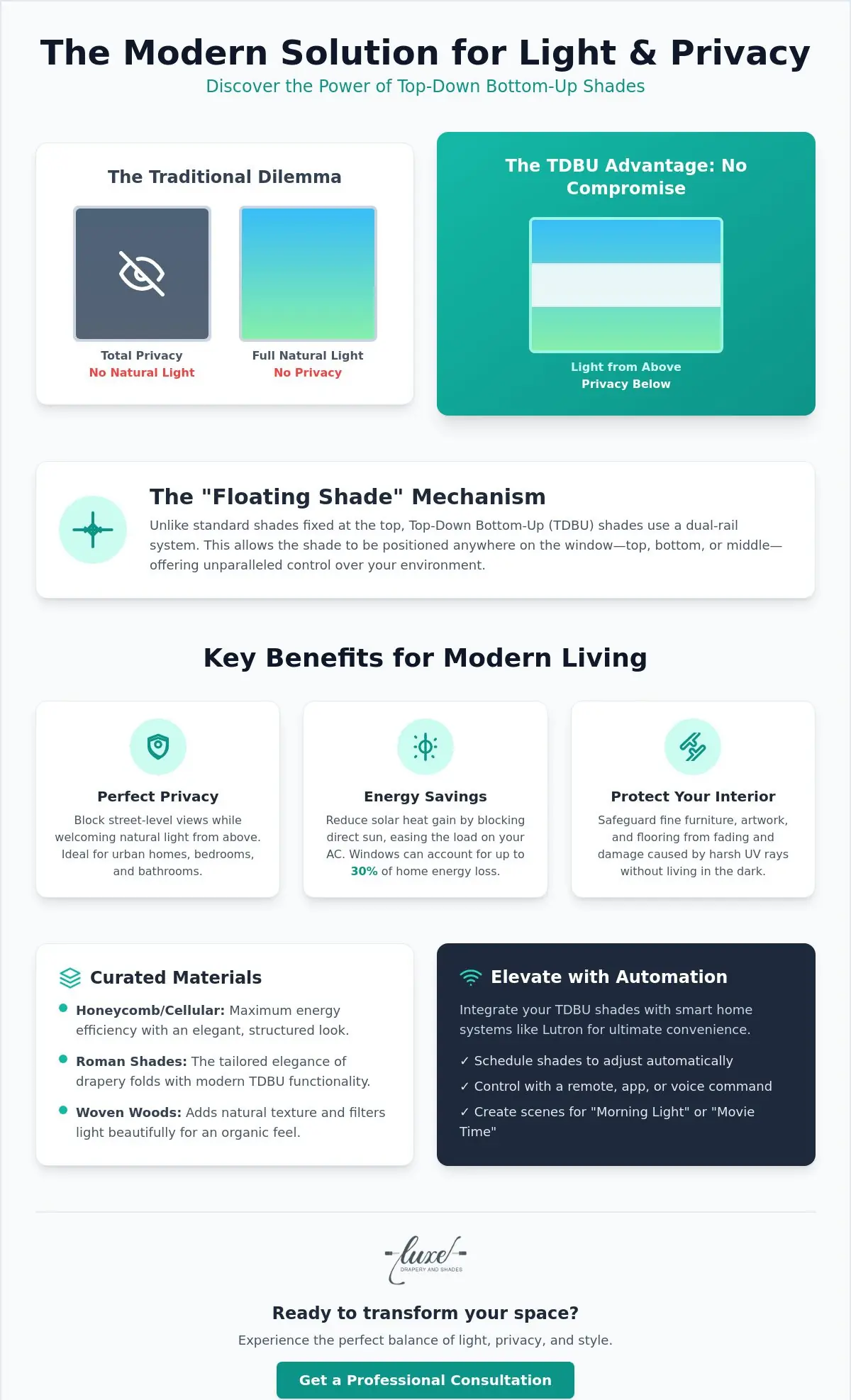
Traditional window treatments often force a compromise. You either welcome the sun and sacrifice your privacy, or you shutter the room and lose the day. The Top-Down-Bottom-Up mechanism changes this dynamic entirely. By allowing the shade to float anywhere on the window, it creates a tailored environment where light and seclusion coexist beautifully. It’s a sophisticated departure from the binary nature of standard shades.
How the Floating Manifold Works
This system functions through a dual-rail design. While a standard shade is fixed to the top of the window frame, a TDBU shade features a secondary moving rail that can be lowered from the top or raised from the bottom. This mechanism is essentially a suspended light-filtering barrier for maximum architectural flexibility. In high-end Los Angeles estates, where floor-to-ceiling glass is a defining feature, this flexibility is indispensable. Modern versions have evolved from complex cord systems to sleek, cordless manual pulls and sophisticated motorized options that align perfectly with smart home aesthetics. The result is a clean, uncluttered appearance that respects the lines of your architecture.
TDBU vs. Standard Shades: A Functional Comparison
Standard shades offer an all or nothing solution. When they’re closed to block the gaze of passersby or neighbors, they also block the view of the sky and the entry of natural light. One of the most significant top-down bottom-up shades benefits is the ability to maintain a clean horizon line across your windows. You can lower the top portion to illuminate your ceiling and brighten the room while keeping the bottom half closed for total urban privacy. This creates a sense of openness without exposure.
This functional edge is particularly valuable for street-level windows or homes with balconies. Beyond privacy, there are thermal advantages to consider. By positioning the shade to block only the most intense, direct rays of the afternoon sun, you can significantly reduce heat gain without plunging your living space into darkness. It’s a nuanced approach to climate control that preserves the airy feel of a luxury home while protecting fine furnishings from UV damage. Understanding top-down bottom-up shades benefits reveals a solution that respects both the architecture of the home and the lifestyle of the inhabitant. It’s not just a window covering; it’s a tool for mastering your interior atmosphere.
The Benefits of Top-Down Bottom-Up Shades for Privacy and Light
Living in a vibrant Los Angeles neighborhood often means balancing the energy of the city with the need for a personal retreat. One of the primary top-down bottom-up shades benefits is the ability to create a sanctuary without feeling boxed in. By lowering the top of the shade, you invite the sky into your living space while completely obscuring the view from the street. It’s a psychological shift. You feel connected to the environment yet entirely shielded from it, turning a standard room into a private gallery of natural light.
This dual-action placement also encourages natural airflow. When you open both the top and the bottom of the treatment slightly, you facilitate a subtle cross-ventilation that pulls cooler air in and allows warmer air to escape near the ceiling. It’s an intentional way to maintain a fresh, breathable atmosphere during those stagnant summer afternoons without compromising your home’s security or your personal privacy.
Mastering the California Sun
The intensity of the Southern California sun can be relentless. Direct exposure doesn’t just raise room temperatures; it poses a constant threat to curated interiors. High-quality energy-efficient window coverings are essential for preserving bespoke furniture and rare artwork from UV degradation. By adjusting the shades to redirect harsh glare toward the ceiling, you illuminate the room with soft, reflected light. This technique eliminates “hot spots” on your upholstery and prevents the washed-out look of overexposed spaces. You maintain a luminous “daylight” feel while significantly reducing the solar heat gain that often stresses your cooling system.
The “View-Through” Advantage
Precision is the hallmark of luxury design. Top-down bottom-up shades allow you to “edit” your surroundings with surgical accuracy. Perhaps you have a stunning view of the Hollywood Hills that is unfortunately framed by a neighbor’s weathered fence or a busy utility line. These shades enable you to hide the unsightly elements at the bottom of the window while keeping the iconic ridgeline in clear view. It’s a way to curate what you see, ensuring your home remains a lens for experiencing only the best of your surroundings.
To achieve a truly finished aesthetic, many designers recommend layering these functional pieces with custom drapes Los Angeles homeowners often use to soften the architectural lines of a room. This combination provides the ultimate flexibility in both light control and decorative expression. If you are ready to refine your home’s atmosphere, you might explore our curated collection of shades to find the perfect match for your interior vision.
Curated Materials: From Honeycombs to Woven Woods
The selection of material is a pivotal design choice that defines the tactile experience of your home. While the mechanism provides the function, the fabric provides the soul. Not every material is suited for a floating configuration; it requires a balance of structural integrity and aesthetic grace. Choosing the right medium ensures that your window treatments remain a seamless part of your interior architecture rather than a bulky afterthought.
The Efficiency of Honeycomb Shades
Honeycomb and cellular designs are widely considered the gold standard for high-performance window treatments. These shades feature a unique pleated structure that creates distinct air pockets, acting as a thermal barrier between your living space and the glass. This is a critical consideration for Southern California residents. According to the U.S. Department of Energy, heat gain and loss through windows are responsible for 25% to 30% of residential heating and cooling energy use. Investing in energy-saving window treatments can significantly mitigate this impact.
One of the most practical honeycomb shades benefits is the ability to choose between blackout and light-filtering fabrics within the same TDBU format. You can maintain a bright, airy ceiling while completely darkening the lower portion of the window for a midday rest. This versatility makes them an essential element for bedrooms and media rooms where light control is paramount.
Sophisticated Roman and Woven Options
For those who prefer soft textures and tailored folds, bespoke Roman shades offer a more traditional sense of luxury. When integrated with a top-down bottom-up system, these shades bring a rhythmic, architectural quality to the window. However, the “stack” height is a vital consideration. Professional-grade Roman shades are engineered to ensure the fabric doesn’t look bulky or heavy when the shade is partially open. It’s about maintaining that crisp, clean horizon line discussed earlier.
Woven wood shades provide a different sensory experience, bringing organic, coastal textures into Westside LA and South Bay interiors. These treatments use natural fibers like bamboo, grasses, and reeds to filter light in a way that feels warm and grounded. Because these materials have varied weights and densities, a professional consultation is often required for larger windows. Heavier fabrics can strain the floating manifold if not properly tensioned. A curated approach ensures your shades hold their shape perfectly, providing the long-term durability and sophisticated top-down bottom-up shades benefits that a luxury home demands.
Elevating Convenience: Motorization and Lutron Integration
Modern luxury is defined by the absence of friction. While the manual versatility of the TDBU mechanism is impressive, the true potential of this design is realized through motorization. In expansive Los Angeles estates, reaching for a cord or a wand can feel like an unnecessary chore. Motorized honeycombs and Roman shades allow you to adjust your environment with a single touch or a simple voice command. This transition to automation doesn’t just add convenience; it preserves the minimalist aesthetic of your home by removing physical controls from the window frame.
Ultra-silent motors are the unsung heroes of a high-end estate. There’s a specific kind of quiet luxury in watching a shade glide into position without a mechanical hum. It’s an invisible layer of sophistication that respects the tranquility of your home. By aligning your shades with the arc of the sun, you can ensure your interiors are always perfectly lit without ever lifting a finger.
Lutron Sivoia and TDBU Technology
Precision alignment is a hallmark of Lutron systems. When you have multiple windows in a single view, you want the shades to move in perfect harmony. Integrating these systems with RadioRA 3 or Homeworks ensures that every shade stops at the exact same millimeter. The integration of Lutron Sivoia effectively solves the cord clutter problem of traditional TDBU, replacing tangled strings with a clean, battery-powered or wired architectural finish.
Smart Home Scenes for Light Management
Imagine a “Morning Glow” scene. At a scheduled time, the top of your shades lowers automatically to catch the first light of the day while the bottom remains closed for privacy. This level of orchestration is a key part of top-down bottom-up shades benefits. You can also integrate your window treatments with Ketra lighting systems to ensure the artificial light in your home perfectly complements the natural light entering from above. Beyond aesthetics, there’s a vital security element. By scheduling your shades to move throughout the day while you’re away from your Los Angeles home, you create the appearance of an occupied residence, providing peace of mind during travel.
If you’re ready to automate your home’s atmosphere, explore our Lutron integration services to see how we can transform your living space with intelligent design.
Design Strategy: Layering TDBU Shades with Custom Drapery
A truly curated home is built on layers. While we’ve explored the technical utility of the floating manifold, its aesthetic potential is fully realized when treated as a base layer for custom drapery. This combination defines the “Soft Modern” aesthetic; it’s a design philosophy that merges the clean lines of smart technology with the warmth of high-end textiles. By pairing functional honeycombs with decorative, pinch-pleated drapes, you create a window treatment that is both a tool for light management and a statement of personal style.
The Art of Layering
Layering serves a dual purpose. While the shades handle the precise light and privacy needs, custom drapes provide essential sound absorption. This is particularly important in modern Los Angeles architecture, where expansive glass walls and stone floors can lead to acoustic challenges. The drapery acts as a frame, softening the window’s edges and adding vertical height to the room. When choosing your materials, consider color coordination between the shade fabric and your custom drapery hardware. A unified palette ensures the window remains an integrated element of the room’s design. For homeowners seeking a more traditional luxury look, plantation shutters offer a structural alternative that provides similar privacy advantages with a classic, furniture-grade finish.
Professional Measurement and Installation
The complexity of the dual-rail system means that professional installation is not a luxury; it’s a requirement. One of the less discussed top-down bottom-up shades benefits is the ability to fit into specialty window shapes, such as arches or transoms, which are common in historic Westside estates. However, these applications require expert leveling. Even a slight misalignment in the floating manifold can cause the fabric to track unevenly or strain the motor. DIY attempts often lead to visible gaps or mechanical failure over time.
Our white-glove installation process ensures that every treatment is perfectly tensioned and calibrated to your home’s unique architecture. This meticulous attention to detail ensures that your top-down bottom-up shades benefits remain consistent for years to come. It’s about providing the lasting comfort and sophisticated atmosphere your home deserves. When technology and craftsmanship meet, the result is a living space that feels intentional and entirely personal.
Refining Your Home’s Natural Atmosphere
Choosing the right window treatments is an act of curation that defines how you experience your private sanctuary. It’s about more than just fabric; it’s about mastering the interplay of shadow and light. We’ve explored how the dual-action mechanism provides a masterclass in control, allowing you to edit your view while inviting the sky indoors. By embracing the full range of top-down bottom-up shades benefits, you transform your windows from functional utilities into essential elements of a sophisticated design strategy. Whether you’re integrating ultra-silent Lutron motors or layering soft textures with custom drapes, the result is an environment that responds perfectly to your lifestyle.
As a licensed and bonded California contractor (CSLB #1066068) and a certified Lutron installer, we specialize in bespoke designs tailored to the unique architecture of Los Angeles. Our expertise ensures that every installation meets the highest standards of craftsmanship and technical precision. It’s time to stop compromising and start enjoying the luminous, airy spaces you deserve. Book a Design Consultation for Your Los Angeles Home and discover the transformative power of a truly curated window solution. Your ideal interior light is just a consultation away.
Frequently Asked Questions
What are the main benefits of top-down bottom-up shades?
The primary top-down bottom-up shades benefits include the unique ability to maintain street-level privacy while simultaneously inviting natural light through the top of the window. This dual-action system also facilitates subtle airflow and helps protect interiors from UV damage by redirecting harsh glare toward the ceiling. It’s an ideal solution for balancing a bright, airy atmosphere with the seclusion required in urban environments.
Can top-down bottom-up shades be motorized?
Yes, these shades can be fully motorized for effortless control in modern estates. Motorization is available for various styles, including cellular honeycombs and Roman shades, allowing you to adjust the floating manifold with a remote, smartphone app, or voice command. This transition to automation removes the need for manual cords, preserving the clean, minimalist lines of your interior design.
Are top-down bottom-up shades good for privacy?
These shades are an exceptional choice for privacy, particularly in dense Los Angeles neighborhoods where homes are situated close together. By raising the bottom of the shade to eye level while keeping the top open, you can effectively block the view of passersby without losing your connection to the sky. It creates a sanctuary feel that doesn’t feel closed off or dim.
How do you clean top-down bottom-up honeycomb shades?
Cleaning these shades is a straightforward process that requires only a soft feather duster or a handheld vacuum with a brush attachment. For deeper cleaning, a damp cloth with mild soap can be used to gently spot-treat the fabric. It’s essential to avoid saturating the cells to preserve their structural integrity and ensure the light-filtering qualities of the material remain intact over time.
Do top-down bottom-up shades work on large windows?
Top-down bottom-up shades work beautifully on large windows, though material weight and manifold tension are critical factors for wider spans. For expansive floor-to-ceiling glass, professional installation is recommended to ensure the rails remain perfectly level. This ensures the mechanism operates smoothly without straining the internal components, providing a sophisticated look that complements large-scale architecture.
Are there cordless options for top-down bottom-up shades?
Cordless options are the standard for modern TDBU designs, offering a cleaner aesthetic and enhanced safety for homes with children or pets. These systems use a simple tension-based handle or a motorized lift, eliminating the cluttered look of traditional strings. Choosing a cordless format reinforces the architectural clarity of the window and provides a more intuitive user experience.
Can I integrate TDBU shades with Lutron home automation?
Integration with Lutron home automation is a hallmark of a high-end window treatment strategy. TDBU shades can be linked with Lutron Sivoia or Homeworks systems, allowing you to synchronize your window coverings with Ketra lighting. This allows you to create automated scenes that respond to the time of day, ensuring your home’s lighting is always perfectly balanced.
How do I choose between light-filtering and blackout TDBU shades?
The choice depends on the specific needs of each room and how you intend to utilize the top-down bottom-up shades benefits. Light-filtering options are ideal for living areas where you want a soft, diffused glow and a sense of openness. Blackout fabrics are essential for bedrooms and media rooms where total light exclusion is necessary for rest or high-performance viewing experiences.