

In the world of high-end interior design, the fabric you choose for your windows isn’t just a decorative layer; it’s the architectural engine that dictates how a room breathes, filters light, and ages over time. Selecting the right materials from the vast array of types of drapery fabric can feel overwhelming when you’re faced with endless swatches and the looming threat of the intense California sun. You likely want your home to reflect a sense of curated luxury, yet you might worry about delicate silks disintegrating in the heat or heavy velvets clashing with modern automation.
We understand that a beautiful home requires a balance between aesthetic mastery and practical performance. This guide provides a sophisticated framework for selecting premium textiles that elevate your Los Angeles residence while ensuring long-term durability. You’ll discover which fabrics offer the best longevity against UV exposure, how different weights affect room acoustics, and which specific materials are considered motor-friendly for seamless integration with Lutron systems. We’ll explore the essential characteristics of linens, wools, and performance blends to help you transform your windows into a lens for a more refined lifestyle.
Key Takeaways
- Learn how to evaluate the tactile “hand” and visual “drape” of different types of drapery fabric to ensure your window treatments hang with intentional elegance.
- Compare the performance of natural linens and synthetic silks to find the perfect balance between high-sheen luxury and resistance to California’s UV exposure.
- Determine the best opacity for your space by exploring why it’s essential to balance sheers, light-filtering blends, and blackout velvets for privacy and atmosphere.
- Understand how fabric weight and memory affect the longevity of motorized hardware, ensuring your Lutron Sivoia system remains a seamless part of your home.
- Discover how to harmonize textile choices with iconic Los Angeles architectural styles to create a cohesive and deeply personal living environment.
Understanding Drapery Fabric: The Foundation of Window Design
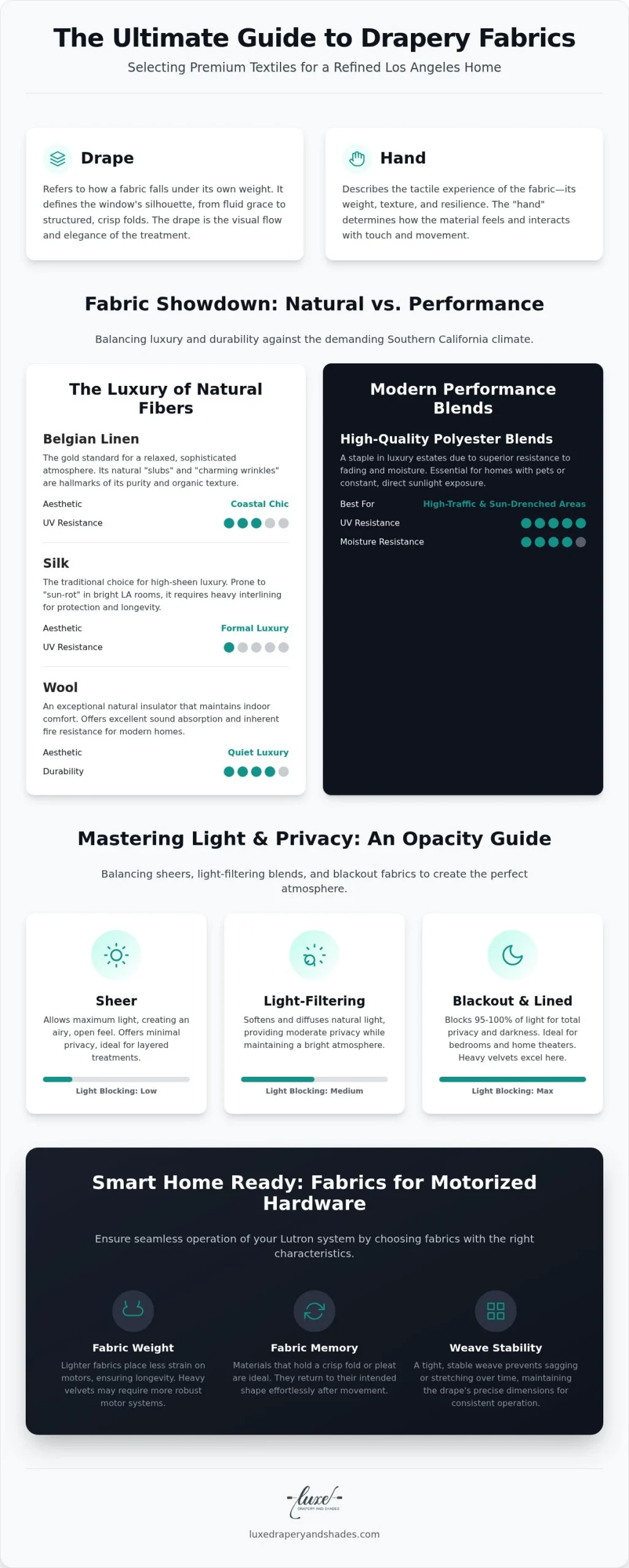
In the pursuit of a perfectly appointed home, window treatments act as the soul of the space. To select the ideal different types of drapery fabric, one must first master two technical concepts: drape and hand. Drape refers to how a fabric falls under its own weight; it’s the fluid grace of a pleat or the structured crispness of a fold that defines the window’s silhouette. Hand describes the tactile experience, encompassing the weight, texture, and resilience of the material when manipulated. These characteristics aren’t just aesthetic choices; they’re the variables that determine how a treatment interacts with light and movement.
Choosing between various types of drapery fabric reveals that custom solutions provide a level of detail that mass-produced options cannot mimic. While ready-made retail panels offer a quick solution, they often lack the density and “memory” required for a truly bespoke look. Custom selection allows you to choose materials that perform specific roles, such as sound absorption in an open-concept Beverly Hills villa or thermal regulation against the afternoon sun in a Santa Monica loft. High-quality textiles don’t just decorate; they improve the daily quality of life within the home.
The Anatomy of a High-End Drape
Luxury window treatments require attention to the structural integrity of the textile. Premium fabrics often come in wider widths, allowing for “railroading” to avoid vertical seams on large, expansive windows. The fiber content is equally vital; natural fibers like wool and linen offer a depth of color and organic texture that synthetics rarely match. However, even the finest face fabric requires a professional lining. This hidden layer protects the primary material from UV degradation and adds the necessary body to ensure the drape remains consistent and lush year after year.
Aesthetic Impact: Setting the Tone of the Room
The texture of your chosen fabric dictates the psychological temperature of a room. Heavy velvets evoke a sense of Quiet Luxury and permanence, making them ideal for formal dining rooms where intimacy and acoustic dampening are prized. Conversely, lightweight linens capture a Coastal Chic aesthetic perfect for the South Bay, inviting a relaxed, airy atmosphere into the living space. When designing custom drapes in Los Angeles, we consider how these textures interact with the city’s unique architectural styles, from the clean lines of Mid-Century Modernism to the textured warmth of Spanish Colonial homes.
Natural vs. Synthetic: Performance Profiles for Every Room
Los Angeles homes demand a lot from textiles. The choice between natural and synthetic drapery and curtain fabrics isn’t just about price; it’s about how the material survives the Southern California climate. When evaluating different types of drapery fabric, we must consider the specific UV intensity and coastal salt air that define our region. While natural fibers offer unmatched prestige, modern synthetics provide a level of resilience that’s often necessary for sun-drenched estates.
The Luxury of Natural Fibers
Belgian linen remains the gold standard for those seeking a relaxed yet sophisticated atmosphere. Its natural slubs, or slight irregularities in the weave, provide an organic texture that mimics the effortless elegance of a Malibu retreat. You should embrace the “charming wrinkle” of authentic flax, as it’s a hallmark of the material’s purity. For those desiring high-sheen luxury, silk is the traditional choice. However, in bright Westside LA rooms, silk requires heavy interlining to prevent “sun-rot.” Without this protection, the delicate fibers can become brittle within a few seasons. Wool is another exceptional natural option; it acts as a natural insulator to maintain indoor comfort and offers inherent fire resistance for modern homes.
Performance Blends and Modern Synthetics
Performance synthetics have undergone a revolution, moving from utility to high-end design. High-quality polyester blends are now staples in luxury estates because they resist fading and moisture. This is vital for homes with pets or expansive floor-to-ceiling windows where sunlight is constant. Modern manufacturing allows these materials to maintain a refined appearance while offering superior longevity. Unlike the stiff synthetics of the past, today’s performance weaves drape with a grace that rivals natural alternatives.
- Durability: Polyester-based velvets often outlast cotton or mohair counterparts in high-traffic areas or media rooms.
- Tactile Quality: Modern faux silks now mimic the “hand” of traditional mulberry silk so closely that they’re indistinguishable to the untrained eye.
- Versatility: Premium cotton twills offer a crisp, modern look that suits the architectural lines of Hollywood Hills homes and takes dyes beautifully for vibrant, custom colors.
Choosing the right balance between these materials ensures your home remains both beautiful and functional. If you’re unsure which profile suits your room’s specific light exposure, exploring custom drapes in Los Angeles with a specialist can clarify the best path forward for your space.
Opacity and Light Control: From Sheer Voiles to Blackout Velvets
Managing the luminous intensity of the Southern California sun is a fundamental challenge for any homeowner. The art of selecting the correct opacity involves more than just picking a color; it requires a deep understanding of how different types of drapery fabric interact with the local environment. Whether you’re looking to diffuse the midday glare in a Santa Monica sunroom or achieve absolute darkness in a Hollywood Hills media suite, the construction of your textile determines its performance. The sun is relentless. Without the right density, your interiors can feel exposed and overheated.
Sheer Elegance and Privacy
Sheer fabrics like Voile, Chiffon, and Batiste serve as the first line of defense against harsh UV rays. These materials are prized for their ability to soften incoming light while maintaining a visual connection to the outdoors. In contemporary Los Angeles architecture, where floor-to-ceiling glass walls are common, wide-width sheers are preferred. They allow for a seamless appearance without the interruption of vertical seams. Layering these sheers with heavier drapes offers a multi-functional solution. You can enjoy the view during the day and draw the secondary panels for total privacy at night. This layered approach also provides a subtle buffer against the salt air in coastal neighborhoods.
Mastering the Dark: Blackout Solutions
When light control is the primary objective, the distinction between room-darkening and blackout construction is critical. Integrated blackout fabrics are woven with a “black yarn” core that blocks light within the textile itself. However, for true luxury applications, we often recommend a separate blackout lining paired with heavy face fabrics like Velvet, Chenille, or dense Damask. This combination adds significant weight and a high-end “hand” to the treatment. It’s essential for sound dampening in home theaters or nurseries where silence is as important as darkness.
Achieving a total blackout effect requires more than just the right material. Professional measurement and installation are non-negotiable to eliminate light gaps at the edges of the window. Even the most opaque velvet can’t compensate for a poorly fitted panel. Additionally, incorporating a thermal lining is a wise investment for LA homes. This extra layer provides a critical barrier against heat transfer, helping to maintain a consistent indoor temperature during the hottest months of the year. By choosing the right opacity, you turn your windows into a curated tool for comfort and atmosphere.
Smart Home Ready: Selecting Fabrics for Motorized Hardware
The integration of home automation has redefined the criteria for selecting premium textiles. While aesthetic appeal remains paramount, the functionality of motorized hardware introduces technical requirements that ready-made options simply can’t meet. When evaluating different types of drapery fabric for an automated system, you must consider how the material’s physical properties interact with the precision of the motor. A fabric that looks beautiful in a static drape might behave differently when subjected to the repetitive, precise movements of a smart home system.
Weight Matters for Lutron Systems
Lutron Sivoia systems are engineered for near-silent operation, but their longevity depends on staying within specific torque limits. Calculating the Total System Weight involves more than just the face fabric; it includes the lining, interlining, and the weight of the hardware itself. Linear weight is the key metric for motor selection. Heavy velvets or dense damasks may require high-torque motors or specialized track configurations to prevent premature wear on the drive unit. Selecting a material that balances luxury with a manageable weight ensures your system operates smoothly for years.
Durability Under Tension
Motorized movement applies a consistent, repetitive pull that can stress fabric seams over time. High-end custom drapes utilize reinforced headers to distribute this tension evenly across the track, preventing the fabric from tearing or pulling away. It’s also vital to select fabrics with excellent stability. Materials that stretch or sag under their own weight will eventually lose their alignment, causing the hem to graze the floor unevenly. We prioritize fabrics with strong “memory,” ensuring that pleats remain crisp and uniform even after thousands of cycles.
Beyond weight and tension, the interaction between the fabric and the track influences the sensory experience of the room. Certain synthetic blends can generate static or friction, which may lead to minor tracking issues or unwanted noise during operation. We recommend textiles that compliment quiet motorized operation, such as stable linens or performance blends that glide effortlessly along the rail. If you’re ready to integrate these sophisticated solutions into your home, our team can help you select the most motor-friendly drapery fabrics for your specific architecture.
The Luxe Experience: Designing Your Custom Drapery in Los Angeles
The culmination of a well-designed room often rests on the final layer of texture at the window. In a city where light defines the lifestyle, selecting from various types of drapery fabric requires a nuanced understanding of both material science and local aesthetics. Working with a specialist for custom drapes in Los Angeles ensures that your window treatments don’t just fit the frame, but also the unique architectural spirit of your home. Whether you’re managing the salt-mist in Torrance or the bright coastal exposure of the South Bay, local expertise transforms a functional item into a curated design statement.
Tailoring to Los Angeles Architecture
LA’s architectural diversity demands a versatile approach to textile selection. For glass-heavy modern estates on the Westside, minimalist linens provide a soft, organic counterpoint to industrial steel and stone. These fabrics filter light without obscuring the silhouette of the home. In contrast, rich, textured jacquards and damasks offer the requisite weight for Spanish Colonial or traditional estates, grounding large rooms with historical depth. For those embracing the seamless indoor-outdoor lifestyle, we utilize specialized UV-resistant fabrics that maintain their color and integrity even when exposed to the California elements.
The Final Touch: Professional Installation
The beauty of a premium textile is only fully realized through meticulous installation. Heavy luxury fabrics, particularly when lined for thermal control or blackout, require specialized wall anchors and structural support to ensure safety and longevity. Once the hardware is secure, our team begins the “dressing” process. This involves professional steaming and “training” the drapes, where each fold is hand-set to ensure the fabric falls in perfect, uniform pleats. This level of attention ensures that your types of drapery fabric behave exactly as intended from the moment they’re installed. It’s the difference between a window covering and a tailored architectural element.
A home is more than a structure; it’s a sanctuary shaped by the quality of the materials within it. We invite you to explore how the right textiles can transform your living environment into a space of quiet confidence and enduring comfort. To ensure your window treatments reflect your standard of living, schedule your professional design consultation with Luxe Drapery and Shades today.
Reframing Your Home Through Curated Textiles
Choosing the right materials is the first step in creating a home that feels both intentional and effortless. By mastering the nuances of different types of drapery fabric, you’ve gained the framework to balance aesthetic beauty with the technical demands of light control and motorization. Whether you’re selecting a breathable Belgian linen for a coastal breeze or a dense velvet for a private cinema, your choice serves as a lens for experiencing a more refined lifestyle. Every fold and fiber contributes to the overall atmosphere of your sanctuary.
We specialize in bringing this level of curated luxury to Los Angeles, Torrance, and the South Bay. As a licensed and bonded California contractor (CSLB #1066068) and a Lutron Certified Installer, we ensure every installation is as technically sound as it is visually stunning. Since 2020, we’ve helped homeowners navigate the complexities of bespoke design with quiet confidence and aesthetic expertise. We invite you to elevate your home with a custom drapery consultation and discover the transformative power of quality craftsmanship. Your vision for a beautiful, comfortable living space is within reach.
Frequently Asked Questions
What is the most durable fabric for high-traffic rooms?
Performance synthetics are the most resilient choice for high-traffic environments. High-end polyester blends offer superior resistance to pilling, fading, and moisture compared to many natural fibers. These materials maintain their structure even in busy households with pets or frequent activity. While cotton or linen may show wear over time, a high-quality performance weave ensures your window treatments remain pristine. They provide the look of luxury without the delicate maintenance requirements of fragile textiles.
Can I use any fabric for motorized drapery hardware?
Not every material is suitable for automation. Motorized systems like Lutron require fabrics that fall within specific weight capacities to ensure the motor’s longevity. Extremely heavy velvets or very lightweight sheers that lack stability can cause tracking issues or strain the hardware. We evaluate various types of drapery fabric based on their linear weight and memory. Choosing a stable, motor-friendly textile is essential for the smooth, silent operation expected in high-end home automation.
How do I prevent my linen drapes from wrinkling excessively?
Pure linen is prized for its organic texture, but it’s naturally prone to wrinkling. To minimize this effect, we often recommend linen blends that incorporate small amounts of synthetic fibers for added resilience. Additionally, a professional lining provides the necessary body to help the fabric hang straight. During installation, our team “trains” the drapes by hand-setting the folds, which encourages the material to maintain its shape and reduces the appearance of deep, stubborn creases.
What is the best fabric for blocking out 100% of light in a bedroom?
Achieving a total blackout requires a combination of a dense face fabric and a specialized blackout lining. Heavy materials such as velvet, chenille, or thick damask are excellent choices for bedrooms. These textiles provide the necessary opacity while also offering acoustic dampening for a quieter sleep environment. When paired with a professional installation that eliminates light gaps at the edges, these types of drapery fabric ensure absolute darkness and enhanced thermal insulation for your sanctuary.
How does coastal salt air in Los Angeles affect drapery fabric selection?
Coastal environments in Los Angeles, particularly in the South Bay, introduce moisture and salt that can degrade natural fibers. Salt air can cause certain materials to become stiff or trap humidity, leading to potential fiber breakdown. We suggest performance-driven synthetics or treated natural blends for homes near the ocean. These materials are engineered to resist the corrosive effects of the marine layer while maintaining the soft, luxurious appearance required for high-end coastal architecture and long-term comfort.
Is silk fabric worth the maintenance for a sunny living room?
Silk offers an incomparable sheen and luxury, but it’s highly sensitive to UV exposure. In a sunny living room, silk requires a heavy interlining to prevent the sun from rotting the delicate fibers. If you prefer a lower-maintenance option that survives the intense California sun, high-quality faux silks provide a similar aesthetic with much higher durability. These modern alternatives resist fading and brittleness, making them a more practical choice for expansive, light-filled living spaces.
Should I always use a lining with my custom drapes?
We almost always recommend a professional lining for custom window treatments. A lining serves multiple purposes: it protects the expensive face fabric from UV damage, improves the drape by adding essential weight, and provides thermal insulation. Without a lining, even the most luxurious materials can look thin and lose their color prematurely. For specific needs, you can choose between light-filtering, thermal, or blackout linings to tailor the performance of your drapes to the specific function of the room.
How do I choose between a solid and a textured fabric for a large window?
Choosing between solid and textured materials depends on the visual weight you want to achieve. Solid fabrics create a clean, contemporary look that emphasizes the architectural lines of a large window. Textured weaves, such as bouclés or jacquards, add depth and interest without the need for busy patterns. In expansive Los Angeles estates, texture often provides a sense of warmth and curated luxury that prevents a large room from feeling sterile or overly cold.