Could the very fabric you chose for its beauty be the reason your window treatments fail within a single season? While a textile might look stunning on a swatch, the reality of high sun exposure and the mechanical demands of modern automation can quickly turn a luxury investment into a disappointment. Selecting the best fabrics for roman shades requires a delicate balance between visual allure and technical performance. You likely want a look that feels effortless and tailored, yet it’s natural to worry about fabric rot in the sun or how a heavy material might struggle with a motorized lift system.
We understand that a home’s atmosphere is defined by these fine details. You deserve a window treatment that operates with precision and maintains its crisp folds for years. In this curated guide, you’ll discover how to select the perfect fabric to balance aesthetic elegance, structural integrity, and light control for your custom Roman shades. We’ll explore the enduring appeal of linen blends, the impact of the June 2024 safety standards on cordless design, and the specific textiles that ensure your shades remain a sophisticated focal point rather than a bulky afterthought.
Key Takeaways
- Understand how “fabric memory” ensures your window treatments maintain their crisp, architectural folds over years of daily use.
- Discover why linen and high-performance cotton blends are considered the best fabrics for roman shades when balancing luxury aesthetics with durability.
- Learn to match textile weight to your chosen style, ensuring flat shades remain stable while relaxed designs achieve a graceful, supple curve.
- Identify the critical technical requirements for motorized systems to ensure smooth operation without straining the internal motor or take-up tube.
- Recognize the importance of professional in-home light testing to see how designer textiles transform under your specific environmental conditions.
Why Fabric Selection is the Foundation of Roman Shade Design
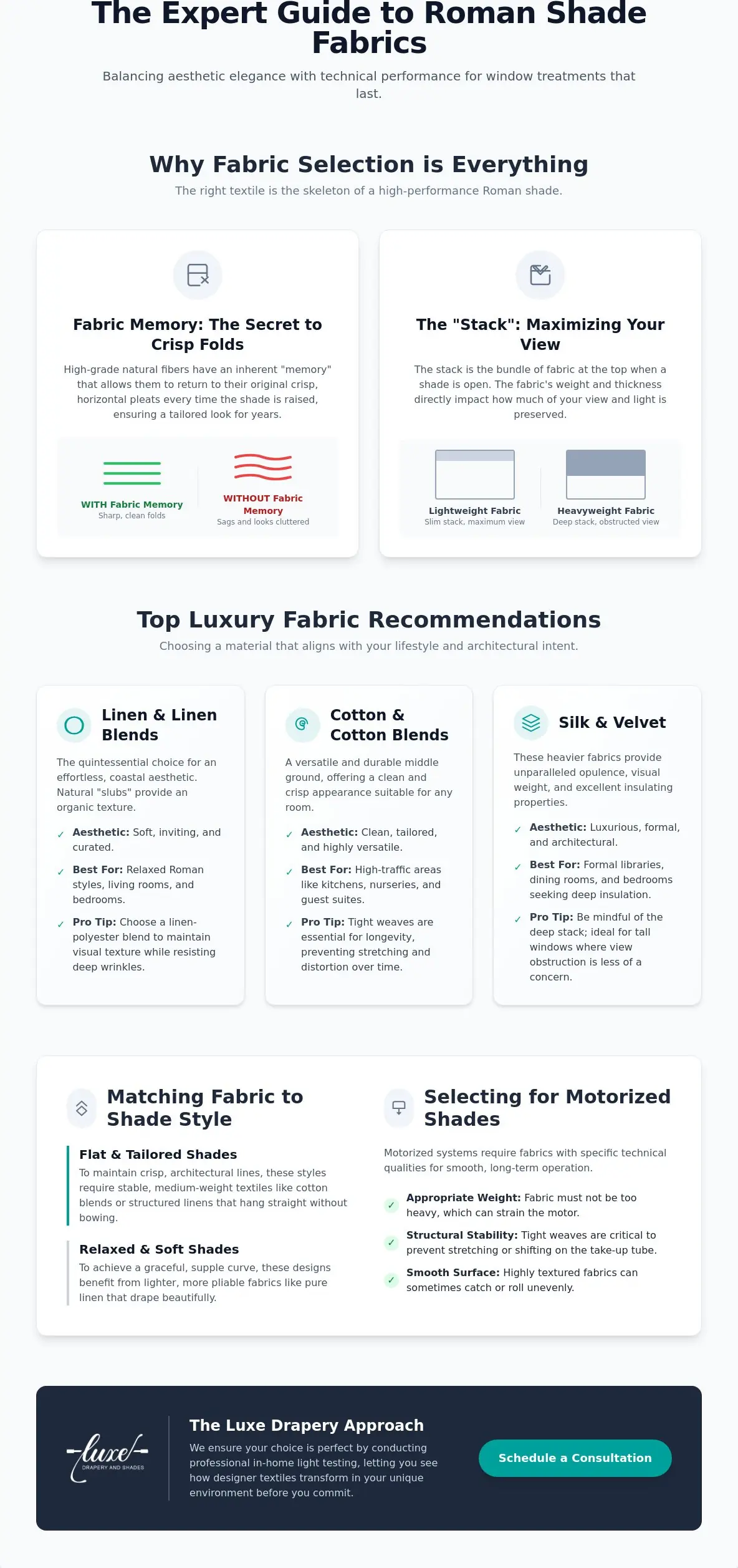
Choosing the best fabrics for roman shades isn’t merely an aesthetic exercise; it’s a structural necessity. Unlike drapery that hangs vertically, Roman shades must fold and unfold with mathematical precision. This requires a textile with “fabric memory,” a quality found in high-grade natural fibers that allows the material to return to its crisp, horizontal pleats every time it’s raised. When you select a fabric without this inherent integrity, you risk a window treatment that sags over time or looks cluttered when retracted. A well-chosen textile acts as the skeleton of the shade, providing the necessary tension to maintain a tailored appearance.
Consider the “stack,” which is the bundle of fabric gathered at the top of the window when the shade is open. A heavy velvet provides a rich, architectural presence, but it creates a deep stack that might obscure a significant portion of your view or natural light. Conversely, a lightweight linen offers a slimmer profile, preserving the clean lines of your window frame. Custom-tailored shades differ fundamentally from ready-made options because they’re engineered to handle these specific weight distributions. We often use specialized interlinings to provide body and “memory” to a fabric without adding the unnecessary bulk that makes a shade look cumbersome when raised.
The Science of the Fold: Weight and Weave
For the wide, expansive windows common in Los Angeles estates, we often recommend “railroading” the fabric. This technique involves turning the fabric bolt 90 degrees to avoid vertical seams that can disrupt the visual flow of the horizontal folds. Medium-weight textiles are generally the gold standard for achieving a sharp, professional look. They possess enough density to hang straight without bowing, yet remain supple enough to fold neatly into the headrail. Tight weaves are essential for structural longevity; loose weaves tend to stretch under their own weight, eventually leading to uneven hems and distorted folds.
Light Filtration vs. Room Darkening
The way a fabric interacts with the sun changes its character throughout the day. A sheer linen might look ethereal in the soft morning light but lose its color depth and texture under the harsh afternoon glare. We categorize textiles into sheer, semi-opaque, and blackout to help you manage these shifts effectively. The density of the textile’s weave dictates how much silhouette is visible from the exterior when interior lights are active, even without a privacy lining. By selecting the best fabrics for roman shades based on their opacity and weave, you can curate the exact mood of your living space while ensuring your privacy remains uncompromised.
The Top 4 Luxury Fabrics for Custom Roman Shades
Selecting the best fabrics for roman shades involves more than matching a color palette; it’s about choosing a material that aligns with your lifestyle and the architectural intent of your home. From the breezy textures of the coast to the heavy, insulating weaves required for formal libraries, the right textile defines the room’s soul. While a swatch might look appealing in a showroom, its true character emerges when it’s draped across a window, interacting with the specific light of your environment. Each category of luxury fabric offers a distinct set of benefits for both form and function.
Linen: The Designer’s Favorite for a Reason
Pure linen remains the quintessential choice for achieving that effortless, coastal Los Angeles aesthetic. Its natural “slubs,” those beautiful, irregular bumps in the yarn, provide an organic texture that synthetic fibers struggle to replicate. For many South Bay homes, a “Relaxed” Roman style in linen creates a soft, inviting atmosphere that feels both curated and lived-in. However, pure linen is naturally prone to wrinkling. If you prefer a crisper, more architectural look, we often recommend linen-polyester blends. These hybrids maintain the visual depth of natural flax while adding the structural resilience needed to resist deep creasing and sagging over time.
Cotton and cotton blends offer a versatile middle ground for high-traffic areas. They’re durable enough for active kitchens yet refined enough for a nursery or guest suite. In more formal spaces, silk and velvet provide unparalleled opulence. Beyond their visual weight, these heavier materials contribute to Energy Efficient Window Coverings by providing deep insulation against heat transfer. This thermal barrier helps keep your home’s microclimate stable throughout the seasons, reducing the strain on your climate control systems during peak summer months.
Performance Fabrics: The Modern Standard
The California sun is relentless, often causing natural fibers to fade or “rot” over several years of direct exposure. This reality has led to the rise of performance luxury textiles. These high-tech synthetics are engineered to mimic the hand-feel of wool, silk, or heavy linen while remaining entirely UV-stable. They’re particularly effective in sun-drenched kitchens or children’s rooms where stain resistance and easy maintenance are paramount concerns for the homeowner.
Today, performance fabrics are no longer just for outdoor furniture; they’ve become a staple in custom drapes Los Angeles design. By integrating these resilient fibers into your Roman shades, you ensure that your investment retains its vibrant color and structural integrity despite the intense light. If you’re curious about how these textures feel in person, exploring our collection at luxedraperyandshades.com is an excellent starting point for your design journey. We believe that the right fabric doesn’t just cover a window; it transforms the way you experience your home’s most private spaces.
Matching Fabric to Roman Shade Styles
The silhouette you select for your windows acts as a technical blueprint for the textile’s performance. While we previously explored the inherent qualities of luxury fibers, the way those fibers are woven into a specific style determines the long term success of the installation. A fabric that looks magnificent as a flowing drape might fail as a structured shade if it lacks the necessary stability. Achieving a balance between the artistic “smile” of a relaxed shade and the architectural precision of a flat fold requires a sophisticated understanding of how different weights interact with the shade’s internal hardware.
Best Fabrics for Modern Flat Shades
Flat Roman shades are the preferred choice for minimalist interiors where clean lines are paramount. Because this style lacks horizontal ribs when lowered, it relies entirely on the textile’s weave to stay square within the window frame. Structured cottons and dense jacquards are often the best fabrics for roman shades in this category. These materials possess a natural stiffness that prevents the center of the shade from bowing inward over time. By choosing a stable, medium weight textile, you create a tailored look that mirrors the precision of plantation shutters, offering a soft alternative to hard window furniture without sacrificing visual order.
Softening the Room with Relaxed Styles
Relaxed styles, frequently referred to as European shades, thrive on a different philosophy. These shades are designed to intentionally sag in the center, creating a graceful, curved hem. To achieve this “smile” without the fabric looking forced or stiff, you must use soft, supple textiles. Lightweight linens or very thin wools are ideal here. They possess the fluidity to drape naturally under their own weight. While patterns can be striking, they’re often tricky on relaxed styles as the curve can distort geometric designs. We generally suggest solid colors or subtle, tone on tone textures to let the elegant silhouette remain the focal point. Unlined versions offer a breezy, translucent feel, while a light sateen lining provides privacy while maintaining the fabric’s movement.
The hallmark of a truly bespoke window treatment is often hidden from view. We use a secret layer of flannel interlining to transform a standard textile into something extraordinary. This extra layer adds a luxurious “body” and weight to the shade, allowing even a delicate silk to hang with the authority of a much heavier material. It also serves a functional purpose, softening the edges of the shade and providing an additional layer of sound dampening. In cascade or hobbled styles, where the fabric is permanently folded into loops, a strategic choice of lightweight face fabric paired with a thin interlining prevents the stack from becoming too bulky when the shade is fully raised.
Selecting Fabrics for Motorized Roman Shades
The integration of automation transforms a window treatment from a passive design element into a dynamic smart home feature. For motorized Roman shades, weight becomes the most critical variable in the selection process. While we explored the visual weight of various textiles earlier, automated systems require a more calculated approach to mass and thickness. Every motor possesses a specific torque rating; exceeding it can lead to uneven lifting or premature wear on the internal components. Achieving a reliable, whisper-quiet operation starts with selecting a textile that respects these mechanical limits.
Choosing the best fabrics for roman shades when motorizing means looking for textiles with high tensile stability. This ensures the shade doesn’t stretch or skew during the thousands of cycles it’ll perform over its lifetime. We generally advise against exceptionally heavy velvets or thick, multi-layered tapestries in these applications. These materials don’t just strain the motor; they create a roll-up diameter that’s often too large for the take-up tube. When the fabric is too thick, it can rub against the headrail or housing, leading to frayed edges and mechanical resistance.
Lutron Compatibility and Fabric Choice
The synergy between Lutron Sivoia technology and high-end performance textiles is where true luxury meets technical reliability. These systems are engineered to handle varying fabric tensions with incredible precision, but they perform best when paired with medium-weight linens or advanced synthetics. Professional measurement is non-negotiable here. We must calculate the total “stack” and roll-up diameter to ensure the fabric clears the motor housing perfectly. This level of planning prevents “telescoping,” a common issue where the fabric drifts to one side as it raises, which is often caused by using inferior, “stretchy” textiles.
Acoustics and Thermal Control
In the open-concept floor plans prevalent in modern Los Angeles homes, acoustics can be a significant challenge. Heavier weaves, such as dense cotton-linen blends, act as effective sound absorbers, dampening echoes and creating a more intimate atmosphere. When these are paired with specialized thermal linings, your shades become a sophisticated tool for climate management. By programming your system to lower during peak sun hours, automated shades provide a proactive shield that protects your interior fabrics and fine art from irreversible UV damage. This marriage of smart technology and premium textiles ensures your home remains both beautiful and energy-efficient.
To see our full range of automation-ready textiles and explore the possibilities for your home, visit luxedraperyandshades.com to begin your custom design experience.
The Luxe Drapery Approach to Bespoke Roman Shades
At Luxe Drapery and Shades, we believe that window treatments are the final, defining layer of a room’s architectural narrative. Identifying the best fabrics for roman shades is only the beginning of a highly personalized creative journey. Our approach isn’t about simply selecting a textile from a catalog; it’s about curating a sensory experience that aligns with your lifestyle. We provide an exclusive selection of designer textiles and performance lines that have been rigorously tested for their “fabric memory” and structural resilience, ensuring your investment remains as crisp and elegant on its thousandth lift as it was on the first.
The true success of a custom installation lies in the nuances of your home’s environment. A fabric that appears warm and inviting in a showroom can shift dramatically under the unique light of a Malibu sunset or the shaded cool of a Beverly Hills estate. Our process honors these variations by bringing the showroom to you. By integrating your window treatments into a broader Lutron home automation ecosystem, we ensure that your shades respond intelligently to the time of day, preserving your privacy and protecting your interior finishes with effortless precision.
The Luxury of Choice: Swatches and Lighting
We highly recommend viewing large-format swatches in the specific room where they’ll hang. Our design consultants guide you through this selection, analyzing how natural and artificial light interact with the weave of the best fabrics for roman shades in our collection. This in-home testing allows you to see the subtle shifts in color and opacity that define a truly bespoke product. Beyond aesthetics, we provide the peace of mind that comes with professional expertise; as a licensed CA contractor, we guarantee that every shade is manufactured and installed to the highest standards of craftsmanship and safety.
Next Steps for Your Los Angeles Home
Transitioning from inspiration to a finished installation requires a master’s touch. Even the most exquisite silk or performance linen can fail if the measurements are off by a fraction of an inch or if the motor’s torque isn’t perfectly calibrated. During your professional measurement session, we evaluate the window’s depth, the wall’s structural integrity, and the necessary “roll-up” clearance for motorized systems. This meticulous attention to detail ensures a seamless fit that ready-made alternatives simply cannot replicate. Once your design plan is finalized, our expert installers take over, handling the technical complexities so you can simply enjoy the transformative beauty of your new environment.
Are you ready to elevate your living space with window treatments that reflect your individual style? Schedule your private consultation with Luxe Drapery and Shades today. We look forward to helping you discover the perfect marriage of luxury textiles and modern technology for your home.
Elevate Your Environment with Bespoke Artistry
A home’s atmosphere is defined by the quality of its light and the textures that frame it. Identifying the best fabrics for roman shades is a decision that balances high-end artistry with structural engineering. From the effortless drape of coastal linen to the technical precision required for automated systems, every choice impacts the longevity and elegance of your space. You now understand how fabric memory ensures crisp folds and why weight is the silent architect of a reliable motorized system.
As a Licensed and Bonded CA Contractor (CSLB #1066068) and expert Lutron certified installers, we specialize in the unique demands of high-end Los Angeles residential estates. We don’t just sell window treatments; we curate essential elements of a beautiful lifestyle. Our team is ready to help you navigate these nuances to ensure your vision is realized with absolute precision. We invite you to Request a Professional Design Consultation with Luxe Drapery and Shades today. Your windows are the lens through which you experience the world; let us make that view extraordinary.
Frequently Asked Questions
Can I use upholstery fabric for Roman shades?
Upholstery fabric is generally too heavy and stiff for the precise folding required by Roman shades. While these textiles are durable for seating, their thickness often prevents the shade from stacking neatly within the headrail. This results in a bulky, unrefined appearance that can strain the lifting cords. For a similar aesthetic with better functionality, we recommend choosing a heavy-weight drapery fabric that mimics the texture of upholstery without the excessive mass.
What is the best fabric for blackout Roman shades in a bedroom?
The best fabrics for roman shades in a bedroom are medium-weight cottons or polyester blends paired with a specialized blackout lining. While the face fabric provides the aesthetic appeal, the lining is what truly blocks the light and provides privacy. We often suggest a matte finish for bedroom textiles to create a calm, restful environment. This combination ensures your room remains dark and cool even during the peak of a California morning.
How do I prevent my linen Roman shades from wrinkling?
Selecting a linen-polyester blend rather than a 100% flax textile is the most effective way to prevent excessive wrinkling. These hybrid weaves maintain the organic look of natural linen while adding the resilience of synthetic fibers. We also recommend “training” your shades by leaving them in the raised position for several days after installation. This helps the fabric fibers memorize the fold lines, ensuring a crisp look every time they’re operated.
Which Roman shade fabrics are easiest to clean?
Performance luxury synthetics are the easiest textiles to maintain, particularly in active spaces like kitchens or children’s rooms. These fabrics are engineered to repel spills and resist deep staining, often requiring only a light dusting or spot cleaning with a damp cloth. Unlike delicate silks that require professional care, these modern materials offer a high-end look without the high-maintenance requirements. They’re an excellent choice for homeowners who value both elegance and practicality.
Are natural fibers or synthetics better for the Los Angeles sun?
High-performance synthetics are superior for the intense Los Angeles sun due to their inherent UV stability. Natural fibers like silk or 100% cotton can become brittle and fade when exposed to direct sunlight over several years. If you prefer the look of natural fibers, it’s vital to use a heavy-duty, UV-protected lining. This barrier shields the face fabric from solar damage, extending the life of your window treatments in sun-drenched coastal estates.
Can motorized Roman shades handle heavy velvet fabrics?
Motorized systems perform most reliably with medium-weight textiles rather than heavy, thick velvets or tapestries. Excessive thickness can interfere with the motor’s take-up tube, causing the fabric to rub against the headrail or lift unevenly. If you desire the rich look of velvet for a motorized shade, we suggest a low-pile performance velvet. This provides the same opulent aesthetic while staying within the weight and thickness limits required for smooth, quiet operation.
Do I need a lining for my Roman shades?
A high-quality lining is essential to protect your Roman shades from the elements and improve their drape. Beyond light control, the lining provides the “body” required for the fabric to fold correctly. Without it, many textiles would appear limp and fail to maintain their architectural shape. We offer various options, from thin privacy sateens to heavy thermal linings, allowing you to customize the performance of your shades to each room’s needs.
What is the best fabric for a ‘relaxed’ Roman shade style?
Supple, lightweight linens and soft cotton blends are the best fabrics for roman shades in a relaxed or European style. These textiles possess the natural fluidity needed to create the signature “smile” curve at the bottom of the shade. Stiff or overly structured fabrics will resist this drape, resulting in a look that feels forced rather than graceful. Choosing a fabric with a soft hand-feel ensures your shades hang with an effortless, sophisticated elegance.