

Could the difference between a house and a curated home be as simple as how you dress your windows? In the sun-drenched neighborhoods of the Westside, a single blind often fails to address the complex needs of a modern luxury interior. Many homeowners find that the harsh Southern California light can quickly fade bespoke furniture while leaving rooms feeling uncomfortably exposed to the street. Exploring the benefits of layered window treatments allows you to move beyond basic functionality into a realm where sophisticated design meets precision engineering.
It’s understandable to want a home that feels both open to the landscape and entirely private. We’ll show you how to pair custom drapery with motorized roller shades or Roman shades to achieve a designer-level look that offers more than just visual depth. You’ll learn how these combinations manage the nearly 30% of heating and cooling energy typically lost through glass; you’ll also see how new 2026 safety standards and Lutron automation make these systems more intuitive and safer than ever. This guide provides a roadmap for integrating high-end textures with the technical performance your lifestyle demands.
Key Takeaways
- Understand why professional layering is the defining standard for elite Los Angeles interiors, offering a level of visual sophistication and architectural depth that single treatments cannot achieve.
- Discover how creating insulating air pockets between fabric layers maximizes thermal control while shielding bespoke furnishings from the damaging effects of intense UV exposure.
- Explore the aesthetic impact of mixing diverse textures, such as pairing organic woven wood shades with soft custom drapery to anchor a room’s design.
- Learn how to leverage the benefits of layered window treatments through Lutron motorization for seamless, one-touch control over multiple light and privacy levels.
- Identify the most effective combinations for your home, from achieving total blackout in the master suite to balancing daytime solar protection with evening elegance in living spaces.
Defining Layered Window Treatments for the Modern Estate
A window is more than an opening to the outside world; it’s a canvas for architectural expression. Layering involves the intentional union of two or more treatments to create a singular, cohesive aesthetic that resonates with the rest of your home. In Los Angeles estates, where sprawling glass walls and expansive views are common, this technique is a hallmark of professional interior design. It signals a move away from the temporary feel of ready-made products toward a bespoke, curated environment. When you choose to layer, you aren’t just covering a window. You’re composing a room.
The psychological impact of a well-dressed window shouldn’t be underestimated. A room with bare or under-dressed windows often feels transient and emotionally cold. By contrast, the benefits of layered window treatments include a sense of permanence and security that grounds a living space. This approach allows for a nuanced transition between the vibrant energy of the Westside and the serene sanctuary of your private residence. It’s the difference between a house that’s merely occupied and a home that’s thoughtfully designed.
The Anatomy of a Dual-Treatment Design
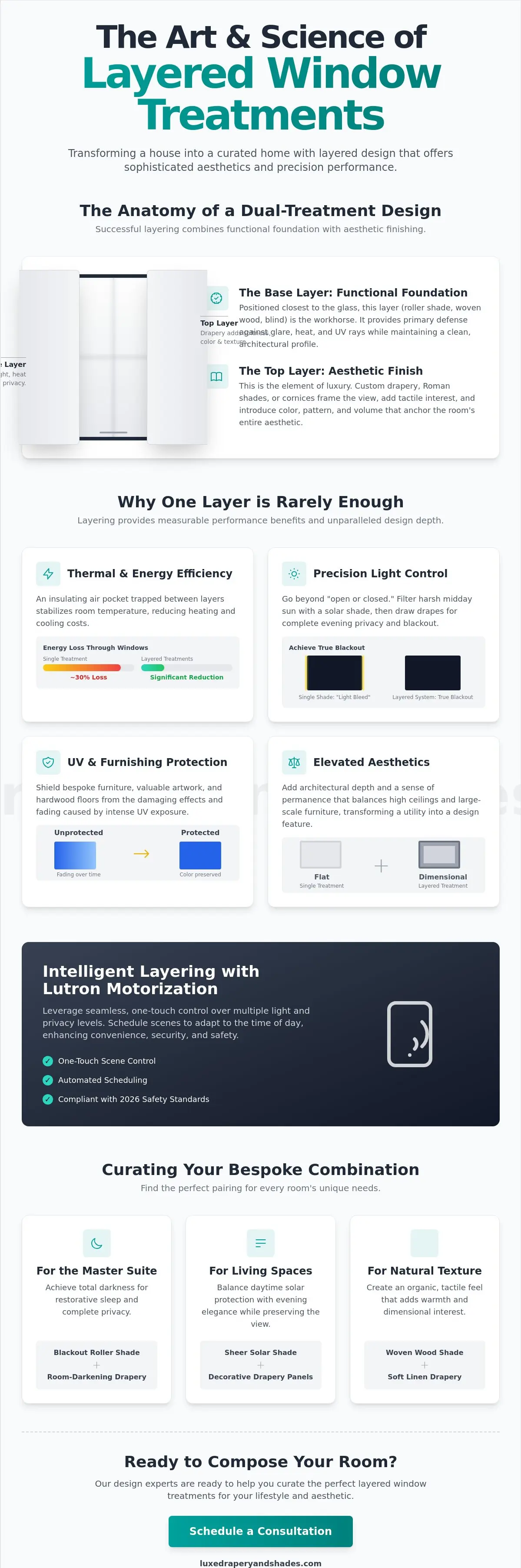
Successful layering begins with a clear understanding of the roles each element plays. The base layer serves as the functional foundation of window light control. Typically, this involves a window blind, roller shade, or woven wood shade that sits closest to the glass. These foundational pieces provide the primary defense against glare and heat while maintaining a clean, architectural profile within the window frame.
The top layer introduces the elements of luxury and softness. Custom drapery, Roman shades, or elegant cornices act as the “finishing touch” that frames the view and adds tactile interest. While the base layer handles the technical demands of the environment, the top layer provides the color, pattern, and volume that anchor the room’s aesthetic. This combination ensures that your windows are as beautiful as they are functional.
Why One Layer is Rarely Enough for LA Interiors
In many luxury homes, a single shade can look surprisingly flat and uninspired. It lacks the three-dimensional depth required to balance high ceilings and large-scale furniture. Layering solves this by introducing a “dimensional design” that draws the eye upward and adds a sense of grandeur. It transforms a simple utility into an architectural feature that complements the structural lines of the building.
Light management in Southern California also requires a more sophisticated approach than a simple “open or closed” setting. One of the primary benefits of layered window treatments is the ability to fine-tune your environment throughout the day. You might use a sheer solar shade to filter the midday sun while keeping the drapes open to preserve your view; later, you can draw the heavy linen panels for total evening privacy. This flexibility allows you to adapt to the shifting Los Angeles light without ever sacrificing comfort or style.
Performance & Protection: Thermal Efficiency and Light Control
Beyond the visual appeal, the technical performance of a window system is what truly defines a comfortable living environment. One of the most significant benefits of layered window treatments is the creation of a thermal buffer between your interior and the glass. By trapping a layer of air between a base shade and a secondary drapery panel, you create an insulating pocket that stabilizes room temperatures. This multi-layered approach is particularly effective in large-scale Los Angeles estates where expansive windows can otherwise lead to substantial energy loss.
Research into Energy Efficient Window Coverings demonstrates that about 30% of a home’s heating energy is lost through windows; however, combining a high-performance honeycomb shade with a heavy fabric layer can significantly improve R-value insulation and reduce this thermal exchange. This isn’t just about winter warmth. In Southern California, it’s about repelling the radiant heat that pours through the glass during a July afternoon. By stacking treatments, you gain the precision required to eliminate “light bleed” at the edges, achieving a level of darkness often referred to as true blackout, which is essential for home theaters and primary suites.
Managing the Southern California Sun
In the sun-drenched neighborhoods of the Westside, the light is both a blessing and a burden. Solar shades are often the preferred base layer because they preserve your coastal views while filtering out the harshest glare. Adding custom drapes los angeles residents rely on provides the necessary density to block UV rays that would otherwise fade expensive hardwood floors and curated art collections. This dual-action system allows your HVAC unit to run more efficiently, as the layers work in tandem to minimize solar heat gain. It’s a proactive way to protect your interior investments while maintaining a light, airy atmosphere during the day.
Acoustic Insulation and Nighttime Privacy
Privacy is a rare luxury in densely populated areas like Santa Monica or Torrance. Layering acts as a double-barrier, ensuring that your evening activities remain entirely secluded from the street. This configuration also offers surprising acoustic benefits. Heavy drapery installed over cellular shades provides superior sound absorption, damping the persistent hum of city traffic and coastal wind. The result is a quieter, more serene sanctuary that feels physically separated from the outside world. If you’re interested in refining your home’s atmosphere, you might consult with a design specialist to explore which fabric weights best suit your local environment.
Elevating Interior Aesthetics through Dimensional Design
Sophisticated interior design thrives on the interplay of light, shadow, and tactile depth. While a single shade offers a clean look, it rarely provides the visual anchor needed to ground a large-scale living area or a high-ceilinged estate. One of the primary aesthetic benefits of layered window treatments is the immediate sense of dimension they introduce to a room. By stacking different materials, you create a rich, textured environment that feels curated over time rather than quickly assembled from a catalog.
This design strategy also offers a practical way to refresh your home’s look without a complete overhaul. Swapping out a heavy velvet top layer for a light, airy linen during the warmer months can entirely transform a room’s mood. While these choices are often driven by style, they also provide a functional edge; for instance, high-quality window attachments help you lower your energy bills while maintaining a high-end aesthetic. This flexibility ensures your home remains as comfortable as it is beautiful through every season.
Creating Depth with Texture and Pattern
Pairing organic woven wood shades with structured custom drapery creates a compelling contrast between raw, natural fibers and refined textiles. This juxtaposition adds warmth to modern Los Angeles architecture, which can sometimes feel stark or clinical. If you prefer a more ethereal atmosphere, incorporating a middle layer of sheers allows for a soft glow that diffuses sunlight beautifully across your furniture without sacrificing privacy. When matching patterns between a Roman shade and side panels, aim for a common color thread to ensure the layers complement each other without competing for attention. This nuanced approach allows for a focal point that draws the eye without overwhelming the rest of the space.
The Role of Custom Drapery Hardware in Layering
The integrity of a layered design depends heavily on the structural bones of the system. Custom drapery hardware must be robust enough to support the weight of multiple luxury fabrics, such as interlined silks or heavy linens. Double-rod systems are the standard for seamless operation, allowing each layer to move independently without friction. Aesthetic choices like hand-finished brass or architectural matte black can act as the “jewelry” of the window, making a bold statement. Alternatively, hidden recessed tracks offer a minimalist profile for homes where the architecture should remain the primary focus. Choosing the right hardware ensures that the benefits of layered window treatments are enjoyed with effortless, daily reliability.
Intelligent Layering: Integrating Lutron Motorization
Managing multiple layers of fabric and shades manually can often feel like a chore, potentially discouraging you from fully utilizing your window system. This is where the true power of technology meets design. One of the most compelling benefits of layered window treatments is the ability to orchestrate every element through a single, intuitive interface. When you integrate Lutron home automation, the complexity of dual-treatment windows vanishes. Instead of adjusting each cord or wand, a single button press aligns every layer with mathematical precision.
There is a distinct visual “magic” in synchronized motorized movement. Seeing a sheer solar shade descend while custom drapes glide into a perfectly pleated stack is a choreographed experience that enhances the luxury feel of a home. This level of control allows you to schedule your environment to match your daily rhythm. You might program the solar shades to lower during the peak sun hours of the Westside afternoon while keeping the drapes open to maintain an architectural frame. As dusk falls, the system can automatically draw the heavier panels for evening seclusion without you ever lifting a finger.
Automated Light Filtering vs. Total Blackout
Modern luxury living requires lighting that adapts to the moment. By programming custom scenes, you can transition a room from a “Morning Glow” setting, where only the sheer layer is active, to a “Movie Night” mode that engages the full blackout capabilities of your layered system. The benefits of layered window treatments become even more apparent when you can toggle between these modes instantly. Utilizing Lutron Sivoia ensures these adjustments happen in near-silence, preserving the peaceful atmosphere of your home. Whether you’re choosing the permanence of hardwired systems in a new build or the flexibility of battery-powered motors for a renovation, the result is the same: ultra-precise adjustments that single-layer systems simply cannot match.
Voice and Scene Control for Layered Systems
The integration of voice control via Josh.ai or Apple HomeKit adds another layer of hands-free luxury to your estate. Simply asking your home to “close the bedroom” can trigger a sequence where the base shade and the decorative drapery move in tandem. Beyond daily convenience, these systems offer critical protection. Setting an “Away” mode ensures your window treatments continue to cycle while you travel, protecting your furniture from UV exposure and giving the home an occupied appearance. These motorized installations are designed to be wire-free and clean, maintaining the uncluttered aesthetic of a professionally designed interior. The results don’t just add convenience; they provide a seamless integration with your lifestyle. To see how these technologies can transform your space, you can explore our motorized collection and start your journey toward a smarter home.
Curating Your Bespoke Combination with Luxe Drapery and Shades
Every room in your estate serves a distinct purpose, and your window treatments should reflect those specific needs. While the benefits of layered window treatments apply throughout the home, the “recipe” for success changes as you move from the sanctuary of the bedroom to the social hub of the living room. In the master suite, the objective is often total seclusion and restorative darkness. Achieving this requires a pairing of high-performance blackout roller shades with heavy, interlined custom drapery. This combination seals the edges where light typically leaks, creating a cocoon-like environment that supports deep sleep and complete privacy.
In the living room, the strategy shifts toward balancing daytime protection with evening elegance. Here, you want to preserve the natural light that makes Southern California homes so inviting while still guarding against the glare that can interrupt a conversation or wash out a television screen. A successful installation avoids the “clunky” look of poorly planned layers by ensuring every component is scaled to the room’s proportions. The Luxe Approach represents a seamless blend of artisanal craftsmanship and advanced home technology, ensuring every window is a masterpiece of both form and function.
Popular Pairings for Westside LA Homes
For a modern coastal aesthetic common in Santa Monica or Pacific Palisades, we often recommend pairing airy sheer drapes over roller shades. This provides a soft, diffused light during the day while maintaining a crisp, minimalist profile. In more traditional estates, such as those found in Hancock Park, velvet drapery installed over plantation shutters offers a timeless sense of weight and architectural permanence. Sunrooms and breakfast nooks benefit from a different logic; pairing Roman shades over solar screens allows you to manage intense heat without losing the connection to your outdoor landscaping. These combinations ensure the benefits of layered window treatments are tailored to the specific architecture of your home.
The Professional Installation Advantage
The difference between a designer-level look and a cluttered window often comes down to the precision of the installation. Multi-layered setups require significant depth within the window casing or carefully planned wall mounts to operate without interference. Our team meticulously manages the “stack,” ensuring that when your treatments are fully open, they don’t block the very views you’ve invested in. This level of detail is why professional measurement is non-negotiable for complex layering. Luxe Drapery and Shades provides a dedicated white-glove service across Los Angeles and Torrance, handling every technical nuance from weight distribution to recessed track integration. This meticulous attention to detail ensures your window accents remain a source of daily inspiration and effortless comfort.
Transform Your Environment with Curated Layering
Elevating your windows from simple utilities into architectural features requires a deliberate approach to both design and technology. By integrating diverse textures and intelligent automation, you unlock the full range of benefits of layered window treatments, ensuring your living spaces are as thermally efficient as they are visually compelling. Whether you’re seeking the total seclusion of a blackout primary suite or the soft, diffused glow of a coastal living room, the right combination of shades and drapes provides a level of comfort that single-layer solutions can’t achieve.
Refining your home’s atmosphere is a journey that deserves expert guidance and precise execution. As a Licensed and Bonded California Contractor (CSLB #1066068), our team combines bespoke Los Angeles craftsmanship with the technical mastery of Expert Lutron Certified Installers. We invite you to Schedule a Design Consultation with Luxe Drapery and Shades to explore the transformative power of high-quality accents. We’re ready to help you craft a sanctuary that reflects your individual style and enhances your daily life.
Frequently Asked Questions
Can you layer shades over existing blinds?
Yes, you can layer treatments over existing blinds, though the most successful designs often involve mounting custom drapery outside the window frame. This approach hides the hardware of the current blind while adding a soft, decorative element to the room. If you prefer two layers of shades, you must ensure the window casing is deep enough to accommodate both without the fabrics rubbing against each other during operation.
Does layering window treatments actually lower electricity bills?
Layering is one of the most effective ways to reduce home energy costs throughout the year. By creating an insulating air pocket between the shade and the drapery, you significantly limit the thermal exchange that accounts for nearly 30% of a home’s heating and cooling loss. These performance-led benefits of layered window treatments are particularly valuable in Los Angeles, where managing solar heat gain is essential for maintaining a comfortable interior.
What is the best combination of window treatments for a bedroom?
The gold standard for a primary suite is a combination of blackout honeycomb shades and interlined custom drapes. The honeycomb structure provides superior thermal insulation and light blockage, while the heavy drapery panels dampen city noise and ensure total privacy. This dual-barrier approach creates a serene, light-tight environment that supports natural sleep-wake cycles and personal wellness.
How do I prevent layered window treatments from looking too bulky?
To maintain a clean, architectural profile, use a low-profile base layer like a motorized roller shade. Mounting the top layer of drapery higher and wider than the window frame also prevents the fabric from crowding the glass when the treatments are open. Choosing recessed tracks or slim-profile drapery hardware ensures the layers look intentional and integrated rather than simply stacked together.
Is it possible to motorize both layers of a window treatment?
Yes, you can motorize both the foundation shade and the decorative drapery layer for ultimate convenience. Systems like Lutron Sivoia are specifically designed to handle dual-motorized configurations with near-silent operation. This allows you to adjust both layers independently or simultaneously through a single app or voice command, creating a truly seamless smart home experience.
What are the most popular fabric combinations for layering in 2026?
Current 2026 trends favor the juxtaposition of natural textures with refined performance fabrics. Homeowners are increasingly pairing woven wood shades made from sustainable bamboo or grasses with soft, Belgian linen drapery. Understanding the aesthetic benefits of layered window treatments helps in selecting high-contrast pairings, such as sheer solar shades under heavy velvet, which remain a popular choice for formal Los Angeles living areas.
How much depth is needed in a window frame for layered shades?
A standard inside-mount shade typically requires at least 3 inches of casing depth for a clean fit. For a dual-mount system where both layers sit within the frame, you generally need 6 to 7 inches of depth to ensure smooth operation. If your window casings are shallow, we recommend an “inside-outside” mount, where the base shade sits inside the frame and the drapery hardware is mounted on the wall above.
Can I layer outdoor shades with indoor treatments?
You can certainly combine outdoor zip screens or awnings with your interior window treatments for maximum climate control. The outdoor layer stops the sun’s heat before it even reaches the glass, while the indoor layers handle your home’s interior design and nighttime privacy. This comprehensive approach provides the highest level of protection for your furniture and superior energy efficiency for your estate.