

Solar powered exterior shades use a solar panel to power a motor that raises and lowers the shade without a manual crank. The system combines outdoor fabric, a motor, solar power, and mounting hardware to provide adjustable shade for a patio or other outdoor space. The right setup depends on how you want the area to look and function.
Fabric may be the first thing you notice, but color, hardware finish, mounting position, and shade style all shape the finished result. A well-chosen combination can soften strong sunlight and give an outdoor living area a more composed feel.
Learn how solar-powered operation works, what to consider when choosing fabric colors and hardware, and how mounting choices affect the installation. You’ll also see how patio shade systems differ, so you can weigh practical features against the look you want.
Key Takeaways
- Understand how a solar panel powers a motorized shade and compare that setup with rechargeable operation or a manual crank.
- Choose fabric and hardware colors with both appearance and visibility in mind; darker shade fabric can be more transparent than lighter fabric.
- Compare mounting positions and hardware options to see how they affect fit and help control movement in the breeze.
- Match a patio shade system to the space by considering its width, drop, and preferred way of operating it.
Motorized and rechargeable solar-panel operation
Solar powered exterior shades pair an outdoor fabric screen with a motor and solar panel. Compare how each system operates, how you control it, and what suits your patio.
Motorized and Wireless Operation
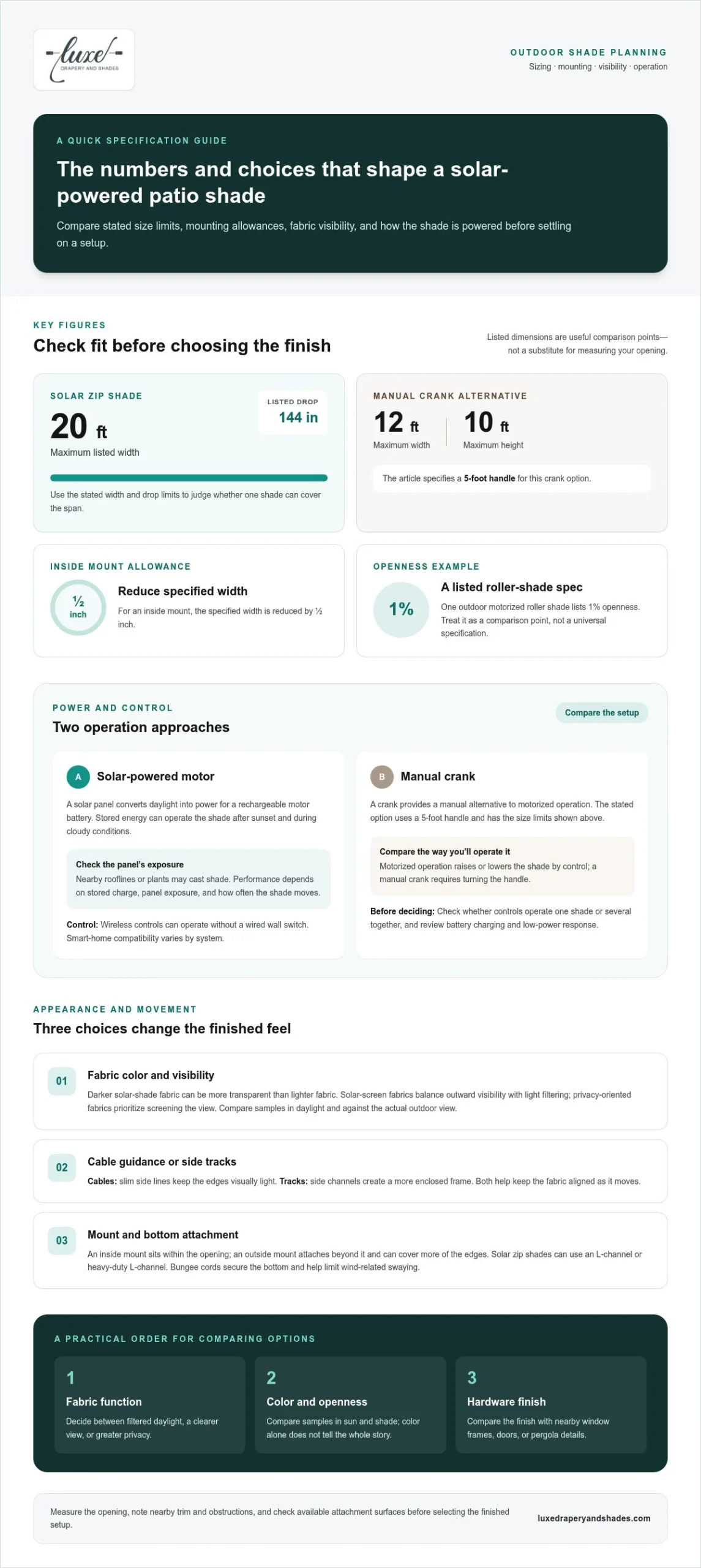
A motor raises or lowers the shade, replacing repeated manual pulling with button-controlled operation. Wireless controls send commands without a wired wall switch, keeping the patio setup visually streamlined. Compare the control method and whether it operates one shade or several together. For a manual alternative, a crank with a 5-foot handle has defined size limits: up to 12 feet wide and 10 feet high.
Rechargeable Solar-Panel Operation
A solar panel converts daylight into power for a rechargeable motor battery. The battery stores energy for operation after sunset and during cloudy conditions, when the panel receives less direct sunlight. Performance depends on the stored charge, panel exposure, and how often the shade moves. Consider the panel’s position relative to the sun and nearby rooflines or plants that could cast shade on it—clean energy and electrical specialists like Brighter Sparks Electrical Pty Ltd similarly emphasize proper solar orientation to keep battery-backed systems performing reliably.
Motor, Battery, and Smart-Home Controls
Compare motor operation, battery charging, and the controls provided with the system. Look for clear information about remote operation and charging, and how the shade responds when power is low. Smart-home compatibility varies by system, so distinguish it from basic wireless remote control rather than assuming every motor connects to a home platform.
For wind, weather, and fire safety, compare the product’s stated performance ratings and material classification with your patio conditions. Permitting rules and HOA requirements vary by location. Consider structural approval and appearance restrictions separately before installation.
Shade fabric and hardware color choices
Start with your patio’s main need: filtered daylight, a clearer view, or greater privacy. Then compare fabric color, openness, and guidance. For example, pale fabric can create a softer visual presence, while darker fabric may provide a clearer view outward.
Fabric color doesn’t tell the whole story. Dark-colored solar shade fabric is more transparent than light-colored fabric, so compare swatches against the actual outdoor view. A listed outdoor motorized roller shade specifies 1% openness. Use that figure as a comparison point, then consider how much visibility and light control you want at the patio’s brightest time of day.
The guidance system also affects the shade’s appearance and movement. Cable-guided fabric moves alongside slim side cables, while track-guided fabric runs inside side channels. Consider the surrounding architecture: cables can keep the edges visually light, while tracks create a more enclosed frame. Both help keep the fabric aligned as it moves, so consider the patio’s exposure and the look you want.
To make an “easy shade” choice, narrow your options in this order: fabric function, color, then hardware finish. Solar-screen fabrics balance outward visibility with light filtering, while privacy-oriented fabrics prioritize screening the view. Those labels alone don’t tell you exactly how a fabric will look, so compare its openness and appearance in daylight. Match the hardware color to nearby window frames, doors, or pergola details for a cohesive finish.
Before choosing, view fabric samples beside the patio’s trim and note how each color reads in direct sun and shade. Then compare cable or track guidance with the setting and desired visual weight. Explore fabric and hardware choices as you refine the look and light control for your outdoor space.
Shade hardware and mounting options
Mounting affects fit, coverage, and how the hardware meets the patio’s architecture. Consider the opening, available attachment surfaces, and the level of UV protection you want.
Custom Sizing and Mount Options
Measure the opening and note nearby trim, posts, and obstructions before choosing a shade size. A solar zip shade can be up to 20 feet wide, with listed drop heights extending to 144 inches. Those limits help you assess whether one shade can cover the span or whether the layout needs another approach. Choose mounting hardware to suit the structure and the desired finished profile.
Inside and Outside Mounting
An inside mount sits within the opening, giving the shade a contained appearance. For this option, the specified width is reduced by 1/2 inch. An outside mount attaches beyond the opening and can cover more of its edges. Compare the available mounting surface and nearby trim, then consider how the shade will sit beside doors, posts, or other patio features.
Mounting Methods
Mounting hardware connects the shade to its support surface, so the attachment method needs to suit the location. The solar zip shade can use an L-channel or heavy-duty L-channel. Bungee cords secure the bottom and help limit wind-related swaying. Consider how exposed the patio is and whether the bottom attachment will be clear of furniture and foot traffic.
Consider daily use, too. A remote is easier to operate when the shade and seating layout leave a clear line of access. Before choosing a mount, compare the measured opening with the coverage you want and the structure’s available attachment points. Planning ahead helps the shade feel integrated rather than added as an afterthought.
Solar-powered patio shade systems
A complete system pairs an outdoor shade with a motor, solar panel, and controls. In Los Angeles, choose a setup based on your patio’s sun exposure, coverage needs, and preferred way to operate it.
Benefits Compared With Interior Shades
Exterior shades intercept sunlight before it reaches patio doors or windows, while interior shades manage light after it enters. This can help reduce direct sun on an outdoor seating area and glare at nearby glass. Decide where you need shade: outside for patio comfort, inside for room-side light control, or both for separate needs.
A solar-powered patio system also lets you adjust coverage in an open-air space. For example, a zip shade can screen the side of a patio and be raised when the sunlight shifts. Consider the opening, surrounding structure, and how you use the space throughout the day.
Cleaning and Maintenance
Keep fabric and hardware free of loose dirt so debris doesn’t collect along the edges or guides. Brush off surface dust, then clean marks with a soft cloth and mild soap solution. Rinse gently and let the fabric dry fully before retracting it. Avoid abrasive brushes that could damage the fabric or finish.
Include the panel, wiring, and moving parts in routine care. Clear leaves from the panel, check that guides are unobstructed, and operate the shade to notice changes in its movement. Follow the care directions provided for the specific fabric and motor.
A solar-powered patio shade system can be configured for substantial openings, with listed widths up to 20 feet and drop heights up to 144 inches. Those dimensions make it useful to assess the full span, shade direction, and attachment points together. A clear plan helps match the system to the structure rather than treating the motor and fabric as separate choices.
In Los Angeles, look for a local installer who can size the shade, coordinate its mounting, and integrate the solar-powered motor. Compare the proposed system’s coverage and operating method with your patio’s layout, then plan an outdoor shade solution that suits the space.
Luxe Drapery and Shades: Custom Drapery
Luxe Drapery and Shades helps connect outdoor shade with adjoining interiors through Custom Drapery. If patio sunlight also affects your rooms, custom window treatments can complement the outdoor setup and shape the light and atmosphere inside.
Choose Roller Shades for a clean, tailored profile, Roman Shades for soft folds, or Honeycomb / Cellular Shades for a structured look. Coordinating fabrics and finishes across patio doors and nearby windows can make the transition feel intentional without making every treatment identical.
If you’re updating the interior alongside an outdoor project, these options are a natural next step. Contact Luxe Drapery and Shades to explore Custom Drapery and complementary window treatments for your home.
Shape an Outdoor Space You’ll Love to Use
Think beyond shade alone. An inviting outdoor setting can feel like a natural extension of your home, with comfort, privacy, and visual harmony guiding each choice. Consider how you want the patio to feel at different times of day and how its finishes can connect with the rooms inside.
Solar powered exterior shades can support a considered home design. Luxe Drapery and Shades offers Custom Drapery, Roller Shades, and Roman Shades to help create a cohesive atmosphere across adjoining spaces. Choose details that suit your routines and personal style, and bring the overall design together.
Contact Luxe Drapery and Shades to explore window treatments for your home. A thoughtful design can make everyday moments outdoors feel even more inviting.
Frequently Asked Questions
Why Upgrade to Smart Outdoor Shades?
Smart outdoor shades make it easier to adjust coverage as sunlight shifts, without walking to each shade. Compatible systems can operate by remote, touch, voice command, or smart device. For example, you can lower a motorized shade before afternoon glare reaches the patio seating area, then raise it when the space is no longer in use.
How do solar-powered exterior shades work?
Solar-powered exterior shades use a panel to convert daylight into energy for a motor that moves the fabric when you send a command. In rechargeable designs, a battery stores energy for later use. Panel placement and exposure affect charging, while stored energy supports operation when direct sunlight isn’t reaching the panel. The motor and control method determine how the shade moves.
What types of solar-powered exterior shades are available for homes?
Common formats include motorized exterior roller shades and zip screens. Solar power describes how the motor receives energy, not the shade’s shape or fabric. Compare how each format fits the opening, whether side guidance is useful, and how much of the patio edge you want covered. A roller-style shade has a different look from a zip screen.
How much can exterior shades reduce heat gain and energy bills?
There is no single energy-bill reduction that applies to every home. Exterior fabric intercepts sunlight before it reaches the glass, and the effect depends on window orientation, glazing, fabric openness, shade coverage, and how often the home uses cooling. For balanced indoor comfort, pairing shading strategies with quality HVAC maintenance from professionals like Ultra Air Heating and Cooling can further optimize household efficiency. To assess any impact on energy use, compare utility consumption during similar weather periods and account for changes in thermostat settings and household routines.
How do you measure for and install exterior solar shades?
Measure the opening’s width and height, note whether the shade will sit inside or outside it, and record nearby trim, posts, and other obstructions. Check that the mounting surface can support the chosen hardware and that the fabric can move without hitting furniture or doors. In Los Angeles, Luxe Drapery and Shades can coordinate measurements, product selection, and installation for outdoor shades.
What wind, weather, and fire-safety ratings should exterior shades have?
Compare the product’s stated wind and weather performance ratings and fire-safety material classification with your patio conditions.