

What if the cleanest-looking shade pocket is also the easiest detail to overlook during planning? Seamless recessed shade pockets design can make a window treatment feel integrated with the architecture, but concealment alone is not enough. The pocket must suit the selected shade and motor, allow the system to operate, provide practical access for maintenance, and align with the ceiling, wiring, and finish details. These decisions are easier to coordinate before framing and drywall make changes more complex.
If you’re unsure how much space your system needs or when to involve a shade specialist, planning ahead can clarify the next steps. This guide explains how shade hardware and fabric affect pocket dimensions, what to confirm before construction advances, and how to plan for motorization and access. For Los Angeles homeowners and project teams, early coordination can connect the design vision with the requirements of the chosen shade system.
Key Takeaways
- Understand how a recessed pocket creates a cleaner transition between ceiling and window covering.
- See why the selected shade, fabric roll, brackets, and motor determine the clearance the pocket needs.
- Compare recessed pockets with fascia and exposed installations to weigh appearance, construction coordination, and access.
- Use a pre-construction checklist to coordinate shade selection, drawings, power planning, and finishes before work progresses.
- Explore how seamless recessed shade pockets design can bring architecture and function together in a Los Angeles project.
What Makes a Recessed Shade Pocket Look Seamless?
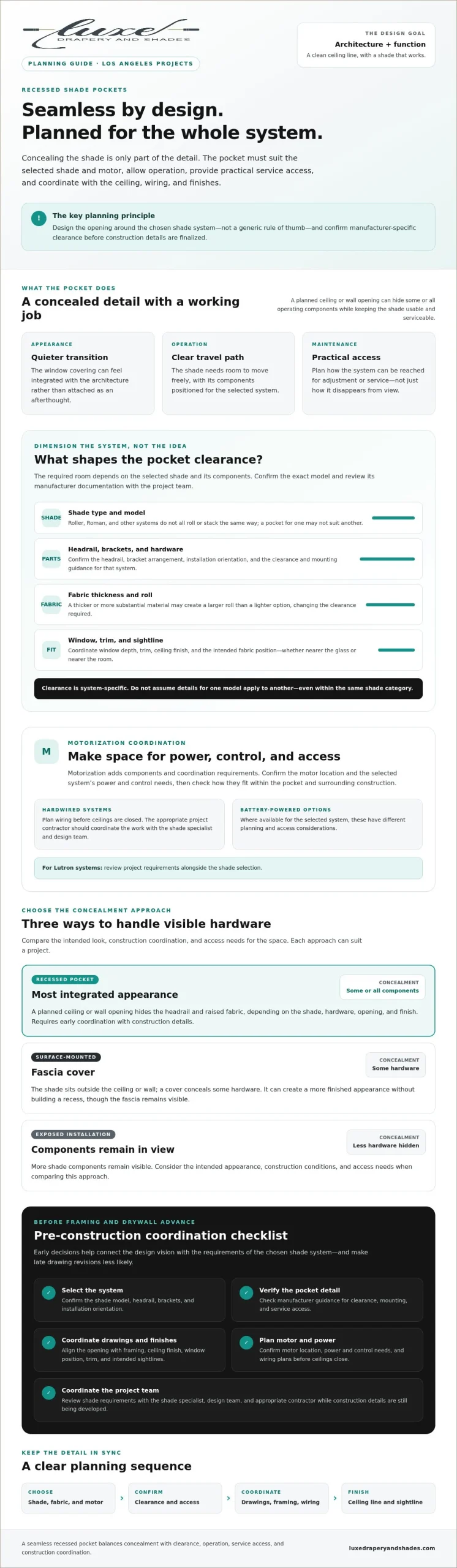
A recessed shade pocket is an opening planned in a ceiling or wall to conceal some or all of a shade’s operating components. The goal is a quiet visual transition: the window covering feels integrated with the architecture rather than attached as an afterthought. A window covering can refer to different types of shades and blinds, and each has its own hardware and installation requirements. A pocket designed for one system may not suit another.
Seamless recessed shade pockets design balances concealment with function. The shade needs to move freely, and its components may need to remain reachable for adjustment or service. The opening’s position, visible edges, and finish also affect how the detail looks from inside the room. Even a well-hidden headrail can seem out of place if the recess is misaligned with the window or interrupts the ceiling line.
What does a recessed shade pocket conceal?
When a shade is raised, a purpose-built recess can hide its headrail and rolled or folded fabric. The result depends on the shade type, hardware, opening, and finish. Roller shades, Roman shades, and other systems don’t all roll or stack in the same way, so confirm the pocket’s size and configuration for the selected system.
A surface-mounted shade with a fascia takes a different approach. The shade sits outside the ceiling or wall, while a cover conceals some of its hardware. This can create a more finished appearance without building a recess, although the fascia remains visible. An exposed installation leaves more components in view. Each approach can suit a space; compare the intended look, construction conditions, and access needs before choosing.
Why plan the pocket before construction is complete?
A recessed shade pocket is an architectural opening planned to conceal shade hardware while preserving the clearance and access the chosen system needs. It is easiest to get that balance right while the ceiling framing and finish details are still being developed.
The pocket’s placement affects the ceiling opening, the shade’s position relative to the glass, and the finished sightline. Framing and finished surfaces, in turn, determine how much room is available and how cleanly the recess can meet the surrounding ceiling. If shade selection or pocket details come late, drawings may need revision and the project team may need to coordinate additional changes. Confirm the intended shade system and its manufacturer-specific clearance requirements before finalizing construction details. Early coordination helps the recess look deliberate while keeping the shade practical to use.
How Shade Hardware, Fabric, and Motorization Shape Pocket Design
Draw the pocket around the shade system you plan to install, not a generic rule of thumb. The headrail, brackets, fabric roll, and operating components all affect the room the shade needs to travel and function. Fabric matters, too: a thicker or more substantial material may create a larger roll than a lighter option, changing the clearance needed inside the recess.
Getting those details right supports both appearance and performance. Integrated shading can contribute to sustainable building design, but the selected shade still needs to sit in the intended position and operate without interference. Confirm final pocket dimensions against the chosen system’s manufacturer documentation and review them with the project team.
What should be checked before setting pocket dimensions?
Confirm the exact shade model, headrail, bracket arrangement, and installation orientation. Then review the manufacturer’s guidance for clearance, mounting, and service access. Don’t assume that details for one model apply to another, even within the same shade category.
Coordinate the shade with the window depth, trim, ceiling finish, and desired fabric position. For example, a shade mounted closer to the glass will relate differently to the trim and sightlines than one positioned nearer the room. These choices affect the opening and the fabric’s position when the shade is lowered.
How does motorization affect a concealed shade?
Motorization adds components and coordination requirements. Confirm the motor’s location and the selected system’s power and control needs, then determine how those details fit within the pocket and surrounding construction. Hardwired systems require wiring plans before ceilings are closed. The appropriate project contractor should coordinate that work with the shade specialist and design team. Battery-powered options, where available for the selected system, have different planning and access considerations.
For Lutron systems, review project requirements alongside the shade selection. This guide to Lutron Sivoia motorized shades offers more context on motorized shade planning. Keep maintenance in view, too: concealment should not prevent access to components that may need attention.
Before framing or finishing is finalized, have the shade professional and relevant project team confirm the system, pocket detail, power approach, finish relationship, and service access together. In Los Angeles, Luxe Drapery and Shades can help coordinate custom and motorized shade selection with the chosen system’s requirements. That review helps make seamless recessed shade pockets design a coordinated detail rather than a dimension guessed too early.
Recessed Shade Pocket vs. Fascia: Which Concealment Approach Fits?
Shade hardware can be concealed in more than one way. A recessed pocket places the shade within a ceiling or wall opening, a fascia covers components on a surface-mounted shade, and an exposed installation leaves the hardware visible. Each approach creates a different relationship between the window treatment and the room’s architecture. Choose by weighing the desired appearance, existing conditions, construction scope, and requirements of the selected shade system.
When is a recessed pocket the stronger design choice?
A recessed pocket can suit a project where a restrained ceiling line and less visible shade hardware are priorities. It is often easier to coordinate during new construction or a planned renovation, when the opening can be included in construction details. The shade itself will not disappear: the fabric remains visible when lowered, and the pocket’s edges may be noticeable from some sightlines.
The finished effect depends on a verified system fit and careful finishing. If the opening is misaligned or the shade components don’t fit as intended, the pocket can draw attention instead of blending into the architecture. Have the shade professional and project team confirm both the system requirements and the finished detail before construction advances.
When might a fascia or surface-mounted shade be more practical?
If the ceiling is finished and opening it isn’t part of the project scope, a surface-mounted shade may be a better fit. A fascia can cover some operating components without the construction coordination involved in creating a full recess. Because the cover remains visible, consider whether its profile and placement work with the window and interior.
An exposed installation offers a simpler treatment, with hardware intentionally left in view. This can suit a room where visible hardware complements the design or where access and existing conditions take priority over concealment. It may also avoid adding a pocket detail to a completed ceiling.
Use these considerations to compare options for your space:
- Appearance: A pocket minimizes visible hardware; a fascia covers it with a visible element; an exposed installation makes it part of the look.
- Construction: A pocket requires coordination with framing and finishes. Fascia and exposed options may suit projects without ceiling modifications, subject to system requirements.
- Access: Consider how the shade’s components can be reached for service or adjustment, whichever approach you choose.
- Suitability: Window placement, ceiling conditions, shade type, and manufacturer requirements all matter.
Seamless recessed shade pockets design can be a refined solution, but it isn’t right for every project. Compare the alternatives against the architecture and chosen system, then select the detail that delivers the intended look without compromising practical use.
Plan a Recessed Shade Pocket: A Pre-Construction Checklist
A clear sequence helps homeowners and design teams resolve key details before a ceiling is closed. The goal is not just to reserve an opening, but to coordinate the shade, architecture, power, finishes, and access as one considered detail.
- Define the design intent. Decide how much hardware you want to conceal, where the shade should sit in relation to the window, and how the opening should meet the ceiling or wall.
- Select the shade and operating method. Identify the shade category and whether it will be manual or motorized. The selected system determines which headrail, brackets, and operating components need to fit within the pocket.
- Verify system requirements. Ask a shade professional to review the manufacturer’s documentation for pocket clearance, mounting, installation orientation, and service access. Don’t finalize dimensions using a generic detail.
- Review site conditions and drawings. Check window depth, trim, ceiling construction, and the shade’s intended position. Have the designer, shade professional, and relevant construction trades review the plans together and identify possible conflicts, such as framing or other planned services.
- Coordinate power and controls. For a motorized shade, confirm the selected system’s power and control requirements with the shade professional and relevant electrical contractor. Resolve wiring and control locations before ceilings are closed.
- Confirm finishes and access. Agree how the pocket edges will be finished and how the shade can be installed, adjusted, and reached for future service. Record the coordinated details in the project documents before work proceeds.
Before the ceiling is closed, confirm the shade model, verified pocket dimensions, mounting and service access, power and control plan, and finish detail with the project team. This is the practical foundation of seamless recessed shade pockets design: a polished appearance that still accommodates the selected system.
Can an existing room accommodate a recessed pocket?
Possibly, but feasibility depends on the existing ceiling, available construction depth, and conditions around the window. A site assessment can help establish what is there and whether the proposed recess can fit. Don’t assume retrofit work will be straightforward. If conditions are restrictive, compare a surface-mounted shade with fascia or another suitable concealment approach before committing to ceiling changes.
For a Los Angeles project, involve a shade professional while the design is still flexible. Discuss shade planning for your project to help align the selected system with the pocket details and installation sequence.
Bring a Seamless Shade Pocket Design Together in Los Angeles
A refined pocket comes from coordinated decisions, not concealment alone. Consider design intent, verified hardware requirements, motorization needs, and future service access together so the shade fits the architecture and remains practical to use. In Los Angeles, Luxe Drapery and Shades helps residential and commercial clients select custom roller and motorized shades and provides professional installation. Whether a recessed pocket is suitable depends on the specific shade system and project conditions.
Share your window details, ceiling conditions, preferred shade, and project stage with a shade professional. That conversation can help identify what to confirm with the design and construction team before work progresses.
What to bring to a shade-pocket consultation
Useful project details help the shade professional assess the design and its constraints. Bring what’s available, even if some selections are still in progress:
- Drawings and window details: Include window dimensions, trim information, and plans showing the ceiling and nearby construction.
- Ceiling information: Share what’s known about the ceiling construction and whether the room is unfinished, being renovated, or already complete.
- Design and function preferences: Describe desired light control and privacy, the appearance you want from the shade, and whether you prefer manual or motorized operation.
- Project stage: Identify whether this is new construction, a renovation, or an existing room. The stage helps the team understand which details may still be coordinated.
These details don’t replace confirmation of the selected system’s manufacturer requirements. They make that review more focused, including questions about pocket fit, installation access, power planning, and the shade’s position relative to the window.
Coordinate the shade with the wider interior
A shade pocket is one detail within a finished room. Consider how fabric tone and texture, shade placement, and visible edges relate to the window trim and any adjacent drapery. If you’re considering a layered treatment, plan the shade and drapery together so their functions and proportions complement one another. The guide to custom drapery in Los Angeles offers further perspective on bespoke window treatments.
With seamless recessed shade pockets design, a considered result comes from matching the architectural detail to the specific shade, rather than assuming every system or room can use the same solution. Explore custom shade solutions and discuss the window, ceiling conditions, preferred shade, and stage of your Los Angeles project.
Bring the Window and Architecture Into Harmony
A successful recessed shade pocket involves more than hiding hardware. Its dimensions should follow the selected shade system, while the finish, motorization plan, and service access are coordinated with the room. If a recess doesn’t suit the existing ceiling or project scope, a fascia or exposed installation may be more appropriate.
Thoughtful seamless recessed shade pockets design starts with early decisions: clarify the desired look, confirm manufacturer requirements, and review the pocket detail with the project team before construction advances. These steps help balance a clean architectural finish with practical everyday operation.
Luxe Drapery and Shades serves residential and commercial projects in Los Angeles, providing custom interior shading and professional installation, with a focus on motorized shades and Lutron lighting-control integration. Before engaging an installation contractor, confirm current license details and verify the chosen shade system’s requirements for your project.
Explore custom shade solutions and take the next step toward a window treatment that feels considered, functional, and at home in your space.
Frequently Asked Questions
What is a recessed shade pocket?
A recessed shade pocket is an opening planned in a ceiling or wall to conceal some or all of a shade’s operating components. It can hide the headrail and, when raised, the rolled or folded fabric, creating a more integrated appearance. The result depends on the shade system, pocket opening, and finish details. The recess still needs enough room for the shade to operate and for components to be reached when needed.
How deep should a recessed shade pocket be?
There isn’t one depth that works for every shade pocket. Required dimensions depend on the selected shade model, headrail, brackets, fabric roll, operating components, and installation orientation. For seamless recessed shade pockets design, confirm the manufacturer’s clearance and mounting requirements before drawings or framing are finalized. A shade professional should review the system alongside window depth, trim, ceiling construction, and the intended fabric position, then confirm final dimensions with the project team.
Can motorized shades be installed in a recessed pocket?
Yes, motorized shades can be installed in a recessed pocket if the chosen system fits the planned opening and the project accounts for its motor and operating requirements. Confirm motor placement, manufacturer clearances, service access, and power and control needs with the shade professional. For a hardwired system, coordinate wiring with the relevant contractor before the ceiling is closed. Requirements vary by system, so verify them rather than relying on a generic pocket detail.
Are recessed shade pockets suitable for existing homes?
They may be suitable, but feasibility depends on the existing ceiling construction, available depth, and conditions around the window. A site assessment can help determine whether a recess is practical and what construction coordination it may involve. Don’t assume a finished ceiling can accommodate a pocket without modification. If conditions are restrictive, compare a surface-mounted shade with fascia or another suitable approach. In Los Angeles, have the shade system and site conditions reviewed together before choosing a solution.
What is the difference between a recessed shade pocket and a fascia?
A recessed shade pocket is built into a ceiling or wall, placing shade components within an opening. A fascia is a cover mounted with a surface-mounted shade to conceal some of its hardware, so the cover remains visible rather than forming part of a recess. A pocket may suit a project seeking a restrained ceiling line, while fascia can be considered when opening a finished ceiling isn’t planned. Fit, access, and appearance matter for both.
When should I plan a recessed shade pocket?
Plan the pocket while the design and construction details are still being developed, ideally before framing and ceiling finishes are finalized. First identify the shade category and operating method, then confirm the selected system’s pocket, clearance, power, and access requirements. Have the shade professional review drawings with the designer and relevant trades. For a Los Angeles new build or renovation, early coordination helps connect the intended appearance to the actual window and ceiling conditions.