

The most adaptable pergola roof isn’t automatically the best value. The cost of a retractable pergola roof in Los Angeles depends on the roof style, its dimensions, motorization, and installation requirements; fabric, louvered, and fixed designs each involve different trade-offs. For a clear comparison, weigh how you want the roof to respond to sun, changing weather, and everyday use, not just its initial complexity.
It’s natural to want generous shade without losing the open-air feeling that makes an outdoor space special. This guide compares fabric, louvered, and fixed pergola roofs for Los Angeles conditions and explains what affects retractable pergola roof cost in Los Angeles. You’ll also find practical considerations for choosing a roof that brings comfort and visual coherence to your patio.
Key Takeaways
- Choose a roof style by deciding whether adjustable coverage, open-air flexibility, or permanent shade matters most for your patio.
- Compare fabric, louvered, and fixed designs with both installation complexity and long-term upkeep in mind.
- Account for Los Angeles sun, wind, and seasonal rain when considering how a pergola roof will perform outdoors.
- Plan for dimensions, lighting, screens, and finish choices early, since each can shape the project scope and overall cost.
Which Pergola Roof Is Best for Los Angeles?
For Los Angeles patios, fabric canopies offer retractable shade, while louvered roofs adjust overhead coverage. Retractable pergola roof cost in Los Angeles depends on the roof type, dimensions, and installation scope. Choose by balancing everyday comfort, the structure’s design, and the level of control you want.
Manual and Motorized Roof Pricing
A manual canopy operates by hand; motorization adds a powered mechanism and electrical planning. Motorized louvered roofs also have adjustable components, making their systems more complex than fabric covers. To compare retractable pergola roof costs in Los Angeles, consider the materials, roof mechanism, electrical work, screens, and finishes together. The project’s specific requirements determine the price, which is provided after a quote request.
Fabric and aluminum systems can both offer value, depending on your priorities for durability, appearance, and adjustability. Rather than relying on a brand name alone, compare the system’s materials and specifications with how you plan to use the patio. Smart-home controls add equipment and setup to consider.
Permits and Local Rules
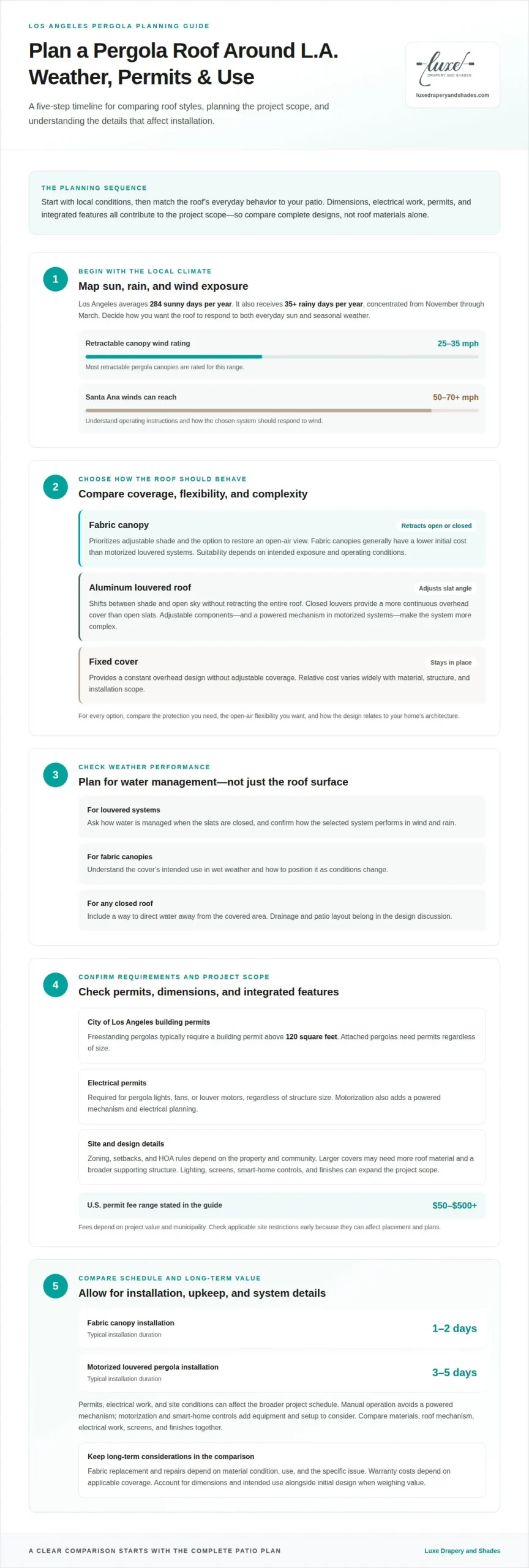
In the City of Los Angeles, freestanding pergolas typically require a building permit above 120 square feet; attached pergolas need permits regardless of size. Electrical permits are required for pergola lights, fans, or louver motors, regardless of structure size. Permit fees in the United States range from $50 to $500+, depending on project value and municipality.
Zoning, setbacks, and HOA rules depend on the property and community. These requirements can affect the structure’s placement and project plans, so account for applicable site restrictions early.
Fabric replacement and repairs depend on the material’s condition, how it is used, and the specific issue. Warranty costs depend on the applicable coverage. Consider these factors alongside the initial design when weighing long-term value.
Installation typically takes 1-2 days for fabric canopies and 3-5 days for motorized louvered pergolas. Permits, electrical work, and site conditions can affect the broader project schedule.
Fabric roof versus louvered and fixed covers
Fabric, aluminum louvers, and fixed covers differ in how they manage shade and in their installation complexity. A retractable fabric canopy opens or closes across the patio, while a motorized louvered roof adjusts the angle of its slats. A fixed cover stays in place, offering a simpler experience without adjustable overhead coverage.
Fabric canopies generally have a lower initial cost than motorized louvered systems. Louvered designs cost more because they use adjustable components and, when motorized, require a powered mechanism. A fixed patio cover can vary widely by material and structure, so its relative cost depends on the design and installation scope.
Fabric suits homeowners who want overhead protection that can retract to restore an open view. Its moving canopy’s suitability depends on the intended exposure and operating conditions. By contrast, a motorized louvered roof changes the angle of its aluminum slats, allowing the space to shift between shade and open sky without retracting the entire roof.
Closed louvers provide a more continuous overhead cover than open slats, while a fabric canopy creates shade when extended. Neither design is the same as a fixed, solid roof. Compare how much protection your patio needs, whether adjustable coverage matters, and how the roof will relate to your home’s architecture.
Sizing affects both the system and the work required to install it. A larger patio cover needs more roof material and may require a broader supporting structure; a compact outdoor dining area has different needs from a generous entertaining space. Integrated lighting or a screen can also expand the project scope, so compare complete designs rather than roof components alone.
For a refined result, weigh open-air flexibility, dependable shade, and visual continuity with your home. Fabric prioritizes retractability, aluminum louvers offer adjustable coverage, and fixed covers keep the overhead design constant. Comparing these everyday differences alongside dimensions and integrated features helps clarify which system suits your Los Angeles patio.
Pergola roof options for Los Angeles weather
Los Angeles averages 284 sunny days per year, making shade an important part of outdoor comfort. But a backyard roof also needs to suit seasonal weather: the city receives 35+ rainy days per year, concentrated from November through March. A fabric canopy can retract when you want an open-air view, while an adjustable roof changes the balance between sun and shade. Consider how each option supports everyday outdoor living, not just midday sun protection.
Wind exposure matters, too. Most retractable pergola canopies are rated for wind speeds of 25-35 mph, while Santa Ana winds can reach 50-70+ mph. That difference makes operating instructions and wind response important considerations for a fabric roof. A motorized louvered pergola uses adjustable slats, but its performance in wind and rain depends on the system’s design and installation.
Rain protection requires more than a roof surface. A closed roof needs a way to direct water away from the covered area, so drainage and patio layout belong in the design discussion. For louvered systems, ask how water is managed when the slats are closed. For fabric, understand the cover’s intended use in wet weather and how to position it as conditions change.
Smart controls and weather sensors can help coordinate operation, but their functions depend on the equipment selected. A sensor-based setup may be configured to respond to weather conditions; clarify its control logic and compatibility with the roof system. Account for integrated lighting separately, since outdoor illumination affects the electrical plan and how the space serves evening gatherings.
Fixed panels offer a different kind of protection. Solid insulated pergola roof panels are estimated to reduce temperatures beneath a pergola by 10-15°F, while most polycarbonate panels block 99% or more of harmful UV rays. Lower-grade polycarbonate may yellow and become brittle after 5-10 years of UV exposure. Compare shade, rain management, upkeep, and lighting needs before choosing a roof for Los Angeles weather.
Cost factors such as size, lighting, screens, and custom finishes
Start with the structure’s footprint: a 14-by-20-foot outdoor space requires a different design scope from a compact patio. More covered area affects the roof span, supporting structure, and installation planning. A louvered roof also has moving components across its coverage, so dimensions influence the system selected. The project price depends on the case and is provided after a quote request, with size, roof type, and installation scope shaping the estimate.
Next, decide how the outdoor living area should function after sunset. Integrated LED strips or downlights add electrical planning and need to coordinate with the pergola layout. A lighting control system can align illumination with the wider home environment, while fixture placement affects how the covered space feels. Set lighting goals early, such as softly illuminating a dining area rather than brightly lighting the entire patio.
Screens change the enclosure and comfort of an outdoor space. Motorized screens can be added along one or more sides, each with its own design and installation requirements. Zip screens can create a more finished perimeter. Consider which openings need screening, how screens relate to doors and seating, and whether the louvered roof and screen controls should work together.
Custom finishes also shape a structure’s appearance. A powder-coat color beyond standard finishes requires a tailored specification, and color selection can connect the pergola to nearby trim, window frames, or outdoor furnishings. For example, coordinating the finish with dark window frames can create a cohesive transition from indoors to outdoors. Include these selections with the roof, screens, and lighting in the project plan, rather than leaving them as afterthoughts.
To shape a pergola around your patio’s dimensions, lighting, and screening needs, explore custom outdoor shading options as part of your design planning.
Premium motorized aluminum pergolas with lighting and screens, 14 by 20 feet or larger, cost 30,000 – 45,000+ installed in Los Angeles.
Material-only aluminum pergola pricing is typically 40-50% of installed cost.
Luxe Drapery and Shades: Pergolas
Luxe Drapery and Shades offers pergolas for homeowners shaping an outdoor space around shade, flexibility, and their home’s architecture. After comparing fabric, louvered, and fixed roof options, narrow your choice to the coverage and appearance that suit your patio. Consider how you use the space, whether adjustable shade matters, and how the pergola will complement your home.
A considered design can connect outdoor living with interior style. Custom Drapery, Roller Shades, and Roman Shades offer ways to carry a cohesive aesthetic indoors, while a pergola defines the patio’s comfort and character. Bring your preferred roof type, approximate dimensions, and priorities for shade or openness into the conversation.
Contact Luxe Drapery and Shades to explore pergolas for your home.
Shape an Outdoor Space That Feels Like Home
A tailored approach to retractable pergola roof cost in Los Angeles starts with how you want to live outdoors. Consider what the space should support, from quiet mornings to relaxed evenings with friends. That vision can guide decisions about shade, openness, and how the pergola relates to your home, giving the project a clear design direction before details are finalized.
The transition between indoors and out can feel especially considered when surrounding rooms share a complementary style. Custom Drapery, Roller Shades, and Roman Shades offer ways to carry a cohesive visual language beyond the patio. Luxe Drapery and Shades can help you explore pergolas alongside these interior treatments, with choices shaped around your home and priorities.
Contact Luxe Drapery and Shades to begin shaping an outdoor setting that feels distinctly yours.
Frequently Asked Questions
Can I add side screens?
Yes, zip screens can complement a pergola and create a more enclosed feeling on a Los Angeles patio. They can help define a dining or seating area while preserving a coordinated outdoor design. Consider which sides need screening and how you’ll use the openings, such as keeping a clear passage between the patio and home.
Can it be motorized?
Yes, pergola roof systems are available with motorized operation, including louvered designs. Decide how you want to control the roof and plan for its power requirements as part of the project. Pergola roof automation is distinct from motorized shades, so consider the controls and operation of each system separately.