

The most private glass office isn’t necessarily the one that feels most closed off. Full-height coverage can block sightlines, but it can also reduce the daylight and openness that made glass appealing in the first place.
That balance matters when meeting rooms, private offices, and shared spaces each call for a different degree of discretion. The right privacy solutions for glass wall offices respond to how each room is used while keeping the workplace bright and visually cohesive.
This guide compares custom shades and drapery with privacy film and switchable glass, explaining where each approach may fit and what to consider when weighing flexibility, light, and appearance. You’ll also see how tailored roller shades, drapery, and motorized operation can make privacy easier to adjust as a room’s needs change. With a considered plan, glass partitions can offer discretion when it’s needed without diminishing the office’s open character.
Key Takeaways
- Separate visual privacy from sound control, screen security, and room separation before choosing a treatment.
- Match privacy solutions for glass wall offices to each room’s purpose, from meeting spaces to shared work areas.
- Compare shades, drapery, film, and switchable glass by adjustability, daylight, and the visual effect you want.
- Consider how Los Angeles daylight and changing sun exposure affect sightlines and treatment choices throughout the workplace.
- Plan operation and finish alongside privacy needs so custom roller shades or drapery feel integrated with the office design.
Privacy Solutions for Glass Wall Offices: Start With the Room’s Needs
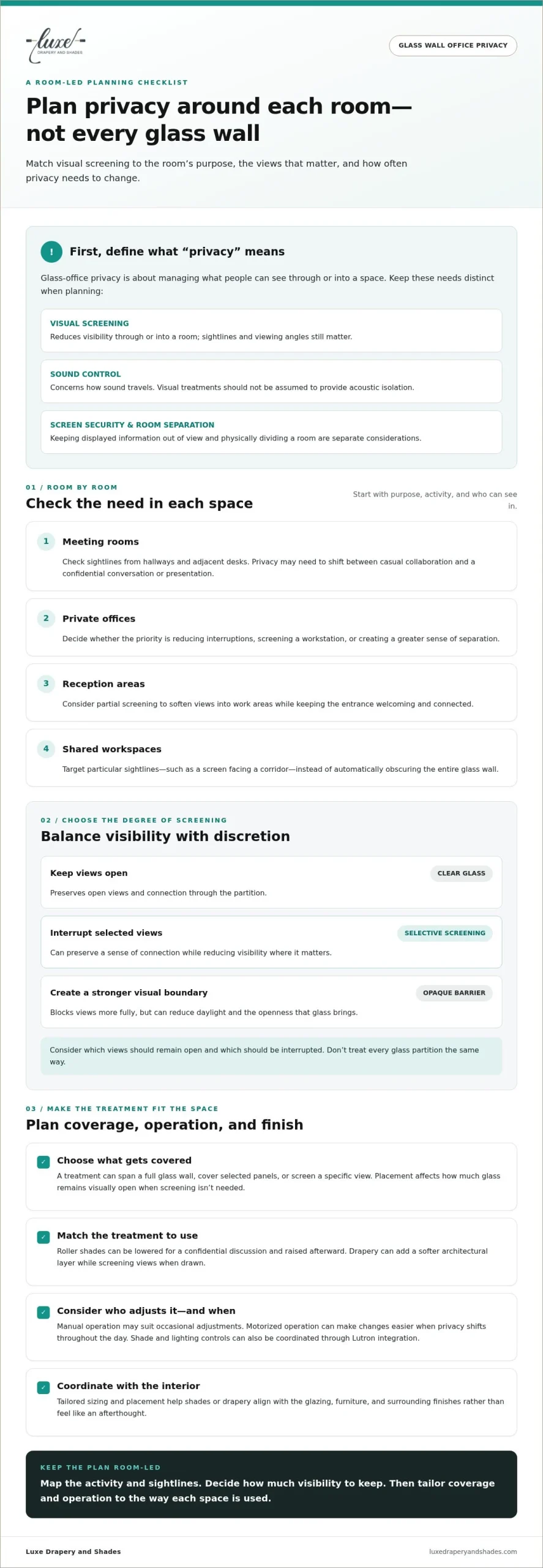
The best privacy solutions for glass wall offices begin with a practical question: what needs to be private, and from whom? A treatment that screens a passing glance may be enough for a shared workspace, while a confidential meeting calls for more deliberate visual discretion. Start with each room’s purpose, then decide how to preserve useful daylight and openness without treating every glass partition the same way.
Glass-office privacy means managing what people can see through or into a space. It isn’t the same as acoustic isolation, which concerns how sound travels, or screen security, which focuses on keeping displayed information out of view. Visual screening also doesn’t physically divide a room. These goals may overlap, but each requires its own consideration.
What kind of privacy does each glass-walled room need?
Map the need by room and activity. Consider where people approach from, what they can see through the glass, and whether the space changes use during the day. A conference room, for instance, may feel open between meetings but need stronger visual screening during a confidential discussion or presentation.
- Meeting rooms: Identify sightlines from hallways and adjacent desks, then consider how privacy needs shift between casual collaboration and sensitive conversations.
- Private offices: Decide whether the priority is reducing interruptions, screening a workstation, or creating a greater sense of separation.
- Reception areas: Partial screening can soften views into work areas while keeping the entrance welcoming and connected.
- Shared workspaces: Target specific sightlines, such as a screen facing a corridor, rather than automatically obscuring the entire glass wall.
Can office privacy treatments preserve daylight and openness?
Yes, but the balance depends on the treatment and the desired level of screening. Clear glass keeps views open, while an opaque barrier blocks them more fully and creates a stronger visual boundary. Adjustable treatments can shift the atmosphere as room use changes, although privacy still depends on viewing angles and conditions.
Think in layers: which views should remain open, and which should be interrupted? In a meeting room, for example, selective screening can preserve a sense of connection outside the room while reducing visibility during a focused discussion. Switchable glass is another approach to consider; Smart glass technology for office privacy provides an overview of glass that changes its light-transmitting properties.
Keep the goals distinct as you plan. Shades and drapery can address visual screening, but they shouldn’t be assumed to solve sound transfer or secure sensitive screen content on their own. A room-led plan considers occupancy, activity, and sightlines together, giving each space an appropriate degree of discretion without making the whole workplace feel closed in.
How Shades and Drapery Create Flexible Privacy Across Glass Walls
Shades and drapery add adjustable visual screening to glass-walled offices without replacing or modifying the partitions. Lower a roller shade when a meeting calls for discretion, then raise it to restore an open view when the room is available for informal collaboration. This lets privacy solutions for glass wall offices respond to daily use while preserving the clarity of the original architecture.
Coverage depends on the glazing layout and the sightlines you want to address. A treatment might span a full glass wall, cover selected panels, or screen a specific view into the room. Tailored sizing and placement help it align with the partition and surrounding interior rather than look like an afterthought. They also determine how much glass remains visually open when screening isn’t needed.
Where can roller shades and drapery support office privacy?
In a conference room with glass facing a corridor, a roller shade can be lowered during a confidential discussion and raised afterward. Drapery offers a softer architectural layer, bringing visual warmth to selected office interiors while screening views when drawn. The right placement depends on the glazing configuration and whether the goal is to cover an entire wall or interrupt particular sightlines. Planning around furniture and room use helps coverage feel deliberate and practical.
How can motorized shades support changing privacy needs?
Manual operation can suit a treatment adjusted occasionally by someone in the room. Motorized operation makes changes easier when privacy shifts throughout the day, such as when a space moves from an open presentation to a focused meeting. For spaces with coordinated shade and lighting control, Lutron integration can bring these functions into a considered system. Lutron home automation systems can be part of planning how controls support the workplace.
Before selecting a treatment, consider who will use it and when. If staff need to adjust coverage as meetings begin and end, convenient operation becomes part of the privacy plan. If a room’s needs are more consistent, the priority may be clean visual alignment with the glass and interior finishes. Custom roller shades and drapery can be coordinated with the scale and character of the space.
Thoughtful design brings function and finish together. A tailored treatment can soften a glass partition without making the office feel closed, while professional installation helps it sit neatly within the workplace. For commercial interiors, custom office shades and drapery can shape privacy around the room rather than impose one approach across every glass wall.
Glass Office Privacy Options Compared: Shades, Film, and Switchable Glass
Each approach shapes a glass office differently. Adjustable window treatments respond to changing room use, while film and switchable glass alter the glazing’s appearance or visibility. Compare options by asking: should coverage change throughout the day, should the treatment become part of the glass itself, and how much daylight and visual connection should remain?
| Option | Adjustability | Visual effect | Daylight | Typical use |
|---|---|---|---|---|
| Custom shades or drapery | Can be opened or closed as needs change; operation may be manual or motorized. | Adds a distinct layer in front of the glass, with finish and placement tailored to the interior. | Changes with coverage and material. | Rooms where visual screening needs to vary by activity or time. |
| Decorative film | Generally a fixed visual treatment. | Changes the glass’s appearance and can soften or obscure views, depending on the film and application. | Depends on the film and how much glass it covers. | Spaces seeking a consistent visual treatment or a decorative element on glazing. |
| Switchable glass | Designed to shift between visual states. | Changes the appearance of the glass rather than adding a separate shade or drape. | Depends on the glazing and its state. | Projects where changing the glass’s visibility is a central design consideration. |
This comparison concerns visual privacy, not sound control. Privacy outcomes depend on the material, coverage, lighting, and viewing angle. No single option should be assumed to block every view in every condition.
When do adjustable window treatments make sense?
Consider shades or drapery when a room alternates between open collaboration and private use. A conference room, for example, may need clear sightlines between meetings and screening during a presentation. Custom sizing and coordinated finishes can help treatments feel integral to the architecture. They manage visibility, but shouldn’t be treated as acoustic insulation or a guarantee against every possible line of sight.
When are film or switchable-glass approaches worth considering?
Decorative film suits a consistent change to the glass’s appearance, while switchable glass offers a way to change its visual state. Both call for attention to coverage, surrounding light, and views from adjoining spaces. If the main concern is sensitive information on screens, consider screen-specific protection separately from general sightline control. A treatment that obscures a room’s interior isn’t automatically designed to shield display content.
The decision isn’t simply shades versus film. Consider where the treatment sits, whether people need to change its coverage, and how it will relate to finishes throughout the workplace. Custom roller shades or drapery can bring adjustable coverage and a cohesive design language; fixed film or altered glass appearance may suit a different brief. Matching the method to the room’s use keeps privacy purposeful without making every glazed surface feel alike.
Plan Glass Wall Office Privacy in Los Angeles: A Practical Checklist
A clear brief makes it easier to compare treatments and coordinate them with the workplace design. For privacy solutions for glass wall offices, move from how each room is used to how a treatment will operate and look. In Los Angeles, include daylight and changing sun exposure in the assessment. A room can look different as the sun shifts, so consider how its glass reads at different times of day.
What should a glass-office privacy brief include?
Begin with the room’s purpose and the moments when privacy matters. Record who uses it, how often occupancy changes, and what needs screening. Then map sightlines from corridors, adjacent work areas, and exterior-facing glazing. Note desired daylight, visual coverage, appearance, and whether privacy should be adjustable. Include screen sensitivity when visibility of displayed information is a central concern.
- 1. Define the room’s use. Note whether the space hosts confidential meetings, focused work, reception, or collaboration, and what changes between uses.
- 2. Map exposed views. Walk the perimeter and observe what is visible from corridors, nearby desks, and outside-facing glass. Include seated and standing perspectives.
- 3. Describe the privacy moments. Identify when screening is needed and whether it should cover the full partition or only selected areas.
- 4. Set daylight and design priorities. Consider how much openness to retain, how changing Los Angeles sun exposure affects the room, and how treatments should relate to lighting and interior finishes.
- 5. Choose operation and finish. Decide whether people will adjust treatments manually or whether motorized operation better suits the room’s rhythm. Consider how the selected material, hardware, and placement will complement the glass and surrounding palette.
How should treatment and controls fit the office design?
Plan placement alongside the partition layout, not after it. A shade or drapery treatment may cover a broad glazed surface or address a specific sightline; its position affects both the amount screened and the room’s visual balance. Manual operation can suit occasional adjustments, while motorized shades can simplify changes across different room uses. Coordinate controls with the lighting plan so privacy and illumination support the same activities.
For a polished result, consider how fabric, shade finish, and hardware relate to nearby furnishings, wall finishes, and architectural details. Custom drapery can introduce a soft, tailored layer where that character suits the interior, while roller shades offer a streamlined treatment. Professional design coordination and installation help bring the selected approach together with the glass-wall layout.
A written brief can guide a tailored workplace treatment plan instead of applying one solution uniformly. Custom drapery and office shade options can be selected to fit the glass-walled interior.
A Tailored Privacy Approach for Glass Wall Offices
A considered plan brings room purpose, sightlines, daylight, and flexibility into one decision. Rather than applying the same treatment across every partition, match coverage and operation to how each space is used. That is the foundation of effective privacy solutions for glass wall offices: discretion where it’s needed, with an interior that still feels bright and connected.
What does a tailored workplace treatment plan bring together?
A tailored plan connects the privacy goal to the treatment’s coverage, operation, and visual character. Custom roller shades or drapery can be selected and sized around the project’s glass layout and interior, so screening feels intentional rather than added as an afterthought. Professional installation helps the finished treatment sit neatly within the workplace design.
Before finalizing the approach, consider how the treatment will look both open and closed. A shade may create a crisp, restrained line across glazing; drapery can introduce a softer architectural presence. The choice should suit the room’s finishes and the visual rhythm of nearby spaces, as well as its privacy needs. Neither treatment replaces acoustic planning or guarantees that every view is blocked in all conditions.
How can motorization fit a refined office experience?
Motorized shades can make adjustments more convenient in rooms that move between presentations, private discussions, and open collaboration. Motorized operation supports a smoother change in the room’s atmosphere without asking someone to adjust each treatment manually. For projects that coordinate shades and lighting, Lutron shade and lighting-control integration can bring those elements into a unified approach.
As the plan comes together, confirm that the details work as a whole:
- Coverage: Align the treatment with the sightlines and areas that need screening.
- Operation: Choose manual or motorized control based on how often the room changes use.
- Finish: Coordinate shade or drapery appearance with the glass partitions and surrounding interior.
- Installation: Plan for a considered fit within the commercial space and its design.
For Los Angeles businesses, custom treatments shape glass-walled interiors around workplace routines while preserving a composed, open feel. Luxe Drapery and Shades serves commercial clients with custom window treatments and professional installation. Explore tailored office shades and drapery for a considered approach to workplace privacy.
Shape a More Considered Workplace
Start with the glass-walled room whose changing use creates the greatest need for privacy. Observe its sightlines during a typical workday, note when you want screening, and decide what should remain visible. That brief gives the design plan a clear starting point without requiring every partition to receive the same treatment.
Effective privacy solutions for glass wall offices support the way people work while preserving the atmosphere you want the workplace to have. A refined treatment should feel purposeful in use and at home in the interior. Luxe Drapery and Shades serves Los Angeles commercial clients with custom window treatments and professional installation.
Explore tailored window treatments for your Los Angeles office and take the next step toward a workplace that feels both open and thoughtfully private.
Frequently Asked Questions
What is the best privacy solution for a glass-walled office?
The best option depends on what the room needs to conceal and how often that need changes. A manager’s office used for focused calls may benefit from adjustable coverage, while a glass meeting room used for occasional confidential discussions may need screening only at certain times. Consider who can see in, what they might see, and whether the treatment should be movable or consistently present before choosing a solution.
Can office shades provide privacy without blocking natural light?
Shades can be adjusted to balance screening and daylight, though the result depends on the material and how much of the glass is covered. For example, a team might lower a shade enough to interrupt a direct view of seated occupants while leaving part of the glazing uncovered. Review the effect from inside and outside during normal working hours, since changing light can alter what’s visible.
Are motorized shades a good choice for glass office walls?
Motorized shades can be a good fit when staff adjust coverage often, when glazing is awkward to reach, or when a room serves several purposes. In a presentation room, for instance, controls can make it easier to shift from an open meeting setup to a more screened one. They may be less essential where treatments rarely move. Consider who will operate them and how controls should fit the room’s routines.
What is the difference between privacy film and office shades?
Privacy film is applied to glass to create a more consistent change in its appearance or visibility. Office shades cover the glazing separately and can be raised or lowered as needs change. A fixed film treatment may suit a partition that should look the same throughout the day; shades may be more suitable when people want an unobstructed view at some times and additional screening at others.
Can glass-wall office privacy treatments protect computer screens?
Window treatments can reduce visibility through covered glass, but they shouldn’t be treated as a guarantee that computer screens are protected. A display may still be visible from an uncovered angle or through another opening. For sensitive information, consider screen placement as well as the treatment: position monitors away from direct views through glass, and assess the screen from common approach paths. Screen-focused protection addresses a different need than general room privacy.
How do I plan privacy for a glass conference room?
Start by identifying which activities need screening, such as confidential calls, presentations, or discussions involving sensitive documents. Then review views into the room from its entrance and nearby work areas, including the location of the meeting table and display. Decide whether coverage should be used throughout the meeting or only for particular moments. This helps match the treatment and its operation to the room’s actual schedule.
Can window treatments be integrated with office lighting controls?
Yes. Lutron shade and lighting-control integration can coordinate these functions within a workplace plan, helping the room adapt as its use changes. For example, staff may want to adjust shade coverage and lighting when preparing a presentation or shifting to a private discussion. The control approach should reflect who uses the room and how adjustments fit their routine. Luxe Drapery and Shades integrates motorized shades with Lutron lighting control systems for clients in Los Angeles.