

The most expensive fabric in the world can still fail to impress if the header style clashes with your home’s architectural soul. It’s a common dilemma for homeowners in Los Angeles seeking that perfect balance between classic warmth and contemporary precision. You’ve likely found yourself caught in the pinch pleat vs ripplefold drapery debate, wondering which finish will look as intentional in ten years as it does today.
We understand that technical terms like stack-back and fullness ratios can turn an exciting design project into a source of hesitation. You want a custom drapery solution that doesn’t just cover glass but elevates your daily environment. This guide explores the aesthetic and functional nuances of both styles, specifically focusing on how they interact with modern light and your home’s unique architecture.
You’ll gain clarity on which style best suits your ceiling height, how each option integrates with advanced Lutron motorization, and the hardware secrets that ensure a smooth, luxurious glide. By the end, you’ll have the designer’s perspective needed to select a tailored finish that feels uniquely yours and functions with effortless sophistication.
Key Takeaways
- Distinguish between the classic, structured elegance of three-finger pleats and the fluid, architectural wave of modern ripplefold systems.
- Evaluate the nuances of pinch pleat vs ripplefold drapery to determine which style best complements your home’s unique architectural lines.
- Master technical concepts like stack-back and fullness to ensure your custom drapery preserves your view while providing a luxurious, tailored appearance.
- Understand why ripplefold headers are the preferred choice for Lutron motorization, offering a seamless integration into high-end smart home environments.
- Gain professional insight into selecting the hardware and fabric weights necessary to support the long-term beauty of heavy, bespoke panels.
Choosing Between Pinch Pleat and Ripplefold Drapery
Window treatments are the final layer of a room’s narrative, acting as the soft architecture that bridges the gap between cold glass and lived-in comfort. The decision between pinch pleat vs ripplefold drapery is rarely just about aesthetics; it’s about how you intend to experience your home. One style offers a sense of historical gravitas and tailored precision, while the other embraces the fluid minimalism of modern design. This choice dictates the visual rhythm of your walls and how the eye perceives the very proportions of your living space.
At Luxe Drapery and Shades, our design process begins with a deep analysis of your home’s “bones.” We recognize that a high-end installation in Los Angeles must account for both the intense Southern California sun and the specific architectural intent of the property. We don’t simply provide window coverings; we curate a visual experience that enhances the natural height and width of your rooms through precise hardware integration and expert fabric selection.
The Aesthetic Intent: Setting the Tone
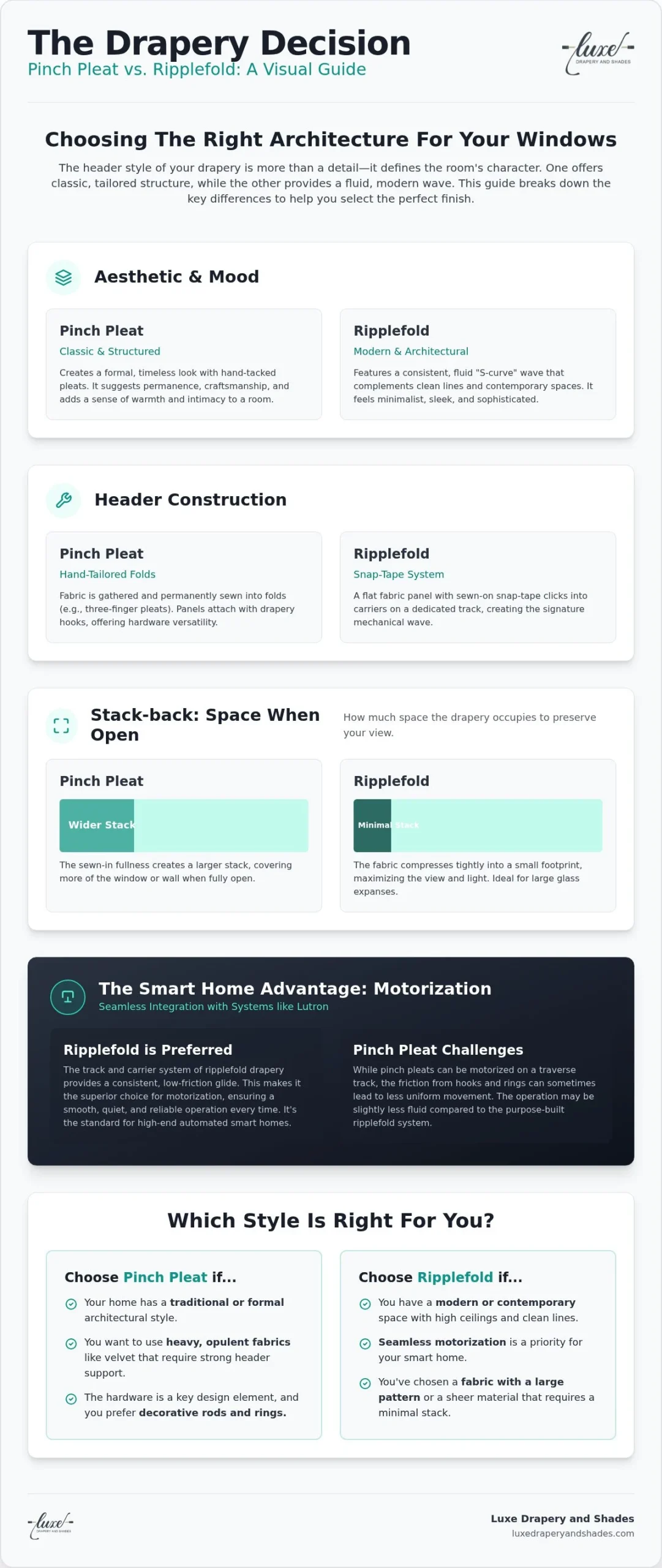
Pinch pleats remain the gold standard for formal dining rooms and traditional estates in neighborhoods like Hancock Park or Pasadena. By sewing the fabric into permanent folds at the header, this style creates a structured, ceremonial look that feels inherently timeless. It’s a look that suggests permanence and craftsmanship. For those interested in seeing how these tailored finishes are applied in high-end international projects, you can learn more about Fabrico and their specialized pleated window treatments.
In contrast, ripplefold drapery has become the hallmark of Westside Los Angeles architecture. Its consistent, S-curve wave complements the clean lines and expansive glass found in contemporary homes. The success of the “drape” depends on the weight of your material. While a heavy, opulent velvet requires the structural support of a pinch pleat to hang correctly, a lightweight linen or silk thrives in the rhythmic, predictable motion of a ripplefold track system.
Your room’s physical dimensions often crown the winner. If you’re working with soaring ceilings, the continuous vertical lines of a ripplefold header can make a space feel infinitely taller. However, if your goal is to add a sense of intimacy and “enclosure” to a private study or library, the clustered volume of pinch pleat headers provides that desired warmth.
Fabric patterns also play a decisive role. Intricate curtain styles often feature large-scale prints that can be obscured or distorted by the tight folds of a pinch pleat. If you’ve selected a bold geometric or a delicate floral, the gentle, uniform waves of ripplefold drapery preserve the integrity of the pattern. For sheer “day” drapes, ripplefold is almost always the superior choice. It allows the fabric to stack back into an incredibly small footprint, ensuring your view remains the focal point of the room.
Defining the Styles: The Tailored Pleat vs. The Architectural Wave
Precision is the hallmark of luxury. When comparing pinch pleat vs ripplefold drapery, the distinction lies in the geometry of the header. One relies on manual craftsmanship to “pinch” the fabric into place, while the other utilizes a mechanical system to guide the material into a perfect, repeating wave. These structural differences dictate not just how the fabric hangs, but how it interacts with the light and the hardware above.
The Anatomy of a Pinch Pleat
The pinch pleat is a testament to traditional tailoring. It’s constructed by gathering a specific volume of fabric into folds, which are then permanently sewn at the base of the header. The three-finger pleat is the most iconic variation, creating a distinct “V” shape that fans out slightly at the top. For a more contemporary take on this classic, many designers opt for the Euro pleat, which is tacked at the very top of the header for a cleaner, more streamlined silhouette.
This style offers immense hardware flexibility. Because the panels are attached via drapery hooks, they can be hung from decorative rods with rings or hidden traverse tracks. This versatility allows the hardware to become a statement piece itself, whether you prefer hand-forged iron or polished brass. Selecting the right foundation for your custom drapery ensures that the final installation mirrors your initial vision for the room.
The Ripplefold Mechanism
Ripplefold drapery represents a shift toward architectural clarity. Unlike pleats that are sewn into the fabric, the ripplefold effect is created by a snap-tape system. A specialized tape is sewn onto the flat top of the panel, which then snaps into carriers spaced at precise intervals along a dedicated track. This creates a continuous “S” curve that looks identical from both the interior and the exterior of the home.
The mechanics of this system require a specialized track rather than a standard rod. The panels hang “under-slung” beneath the hardware, which conceals the carriers and allows the fabric to glide with minimal friction. This under-slung positioning is why ripplefold is the preferred choice for floor-to-ceiling installations, as it creates a seamless column of fabric that appears to emerge directly from the ceiling or a recessed pocket. It’s a sophisticated composition that values order and rhythmic consistency.
Technical Performance: Stack-back, Fullness, and Light Control
Technical excellence is the invisible foundation of luxury. When evaluating pinch pleat vs ripplefold drapery, the functional performance of the header determines how much of your view remains visible and how effectively you can darken a room. Fullness is the primary driver of this aesthetic weight. For a truly opulent finish, we recommend a fullness of 2.5 to 3 times the width of the window. This ensures the panels look rich and intentional, rather than stretched thin when closed. A well-engineered header ensures your drapery retains its crisp silhouette without sagging or losing its rhythmic flow over years of daily use.
Maximizing Your Los Angeles View
In homes with expansive glass walls, the concept of “stack-back” is critical. This term refers to the horizontal space the drapery occupies when fully retracted. Ripplefold headers are celebrated for their efficiency; because the fabric folds into a tight, consistent S-curve, it creates a much smaller footprint than traditional styles. To preserve every inch of a canyon or coastal vista, we often mount hardware six to twelve inches wider than the window frame itself. This allows the fabric to “stack” over the wall rather than the glass. Pinch pleat drapes, while beautiful, typically require more space for their gathered headers, making them better suited for rooms where wall space is abundant.
Light and Privacy Considerations
Achieving total darkness for a media room or master suite requires more than just heavy fabric. It requires a precise seal at the window’s edge. Ripplefold systems, because they hang below the track, can occasionally create a “halo effect” where light leaks over the top of the header. Pinch pleats can be pinned higher on the rod to minimize this gap. When integrating blackout linings, the structured folds of a pleat help the material fall straight, preventing light from bleeding through the sides.
Because these technical nuances vary by millimetre, custom drapes Los Angeles require professional measurement and installation. Maintenance of your investment also depends on these mechanical choices. While pinch pleats are permanently sewn, ripplefold relies on the snap-tape’s tension. Choosing between pinch pleat vs ripplefold drapery often comes down to how frequently you intend to operate the panels; ripplefold’s track system is designed for high-frequency movement, whereas the structured pleat offers a more static, formal elegance.
The Impact of Automation: Motorizing Your Custom Drapery
In the modern Los Angeles home, luxury is defined by the absence of effort. Motorization has transitioned from a high-tech novelty to an essential standard for managing large-scale window treatments. When navigating the choice of pinch pleat vs ripplefold drapery, automation often becomes the deciding factor. While both styles can be automated, the mechanical nature of the header dictates how smoothly the system operates and how the fabric behaves during movement.
Ripplefold is widely considered the natural partner for motorized drapery hardware. Its snap-on system allows the fabric to glide along the track with consistent spacing, ensuring the “S” curve remains perfect whether the drapes are open, closed, or partially drawn. Motorizing heavy pinch pleat panels presents unique challenges; the concentrated weight of the pleats requires high-torque motors and precise calibration to prevent the fabric from bunching or straining the hardware. Our expertise as a licensed California contractor ensures that these heavy, bespoke panels are installed with the structural integrity required for long-term performance.
Lutron Sivoia and Custom Drapery
Integrating your window treatments with Lutron lighting control systems elevates a functional necessity into a sensory experience. The Lutron Sivoia platform provides the precision needed for ripplefold wave consistency, moving the fabric with a whisper-quiet operation that respects the tranquility of your home. You can program specific “scenes” that align with your daily rhythm. Imagine your drapes gently opening at sunrise to reveal a canyon view, or transitioning to “cinema mode” with a single touch to eliminate glare during a mid-afternoon screening.
Hardware Concealment in Modern Design
The ultimate aesthetic achievement in motorized design is the complete concealment of technology. By utilizing recessed ceiling pockets, we can hide the motorized tracks entirely. This creates the “floating” drape effect that is so highly coveted in contemporary ripplefold installations. The fabric appears to emerge directly from the architecture, moving with a fluid grace that feels almost magical. This level of Lutron home automation integrates your drapes into the very fabric of your smart home, allowing for seamless control through elegant keypads or mobile devices.
If you’re ready to experience the transformative power of automated window accents, explore our full range of custom drapery solutions tailored for the sophisticated Los Angeles lifestyle.
Designing Your Custom Window Treatments in Los Angeles
Selecting the ideal window treatment requires more than an eye for color; it demands an understanding of how light, fabric, and architecture intersect within a room. A professional design consultation is the essential first step in navigating the pinch pleat vs ripplefold drapery decision. At Luxe Drapery and Shades, we guide you through a tactile exploration of materials, from the ethereal transparency of sheer linens to the substantial, light-absorbing presence of heavy velvets. We believe that every window is an opportunity to enhance the lifestyle of our clients, ensuring that the chosen style resonates with the home’s existing character while providing modern functionality.
Our installation process is defined by precision and a white-glove standard of care. As a licensed California contractor, we handle the complex integration of heavy custom panels and advanced automation with quiet confidence. We understand that the beauty of a drape is only as good as its installation, which is why we prioritize exactness in every bracket placement and every fold. This expertise allows us to coordinate drapes seamlessly with other treatments like roller shades, creating a multi-functional system that manages heat and light with effortless sophistication.
Layering for Depth and Function
Layering provides the ultimate in light control and aesthetic depth. In many Los Angeles estates, we install ripplefold sheers on a hidden track to manage daytime glare, paired with structured pinch pleat blackout panels for evening privacy. This combination creates a versatile environment that adapts to the shifting Southern California sun. We also ensure that your drapery hardware complements other architectural elements, such as plantation shutters or wood blinds. This holistic approach creates a unified look across open-concept living spaces, where visual continuity is key to maintaining a sense of order and luxury.
The Final Touches: Linings and Hems
The subtle details of linings and hems provide the finishing stroke of curated luxury. Interlinings add a soft, padded quality that improves insulation and gives the fabric a more opulent “hand,” while specialized blackout linings are indispensable for media rooms and master suites. The choice of hem length is equally vital to the room’s personality. A “puddle” hem offers a romantic, traditional overflow of fabric that feels deeply indulgent, whereas a “hover” hem clears the floor by a fraction of an inch for a crisp, modern look that is easier to maintain. If you’re ready to transform your space with a tailored finish, we invite you to Schedule a consultation with Luxe Drapery and begin the journey toward a more beautiful home environment.
Achieving Architectural Harmony in Your Home
The decision between pinch pleat vs ripplefold drapery ultimately rests on the architectural narrative you wish to tell. Whether you lean toward the tailored, historical charm of a structured pleat or the rhythmic, contemporary wave of a ripplefold system, the result should feel like an essential extension of your living space. We’ve explored how technical factors like stack-back and fullness ratios define the visual weight of your room, while advanced motorization ensures your daily environment remains as effortless as it is beautiful.
As a Certified Lutron Installer and expert in Los Angeles luxury residential projects, Luxe Drapery and Shades specializes in bridging the gap between high-end design and smart home technology. We provide custom-tailored solutions for every window shape, ensuring that your heavy bespoke panels are installed with the precision they deserve. It’s time to transform your windows into a lens for experiencing a better lifestyle.
Elevate your interiors with custom drapery from Luxe Drapery and Shades and begin the journey toward a home that reflects your unique standard of comfort and style.
Frequently Asked Questions
Which is more expensive: pinch pleat or ripplefold drapery?
Ripplefold systems typically require a higher initial investment due to the specialized hardware and snap-tape mechanisms involved. While the fabric cost depends on your chosen material, the dedicated track system for ripplefold often accounts for an average 20% increase in hardware costs compared to standard pinch pleat rods. In many Los Angeles luxury homes, the long-term aesthetic value of the architectural wave justifies this premium, especially when integrated with high-end automation.
Can I use a decorative rod with ripplefold drapes?
Standard decorative rods with rings are not compatible with ripplefold panels. This style requires a specialized track system where carriers are connected at fixed intervals to create the signature wave. However, you can select “track-rods” that offer the aesthetic of a decorative metal or wood pole while hiding the functional track underneath. This allows homeowners to maintain a traditional look while enjoying the fluid motion of a ripplefold header.
Which drapery style is easier to maintain and clean?
Ripplefold drapery is frequently favored for its ease of handling during routine maintenance. The snap-on system allows you to remove and reattach panels with minimal effort compared to the manual hooks used in pinch pleats. When comparing pinch pleat vs ripplefold drapery for high-traffic areas, the rhythmic S-curve of the ripplefold also tends to hold its shape better over time, though we always recommend professional care for bespoke luxury fabrics.
Does ripplefold drapery work in traditional-style homes?
Modern ripplefold headers can absolutely complement traditional architecture when paired with the right textiles. While the wave is inherently contemporary, using rich velvets or heavy linens can soften the look for a classic Los Angeles estate. It’s often used in open-concept spaces to provide a clean, uncluttered backdrop that doesn’t compete with more ornate furniture or crown molding. The key is balancing the architectural header with timeless fabric choices.
What is the best fullness for custom pinch pleat drapes?
The industry standard for luxury custom drapery is a fullness of 2.5 to 3 times the window width. A 2.5x fullness provides a classic, elegant look that is suitable for most residential applications. For a more opulent and dramatic appearance, especially in rooms with soaring ceilings, we recommend 3x fullness. This ensures the pleats remain deep and well-defined even when the drapes are fully closed, preventing a flat or sparse appearance.
Can I motorize existing pinch pleat drapes?
Existing pinch pleat panels can be motorized, provided they are transitioned to a compatible motorized track system. This often involves replacing your current rod with a high-torque system like Lutron Sivoia. Our team specializes in retrofitting these heavy, custom panels to ensure the motor can handle the weight of the pleats. It’s an excellent way to upgrade your home’s functionality without replacing the beautiful fabric you already love.
How much space do I need for a drapery pocket?
A standard drapery pocket should measure between 10 and 12 inches in depth for a truly seamless look. This space is necessary to accommodate the motorized hardware and allow the fabric to stack without rubbing against the walls. If you’re layering sheers with blackout panels, the pocket may need to be wider. We recommend consulting with a licensed contractor early in your Los Angeles renovation to ensure these dimensions are integrated into the ceiling plans.
Is ripplefold better for blackout than pinch pleat?
Pinch pleat headers often provide superior light control for blackout requirements. Because the pleats can be pinned to sit higher on the rod, they minimize the light gap between the top of the fabric and the hardware. Ripplefold panels hang below the track, which can sometimes create a small “halo effect” of light at the ceiling. For master suites or media rooms, pinch pleats paired with a blackout lining offer a tighter seal against intrusive light.