

Will a pergola with a retractable canopy give your Los Angeles patio the shade and flexibility you need? The right pergola with retractable canopy Los Angeles homeowners choose depends on how sunlight moves across the space and how they plan to use it throughout the day.
A fabric canopy, a fixed roof, and a louvered roof each create a different outdoor experience. Los Angeles conditions also vary by site: coastal marine air, valley heat, strong sun, occasional rain, and Santa Ana winds can all inform the design.
This guide compares canopy approaches and explains what to consider when evaluating materials, operation, structure, and patio dimensions. It also covers project planning and local approvals, which can depend on the property and its jurisdiction. Use these considerations to plan an adaptable outdoor space that complements your home and routine, with custom design and professional installation from Luxe Drapery and Shades.
Key Takeaways
- Match canopy adjustability to how you use the patio for dining, lounging, and entertaining as the light changes.
- Compare retractable, louvered, and fixed shade systems by openness, visual character, maintenance, and documented weather limits.
- Evaluate a pergola with retractable canopy Los Angeles homeowners are considering against the patio’s dimensions, sun exposure, and site conditions.
- Plan the project from site measurements through design review, including applicable approval requirements for the property’s jurisdiction.
- Shape a custom pergola around your home’s architecture and outdoor routine, with coordinated design and professional installation.
Why a Pergola with a Retractable Canopy Suits Los Angeles Outdoor Living
A pergola with a retractable canopy is an outdoor structure with a movable overhead covering that can open or close to adjust shade. It lets you choose between extending coverage and opening more of the sky above the patio. If you use your outdoor space for several activities, that flexibility can make it easier to adapt the area to changing light and plans. The What is a pergola overview provides background on pergolas as architectural garden features.
As the sun moves, adjustable coverage can shift a patio from a bright, open setting to a more shaded place for a meal or a stretch of lounging. Shade, rain protection, and wind performance depend on the selected system and its documented specifications. Don’t assume a retractable covering provides the same shelter in every condition. The right design also depends on patio dimensions, sun exposure, surrounding architecture, and how you intend to use the space.
What changes when the canopy retracts?
Extending the canopy adds overhead coverage; retracting it opens the space to more direct light and sky. That change affects brightness, views, and the patio’s sense of openness. Imagine a dining table in strong afternoon sun: extending the canopy may make the space more comfortable for a meal, while retracting it later can restore an airier feel. The practical question is when you want coverage, not simply whether you want shade.
Which Los Angeles patio conditions should shape the decision?
Start by observing the site. Note the patio’s orientation, nearby buildings, tree cover, and where sunlight falls at different times of day. A neighboring structure may shade one part of the patio while leaving another exposed. Trees can create shifting shade and affect the view overhead.
Conditions vary across Los Angeles. An inland patio may face more heat exposure, while a coastal setting may have different sun and marine-layer patterns. Neither location alone determines the best design. Track when and where shade matters most, then consider how you use the patio at those times. This gives you a site-specific starting point for choosing a pergola with retractable canopy Los Angeles homeowners can tailor to their property, rather than selecting a configuration by appearance alone. A considered design balances comfort with architectural character.
How Retractable Canopy Pergolas Work: Fabric, Structure, and Operation
A retractable-canopy pergola combines a supporting frame, a canopy, a mechanism that moves it, and a method of operation. The frame supports the system, while the canopy extends or gathers to change overhead coverage. Depending on the configuration, the canopy may move manually or with a motor. These are broad system categories, not specifications shared by every pergola.
When comparing options, consider how much of the patio the canopy covers, how it moves, what care the material requires, and the manufacturer’s stated limits for wind and rain. Evaluate a pergola with retractable canopy Los Angeles homeowners are considering as a complete system, not by fabric name or operating feature alone. Check the documentation for the specific system’s ratings, materials, and controls.
What should you know about canopy materials and coverage?
Product documentation can explain how a canopy filters light, what maintenance it requires, and which durability claims apply. Color and openness also shape the experience: a more open appearance can preserve a sense of sky, while a denser-looking surface may feel more sheltered. Treat these as design considerations, not performance guarantees. Review the selected system’s stated coverage and weather limits. Don’t assume a fabric is rain-resistant or has a particular UV rating without supporting product information.
Shade can contribute to sun protection, but it isn’t a substitute for other protective measures. The CDC discusses the sun protection benefits of shade as part of broader sun-safety guidance.
Manual or motorized canopy operation: what fits your routine?
Manual operation means adjusting the canopy by hand. A motorized system uses powered movement, which may be useful if you expect to adjust the canopy frequently or it is beyond easy reach. Consider who will operate it, how often you plan to change the coverage, and whether everyone in the household prefers a hands-on approach. Controls vary by configuration, so review the options documented for the selected system.
Before settling on a design, compare coverage, operation, care guidance, and weather limits together. Luxe Drapery and Shades designs custom pergolas and outdoor-shading projects around your patio and routine. Explore custom pergola design in Los Angeles to see how these considerations can come together in a tailored outdoor space.
Retractable Canopy vs. Louvered and Fixed Pergolas: A Practical Comparison
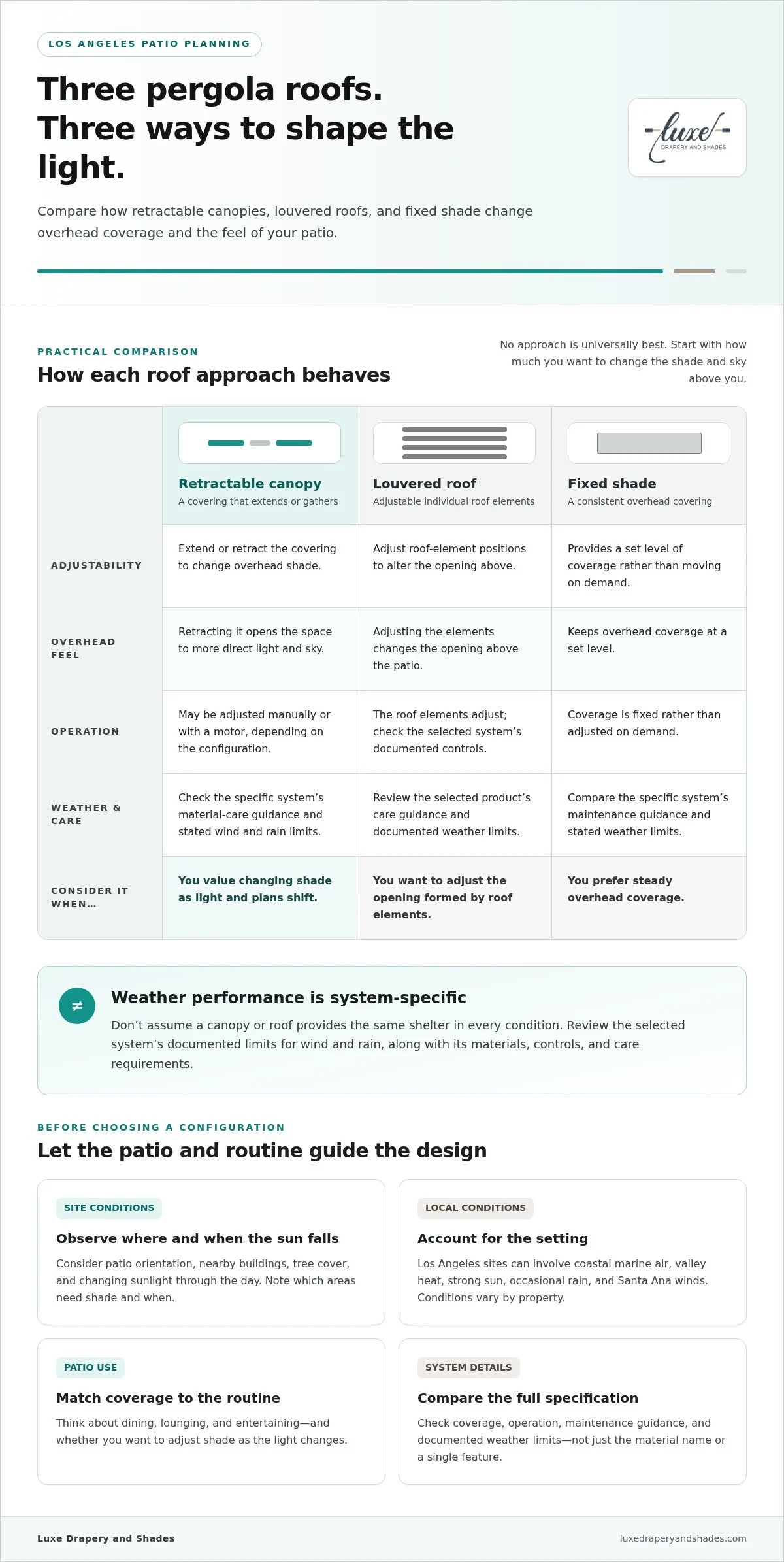
These roof approaches create different relationships with sunlight and sky. A retractable canopy extends or gathers a covering, a louvered roof adjusts its individual elements, and a fixed design provides more consistent overhead coverage. None is universally best. Choose based on whether you value changing shade, an open-air feel, or steady coverage, and compare the specific system’s documented weather limits.
| Consideration | Retractable canopy | Louvered roof | Fixed shade |
|---|---|---|---|
| Adjustability | Extends or retracts the covering to change overhead shade. | Adjusts the position of roof elements to alter the opening above. | Provides a set level of overhead coverage rather than moving on demand. |
| Openness | Can open the overhead space when retracted; coverage changes when extended. | Can change the amount of open sky by adjusting the louvers. | Maintains a consistent overhead surface and visual frame. |
| Visual character | Can feel lighter or more enclosed depending on the canopy’s appearance and position. | Creates a defined roofline with visible adjustable elements. | Establishes a steady architectural feature over the patio. |
| Maintenance | Follow the selected canopy’s care instructions and system guidance. | Follow care guidance for the specific roof and moving components. | Follow care instructions for the selected fixed structure and covering. |
| Weather limits | Depend on the selected system’s documented limits. | Depend on the selected system’s documented limits. | Depend on the structure and covering specifications. |
When does a retractable canopy make the most sense?
A retractable canopy is worth considering when changing overhead coverage is part of how you plan to use the patio. A space used for both shaded lunches and open-sky lounging, for example, may benefit from coverage you can reposition as preferences change. The same flexibility can suit a patio where sun exposure shifts during the day. Before choosing, compare the system’s stated limits for wind, rain, and other relevant conditions. The fact that a canopy retracts does not establish its weather performance.
How do louvered and fixed roofs differ from a retractable canopy?
A louvered roof changes its openings by moving roof elements, while a retractable canopy gathers or extends a covering. A fixed roof keeps its coverage in place. Consider which adjustment best fits your routine and the view you want overhead. For a pergola with retractable canopy Los Angeles project, rank your priorities: adjustable shade, open sky, or consistent coverage. Then compare the relevant system documentation and consider how each design complements the home.
Planning a Retractable-Canopy Pergola for Los Angeles Conditions
A pergola’s suitability depends on the system’s documented limits and the conditions at your property. A useful plan brings together sun exposure, local climate, architecture, daily use, and address-specific building requirements. Follow this sequence to turn those factors into a clear design brief.
- Measure the patio. Record its length and width, potential attachment points, doors and windows, and the routes people use between the home, seating, and dining areas. Note where a frame could affect access or views.
- Map the sun. Observe the patio at different times on a typical day. Mark when direct sun reaches the places where you sit or eat, and which areas you want shaded. This helps define the coverage you are likely to use.
- Document the setting. Note nearby buildings, trees, landscaping, and sightlines from inside the home. Consider whether the site is coastal or inland. Local exposure and comfort needs vary, so one Los Angeles design will not suit every property.
- Review the system’s limits. Read the manufacturer’s documentation for stated wind, rain, and operating conditions, along with canopy care instructions. Follow guidance on when the canopy should be open or retracted rather than assuming it can stay in either position in all weather.
- Check local requirements and review the design. Permit and building requirements depend on the project address and jurisdiction. Verify them with the relevant local building department before proceeding. Then review the layout, proportions, finishes, canopy color, lighting, furniture, and circulation together.
Which design choices help the pergola feel integrated?
Consider the structure as part of the home’s exterior composition. Proportions and finishes can echo architectural details, while canopy color can complement the surrounding palette. Plan lighting and furniture alongside the structure, leaving comfortable routes through the patio and preserving connections to the garden and interior. For related ideas, explore this outdoor shades guide.
These steps help clarify what a pergola with retractable canopy Los Angeles homeowners choose needs to do at their specific property. Luxe Drapery and Shades designs and professionally installs custom pergolas and outdoor shading solutions, tailoring each project to the home, site, and routine. Explore custom pergola design with Luxe for ideas as you plan your outdoor space.
Designing and Installing a Custom Pergola with Luxe Drapery and Shades
A successful pergola project starts with the way you want to live outdoors. Do you picture relaxed breakfasts in filtered light, afternoon lounging, or a dining area that shifts between sun and shade? Luxe Drapery and Shades designs and professionally installs custom pergolas and outdoor-shading solutions for Los Angeles homes, shaping each project around the homeowner’s routine, property, and patio conditions.
What can a tailored pergola project bring together?
Proportions and placement should feel intentional alongside the home’s architecture and patio layout. A design can account for existing features, the areas you want to use, and how the structure frames views and movement through the space. Where additional perimeter shading suits the layout, outdoor shades can complement the pergola as part of a coordinated plan. Explore the Los Angeles outdoor shades guide for ideas on creating a considered patio environment.
How does thoughtful installation support the finished space?
Professional installation helps create a considered fit and cohesive appearance. Project planning takes access, existing features, the home’s exterior, and the patio’s intended use into account, so the finished structure feels at home in its setting. Luxe Drapery and Shades is a California licensed and bonded contractor, CSLB #1066068. Smart-home preferences can also inform the broader outdoor design conversation, without assuming a particular pergola control or integration.
For a pergola with retractable canopy Los Angeles homeowners are planning, the canopy’s materials, operation, and performance depend on the selected configuration and its documented specifications. Luxe’s custom design process brings those practical considerations together with the home’s character to create an outdoor space that is both useful and thoughtfully composed.
What is a natural next step for Los Angeles homeowners?
Begin by defining your priorities: how much shade you prefer, when you want an open sky, and how you expect to use the patio. These preferences give the design a clear foundation. Explore Luxe’s custom pergola and outdoor-shading services to see how a project can be tailored to your property and routine.
Explore custom outdoor solutions for your Los Angeles home.
Shape an Outdoor Space Around the Way You Live
The right pergola is more than a source of shade. It’s an addition to your home planned around how sunlight moves across the patio, the coverage you prefer, and the way you use the space. Comparing retractable, louvered, and fixed designs can clarify your priorities, while reviewing system specifications and local requirements supports an informed decision.
A pergola with retractable canopy Los Angeles homeowners choose should complement the property as thoughtfully as it serves daily routines. Luxe Drapery and Shades designs and professionally installs custom pergolas and outdoor shading solutions for residential and commercial projects. The team brings local expertise and a tailored approach to each project.
Start with your preferred balance of shade, openness, and outdoor comfort. Explore custom outdoor solutions for your Los Angeles home and take the next step toward a patio designed around the way you live.
Frequently Asked Questions
Is a pergola with a retractable canopy a good choice for Los Angeles?
It can be a good choice if you want to adjust overhead shade as sunlight and patio activities change. Los Angeles properties vary, from coastal settings to hotter inland locations, so the right setup depends on your patio’s exposure, dimensions, architecture, and routine. Consider where shade matters most and review the selected system’s documented weather limits. A site-specific design helps align comfort with the character of your home.
How is a retractable canopy pergola different from a louvered pergola?
A retractable canopy changes coverage by extending or gathering a canopy, while a louvered pergola adjusts the position of individual roof elements. Both can change the balance of shade and open sky, but they do so differently. Compare how each system looks when adjusted, how you expect to use it, and its documented care and weather limits. The best fit depends on whether you prioritize a retracting covering or adjustable roof elements.
Can a retractable canopy pergola handle rain and wind?
That depends on the specific system, its installation, and the manufacturer’s stated limits. Don’t assume every canopy is rain-resistant or suitable for the same wind conditions. Review the documentation for the selected configuration and follow its guidance on operating or retracting the canopy in changing weather. Conditions vary across Los Angeles, so design decisions should account for actual site exposure, not broad regional assumptions.
Can I motorize a retractable pergola canopy?
Some retractable canopy systems use motorized movement, while others are operated manually. The appropriate approach depends on the configuration, the canopy’s reach, how often you expect to adjust it, and household preferences. Controls and automation features vary, so rely on the specifications for the selected system rather than assuming app, voice, or sensor operation is included. Consider who will operate the canopy and how it fits into your patio routine.
What canopy material is best for a pergola in Los Angeles?
There isn’t one best material for every Los Angeles patio. Compare documented light-filtering characteristics, maintenance guidance, durability information, and stated weather limitations for the specific canopy options. Color and openness also influence the atmosphere beneath the structure and how much sky remains visible. Check product documentation before relying on claims about UV protection, rain resistance, or warranties. Choose based on your preferred shade experience and the site’s conditions.
Do I need a permit for a pergola in Los Angeles?
Permit requirements depend on the property address, project design, and jurisdiction. In the City of Los Angeles, a building permit is generally required for a pergola attached to a house, larger than 120 square feet, over 12 feet high, or involving electrical work. Requirements may differ elsewhere in the Los Angeles area. Check with the relevant local building department before proceeding, especially if the design includes electrical components.
How do I choose the right size pergola for my patio?
Start by measuring the patio and identifying the areas the structure should serve, such as dining or lounging. Mark doors, windows, attachment points, and circulation routes so the proposed footprint doesn’t obstruct access. Then observe where and when direct sun reaches those activity areas to help determine desired coverage. The final size and placement should suit the home’s proportions, site conditions, selected system, and applicable local requirements.