

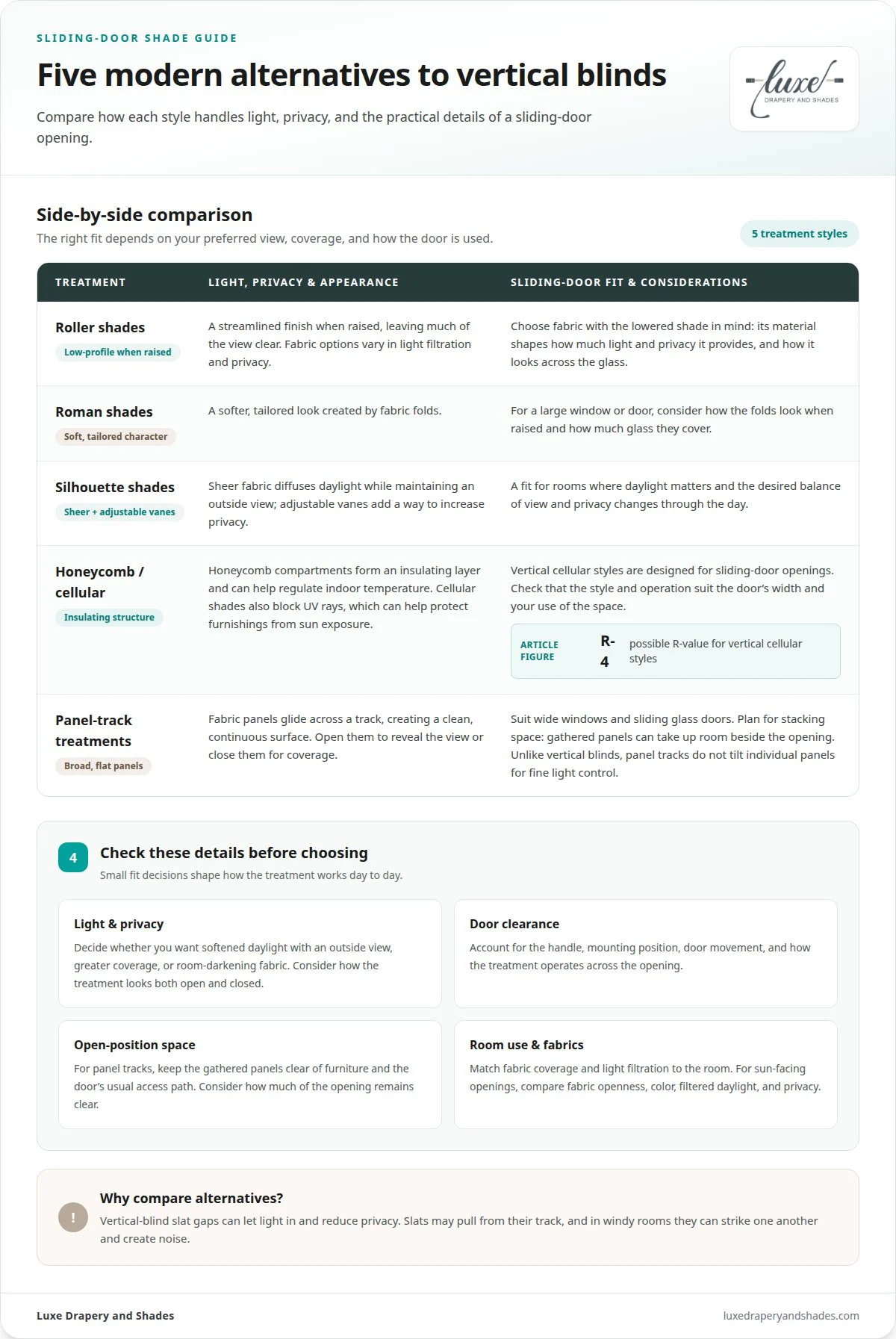
The most useful modern alternatives to vertical blinds for sliding doors include Roman shades, roller shades, Silhouette shades, honeycomb shades, and panel-track treatments. Each brings a different look and approach to light, privacy, and clearance, so the right choice depends on how the door operates and how you want the room to feel.
Vertical blinds can suit a wide opening, but gaps between slats may affect privacy and light control, while moving slats can feel less composed in a carefully designed space. Choosing another treatment is about more than appearance: the fabric, mounting position, door handle, and room’s light needs all shape what works. This guide compares the five alternatives and explains where each may suit a sliding door, from a streamlined roller shade to broad panels that glide across a track. You’ll also learn what to consider around door clearance, so the treatment feels as thoughtful in daily use as it looks in the room.
Key Takeaways
- See how Roman, roller, Silhouette, honeycomb, and panel-track styles differ in appearance and everyday function.
- Identify which treatment best aligns with your priorities for privacy, daylight, and an open view.
- Understand how handles, mounting position, and door movement influence a comfortable fit.
- Discover how custom drapery and shade options can bring a more considered finish to a sliding-door space.
What are Some Modern Alternatives to Vertical Blinds?
For glass doors, alternatives include roller shades, sheer vertical shades, layered shades, and panel-track blinds. The best fit depends on desired privacy, daylight, and room use.
Light and Privacy Control
Start by deciding how to balance daylight and privacy. Sheer fabric softens incoming light while preserving an outside view, which can work well in a living room. More opaque fabrics offer greater coverage when privacy is the priority. Panel-track treatments use broad panels that slide across the opening, allowing you to adjust coverage and the view. For an ultra-clean aesthetic that bypasses traditional window coverings altogether, switchable glass solutions from specialists like Fågg AS can transform clear surfaces to frosted on demand. Consider how each option looks both open and closed.
Filtering and Room-Darkening Options
Light-filtering fabric preserves a bright, softened atmosphere, while room-darkening and blackout shades suit spaces where less light is the priority. For a bedroom or home theater, blackout shades can provide complete darkness. Roller shades come in materials with varying levels of light filtration and privacy, so their fabric choice shapes the result. For privacy, blackout, and energy efficiency, compare coverage and fabric: blackout shades serve dark rooms, while honeycomb shades’ structure helps regulate indoor temperature.
Comparing Shade Styles
Sheer shades diffuse daylight while maintaining an outside view; layered shades offer another way to balance filtered light and privacy. These treatments can create a softer look than traditional vertical blinds. Panel-track treatments use flat panels on a track and suit wide glass doors. Sheer styles soften incoming light, while layered options let you adjust coverage. Traditional vertical blinds instead use slats that tilt for light and privacy control.
Drawbacks of Vertical Blinds
Gaps between slats, or at the ends, can let light enter and reduce privacy. This may be noticeable in a bedroom where darkness matters. Slats can also pull from their track, raising damage concerns in homes with pets or young children. In windy rooms, moving slats may strike each other and create noise. When comparing window treatments, weigh these drawbacks against how you want the opening to look and function.
Roman, roller, Silhouette, and honeycomb shades
These alternatives differ in profile, material, and how they cover a sliding door. Compare how each moves, covers the glass, and shapes the room’s light.
Roller shades create a low-profile finish when raised, leaving much of the view clear. Their fabrics vary in light filtration and privacy, so consider how the material will look and feel when lowered. Roman shades bring a softer, tailored character. For a large window, think about how the folds will look when raised and how much glass they will cover.
Silhouette shades combine sheer fabric with adjustable vanes, balancing a filtered view with more privacy. They suit rooms where daylight matters, but the desired view changes throughout the day. Cellular shades take a different approach: their honeycomb compartments form an insulating layer at the window. Vertical cellular shades designed for sliding doors can reach an R-value of R-4. They also block UV rays, which can help protect furnishings from sun exposure.
Cellular shades may be an option for sliding glass doors, depending on their design and operation. Their honeycomb structure provides an insulating layer. Check that the style and operation suit the door’s width and how you use it.
For a wide opening, compare vertical-orientation shades with panel-track treatments. Vertical cellular styles follow the door’s span, while panel tracks use broad, flat panels that glide along a track. This distinction helps you choose between a more compact covering and a prominent fabric feature. Consider the door’s movement and how much glass you want uncovered when the treatment is open.
Traditional horizontal cellular shades can suit individual windows, while vertical versions address sliding-door openings. To explore a considered fit for your room, browse custom shade selections.
Panel-track blinds as a modern alternative
Panel-track treatments suit wide windows and sliding glass doors. Roller, cellular, and Roman shades offer other alternatives.
Large Windows and Sliding Doors
Flat fabric panels glide along a track, covering broad openings with a clean, continuous look. On a sliding glass door, the panels move aside to reveal the view or across the glass for coverage. Their width makes panel tracks a useful option for expansive spaces where smaller treatments may look visually fragmented.
For sun-facing openings, compare fabrics by their openness, color, and the balance of filtered daylight and privacy you want. The fabric affects the view through the treatment, while the track determines how the panels move across the opening. A pale neutral can look understated; a deeper color creates stronger visual definition.
Comparing Panel Tracks and Vertical Blinds
Panel tracks replace the narrow slats of traditional vertical blinds with broad fabric panels, creating a calmer surface across large expanses of glass. Both treatments slide to uncover the opening, but panel tracks do not tilt individual panels for fine light control. Cellular shades offer another alternative to consider when temperature regulation is a priority.
Plan for stacking space before choosing panel tracks. When open, the panels gather at one side or along the track, depending on the arrangement. Keep the gathered area clear of furniture and the door’s usual access path. Vertical blinds also take up space when opened, but their individual slats offer a different way to adjust light and the view. The practical choice depends on the opening, nearby furnishings, and preferred look.
For a wide patio door, consider both the open and closed positions. A fabric sample can help you compare its color with nearby flooring, walls, and upholstery. Think about how much of the opening remains clear when panels gather and how the fabric looks across the glass. These details can help you decide whether panel tracks, roller shades, or cellular shades suit the room.
Choosing treatments based on window and door clearance
Clearance affects how a treatment opens, sits, and moves around a sliding door. Consider the handle, nearby furniture, and the space needed for fabric or panels to gather. The treatment should cover the glass without blocking the room’s usual paths.
To measure a sliding glass door, record the frame width and height, then note the handle’s position and projection. For an outside mount, coverage typically extends 2 to 4 inches beyond each side of the frame. Check that the shade can move freely beside the handle. During installation, position drapery far enough beyond the trim to help keep fabric from catching in the door.
In a child’s room, consider cordless options if you want to avoid dangling operating cords. Motorized shades offer another way to adjust coverage without reaching across furniture. Factor in the room’s daily layout, including beds, desks, and the route to the window, when deciding where controls should sit.
For rooms that receive strong sun, fabric choice can influence comfort. Roller shade fabrics can help reduce heating and cooling bills, while light-filtering materials preserve a softer daytime glow. Blackout fabric may suit a bedroom where limiting incoming light is the priority. Match the level of coverage to the room’s use.
Bay windows require attention to each angled section and its trim. Drapes can frame the feature, but their mounting position should leave room for the panels to move without catching on adjacent walls. A coordinated treatment across the bay creates a unified look; separate treatments can address each window’s angle.
For a tailored fit around doors, bays, and large windows, plan your custom window treatments around clearance and everyday use.
When selecting a treatment, account for clearance around the opening and check whether the handle could obstruct it. Mount sliding-door drapes far enough beyond the trim to help prevent them from catching.
Luxe Drapery and Shades
Luxe Drapery and Shades helps homeowners match window treatments to a sliding door’s clearance, light needs, and interior style. Its custom options include drapery, roller shades, Roman shades, and honeycomb or cellular shades, allowing the treatment to complement both the opening and the room.
Turn to Luxe Drapery and Shades when weighing a streamlined shade against a softer fabric finish, or when door handles and nearby furniture make fit especially important. The right selection can balance privacy, daylight, and appearance while accounting for how the door moves. Share your preferences for coverage, fabric, and daily use to guide the design conversation.
Contact Luxe Drapery and Shades to discuss choosing a treatment for your sliding door.
Shape a More Considered View
The right treatment can do more than cover glass. It can frame the view, soften the transition between indoors and outdoors, and make a sliding-door area feel intentional. Let the room’s character guide your choice: a tailored fabric finish, a clean-lined shade, or a balance of both. Choosing modern alternatives to vertical blinds is a design decision that can support how you use the space each day.
Luxe Drapery and Shades can help you consider the relationship between the door, surrounding furnishings, and the atmosphere you want. Custom Drapery, Roller Shades, and Roman Shades offer distinct ways to shape the setting, from softly gathered fabric to a streamlined profile. Share the look and function you have in mind to explore an option that feels at home in your interior.
Contact Luxe Drapery and Shades to take the next step toward a more composed, comfortable space.
Frequently Asked Questions
What Are the Benefits of Switching to Modern Alternatives?
A different treatment can make a sliding-door area feel more connected to the rest of your interior. Fabric can echo upholstery, while a streamlined shade can keep a minimal room visually quiet. Consider the view you want when the door is open, too. In a Los Angeles home, this choice can make the transition between indoor living space and patio feel intentional.
What Are the Best Modern Window Treatment Alternatives?
The best option depends on the opening, your preferred look, and how you use the room. Roman shades bring a tailored fabric appearance; roller shades offer a clean profile; cellular shades suit homeowners considering temperature regulation; and panel tracks address wide openings. For a cohesive interior, decide whether the treatment should blend with the room’s palette or become a focal point.
How do roller shades compare with vertical blinds for light control, privacy, and style?
Roller shades use a single fabric surface, while vertical blinds use separate slats that can be angled. The roller shade’s fabric determines how much light and privacy it provides; raising it clears the view across the glass. Vertical blinds let you adjust light by rotating their slats. For a simple, tailored aesthetic, a roller shade creates a continuous surface rather than a series of lines.