

What if the most sophisticated piece of technology in your home was also its most evocative work of art? In the premier estates of Los Angeles, where expansive glass walls meet bold architectural lines, the right window treatments do more than just filter light; they define the very soul of a room. You’ve likely felt the weight of choosing from thousands of fabric swatches or felt concerned that a motorized system might trade elegance for clunky, audible machinery. This is where high-end design meets silent innovation, offering a library of luxury drapery ideas that prioritize both tactile beauty and effortless performance.
We understand that a truly curated home requires a seamless marriage of form and function. You deserve a space that feels unique and intentional, where privacy and light control are managed with a quiet, graceful touch. In this article, you’ll discover how the intersection of artisanal textiles and cutting-edge Lutron automation creates the ultimate sophisticated window treatment. We will explore how to navigate premium fabric selections, integrate smart systems into your existing home architecture, and ensure that every drape hangs with the precision your Los Angeles residence demands.
Key Takeaways
- Learn how to select textiles like Belgian linens and rich velvets that harmonize with the unique light and atmosphere of different Los Angeles neighborhoods.
- Understand the architectural impact of tailoring, comparing the timeless structure of pinch pleats with the fluid, modern aesthetic of Ripplefold systems.
- Explore sophisticated luxury drapery ideas that prioritize the seamless integration of high-end hardware and artisanal craftsmanship.
- Discover why silent Lutron motorization is the gold standard for managing expansive glass walls and hard-to-reach windows with effortless precision.
- Gain insight into matching window treatments with specific architectural styles, from modernist Westside homes to Mediterranean estates in Palos Verdes.
Defining the Modern Luxury Aesthetic in Custom Drapery
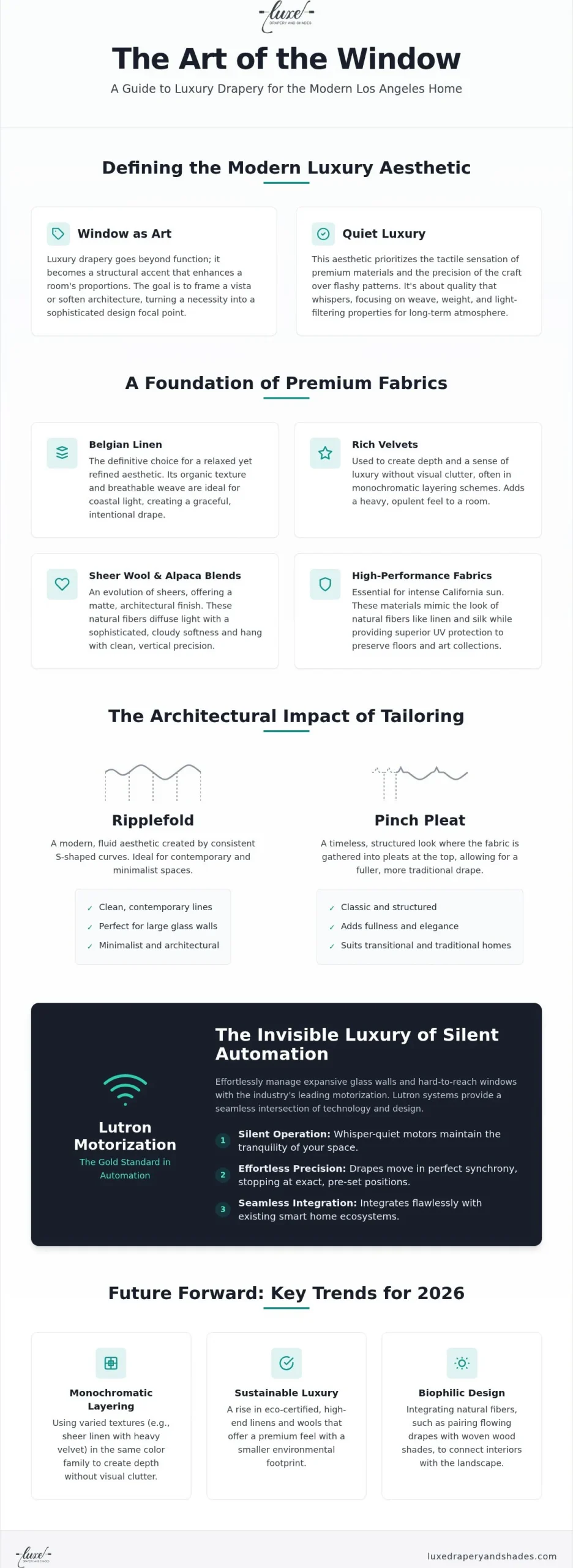
Luxury drapery represents a bespoke marriage of architecture, textile, and technology. In high-end Los Angeles residences, the transition from standard curtains to curated window furniture marks a significant shift in interior philosophy. Rather than merely obscuring a pane of glass, these installations function as structural accents that enhance a room’s proportions. This approach treats the window as a canvas, where the goal isn’t just coverage, but the creation of “Window Art.” By framing a specific vista or softening the transition between indoor and outdoor living, bespoke drapery elevates the entire architectural experience. These luxury drapery ideas focus on how a treatment interacts with the surrounding environment, turning a functional necessity into a focal point of sophisticated design.
The current movement toward “Quiet Luxury” reinforces this evolution. It prioritizes the tactile sensation of heavy-weight linens and the subtle sheen of silk over aggressive, flashy patterns. It’s an aesthetic built on quality that whispers rather than shouts. When you choose materials based on their weave, weight, and light-filtering properties, you’re investing in a long-term atmosphere rather than a fleeting trend. This understated elegance is what defines the modern Los Angeles estate, where the luxury lies in the precision of the craft and the purity of the materials.
The Philosophy of Curated Window Treatments
Custom drapery serves as the anchor for a room’s interior design, bridging the gap between functional light control and high-concept aesthetics. For the soaring ceilings found in Westside estates or Beverly Hills manors, bespoke tailoring is essential. Standard lengths simply can’t capture the dramatic verticality of these spaces; they often look like an afterthought rather than a deliberate choice. A curated treatment ensures that every fold and hem aligns perfectly with the room’s unique geometry, providing an aesthetic enhancement that feels integrated into the home’s very structure.
Emerging Trends for 2026 Interiors
As we look toward 2026, the palette for luxury drapery ideas is becoming more nuanced and texture-driven. Designers are moving away from stark contrasts in favor of more organic, layered compositions. Key trends include:
- Monochromatic layering: Using different textures, such as a sheer linen paired with a heavy velvet, within the same color family to create depth without visual clutter.
- Sustainable luxury: A rise in eco-certified high-end linens and wools that offer a smaller environmental footprint while maintaining a premium feel.
- Biophilic design: Integrating natural fibers like woven wood shades with soft, flowing drapes to connect the interior to the lush Los Angeles landscape.
Premium Fabrics and Textures for a High-End Look
The sensory foundation of any window treatment begins with the textile. In the premier estates of Southern California, fabric selection isn’t just about color coordination; it’s a strategic response to the unique coastal and canyon light. When exploring luxury drapery ideas, the goal is to find materials that interact with the sun rather than just blocking it. Modern luxury sheers are evolving beyond simple synthetics, with sheer wool and alpaca blends providing a matte, architectural finish that diffuses light with a sophisticated, cloudy softness. These natural fibers offer a weight and stability that lighter fabrics often lack, ensuring the drapes hang with a clean, vertical precision.
The Elegance of Belgian Linen and Natural Fibers
Belgian linen remains the definitive choice for a relaxed yet refined Westside aesthetic. Its breathable weave and organic texture are perfectly suited for the South Bay’s bright, coastal atmosphere. High-quality linen is defined by its “slub,” the slight irregularities in the yarn that create a rich, tactile surface. Understanding the weight of the linen is crucial; a heavier weight ensures a graceful drape and a soft, organic ripple that feels permanent and intentional. For a truly layered look, we often suggest pairing these airy panels with woven wood shades. This combination creates a beautiful contrast between the structured reeds of the shade and the fluid movement of the drapery.
While natural fibers are prized for their beauty, the intense California sun requires a practical approach. High-performance fabrics now mimic the look of linen and silk while offering superior UV protection. These materials are essential for preserving your flooring and art collections without sacrificing the high-end look you desire. If you’re ready to see how these textures feel in your space, you can explore our curated textile gallery to find the perfect match for your home’s unique character.
Velvets and Silks: Drama and Light Control
Formal dining rooms and master suites often demand a higher level of opulence and functional control. Heavy-weight silk provides a luminous, high-sheen finish that catches the evening light, creating an atmosphere of timeless luxury. Conversely, velvet is a powerful tool for both aesthetic drama and environmental control. It’s an excellent choice for home theaters or bedrooms where total blackout is required. Beyond light control, the dense pile of velvet provides acoustic dampening, which is particularly useful in modern homes with large glass surfaces and hard flooring. To protect these delicate materials, we always utilize high-quality, sun-resistant linings that prevent fading and maintain the fabric’s integrity over time.
Sophisticated Pleat Styles and Tailored Hardware
The way a fabric is manipulated at the top of the window determines the entire silhouette of a room. While textiles provide the color and soul, the pleat style dictates the architectural rhythm. These luxury drapery ideas focus on the structural integrity of the installation, ensuring your drapes don’t just hang, but perform with intentionality. The finish at the floor is just as critical as the header. A puddled look, where the fabric pools slightly on the ground, exudes a romantic, Old World opulence. Conversely, the “precise floor kiss” is the hallmark of modern tailoring, where the hem skims the floor with a fraction of an inch of clearance, maintaining a sharp, clean line that avoids dust accumulation.
Mastering the Pleat: Pinch vs. Ripplefold
Selecting the right pleat is a study in balancing tradition with modern architectural needs. For formal, traditional estates in neighborhoods like Hancock Park, pinch pleated drapes remain the gold standard. This style uses sewn-in folds at the header to create a structured, permanent look that feels established and timeless. It’s a choice that honors the heritage of a home while providing a crisp, vertical aesthetic.
In contrast, contemporary interiors with floor-to-ceiling glass walls often benefit from Ripplefold pleats. This system creates a consistent, serpentine wave that looks identical from both the interior and the exterior of the home. It’s a fluid, minimalist approach that maximizes the view when the drapes are open. For those seeking an even more understated header, inverted pleats offer a sleek, hidden-header look that tucks the hardware behind a flat fabric surface, allowing the textile’s texture to take center stage.
Hardware as Jewelry for Your Windows
Custom hardware serves as the jewelry of your window treatment, providing the final touch of refinement. It’s essential to select metal finishes that complement your home’s existing lighting and plumbing fixtures to create a cohesive narrative. Brushed brass offers a warm, vintage-inspired glow, while matte black provides a graphic, modern edge that frames a window with authority. For a truly ethereal look, Lucite hardware virtually disappears, allowing the eye to focus entirely on the movement of the fabric.
Modern luxury also embraces the “invisible” approach. Many Westside architects now design ceiling recesses specifically to house architectural tracks, allowing the drapes to emerge directly from the ceiling without visible rods. When hardware is visible, custom finials provide an opportunity for personalization. You might choose minimalist end caps for a clean finish or hand-forged artisan pieces that reflect the unique craftsmanship found throughout your estate. These details ensure that the hardware is never an afterthought, but a deliberate element of the home’s design language.
The Invisible Luxury of Motorization and Lutron Integration
In modern Los Angeles estates, luxury is often defined by what you don’t see. While the tactile beauty of textiles and the precision of pleats are essential, motorization represents the silent engine behind a truly sophisticated environment. It’s the ultimate luxury for large-scale windows or hard-to-reach architectural spans where manual operation would be cumbersome. By integrating Lutron Sivoia systems, you ensure a silent, fluid movement that transforms the atmosphere of a room at the touch of a button. This isn’t just about convenience; it’s about the graceful choreography of light and shadow throughout your home.
Beyond the performance, there’s a significant aesthetic benefit to automation. These systems remove the need for messy cords and wands, resulting in a cleaner, more architectural look that complements minimalist and modern designs. In our bright California climate, automated schedules also enhance privacy and energy efficiency. Your drapes can be programmed to close during the peak afternoon sun, protecting your interiors and maintaining a comfortable temperature without any manual intervention. These luxury drapery ideas prioritize a home that responds intuitively to your lifestyle.
Lutron Home Automation: The Gold Standard
Integrating your window treatments with Lutron home automation allows for one-touch scene setting that coordinates your environment perfectly. You can synchronize your lighting and drapery to create the ideal ambiance for a dinner party or a quiet evening. One of the most impressive features of Lutron motors is their precision. They ensure perfectly aligned hems across multiple windows, creating a sense of visual order that manual systems simply can’t match. Modern smart homes further benefit from voice control and mobile app integration, making your drapes an accessible part of your digital ecosystem.
Motorized Drapery Hardware Design
The technical challenge of motorization is often hiding the machinery to maintain a “Quiet Luxury” aesthetic. We specialize in concealing motors within custom-designed cornices or ceiling pockets, ensuring the focus remains entirely on the fabric and the view. For retrofit projects in older Torrance homes where hard-wiring may be difficult, we offer sophisticated battery solutions that maintain a high standard of performance. Many systems now include “touch-and-go” technology, which allows for a manual override if you prefer to adjust the drapes by hand. To see how these systems can be tailored to your specific architectural needs, connect with our motorization specialists for a personalized assessment.
Tailoring Drapery Ideas to Los Angeles Architecture
Los Angeles is a city defined by its architectural diversity, ranging from the glass-walled modernist pavilions of the Westside to the thick-walled Spanish Colonial estates of Palos Verdes. This variety requires a nuanced approach when exploring luxury drapery ideas. A window treatment that complements a mid-century modern masterpiece would feel out of place in a Mediterranean villa. One of the primary challenges in Southern California is managing the transition between interior spaces and the expansive patio areas that define our lifestyle. To create a cohesive aesthetic, we often coordinate interior textiles with high-performance outdoor shades, ensuring that the visual flow remains uninterrupted from the living room to the poolside.
Modernist Estates: Floor-to-Ceiling Sheers
Modernist homes often feature 20-foot tall windows that demand a specific technical and aesthetic response. Extra-wide Ripplefold sheers are the ideal solution here. They maintain the panoramic views of the Los Angeles skyline while softening the hard lines of steel and concrete. Because these windows are often sun-drenched, we prioritize fabrics with high UV protection to safeguard your interior investments. Motorized solutions are particularly effective for these large-scale installations, allowing you to manage light across massive spans with effortless precision. Neutral palettes, specifically soft greys, warm whites, and muted sands, work best in these environments, ensuring the architecture and the view remain the primary focal points.
Mediterranean & Traditional: Layered Grandeur
For homes with a more historical or traditional character, the design philosophy shifts toward depth and texture. Mediterranean and Spanish Colonial estates often feature arched windows and deep sills that can be difficult to dress. We recommend a layered approach, perhaps combining custom plantation shutters with functional, heavy-weight drapes. This pairing provides excellent light control and a sense of architectural permanence. It’s a sophisticated way to add dimension to a room while respecting the original design intent of the home.
In these spaces, you can embrace rich textures like embroidered linen or subtle damasks that reflect the home’s heritage. Custom cornices and valances can be used to frame arched windows, hiding hardware without obscuring the beautiful masonry. These luxury drapery ideas focus on enhancing the existing character of the property rather than competing with it. By selecting hardware and fabrics that mirror the weight and scale of traditional architecture, you create a room that feels both established and exceptionally comfortable. This tailored approach ensures your window treatments serve as an essential element of your home’s unique story.
Transforming Your Los Angeles Vista into a Curated Masterpiece
Your home is a sanctuary where every detail should reflect a standard of quiet excellence. By integrating artisanal textiles with silent, sophisticated motorization, you move beyond simple window coverings into the realm of bespoke window art. Whether you’re softening a modernist glass wall in the Westside or adding layered grandeur to a Mediterranean estate in Palos Verdes, these luxury drapery ideas serve as the final, essential layer of a well-designed life.
As a Certified Lutron Gold Level Dealer and a Licensed California Contractor (#1066068), we specialize in the technical precision required for high-end estates. Our white-glove professional installation ensures that your custom treatments function as flawlessly as they look, providing seamless comfort across the South Bay and Westside. We invite you to Request a Private Design Consultation in Los Angeles to begin defining the unique atmosphere of your home. We look forward to helping you realize your vision for a more beautiful, intentional living space.
Frequently Asked Questions
What is the difference between custom drapes and ready-made curtains?
Custom drapes are bespoke pieces of window furniture tailored to exact architectural dimensions, while ready-made curtains are mass-produced items. Customization allows for superior fabric quality, specific pleat styles, and precision hemlines that mass-market options cannot replicate. In Los Angeles estates with non-standard window sizes, custom solutions provide an integrated look that feels like a permanent part of the interior design rather than an afterthought.
How much does custom motorized drapery typically cost in Los Angeles?
The investment for custom motorized drapery varies based on the chosen fabric tier, the scale of the window, and the complexity of the motorization system. Factors like the linear footage of the textile and the choice between battery or hard-wired Lutron motors influence the final cost. We focus on providing tailored quotes that reflect the specific requirements of your project, ensuring every element meets our standard of curated luxury and performance.
Can I integrate my custom drapes with my existing Lutron system?
Yes, we specialize in the seamless integration of motorized drapery hardware with existing Lutron lighting control systems. As a Gold Level Dealer, we ensure that your window treatments operate in harmony with your home’s lighting scenes. This allows you to manage privacy and ambiance through a single interface, whether it’s a keypad, mobile app, or automated schedule, creating a truly responsive smart home environment in your Los Angeles residence.
What are the best fabrics for sun-drenched windows in Southern California?
For sun-drenched Los Angeles rooms, we recommend high-performance linens or sheer wool blends that offer natural UV resistance. Belgian linen is a favorite for its ability to filter light beautifully while maintaining a breathable, organic texture. To further protect these premium materials, we utilize high-quality, sun-resistant linings. These linings prevent fabric degradation and protect your home’s interior art and flooring from the intense Southern California sun.
How long does the bespoke drapery process take from consultation to installation?
The timeline for bespoke window treatments typically ranges from six to twelve weeks, depending on the complexity of the design and the availability of imported textiles. This process includes the initial design consultation, precise architectural measurements, professional fabrication, and a white-glove installation. We prioritize craftsmanship and attention to detail at every stage to ensure your finished window art meets the highest standards of luxury and durability.
Is motorized drapery hardware noisy?
Modern motorized systems, particularly Lutron Sivoia, are designed for near-silent operation. These advanced motors provide a smooth, fluid motion that won’t disrupt the tranquility of your home. In a luxury estate setting, the goal is “invisible luxury,” where the technology performs its function without drawing attention to itself. You’ll experience the graceful movement of your drapery with a sound level that is barely audible, even in the quietest rooms.
Should I choose floor-length or puddled drapes for a luxury look?
The choice depends on the architectural style of your home and the desired atmosphere. Floor-length drapes that “kiss” the floor provide a crisp, modern look that highlights precision tailoring and clean lines. Puddled drapes, where the fabric pools slightly on the ground, offer a more romantic and traditional aesthetic. Both styles are excellent luxury drapery ideas, though floor-length options are often preferred for their ease of maintenance in high-traffic areas.
How do I choose between pinch pleat and ripplefold styles?
Your choice should align with the architecture of your room and the functionality you require. Pinch pleats offer a structured, formal appearance that suits traditional or transitional interiors perfectly. Ripplefold styles create a consistent, serpentine wave that is ideal for modern homes with expansive glass walls. Ripplefold tracks also tend to take up less space when the drapes are open, making them a practical choice for maximizing your Los Angeles views.