

A single window treatment often feels like an unfinished thought in a high-end interior. While a solitary shade provides essential function, it rarely captures the visual depth or character required for a truly curated home. Mastering the art of layering drapery with shades is about more than just aesthetics; it’s an architectural strategy to manage the intense Southern California sun while adding a sense of quiet luxury to your living space.
You’ve likely felt the frustration of choosing between the clean lines of a woven wood shade and the soft elegance of custom fabric. It’s natural to worry that combining the two might block too much light or feel cluttered. This guide helps you move past that uncertainty. You’ll learn to pair bespoke drapery with advanced shading solutions, including how to integrate smart home technology like Lutron’s HomeWorks QSX processor for effortless control. We’ll examine the latest 2026 design trends, from warm mushroom tones to textured linens, ensuring your windows reflect a sophisticated, designer-level finish that enhances your daily lifestyle and honors the craftsmanship of your home.
Key Takeaways
- Discover why a multi-dimensional approach creates a sense of “Quiet Luxury” that single window treatments cannot achieve.
- Learn to select the ideal base layer by matching high-performance shades, such as Roman or Roller styles, to your specific light and privacy needs.
- Master the art of layering drapery with shades to create an architectural frame that enhances the scale and sophistication of your home.
- Explore the “Tonal Luxury” strategy for coordinating fabrics and textures that complement Los Angeles architecture, from Spanish Colonial to modern glass estates.
- Understand how to synchronize your layered treatments with Lutron automation for effortless, one-touch management of light and ambiance.
Beyond the Single Treatment: Why Layering is the Standard for Luxury Interiors
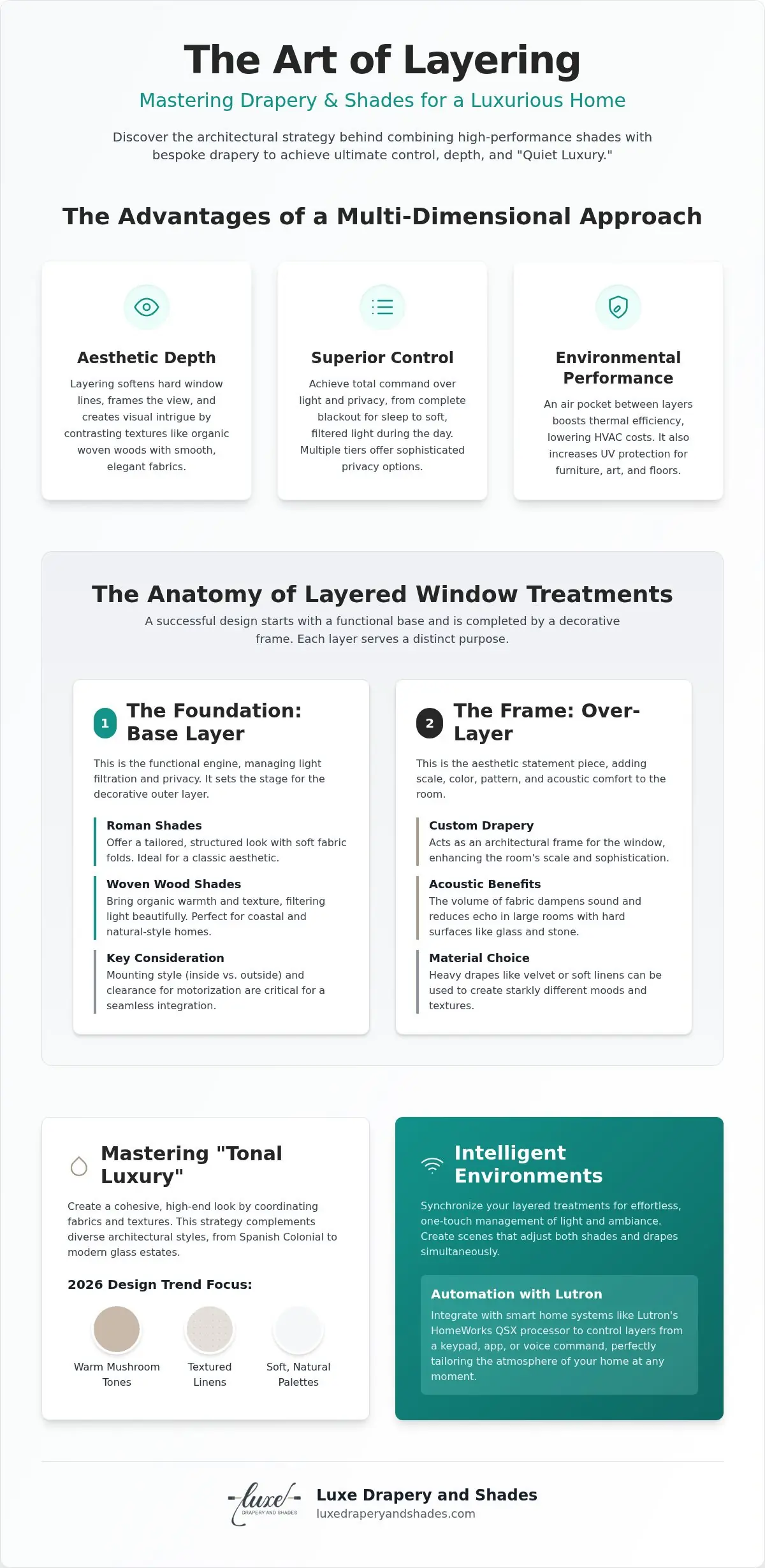
A single window treatment often serves a purpose, but it rarely tells a story. In the most refined homes, window design is treated as an architectural element rather than a finishing touch. Mastering the art of layering drapery with shades involves a sophisticated pairing of two or more styles to create a cohesive, high-performance solution. This approach is the hallmark of “Quiet Luxury,” providing a multi-dimensional look that a solitary roller or Roman shade simply cannot achieve on its own.
Functionality is where this strategy truly excels. By combining layers, you gain total control over your environment. You can achieve a complete blackout effect for restorative sleep at night while maintaining soft, filtered light throughout the day. In the expansive, open-concept estates common across Los Angeles, the sheer volume of fabric also serves a critical acoustic purpose. Modern architecture often relies on hard surfaces like glass, stone, and polished concrete, which can lead to unwanted echoes. The addition of bespoke drapes helps dampen sound, making large rooms feel intimate and serene.
The Aesthetic Advantage of Depth
Hard lines are a staple of contemporary window frames, yet they can often feel stark or cold. Layering allows you to soften these edges with curated textile combinations. Using contrast in texture is a powerful way to create visual intrigue. For example, the organic, tactile feel of woven wood shades offers a beautiful counterpoint to the smooth, heavy drape of bespoke linen or velvet. This layering doesn’t just cover the window; it frames the view. The drapery acts as a soft architectural border, drawing the eye toward the landscape while the base shade manages the glare.
To learn more about how Lifestyle Curtains creates bespoke luxury window furnishings, you can explore their approach to sophisticated interior design.
Superior Environmental Control
Selecting the Foundation: High-Performance Shades as Your Base Layer
The success of layering drapery with shades begins with the foundation. This base layer acts as the functional engine of the window, dictates light filtration, and establishes the privacy baseline for the room. Choosing the right style requires balancing the specific requirements of your space with the architectural constraints of the window frame itself. A well-chosen base layer shouldn’t just exist; it should enhance the layers that follow.
For those seeking a tailored, classic aesthetic, custom Roman shades offer a structured foundation. They provide a soft, fabric-forward look even when the outer drapery is open. When planning your layers, the mounting style is paramount. An inside mount keeps the window casing visible and provides a clean backdrop for drapes. However, if you’re integrating motorization, you must account for the “stacking” space. Motorized components require specific clearances within the header to ensure the shade disappears elegantly without interfering with the drapery hardware. Achieving this level of precision often requires the expertise of a specialized design consultant to ensure every millimeter is accounted for.
Woven Woods and Natural Textures
Coastal homes in the South Bay often benefit from the organic warmth of woven wood shades. These natural fibers create a beautiful interplay of light. Unlined woven materials allow a soft glow to permeate the room, highlighting the intricate textures of the grass or bamboo. Pairing these natural elements with structured, bespoke drapery creates a balanced, sophisticated look that feels grounded yet airy. It’s a design choice that honors the local landscape while maintaining a high standard of interior comfort.
Sleek Roller and Solar Shades
On the Westside, where floor-to-ceiling glass and skyline views are the priority, sleek roller shades are the minimalist choice. Solar shades are particularly effective here; they manage intense glare and protect interiors from UV damage while preserving the visual connection to the Los Angeles horizon. In bedrooms, a blackout roller shade often serves as the “hidden” functional layer. It remains tucked away during the day, allowing decorative drapes to take center stage, then provides total darkness at night with a single touch. This approach ensures that functionality never compromises the aesthetic integrity of your design.
The Art of the Over-Layer: Custom Drapery as an Architectural Frame
While your base shade handles the technical demands of light and privacy, the drapery provides the room’s soul. In high-end interior design, custom-tailored lengths are non-negotiable. Off-the-shelf solutions often fail to account for the precise proportions of a room, leading to gaps or awkward breaks that disrupt the visual flow. For the expansive, high-ceiling rooms frequently found in luxury estates, custom drapes in Los Angeles are essential. They act as a vertical anchor, drawing the eye upward and emphasizing the volume of the space.
Selecting the right pleat style is a critical decision in the process of layering drapery with shades. A traditional pinch pleat offers a structured, timeless depth that suits Spanish Colonial or Mediterranean architecture. Conversely, a Ripplefold style provides a fluid, consistent wave that complements modern glass walls and minimalist interiors. Your choice of fabric density should respond to the room’s purpose. Sheer overlays allow for a delicate play of light over a solid roller shade, while heavy, light-blocking velvets provide the ultimate sense of enclosure and opulence in a private cinema or master suite.
Anatomy of Bespoke Drapery
The secret to that “full,” high-end appearance lies beneath the surface. Professional interlinings add body and weight, ensuring the fabric hangs with a graceful, expensive-looking drape. When designing your layout, you must determine the correct “stack back.” This is the amount of space the drapery occupies when fully open. A precise calculation ensures your shades aren’t obscured, allowing the full window to be showcased. Because layered custom fabrics are substantially heavier than single treatments, selecting high-end hardware is paramount. You need a rod and bracket system designed to support this weight without bowing over time, which is why professional installation is a standard requirement for a lasting finish.
Length and Puddling Options
The way your fabric meets the floor defines the room’s formality. We often recommend three distinct approaches:
- The Kiss: The fabric just grazes the floor. It’s a clean, modern look that’s perfect for high-traffic Los Angeles living rooms where ease of movement is a priority.
- The Puddle: Allowing one to three inches of extra fabric to pool on the floor. This adds romantic drama and a sense of history to master suites and formal dining areas.
- Floor-to-Ceiling: Mounting the hardware at the highest possible point. This creates the illusion of height in smaller spaces, making the entire wall feel like a grand architectural feature.
By carefully considering these bespoke details, you ensure that layering drapery with shades results in a window treatment that feels intentional, permanent, and perfectly scaled to your home’s unique proportions.
Mastering the Aesthetic Balance: Coordination for Los Angeles Estates
Achieving a designer-level look requires more than simply choosing two beautiful fabrics. It demands a deep understanding of scale, proportion, and the architectural language of your home. In the most sophisticated Los Angeles interiors, we often employ the “Tonal Luxury” approach. Rather than matching colors exactly, which can result in a flat and uninspired appearance, we layer varying shades of the same neutral palette. This technique creates a sense of effortless depth; imagine a mushroom-toned Roman shade paired with drapes in a slightly lighter sand-colored linen. The result is a multi-dimensional window that feels curated rather than staged.
Scale is equally critical when layering drapery with shades. The base layer and the over-layer must never compete for visual dominance. If your shade features a bold, organic texture, your drapery should remain more subdued to act as a quiet frame. Conversely, if you’ve selected a rich, heavy velvet for your drapes, a minimalist roller shade provides the necessary functional support without adding unnecessary bulk. This balance is especially important when coordinating with plantation shutters, a unique Southern California tradition. Layering bespoke drapes over shutters creates a “window furniture” effect that adds immense value and architectural weight to a room.
Style Pairings for Southern California
Different regions of Los Angeles dictate distinct aesthetic directions. For coastal estates in the South Bay, we favor white linen drapes over driftwood-toned woven wood shades to mirror the natural landscape. In Westside Mid-Century Modern homes, sheer Ripplefold drapes over motorized solar shades manage the glare of the afternoon sun while maintaining a clean, linear silhouette. For Mediterranean-style villas, the drama of heavy velvet drapes with traditional pinch pleats over structured Roman shades provides the opulence these grand spaces demand.
Color and Texture Trends for 2026
The 2026 luxury interior design palette is moving away from the stark whites of previous years toward “Earthy Luxury.” We’re seeing a significant shift toward warmer tones like terracotta, muted sage, and soft sands. Texture is the primary tool for adding interest in these monochromatic schemes. Incorporating materials like bouclé or raw silk into your drapery adds a tactile quality that invites touch. To keep the focus on these premium textiles, we often recommend the “Invisible Layer” strategy; this involves selecting drapery hardware in colors that match the wall or ceiling, allowing the hardware to blend seamlessly into the architecture. If you’re ready to define the aesthetic of your home, contact our design team today to explore our curated fabric library.
Intelligent Environments: Synchronizing Layered Treatments with Lutron Automation
The ultimate expression of a curated home is the seamless integration of technology and design. While the aesthetic beauty of layered fabrics is undeniable, the true luxury lies in effortless control. When layering drapery with shades, motorization isn’t merely a convenience; it’s a preservation strategy. By utilizing motorized systems, you eliminate the need to touch delicate silks or bespoke linens, preventing the transfer of natural oils from hands that can degrade high-end textiles over time. This ensures your investment remains pristine while providing one-touch management of your entire environment.
Integrating your window treatments with Lutron home automation allows for the precise, synchronized movement of both layers. For those who demand an undisturbed atmosphere, the Lutron Sivoia system provides near-silent operation, allowing shades to glide behind drapes without a whisper. This level of sophistication is powered by the HomeWorks QSX processor, which offers the increased processing power necessary to manage complex, multi-layered schedules across large Los Angeles estates.
Scheduling Your Atmosphere
Automation allows your home to respond to the rhythm of the day. You can program your shades to lower during the peak of the afternoon heat to protect your interiors, while the drapes remain open to maintain the room’s architectural style. As evening approaches, a “Goodnight” scene can close both layers simultaneously, providing total privacy and a secure, enclosed feel for the night. For a completely touchless experience, these systems integrate seamlessly with Josh.ai, allowing you to adjust your light levels through simple voice commands. This is the hallmark of modern wellness-centric design, where your home environment adapts to your needs without a second thought.
The Technical Side of Motorized Layering
Achieving a flawless motorized installation requires careful planning during the architectural phase. Layering two motorized treatments on a single window requires significant pocket depth to accommodate dual tracks and ensure the fabrics don’t interfere with one another. This isn’t a standard DIY project; it requires a Lutron-certified professional who understands the nuances of weight distribution and signal strength. Precision measurements are the only way to guarantee that your custom drapery hardware and shade housings fit perfectly within the designated space. To ensure your project meets these exacting standards, the final step is to schedule a design consultation. This allows an expert to assess the motorized complexity of your windows and provide a technical roadmap for your layered system.
Transforming Your Perspective on Window Design
The windows of your home are more than just apertures for light; they’re the frames through which you experience your daily lifestyle. By mastering the art of layering drapery with shades, you elevate a functional necessity into a sophisticated architectural statement. We’ve explored how the right foundation of high-performance shades, paired with the soft volume of bespoke drapes, creates a multi-dimensional environment that single treatments can’t match. From the precision of “Tonal Luxury” to the silent convenience of Lutron automation, every detail contributes to a home that feels both curated and comfortable.
True luxury is found in the intersection of expert craftsmanship and personalized service. As a Lutron Certified Platinum Dealer and Licensed California Contractor (#1066068), our team is dedicated to bringing this level of design excellence to Los Angeles’ finest estates. Your windows deserve a solution that’s as unique as your vision. We invite you to schedule your complimentary in-home design consultation in Los Angeles today. Let’s work together to transform your living spaces into a masterwork of light, privacy, and enduring style.
Frequently Asked Questions
Can I layer drapes over any type of window shade?
Yes, you can layer drapes over almost any shade style, including roller, Roman, and woven wood shades. The primary consideration is the mounting method; an inside-mounted shade provides the cleanest backdrop for an over-layer of drapery. This combination allows for a sophisticated interplay of textures while ensuring each layer operates independently without interference. It is a versatile way to achieve a truly bespoke look for your windows.
How much space do I need for layered window treatments?
You typically need between five and seven inches of depth for a successful layered installation. If you’re using an inside-mount shade, the depth of your window casing handles the first layer. For dual motorized tracks, specific pocket dimensions are required to ensure the hardware is concealed and the fabrics have enough clearance to move freely without friction, ensuring a seamless and elegant operation for your home.
Do layered drapes and shades help with noise reduction in LA?
Layering drapery with shades is an excellent strategy for noise reduction in modern Los Angeles homes. The increased volume of fabric acts as an acoustic buffer, absorbing sound waves that would otherwise bounce off hard surfaces like glass and stone. This is particularly beneficial in open-concept estates where echoes can disrupt the serene atmosphere, making your living space feel more intimate, quiet, and comfortable.
Is it possible to motorize both the shade and the drapery layer?
It is absolutely possible to motorize both layers using integrated systems like Lutron HomeWorks. This setup provides the ultimate luxury of controlling your privacy with a single touch or voice command. Beyond convenience, motorization aligns with the latest safety standards, such as ANSI/WCMA A100.1-2022, by providing a cordless environment. Professional installation ensures that the motorized drapery hardware and shade motors are synchronized and powered correctly within your home.
What is the best fabric combination for a sunny Los Angeles room?
A high-performance solar shade paired with lined, bespoke linen drapes is the ideal combination for sun-drenched rooms. The solar shade manages intense UV rays and glare while preserving your view of the Los Angeles skyline. The lined drapery adds a critical layer of thermal insulation, helping to maintain a comfortable interior temperature during the warmest afternoon hours while adding a touch of tailored elegance to the space.
Should the shade and the drapery be the same color?
When layering drapery with shades, they don’t need to be identical; in fact, using different tones of the same neutral palette often creates a more sophisticated look. This “tonal luxury” approach adds visual depth and prevents the window from appearing flat. You might pair a mushroom-colored Roman shade with a sand-toned drape to create a curated, designer-level aesthetic that feels intentional and perfectly suited to your interior.
How do I clean layered window treatments without taking them down?
Regular maintenance involves light dusting and the use of a vacuum with a soft brush attachment. This prevents dust from settling into the fibers of your custom fabrics. For delicate silks or high-end linens, it’s best to avoid moisture; instead, focus on gentle, consistent care to preserve the integrity of the textiles. This simple approach keeps your window treatments looking pristine for years without the need for removal.
Does layering window treatments increase my home value?
Custom layered treatments are often viewed as “window furniture,” which can enhance the perceived value and architectural appeal of your home. High-quality, bespoke installations signal a commitment to craftsmanship and attention to detail. When integrated with advanced automation systems, these treatments become a permanent asset that contributes to the overall sophistication and functional efficiency of a luxury property. This makes the home more attractive to discerning buyers who value integrated technology.