

The most sophisticated interior designs aren’t defined by what you see, but by what is intentionally hidden from view. You’ve likely spent hours selecting the perfect fabric and texture for your windows, only to find that a bulky metal headrail or a standard plastic valance disrupts the entire room’s aesthetic. It’s a common frustration for homeowners seeking a minimalist, high-end look where mechanical hardware feels like an unwelcome distraction. Learning how to hide a roller shade valance is the secret to achieving that “invisible” architectural appearance found in the most exclusive luxury estates.
We understand that the nuances of interior design require more than just functional solutions; they require a curated approach to home comfort. This guide will show you how to transform unsightly hardware into a seamless design element using professional architectural and decorative techniques. You’ll discover five expert concealment strategies, including custom-crafted cornices and integrated ceiling pockets, that eliminate light gaps and elevate your window treatments. This exploration of tailored minimalism will help you create a custom, high-end finish that adds lasting value and reflects a truly refined standard of living.
Key Takeaways
- Learn why architectural pockets are the premier choice for recessed mounting, creating a clean look for integrated Lutron motorization.
- Compare the structured elegance of custom cornices against softer fabric-wrapped valances to determine which finish complements your home’s architecture.
- Discover how to hide a roller shade valance by layering custom drapery, using tailored headers to effortlessly mask the shade’s upper hardware.
- Understand why professional installation and precise measurement are essential for achieving a seamless, integrated appearance that adds home value.
- Explore the visual difference between exposed and concealed hardware to master the art of minimalist, high-end window treatment design.
Why Hiding Your Roller Shade Hardware Elevates Your Interior Design
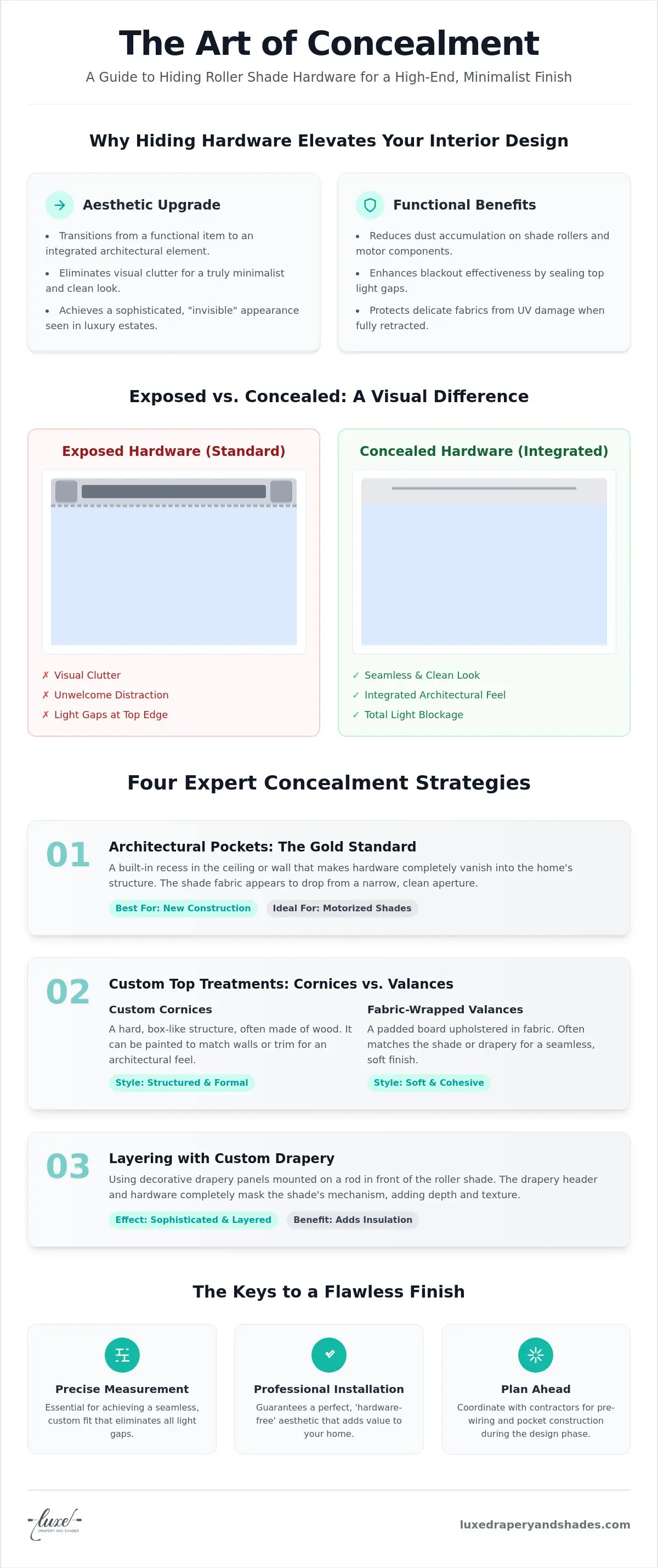
Valance concealment is the intentional art of masking the roller mechanism to achieve a truly minimalist finish. In the sophisticated homes of Los Angeles, where floor-to-ceiling windows often serve as the focal point, exposed metal brackets and bulky rollers can feel like a design oversight. By focusing on how to hide a roller shade valance, you transition from a functional window covering to an integrated architectural element. The visual difference between exposed and concealed hardware is striking; one feels like an addition, while the other feels like part of the home’s original structure.
Standard retail valances are often mass-produced and lack the refinement required for a custom interior. While they have been a popular decorative choice for decades to hide drapery rods, modern luxury demands more than a simple cover. Custom concealment systems are designed to fit the specific dimensions of your window, eliminating the awkward top-edge light gaps that plague standard installations. This precision ensures that your shades don’t just look better; they perform better.
The Minimalist Aesthetic and Roller Shades
Clean lines are the hallmark of contemporary Westside LA architecture. Whether you’re overlooking the hills or the coast, visible hardware creates visual clutter that can disrupt an otherwise high-end design. There is a profound psychological benefit to a streamlined, distraction-free living space. When the mechanical components are tucked away, the eye focuses on the view and the curated textures of the room rather than the industrial nature of the shade hardware.
Functional Benefits Beyond Aesthetics
Concealment offers practical advantages that extend well beyond visual appeal. A custom pocket or cornice acts as a protective barrier, significantly reducing dust accumulation on the shade roller and sensitive motor components. When considering how to hide a roller shade valance, many homeowners also overlook the performance gains in media rooms. By sealing the top of the window, you enhance the effectiveness of blackout shades, ensuring total darkness. This also protects delicate fabrics from UV exposure when the shade is fully retracted, preserving the vibrancy of your investment for years to come.
Architectural Pockets: The Gold Standard for Recessed Shade Concealment
Architectural pockets represent the pinnacle of window treatment design. These built-in ceiling or wall recesses allow the shade hardware to vanish entirely into the home’s structure. When you consider how to hide a roller shade valance, this method offers the most sophisticated result because it eliminates the need for any visible covering. The fabric simply drops from a narrow aperture in the ceiling, creating an “invisible” effect that is a hallmark of modern luxury estates. This approach ensures that your windows remain uncluttered, allowing the focus to stay on the surrounding architecture and the view beyond.
This level of architectural integration is specifically favored for high-end motorized shades, such as Lutron Sivoia systems. Because these motors are engineered for precision and near-silent operation, they deserve a housing that matches their technical excellence. Integrating these pockets during the initial design phase allows for a clean, flush finish that surface-mounted options simply cannot replicate.
Understanding Recessed Mounting Requirements
Precision is vital when planning for recessed pockets. A standard Lutron recessed pocket typically requires a minimum depth and width of approximately five inches to accommodate the roller and motor assembly comfortably. Coordinating with your contractor during the framing and drywall phase is essential to ensure the pocket is perfectly level and square. It’s also the ideal time to finalize pre-wiring. Running power and control cables to the pocket location before the walls are closed prevents the need for invasive electrical work later, ensuring your smart home integration is as clean as the aesthetic itself. To help coordinate these technical and structural requirements, visit BrightWise Handyman for professional home improvement and technology integration services.
Retrofitting Pockets in Existing Homes
While many believe that recessed pockets are only for new builds, several strategies allow for high-end results in existing Los Angeles residences. Surface-mount pockets can be installed against the ceiling and then finished to match the surrounding material, mimicking the look of a built-in recess. In South Bay homes with traditional architecture, crown molding is an excellent tool for masking a newly installed shade pocket. By extending the molding slightly into the room, you create a natural cavity that hides the hardware while adding a touch of classical elegance. Consulting with a licensed contractor who specializes in custom shading ensures these structural modifications are both safe and visually seamless.
Custom Cornices vs. Fabric-Wrapped Valances: Which Suits Your Style?
While architectural pockets offer a hidden, structural solution, decorative concealment options allow you to infuse your personality into the window’s design. Choosing between a custom cornice and a fabric-wrapped valance often depends on the architectural language of your home. A custom cornice is a rigid, upholstered decorative box that crowns the window, providing a structured and formal appearance. In contrast, a fabric-wrapped valance offers a softer, more traditional way to mask the roller. Both methods are highly effective when you’re deciding how to hide a roller shade valance while adding a layer of textile warmth to a room.
In many Los Angeles residences, these treatments act as a bridge between high-tech functionality and classic aesthetics. You might have the most advanced Lutron motorization installed, but you want the room to feel grounded in traditional comfort. A wood-finished cornice can echo the cabinetry in a library or kitchen, while an upholstered design brings a sense of quiet luxury to a master suite. We believe a window is more than a source of light; it’s a curated frame for your daily life, and the hardware should never distract from that view.
The Sophistication of Upholstered Cornices
Pelmets and Structured Valances
The term “pelmet” often refers to a more structured, flat valance that fits closely to the window frame. Historically, pelmets were used to prevent drafts, but today they serve as a superior light seal for nursery blackout shades. A well-crafted pelmet blocks the “light halo” that often escapes from the top of a roller shade. This functional benefit is essential for media rooms and bedrooms where total darkness is required. When matching these styles to the Mediterranean or Craftsman architecture found in areas like Torrance, we focus on silhouettes that respect the home’s heritage while providing modern performance. This thoughtful integration is the hallmark of a truly professional installation.
Layering with Custom Drapery: A Sophisticated Way to Mask Hardware
Layering window treatments is a hallmark of sophisticated design. This “double treatment” technique combines the sleek functionality of a roller shade with the tactile elegance of custom drapery. When you’re exploring how to hide a roller shade valance, layering provides an organic solution that feels intentional rather than corrective. By mounting a drapery rod slightly above and in front of the shade hardware, the fabric header naturally obscures the mechanical components from view. This creates a luxurious “hotel-style” aesthetic, often achieved by pairing a motorized blackout roller with ethereal sheer drapes for versatile light control.
Selection of the correct drapery hardware is critical to this look. The rod must have sufficient projection to allow the drapes to clear the roller mechanism without friction. Standard retail rods often lack the necessary depth, leading to unsightly bulges or operational issues. Professional-grade hardware ensures the drapes hang perfectly straight, providing a clean vertical line that draws the eye upward and enhances the room’s perceived height. This approach transforms a functional necessity into a curated design statement.
Selecting the Right Drapery Header
The style of the drapery top, or header, determines how effectively it masks the hardware. Pinch pleated drapes are particularly effective. Their structured, gathered fabric creates a dense volume that sits directly in front of the top-mounted roller, blocking it from every angle. For those preferring a more contemporary look, ripple fold drapes offer a uniform, undulating wave that hides brackets with a consistent, architectural rhythm. Adding a decorative fascia to the drapery rod can provide an extra layer of concealment, ensuring that even from a side profile, the hardware remains invisible.
The Role of Motorized Drapery Hardware
In high-end Los Angeles homes, automation is the ultimate luxury. Integrating Lutron motorized drapery hardware with your existing roller shades allows for total synchronized control of your environment. A single, custom-designed pocket or cornice can be engineered to house both the motorized shade and the drapery track. This integrated approach allows you to manage light and privacy levels with the touch of a button or a scheduled scene. It ensures your how to hide a roller shade valance strategy is as technologically advanced as it is beautiful. If you’re ready to elevate your home’s atmosphere, explore our custom drapery solutions to see how we can transform your space with tailored elegance.
Professional Installation: Achieving a Seamless, ‘Hardware-Free’ Aesthetic
While many online tutorials suggest that anyone with a basic toolkit can manage window treatments, the reality of high-end concealment is far more demanding. Achieving a truly seamless look requires a level of precision that DIY methods simply cannot provide. When you’re determining how to hide a roller shade valance, the difference between a professional finish and a visible mistake often comes down to the “1/8th inch rule.” Even a minor misalignment in measurement can result in light leaks, uneven fabric rolls, or hardware that peeks through the edges of a custom cornice. Precision is the foundation of luxury.
Professional installation is particularly critical when integrating advanced Lutron home automation. These systems require more than just a simple bracket; they involve precise electrical placement and seamless communication with your home’s smart network. As a licensed and bonded California contractor, Luxe Drapery and Shades ensures that your motorized shades are not only hidden but also perfectly calibrated to respond to your lifestyle. We manage the entire design-to-installation process, bridging the gap between structural necessity and aesthetic desire.
The Design Consultation Process
Our approach begins with a comprehensive evaluation of your window’s structural depth and existing molding. We don’t just look at the glass; we examine the framing and ceiling structure to identify the most effective concealment strategy for your specific architecture. During this phase, we help you select materials that harmonize with your home’s unique Los Angeles style, whether it’s a sleek Westside penthouse or a sprawling South Bay estate. This expert consultation allows you to visualize the final, hardware-free result before a single bracket is mounted, ensuring the outcome aligns with your vision of curated luxury.
Why Los Angeles Homeowners Trust Luxe Drapery
We’ve spent years refining our craft in some of the most exclusive neighborhoods in the region. Our commitment to quiet luxury means we prioritize the details that others might overlook, from the tension of the fabric to the near-silent operation of the motor. Choosing professional installation provides the peace of mind that comes with knowing your investment is protected by experts who understand the nuances of architectural integration. By focusing on precision craftsmanship, we ensure that your window treatments serve as a lens for experiencing a better, more beautiful lifestyle. This is the final step in mastering how to hide a roller shade valance, turning a functional requirement into a lasting architectural asset.
Refining the Architectural Horizon of Your Home
Mastering how to hide a roller shade valance is about more than just masking a bracket; it’s about honoring the architectural integrity of your space. Whether you choose the seamless integration of recessed ceiling pockets or the structured elegance of a custom-upholstered cornice, the result should always feel like an intentional part of your environment. By layering these solutions with bespoke drapery and professional motorization, you transform functional window coverings into essential elements of a beautiful living space. This level of detail doesn’t just improve light control; it enhances your quality of life through visual order and quiet luxury.
As specialists in Los Angeles luxury estates, we bring a deep understanding of craftsmanship to every project. Our team consists of Expert Lutron Certified Installers and we are a Licensed California Contractor (CSLB #1066068), ensuring your home is in the most capable hands. We invite you to schedule your curated design consultation with Luxe Drapery and Shades today to explore these concealment strategies in person. We look forward to helping you create a window treatment design that is as sophisticated and unique as your home itself.
Common Questions Regarding Valance Concealment
Can I hide a roller shade valance without replacing the entire window treatment?
Yes, you can add a custom cornice or an upholstered valance over your existing hardware. These decorative elements are designed to fit over the top of your current installation, allowing you to hide a roller shade valance without the need for structural changes. This is an ideal solution for homeowners who want to upgrade their room’s aesthetic without committing to a full window treatment replacement.
What is the best way to hide a motorized roller shade motor and wires?
Architectural pockets or recessed ceiling mounts provide the most effective way to conceal motors and wiring. By tucking the mechanical components into a dedicated cavity, the wires are routed through the wall or ceiling rather than along the window frame. This creates a completely hardware-free appearance, ensuring that your Lutron or other motorized systems remain entirely invisible and protected.
How much depth do I need in my window frame to install a recessed pocket?
You typically need a minimum depth of five inches for a standard recessed pocket. This dimension allows enough clearance for the roller tube, the fabric roll, and the motor assembly to operate without any friction or interference. If your window frame lacks this specific depth, we often suggest using a surface-mount pocket or a custom cornice to achieve a similar integrated look.
Will adding a cornice make my small Los Angeles apartment windows look even smaller?
A properly designed cornice can actually make your windows appear larger and more significant. By mounting the cornice higher than the window frame and extending it toward the ceiling, you draw the eye upward and create an illusion of height. This technique is a favorite for maximizing vertical space in compact Westside apartments while providing a sophisticated, finished appearance that adds value.
Can I use crown molding to hide my roller shade hardware?
Yes, crown molding can be expertly adapted into a cornice-style concealment system. By installing the molding on a custom projection board that extends out from the wall, you create a hollow space behind the trim. This allows the roller shade to be mounted inside the molding, blending the hardware perfectly with your room’s architectural details for a seamless and traditional finish.
What is the difference between a valance, a cornice, and a pelmet?
The primary difference lies in the structure and the materials used. A valance is typically soft and made of draped fabric, while a cornice is a rigid, upholstered box made of wood or similar materials. A pelmet is a flat, structured frame that often fits closer to the window for light control. Each option provides a unique way to hide hardware while offering different levels of formality.
Is it possible to hide a roller shade valance on an outside-mount installation?
Yes, custom cornices and layered drapery are the most effective strategies for outside-mount shades. Since the hardware is mounted on the wall rather than inside the frame, a deeper cornice can be built to wrap around the sides of the bracket. This provides total coverage from every angle, ensuring the mechanical components are masked even when viewed from the side profile of the window.
How do I coordinate my shade concealment with my Lutron lighting control system?
Coordination starts during the pre-wiring phase of your project. We work with your contractors to ensure that power and control cables are hidden within the same architectural pockets or cornices used for concealment. This integrated approach allows your shades to communicate flawlessly with your RadioRA 3 or Sivoia system while maintaining a clean, hardware-free aesthetic throughout your entire living space.