

A well-matched low-noise shade motor can last 5-10 years or longer, especially when it operates a lightweight shade and receives proper maintenance. Quiet performance depends on more than the motor alone: the shade’s weight, the torque required to move it, and the way the system is mounted all matter.
An underpowered motor may strain, vibrate, and become louder over time. A motor that is poorly matched to the shade can also disrupt smooth movement. Knowing how to choose a quiet motor for shades means looking beyond a decibel rating to the window covering and the room where it will operate.
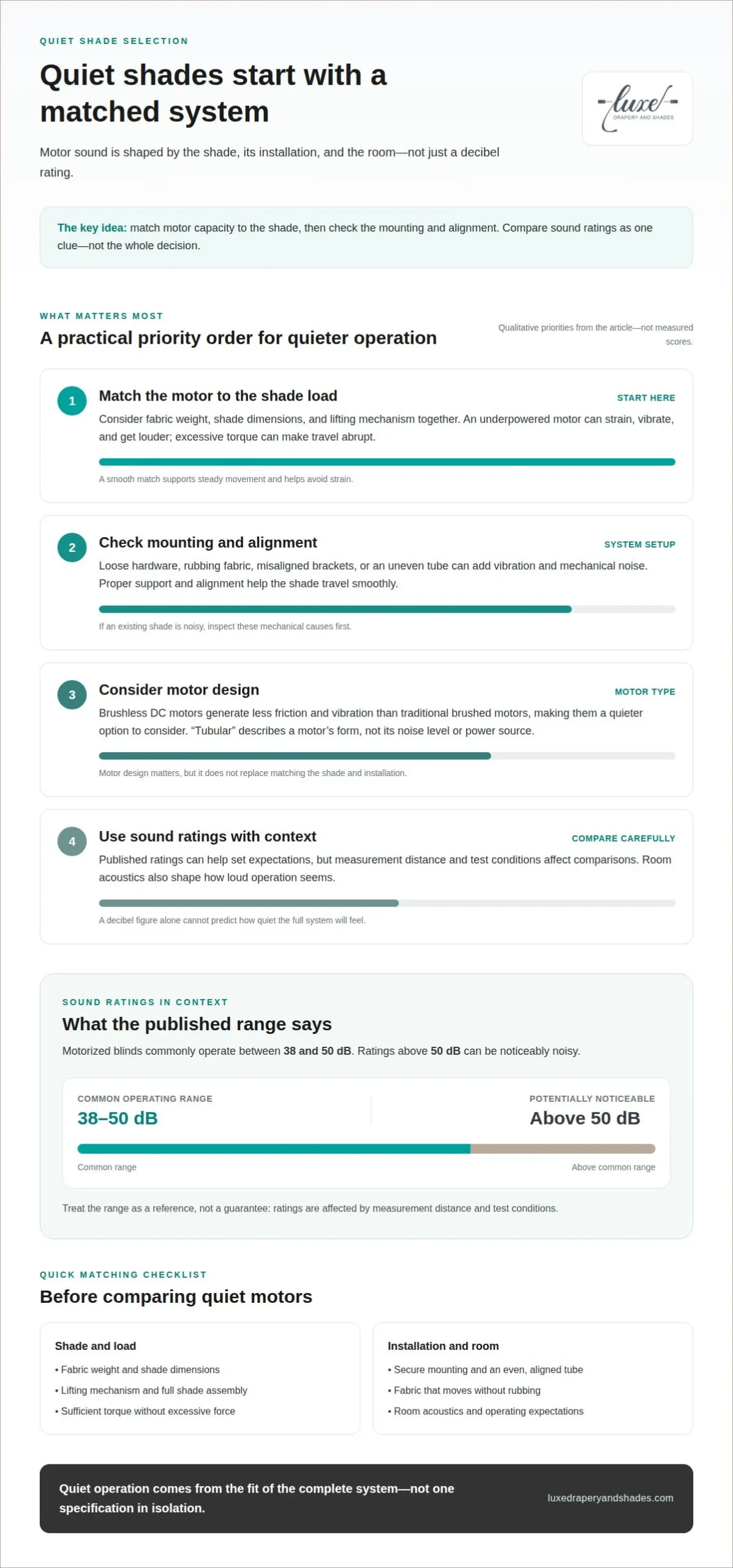
Motor power, torque, shade size and fabric, and room conditions can all affect operating sound. For a quiet space, consider the complete system, including its fit, mounting, and alignment, rather than choosing a motor by one specification alone.
Key Takeaways
- Choose a power source around the room’s wiring, installation plans, and the demands of the shade.
- Match motor torque to the shade’s dimensions, fabric weight, and lifting mechanism for smoother movement.
- Look beyond decibel ratings: mounting, alignment, room acoustics, and operating conditions all shape perceived noise.
- For bedrooms and media rooms, prioritize a quiet, well-matched system and consider how its movement will fit the room’s daily rhythm.
Power Source: Battery, Solar, or Hardwired?
Tubular describes a motor’s form, while battery-powered and hardwired describe its power source. Neither power source alone determines noise. Motor design, shade load, mounting, and alignment also affect sound and performance.
Battery and Hardwired Power
Battery motors operate without a permanent power connection, while hardwired motors draw power through wiring. That difference matters when planning installation, charging, and operation in a particular room. Battery-powered motors may use an internal rechargeable battery or an external clip-on battery wand, which can be positioned differently within a custom covering.
A rechargeable charge typically lasts several months to a year, depending on use and shade size, and rechargeable systems may need charging once or twice a year. Battery power can simplify installation in an existing home. Hardwired motors can connect to low-voltage wiring or standard household electricity, making wiring plans especially relevant during construction or remodeling.
Power Choices and Motor Performance
A tubular motor sits inside a shade tube and can be powered by a battery or wiring. The motor’s form does not identify its power supply, and the power source alone does not predict quietness. Motor design, shade load, mounting, and mechanical alignment are more useful factors when comparing sound and movement.
Battery motors can operate medium-size blinds, while very large blinds typically need wired power to deliver sufficient torque. A roller shade’s size and frequency of use affect battery life, so a frequently adjusted covering may need charging sooner. Hardwired power avoids routine battery charging but requires a suitable wiring plan.
Where the system supports it, solar-assisted power can supplement a battery and reduce reliance on charging alone. Its usefulness depends on available light and the shade’s position: a sun-exposed window differs from a deeply shaded one. Solar assistance does not remove the need to match motor capacity to the covering.
For a battery-powered choice, consider internal rechargeable power versus an external wand, then weigh access for charging against the window’s appearance. For wired operation, account for low-voltage or standard household electricity and the project’s wiring conditions. In either case, a well-aligned tubular motor and appropriately sized shade support smoother, quieter travel.
Matching motor torque to shade size and fabric weight
Torque must suit a shade’s weight, dimensions, and lifting mechanism. An underpowered motor can strain, vibrate, and become noisy; excessive torque can make movement abrupt. RPM describes speed, while torque describes turning force, so neither specification alone predicts quiet operation. Gearing and alignment also affect how smoothly the shade travels. Choosing a quiet motor means considering these factors together.
Start with the window’s actual width and height, then account for fabric weight and roller radius. A basic torque estimate multiplies blind weight by roller radius, though the lifting mechanism matters too. For example, a 2 m by 3 m blackout blind using 400 g/m² fabric has an estimated fabric weight of approximately 2.4 kg, before additional components.
Typical recommendations illustrate how capacity changes with scale: a blind 1.5 m wide and estimated at 5 kg may use 6 Nm; one 2.5 m wide and 8 kg may use 10 Nm. These are examples, not universal matches. Allow sufficient torque margin for smooth travel, without excessive force that could produce abrupt movement.
Clearance matters. The fabric, bottom bar, and changing roll diameter need room throughout the shade’s travel. Roller and Roman shades move fabric differently, so their motors shouldn’t be compared by torque alone. To assess tube compatibility, compare the tube’s internal diameter and keyway grooves with the motor and drive components.
If an existing shade is noisy, first look for loose hardware, rubbing fabric, and incorrect alignment. Misaligned brackets or an uneven tube can cause vibration, while careful installation keeps the shade aligned and supported. Adjustments may reduce mechanical noise without changing the motor’s inherent sound. Installation quality matters when choosing a quiet motor for shades, too.
For motor and control coverage, 1-2 years is an industry norm; review the stated terms alongside service needs. Limit settings define upper and lower travel positions, and correct adjustment helps prevent motor overload. Professional maintenance twice a year can support reliable operation. For a tailored fit, custom roller shades bring fabric, dimensions, and motor integration together.
Factors for selecting motors for quiet spaces
Motor type, shade load, mounting, and room acoustics all shape perceived operating noise. Brushless DC motors generate less friction and vibration than traditional brushed motors, making them a quieter option to consider.
Shade Weight and Motor Selection
Shade weight determines how much work the motor must do, affecting both smooth operation and sound. Heavy fabric or a large roller shade can strain an underpowered motor, causing vibration and added noise.
Match the motor to the window treatment’s fabric, dimensions, and lifting mechanism. A heavier covering needs sufficient torque, while excessive torque can make movement abrupt. This is especially relevant for wide roller shades, where the full shade assembly, not just the fabric, loads the motor during travel.
Motor Types and Quietness
Motor types include tubular motors, commonly fitted inside roller tubes, and DC motors, which may be brushed or brushless. Tubular describes the motor’s format, not its sound level or power source.
Brushless DC motors reduce friction and vibration compared with brushed motors. Published sound ratings can help frame expectations: motorized blinds commonly operate between 38 and 50 dB, while ratings above 50 dB can be noticeably noisy. Compare figures cautiously because measurement distance and test conditions affect the result.
Room choice matters. In bedrooms, quiet home offices, and professional settings where maintaining a calm atmosphere is essential—such as clinical environments like Dental Plus—a faint motor hum can easily disrupt the space. Glass, stone, and other hard surfaces reflect sound, while rugs and upholstered furnishings absorb some of it. A motor that seems unobtrusive in a busy living area may feel prominent in a quiet bedroom or treatment room.
Prioritize windows where shade movement supports daily comfort, such as bedroom windows that need scheduled light control or sun-exposed rooms where covering helps manage afternoon heat. A compatible smart home hub can schedule shades to move at sunrise or during hot afternoon hours. In a bedroom, scheduling movement after your usual waking time can help avoid operation during sleep.
Listen to a full operating cycle from where you usually sit or sleep. A steady, restrained hum differs from rattling, scraping, or repeated clicking, which can point to vibration or misalignment rather than the motor itself.
Quiet shade selection for bedrooms and media rooms
Bedrooms call for restrained operation, while media rooms benefit from shade movement that doesn’t interrupt viewing. Choose the motor, fabric weight, and controls as one system.
Quiet Motors for Bedrooms
Bedroom motors are designed to move shades with minimal sound, helping preserve a calm sleep environment. Motors rated below 35 dB are described as ultra-quiet, making that figure a useful reference when selecting treatments.
Listen to a complete operating cycle from the bed, not only beside the window. Brackets, alignment, and shade weight affect vibration, so installation quality matters alongside the motor rating. A rechargeable motor can suit a bedroom where wiring would complicate the finish, provided charging access is practical.
Quiet Shade Choices for Media Rooms
Media-room shade choices balance sound, light control, and smooth movement. A roller shade that lowers before a film can darken the room without requiring a noisy manual adjustment during viewing.
Evaluate the complete treatment, including its fabric and mounting. Hollow enclosures or lightly supported decorative panels can resonate with motor vibration, making sound more noticeable during quiet scenes. Listen from the seating position through a full cycle, and compare similar configurations under the same conditions.
Compatible smart-home hubs can schedule shades to lower before afternoon sun reaches the screen. This keeps movement outside viewing time and can make operation feel considered rather than distracting.
Comparing Quiet Motor Brands
Brand comparisons are most useful when they focus on motor performance and testing conditions, not reputation alone. Published decibel ratings aren’t directly comparable when measurement distance and test conditions differ.
Compare motors with similar shade configurations, then listen to each through a full cycle from the room’s usual listening position. Note whether the sound is steady or includes clicking, scraping, or rattling. Irregular sounds can indicate alignment or mounting issues, not simply a difference between brands.
For a tailored combination of fabric, motor, and room-darkening needs, explore motorized shade options for your bedroom or media room.
Luxe Drapery and Shades
Luxe Drapery and Shades helps bring window dimensions, fabric weight, room use, and design preferences together in a considered treatment plan. If you’re balancing quiet operation with light control or a polished finish, tailored guidance can help identify what matters most for your space.
Custom Drapery, Roller Shades, Roman Shades, and Honeycomb / Cellular Shades offer different approaches to light, privacy, and texture. The right option depends on the window, the covering’s intended use, and how its materials and construction work with the motor system. Considering these elements together can create a more cohesive result than selecting a motor in isolation.
For help choosing window treatments that suit your room and priorities, contact Luxe Drapery and Shades in Los Angeles.
Shape a Quieter Everyday Rhythm
A well-chosen motorized treatment should feel integrated into the room, not like a separate mechanical decision. As you plan, consider when the shade will move, who will hear it, and how its operation should complement the room. These priorities turn technical choices into a more comfortable daily experience.
Choosing a quiet motor for shades starts with matching the system to your routines, rather than relying on a single specification. Luxe Drapery and Shades can help bring your design preferences and functional needs into the same conversation, so the finished window treatment feels considered in both appearance and use.
Begin planning a quieter window treatment with Luxe Drapery and Shades. A thoughtful choice can make the room feel beautifully composed, every day.
Frequently Asked Questions
How Long Do Low-Noise Electric Blind Motors Last?
A well-matched low-noise shade motor can last 5-10 years or longer, particularly with a lightweight shade and proper maintenance. Actual lifespan depends on operating frequency, shade load, alignment, and how often the system reaches its travel limits. For example, a frequently raised living-room shade experiences more cycles than a rarely adjusted guest-room covering, so duty and fit matter alongside the motor’s build.
Are Automatic Roller Shades Noisy at Night?
Automatic roller shades produce a faint motor hum, which can be more noticeable at night when a bedroom is quiet. To judge the sound realistically, listen from your pillow while the shade completes a full raise-and-lower cycle. If scheduled operation is available, set movement outside usual sleep hours; timing can matter as much as the sound itself.
Are battery-powered shades quieter than wired shades?
No. Battery power doesn’t inherently make a shade quieter than wired power. Motor design, load, mounting, and alignment are stronger acoustic factors. Choose between them based on installation context and power upkeep: a battery setup avoids a permanent power connection, while a wired system depends on suitable wiring. Compare the actual motor and shade combination rather than the power label alone.
How Quiet is Quiet?
For a noise-sensitive room, below 35 dB is described as ultra-quiet, while 35-45 dB is considered low-noise for residential use. These categories offer a starting point, but room acoustics affect what reaches your ear. A motor that sounds subtle in a furnished room can stand out in a quiet bedroom if its mounting or shade alignment adds vibration.
How loud are shade motors in decibels during operation?
Motorized blinds commonly operate between 38 and 50 dB; ratings above 50 dB can be noticeably noisy. A published figure is useful only alongside its measurement distance and test conditions, since mismatched setups aren’t a fair comparison. For context, a refrigerator hum is around 40 dB, while normal conversation is described as 50-65 dB.
What should I consider when choosing a shade motor for a bedroom, nursery, or shared wall?
Prioritize a restrained sound profile, a correctly sized motor, and operating times that avoid sleep. Consider whether the adjacent room is quiet at night, and listen from that side as well as beside the window. Soft furnishings absorb some sound, while hard surfaces reflect it, so the room’s arrangement affects how much motor noise carries into a nursery or shared space.