

Can a single sliver of morning light at the edge of a window truly compromise a five-star guest experience? For the modern traveler, the answer is found in the restorative power of a perfectly dark room. Whether you are embarking on a luxury getaway curated by Sunlover Travel or traveling for business, you likely recognize that while a room’s aesthetic invites a guest in, it’s the quiet confidence of a well-designed sanctuary that earns their loyalty. In vibrant urban centers like Los Angeles, achieving this level of serenity requires sophisticated hotel blackout drapery solutions that masterfully address light leakage and persistent city noise.
Industry data shows that heavyweight, triple-weave fabrics can absorb up to 50% of ambient noise, turning a busy street-side suite into a peaceful retreat. We’ll explore how to elevate your guest rooms using advanced multi-pass linings and the seamless luxury of motorized control systems. This guide previews the essential technical standards for 2026, from NFPA 701 fire safety compliance to the integration of Lutron automation. You’ll discover how custom installation and precision engineering create an environment where energy efficiency meets the high standard of living your guests expect.
Key Takeaways
- Learn the technical distinction between standard room darkening and true hotel-grade blackout performance to ensure 100% opacity for every guest.
- Explore the science of multi-pass linings and how advanced fabric coatings provide essential light blockage without sacrificing a soft, luxurious hand-feel.
- Discover how integrating motorized hotel blackout drapery solutions with systems like Lutron provides guests with effortless, whisper-quiet control over their environment.
- Master the art of balancing utility and elegance by utilizing tailored pinch pleats and premium hardware to achieve a sophisticated, boutique aesthetic.
- Understand why precision professional installation is the final step in eliminating the “light halo” effect through comprehensive wall-to-wall and floor-to-ceiling coverage.
The Standards of Hotel-Grade Blackout Drapery
Luxury isn’t just about the visual impact of a room’s decor; it’s often defined by what a guest doesn’t experience. In the hospitality world, true comfort is found in the absence of unwanted light and the stillness of a quiet environment. Professional hotel blackout drapery solutions are engineered to create a complete void where restorative sleep becomes the priority. While many residential retail products claim to “darken” a room, they frequently fall short of the total occlusion required for a traveler crossing time zones or a guest seeking a sanctuary from the vibrant energy of Los Angeles.
True hotel-grade performance is a technical achievement that transforms a window from a simple opening into a sophisticated protective barrier. For our clients in the Southern California region, this barrier is essential. The city’s perpetual motion and intense coastal sun demand a higher standard of window management that balances aesthetic elegance with uncompromising utility. We believe that a window treatment shouldn’t just be a functional household item, but a lens through which you experience a better, more intentional lifestyle.
Opacity Levels and Light Transmission
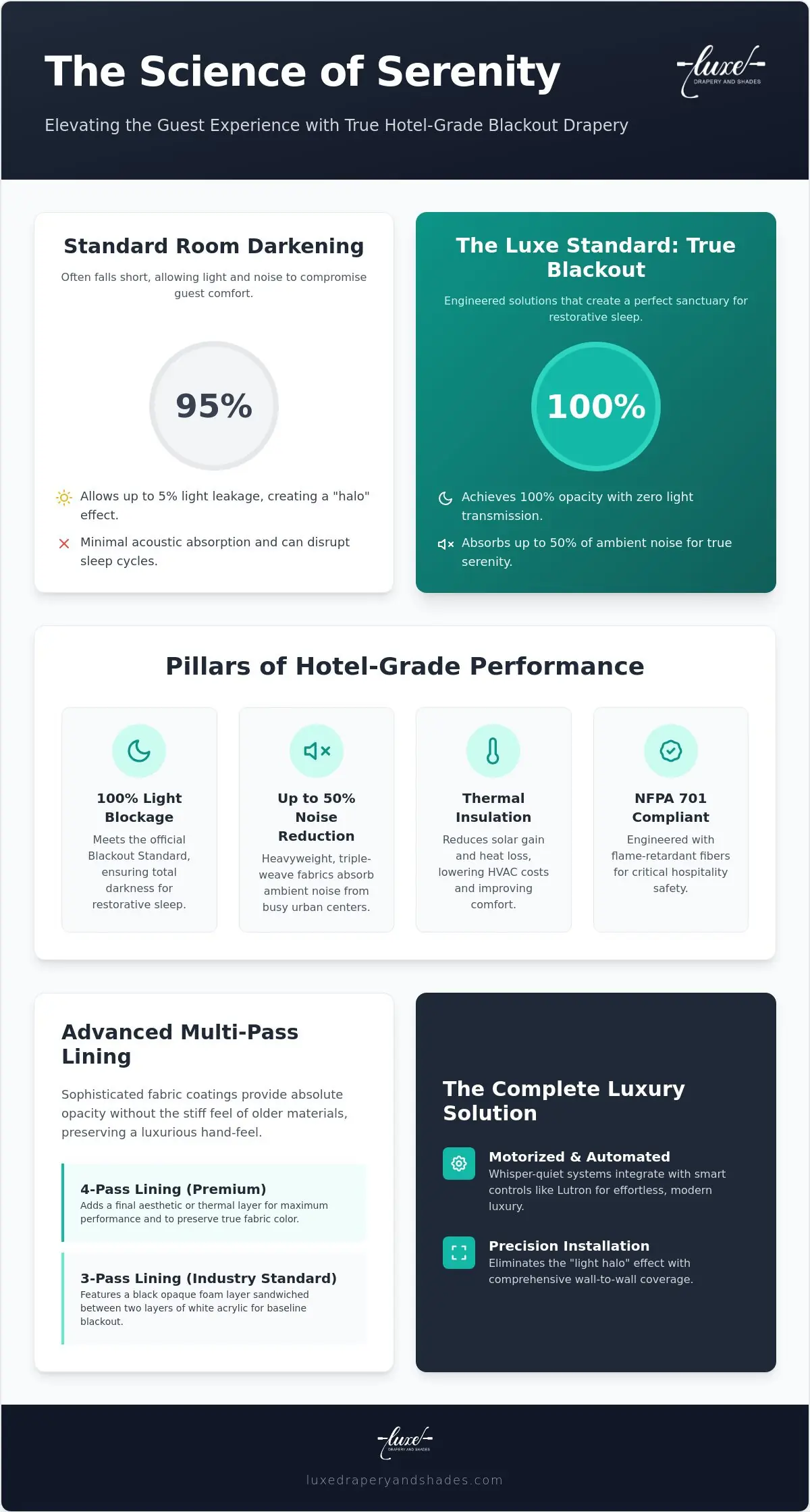
Measuring light transmission involves rigorous testing to ensure a fabric can withstand the brightest environments. While standard room darkening fabrics might block 95% of incoming light, that remaining 5% is often enough to disrupt a guest’s circadian rhythm at dawn. To achieve total darkness, we rely on advanced blackout fabric technologies, specifically the 4-pass lining. This manufacturing process involves multiple layers of specialized coatings applied to the fabric, ensuring that no pinpricks of light penetrate the weave. The recognized Blackout Standard is 100% light blockage under 1,000 lux testing. This level of performance ensures that even the brightest noon-day sun in a Santa Monica suite won’t compromise a guest’s rest.
Thermal and Acoustic Performance
In sun-drenched Los Angeles suites, premium drapery manages the climate as much as the light. High-performance blackout solutions act as a thermal insulating layer, helping to reduce HVAC costs by reflecting intense heat during the summer months. Beyond temperature control, the acoustic benefits are equally vital for guest satisfaction. Heavyweight fabrics, such as velvet or dense triple-weave polyester, can absorb 40-50% of ambient noise. For hotels near the active nightlife of the Westside or the constant hum of urban traffic, this sound dampening is the difference between a restless night and deep, restorative sleep. A silent, dark room is a fundamental pillar of guest wellness that directly translates into positive reviews and brand loyalty.
Advanced Fabric Technologies and Multi-Pass Linings
The elegance of a guest suite relies on the tactile quality of its materials as much as its visual design. When selecting hotel blackout drapery solutions, the challenge lies in merging the industrial necessity of light blockage with the refined hand-feel of high-end textiles. Modern manufacturing has moved past stiff, plastic-like backers. Today’s premium fabrics utilize sophisticated multi-pass chemical coatings that remain supple while providing absolute opacity. We view these textiles not merely as window coverings, but as essential elements that define the rhythm and comfort of a guest’s stay.
A 3-pass process is the industry baseline, featuring a layer of black opaque foam sandwiched between two layers of white acrylic. For the most demanding environments, a 4-pass lining adds a final aesthetic or thermal layer. This ensures that even light-colored face fabrics, like pale linens or soft creams, maintain their true hue without the “graying” effect caused by the internal black membrane. These layers don’t just block light; they significantly reduce window heat loss and solar gain, creating a more stable internal temperature for guest comfort. If you’re looking to balance these technical needs with a specific design vision, exploring custom drapery options allows for the perfect marriage of face fabric and lining.
Safety is equally paramount in commercial settings. Modern blackout materials are now engineered with inherently flame-retardant (IFR) fibers or treated to meet NFPA 701 standards. This ensures that the drapery self-extinguishes if exposed to flame, a critical requirement for hospitality compliance that protects both the property and its occupants.
The Anatomy of a Blackout Panel
A professional-grade panel consists of three distinct components working in harmony. The face fabric, often a lush velvet or a crisp linen, provides the interior’s aesthetic character and texture. Behind it sits the blackout membrane, the technical core that prevents light transmission. Finally, a protective backing faces the window. This layer is designed to resist UV degradation from intense California sun and maintain a uniform, clean appearance from the hotel’s exterior.
Sustainability in Hospitality Fabrics
As of June 2026, new OEKO-TEX regulations have raised the bar for textile safety and environmental responsibility. Modern hospitality standards now prioritize fabrics that minimize chemical off-gassing, ensuring guest sleeping quarters remain healthy and free of volatile organic compounds. Durability is the ultimate form of sustainability; high-turnover hotel environments require fabrics that can withstand frequent operation and commercial cleaning cycles without losing their light-blocking integrity or luxurious texture.
Automated Luxury: Motorized Blackout Drapery Solutions
The intersection of technology and hospitality is most evident in the seamless movement of a room’s environment. Modern hotel blackout drapery solutions have evolved far beyond manual operation, moving toward touchless guest interfaces that prioritize ease and elegance. This transition isn’t just a convenience; it’s an intentional design choice that elevates a window treatment from a simple utility into a lens for experiencing a better, more curated lifestyle. By 2026, smart room automation is expected to be the standard in modern hotels, where guests expect to control their sanctuary with a simple voice command or a tap on a bedside tablet.
Imagine a guest arriving at a suite where the drapes are already drawn to a precise blackout state, ensuring an immediate sense of privacy and calm. In the morning, an automated “reveal” scene can be scheduled to gently part the fabrics, inviting the Los Angeles skyline into the room at a pre-set time. This “wow factor” creates a memorable sensory experience that manual cords simply cannot replicate. Even when technology takes center stage, safety remains the foundation of every installation. All motorized textiles must adhere to rigorous NFPA 701 fire safety standards, ensuring that luxury never comes at the expense of guest security.
Lutron Sivoia and Hospitality Integration
In the most exclusive properties, Lutron has become the preferred standard for achieving whisper-quiet operation and flawless reliability. Choosing Lutron Sivoia in Los Angeles allows designers to unify window treatments with lighting and climate control systems. This integration creates a holistic environment where the room responds to the guest’s needs, maintaining the perfect balance of light and temperature throughout the day without the guest ever needing to lift a finger.
The Practicality of Motorized Hardware
Beyond the aesthetic appeal, motorization offers a significant operational advantage by reducing the physical wear and tear associated with manual handling. Guests often pull on delicate fabrics with varying degrees of force, but automated systems ensure consistent, gentle movement every time. When planning a project, you can choose between hardwired systems for new constructions or advanced battery-powered options for historic hotel retrofits. Selecting the right Motorized Drapery Hardware ensures that the system remains as durable as it is beautiful, providing a long-term return on investment for high-traffic hospitality spaces.
Aesthetic Versatility: Blackout Without the Bulk
The misconception that total darkness requires a heavy, industrial aesthetic is a relic of the past. Modern hotel blackout drapery solutions prove that uncompromising performance can coexist with the airy, sophisticated atmosphere of a boutique Los Angeles suite. By selecting the right heading styles and layering techniques, designers can mask the technical layers of a blackout panel. This approach presents only a refined surface that complements the room’s interior architecture while hiding the multi-pass work occurring behind the scenes.
We don’t believe a functional necessity should ever detract from a room’s beauty. Instead, we view these treatments as essential elements of a curated environment. By utilizing custom hardware finishes, such as brushed brass or matte black, you can align your window treatments with your hotel’s specific branding and metal accents. This attention to detail ensures that the drapery feels like a permanent, high-end fixture rather than an afterthought.
Tailored Heading Styles
The architecture of a drape begins at the top. For a classic, high-end look, Pinch Pleated Drapes remain the gold standard. This style uses permanent folds to create consistent, vertical volume that feels both intentional and timeless. In contrast, Ripplefold systems offer a more contemporary alternative for floor-to-ceiling glass walls. They create smooth, S-curve waves that glide effortlessly along a track, ensuring that even a heavy 4-pass panel hangs with grace rather than bulk.
Color and Texture Trends for 2026
The design direction for 2026 favors a palette of warm neutrals and organic textures that foster a sense of wellness. Sand, terracotta, and soft stone hues are replacing the cooler grays of previous years, creating a sun-drenched feel even when the drapes are closed. Velvet remains a favorite for its superior light absorption and acoustic properties. Its dense pile naturally traps light at the edges, further enhancing the blackout effect while adding a layer of tactile luxury. To maintain brand identity across a large property, we ensure perfect color consistency through precision-dyed commercial batches. This prevents the subtle shifts in tone that often occur with mass-market products.
Layering is the final touch in a versatile window design. By pairing a blackout panel with a delicate sheer, you provide guests with the ability to filter the intense California sun during the day without losing their connection to the outside world. If you’re ready to elevate your guest experience with these sophisticated designs, explore our custom drapery options tailored for luxury hospitality.
The Critical Role of Professional Installation
The most advanced hotel blackout drapery solutions can fail to deliver on their promise if the final execution lacks precision. While high-performance fabrics and whisper-quiet motors are essential components, the true test of a sanctuary room lies in the installation. Even a fraction of an inch of misalignment can create a disruptive “light halo” that ruins a guest’s sleep. In the sophisticated hospitality market of Los Angeles, where expectations are high and the city light is persistent, we treat installation as a technical discipline rather than a finishing touch.
Achieving 100% opacity requires a comprehensive approach that often extends beyond the window frame. Wall-to-wall and floor-to-ceiling coverage is the gold standard for luxury suites, ensuring that light has no path to enter the room. For large-scale commercial projects, working with licensed California contractors is essential. This ensures that heavy motorized systems are securely anchored and that all hardware meets the structural and safety codes required for high-occupancy environments. A professional install protects your investment and ensures the longevity of the fabric and the hardware alike.
Measuring for Zero Light Seepage
A critical detail that DIY approaches often miss is the “return” to the wall. This involves wrapping the end of the drapery panel around the side of the hardware to touch the wall directly, effectively sealing the side gaps where light typically leaks. We also carefully calculate the stack-back, which is the amount of space the fabric occupies when fully open. This ensures that guests can enjoy full window exposure and natural light during the day without the fabric crowding the glass. We recommend a 3-inch floor clearance to maintain an effective acoustic seal while preventing the fabric from dragging on high-traffic surfaces. Finally, a generous center overlap of at least 3 to 4 inches is necessary to prevent light seepage where the two panels meet.
Luxe Drapery and Shades Installation Excellence
Our white-glove approach to Los Angeles hospitality projects focuses on the seamless integration of technology and aesthetics. We don’t just hang fabric; we calibrate an environment. This includes the technical synchronization of motorized drapery with existing Lutron lighting control systems to ensure that every movement is silent and responsive. By prioritizing long-term durability and precision, we ensure that your hotel blackout drapery solutions remain a reliable asset for years. Our commitment to craftsmanship means your windows become a focal point of comfort and a lens for experiencing a better, more restful lifestyle.
Creating the Ultimate Guest Sanctuary
A guest suite is more than a room; it’s a carefully curated environment where every detail contributes to a sense of well-being. We’ve explored how the intersection of multi-pass fabric technology and whisper-quiet motorization creates a sanctuary that is as functional as it is beautiful. By prioritizing total light occlusion and architectural elegance, you don’t just provide a place to sleep; you offer a lens for experiencing a better, more restorative lifestyle. This technical mastery ensures that even the most vibrant urban environments remain outside the guest’s door.
Achieving this level of perfection requires a partner who understands the nuances of high-end design and technical execution. As a licensed and bonded California contractor (CSLB #1066068) and expert Lutron certified installers, we specialize in bespoke LA luxury interiors that demand uncompromising quality. Whether you’re retrofitting a historic boutique property or designing a modern high-rise, our hotel blackout drapery solutions ensure that your windows deliver total darkness without sacrificing aesthetic grace.
We invite you to Schedule a Professional Consultation for Your Los Angeles Hospitality Project today. Let’s collaborate to transform your guest rooms into world-class retreats that leave a lasting impression of quiet luxury and absolute comfort.
Frequently Asked Questions
What is the difference between room darkening and blackout drapery?
Room darkening fabrics reduce incoming light by a significant margin, but only professional hotel blackout drapery solutions provide 100% light blockage. While room darkening might leave a faint glow, true blackout uses multi-pass linings to ensure total darkness under 1,000 lux testing. This distinction is vital for guests who need to rest during daylight hours or those sensitive to persistent urban light pollution.
Can motorized blackout drapes be integrated with hotel management systems?
Modern motorized systems are designed for seamless integration with hotel management platforms and smart room automation. Using Lutron Sivoia technology, properties can coordinate window treatments with lighting and climate controls through a unified interface. To ensure the network backbone for these systems remains secure and reliable, many hospitality firms partner with IT experts like telxcomputers.com. This allows for automated check-in scenes where drapes open to welcome a guest or close to maintain thermal efficiency when the room is vacant.
How do you prevent light from leaking at the top of the drapes?
Preventing light leakage at the top requires a combination of precision mounting and architectural hardware. Installing drapes on a ceiling-mounted track or within a recessed pocket eliminates the gap where light typically escapes. For wall-mounted systems, adding a custom cornice or valance provides a decorative and functional seal that ensures the guest sanctuary remains entirely dark at the upper edge.
Are hotel blackout curtains fire-rated for commercial use in Los Angeles?
Commercial drapery in Los Angeles must comply with strict fire safety regulations to be used in hospitality environments. Professional solutions meet the NFPA 701 standard, which ensures the fabric is flame-retardant and safe for high-occupancy buildings. We prioritize these safety standards alongside aesthetic luxury to protect both guests and property owners while maintaining a high standard of living.
Do blackout drapes help with noise reduction in busy city areas?
Heavyweight blackout fabrics act as an effective acoustic barrier by absorbing a significant portion of ambient street noise. Materials like velvet or dense triple-weave polyester can dampen sound by 40% to 50%, which is essential for properties in busy Westside LA neighborhoods. This acoustic performance turns a noisy city suite into a quiet sanctuary for deep, restorative sleep.
What is a 4-pass lining and why is it better than 3-pass?
A 4-pass lining includes an additional aesthetic or thermal layer compared to the standard 3-pass construction. While a 3-pass lining uses a black opaque layer between two white layers, the 4-pass version adds a final coating that improves the drape’s hand-feel and thermal insulation. It also ensures that light-colored face fabrics don’t appear gray due to the internal black membrane, preserving the fabric’s true color.
How much clearance is needed for motorized drapery hardware?
Motorized drapery hardware generally requires a minimum of 4 to 6 inches of clearance to operate effectively. This space allows the motor and track to sit comfortably behind a cornice or within a ceiling pocket without obstructing the fabric’s movement. Proper clearance is essential to prevent the stack-back from crowding the glass and to ensure the system remains whisper-quiet during operation.
Can I get custom blackout drapes for my home that match hotel quality?
You can certainly bring the same level of luxury and performance to your private residence. We offer custom drapery that utilizes the same commercial-grade multi-pass linings and Lutron automation found in five-star hotels. This allows homeowners to create a professional-grade sleep environment that mirrors the serenity and sophistication of a world-class hospitality suite right in their own bedroom.