

Imagine it’s 4:00 PM on a Tuesday. You’ve curated every detail of your west-facing living room, from the bespoke upholstery to the fine art, yet the space is currently unusable. The sun isn’t just setting; it’s invading. It turns your sanctuary into a greenhouse and renders your television or computer screens unreadable. You shouldn’t have to choose between an expansive view and a comfortable temperature. It’s frustrating when your air conditioning works overtime while your interior design fades under the relentless afternoon glare.
Discover how premium exterior solar screens for west-facing windows act as a sophisticated thermal shield, neutralizing intense heat before it ever touches your glass. This guide explores how high-performance zip screens and Lutron-integrated systems preserve your lifestyle and your home’s aesthetic. We will examine the intersection of energy efficiency and curated design, ensuring your home remains a cool, tranquil retreat even during the peak of the afternoon. By the end of this article, you’ll understand how to reclaim your favorite rooms without compromising on the elegance of your environment.
Key Takeaways
- Learn why exterior solar screens for west-facing windows are more effective than interior treatments by neutralizing thermal energy before it penetrates the glass.
- Understand how to select the ideal openness factor and mesh color to balance high-performance heat rejection with a crystal-clear view of the landscape.
- Explore the engineering of zip screens and why their side-channel technology provides superior wind resistance and a more seamless aesthetic than standard rollers.
- Discover how to integrate your shading with Lutron home automation to ensure your screens deploy automatically as the afternoon sun hits the west facade.
- See how a professional design consultation ensures your custom shading solution complements your home’s unique architectural profile and interior style.
Why West-Facing Windows Require Exterior Solar Protection
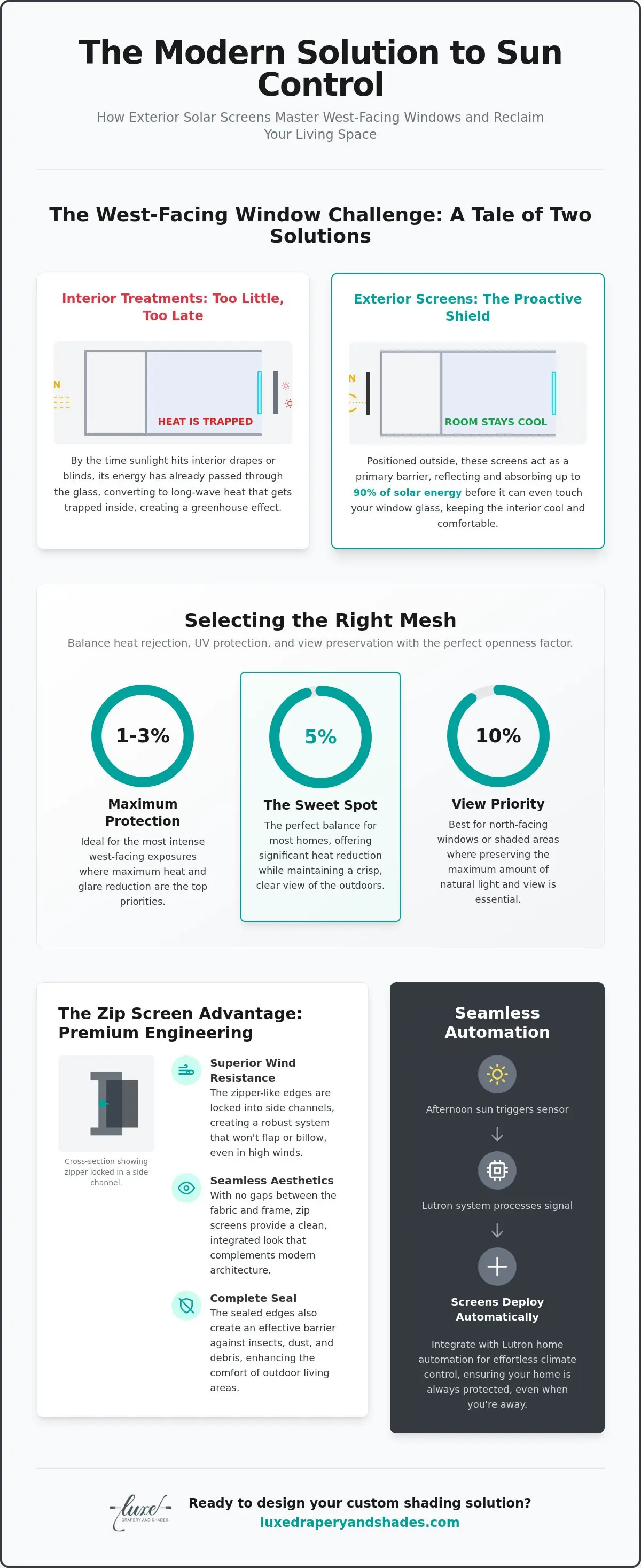
The Los Angeles afternoon sun is famous for its beauty, but for homeowners with expansive west-facing windows, it presents a distinct architectural challenge. During the “Golden Hour,” what should be a time of relaxation often becomes a struggle against the greenhouse effect. As the sun dips lower in the sky, its rays strike the glass at a direct angle, allowing short-wave solar radiation to permeate the room. Once this energy hits your interior surfaces, it transforms into long-wave heat that can’t escape back through the glass. This is why interior treatments often feel insufficient; by the time the sun reaches your drapes or blinds, the heat is already inside your home, radiating into the living space.
Installing exterior solar screens for west-facing windows changes the thermal dynamic entirely. These systems serve as a primary barrier, reflecting up to 90% of solar energy before it ever makes contact with the window pane. In regions like Southern California, where UV intensity remains high year-round, this proactive approach is essential for maintaining a temperate, luxury environment without overtaxing your HVAC system. It’s a method of climate control that prioritizes the comfort of the occupant while protecting the integrity of the home’s interior design.
The Science of Solar Heat Gain Coefficient (SHGC)
Understanding the efficiency of your home’s envelope requires a look at the Solar Heat Gain Coefficient (SHGC). This metric measures how much solar radiation a window allows to pass through. While high-E glass offers some protection, it doesn’t compare to the performance of a physical exterior barrier. By blocking the sun’s path before it reaches the glass, exterior solar screens significantly lower the SHGC of any window, regardless of its original rating. This application aligns with fundamental passive solar design principles, which prioritize external shading to manage internal climates naturally and effectively.
Preserving Your View While Blocking the Heat
One of the most common mistakes in home design is choosing “blackout” solutions to combat afternoon heat. While effective at blocking light, they often result in dark, cave-like rooms that feel disconnected from the beauty of the surrounding landscape. Premium exterior screens offer a more sophisticated alternative. They manage intense glare for home offices and media rooms while preserving the visual connection to your garden or the city skyline. It’s about curated comfort; you gain a usable, cool room in the late afternoon without sacrificing the airy, open atmosphere that defines luxury living.
Selecting the Right Mesh: Openness, Color, and Performance
Choosing the ideal fabric for exterior solar screens for west-facing windows is a nuanced process that balances technical performance with visual elegance. It isn’t just about blocking the sun; it’s about curating the light that enters your home. High-performance fabrics from industry leaders like Mermet and Phifer offer a spectrum of textures and technical specifications that allow for a truly bespoke solution. These materials are engineered to withstand the rigors of the Los Angeles climate while maintaining their structural integrity and aesthetic appeal over time.
Understanding Openness Factors (1% to 10%)
The “openness factor” refers to the density of the weave, representing the percentage of the screen that is open space. This number dictates how much light and heat are filtered before reaching your glass. Selecting the right percentage is a critical step in tailoring the system to your room’s specific needs.
- 1-3% openness: These are the workhorses of solar protection. They provide maximum heat rejection for the most intense west-facing exposures, making them ideal for rooms where temperature control and UV protection are the primary concerns.
- 5% openness: Many designers consider this the “sweet spot” for Southern California residences. It provides a significant reduction in solar gain while maintaining a crisp, clear view of the outdoors.
- 10% openness: This choice is best suited for north-facing windows or areas already partially shaded by architecture, where preserving the view is the absolute priority.
The Role of Color in Thermal Comfort
A common misconception is that light-colored screens are always superior for heat control. While light fabrics do reflect more solar energy, they can create a “veiling glare” from the inside, which obscures your view and makes the screen more visible. According to the U.S. Department of Energy’s research on Energy Efficient Window Coverings, exterior shades are remarkably effective at reducing solar heat gain regardless of color. Darker shades, such as designer bronze or charcoal, are often preferred for luxury applications. They absorb light and reduce glare more effectively, providing superior “see-through” clarity and a more sophisticated, integrated look from the street.
The color you choose should harmonize with your home’s architectural facade while meeting your specific comfort needs. If you’re unsure which combination of openness and color suits your space, a custom design consultation can help you visualize how these high-performance fabrics will transform your afternoon experience. By selecting a mesh that aligns with your home’s orientation, you ensure that your living spaces remain both beautiful and temperate throughout the day.
Zip Screens: The Premium Standard for Exterior Shading
While selecting the correct mesh is essential for thermal control, the hardware delivery system determines the long-term success and aesthetic of your installation. For the discerning homeowner, zip screens represent the pinnacle of exterior engineering. Unlike traditional bungeed rollers that often flap or rattle in a light breeze, zip technology utilizes a specialized side-channel system. This mechanism effectively “locks” the fabric into the tracks along the entire vertical edge, creating a taut, drum-like surface. When you invest in exterior solar screens for west-facing windows, this structural stability ensures that your home remains a tranquil sanctuary, free from the mechanical noise associated with lesser systems.
This sealed design offers a secondary benefit that is often overlooked in luxury home design. By eliminating the gaps between the fabric and the window frame, zip screens act as an impenetrable barrier against insects. This is particularly transformative when the screens are applied to large sliding glass doors or expansive covered patios, effectively extending your usable living space. To understand how these systems can be tailored for larger outdoor areas, you may find our guide to Outdoor Shades in Los Angeles particularly helpful.
Architectural Integration and Hardware
A luxury home demands a seamless aesthetic where functional elements blend into the architecture. Professional-grade zip screens feature custom powder-coated cassettes designed to match your existing window mullions or architectural trim with precision. In modern estates, these systems can often be recessed into the soffit or ceiling, allowing the hardware to remain completely hidden from view when the screens are retracted. For residences in coastal Los Angeles, specifying stainless steel internal components is a non-negotiable standard. These high-grade materials prevent the corrosion and salt-air degradation that typically plague mass-market products, ensuring your exterior remains as pristine as your interior.
Durability and Maintenance of High-End Systems
High-end hardware is built for longevity. These systems are designed to provide reliable service for 15 years or more, far exceeding the lifespan of big-box alternatives. Maintaining these systems is remarkably simple. A periodic cleaning of the side tracks and an occasional application of dry silicone spray will keep the mechanism gliding effortlessly. Reliability is perhaps the greatest luxury of all. The locked-in design of zip screens prevents the fabric “blow-outs” that typically occur during intense Santa Ana winds, protecting your investment and your peace of mind during sudden weather shifts.
Seamless Integration with Lutron Home Automation
The true mark of a modern luxury home lies in its ability to anticipate your needs without manual intervention. For properties with significant western exposures, adjusting window treatments throughout the day can become a tedious chore that disrupts your daily rhythm. Integrating exterior solar screens for west-facing windows into a sophisticated control system transforms these functional barriers into an invisible concierge. Lutron systems allow your home to respond dynamically to the environment, deploying shades precisely when the thermal load is greatest. This level of Lutron Home Automation in Los Angeles ensures that your interior remains cool and protected even if you are away for the afternoon.
Unlike standard industrial motors that announce their presence with a mechanical hum, Lutron motors are engineered for “Quiet Luxury.” They move with a near-silent, fluid motion that respects the tranquility of your living space. This silent performance is essential for maintaining the atmosphere of a well-appointed home, where technology should enhance comfort without drawing attention to itself. It’s about creating a frictionless environment where the transition from a bright morning to a protected afternoon happens effortlessly.
Smart Scheduling and Solar Tracking
Modern automation goes far beyond simple timers. Advanced solar tracking technology allows your shades to descend based on the actual position of the sun relative to your home’s specific coordinates. This ensures your exterior solar screens for west-facing windows are only active when necessary, maximizing your natural light during the morning and providing total protection as the sun moves west. For those who enjoy entertaining, custom scenes like “Evening Sunset” can be programmed to adjust both interior lighting and exterior shades simultaneously. Integration with privacy-focused voice-control platforms like Josh.ai further elevates the experience, allowing for hands-free adjustments that feel entirely natural within a high-end environment.
The Lutron Sivoia Advantage for Exterior Systems
Precision is a hallmark of curated design. Lutron Sivoia technology ensures that multiple shades on a single facade move in perfect synchronization, maintaining the clean horizontal lines of your home’s architecture. This system allows for a sophisticated, layered approach to light control. You can link your exterior screens with interior Lutron Sivoia shades, creating a comprehensive thermal envelope that is as beautiful as it is functional. In expansive estates, the reliability of Lutron’s Clear Connect technology ensures that commands are executed flawlessly across vast distances, providing a consistent and dependable experience throughout the entire property.
If you’re ready to elevate your home’s comfort with intelligent shading, explore our Lutron integration services to see how we can customize a system for your unique architectural needs.
Designing Your Custom Shading Solution in Los Angeles
Designing for the unique intensity of the Southern California light requires more than a catalog selection; it demands an architectural approach. Custom measurement is non-negotiable for exterior solar screens for west-facing windows because even a minor discrepancy can allow slivers of intense light to bypass the mesh, undermining the thermal barrier. A design consultant doesn’t simply offer options. They act as an aesthetic guide, selecting fabrics and hardware finishes that harmonize with the specific lines and materials of your home. This bespoke process ensures that the final installation feels like an original part of the house rather than an afterthought.
Working with a licensed and bonded California contractor provides the necessary peace of mind for such a significant home improvement. These professionals understand the nuances of local building codes and the specific environmental stressors of the region. From the salt air of the coast to the dry heat of the valleys, a professional installation ensures your shading system is anchored correctly and performs reliably for years to come.
From Consultation to Installation
The journey toward a cooler home begins with on-site heat mapping and a detailed glare assessment. We analyze how the sun interacts with your specific floor plan to determine the optimal placement and openness factor for each window. Custom-fit cassettes are then engineered to ensure zero light gaps at the edges, providing a clean, integrated appearance that complements your home’s facade. Expert wiring is a critical component of the process, especially for the motorized exterior systems mentioned previously. This technical precision ensures that your screens respond instantly to your control system without the need for visible or messy cabling.
Enhancing Home Value and Energy Efficiency
Investing in premium exterior shading is a strategic move that pays dividends in both comfort and property value. By stopping heat before it reaches the glass, you significantly reduce the load on your HVAC system. This doesn’t just lower monthly energy costs; it also extends the operational life of your climate control equipment by preventing constant cycling. Beyond the technical benefits, there is the undeniable impact on curb appeal. High-end, uniform window treatments provide a polished, intentional look to the home’s exterior, signaling a high standard of care and design. If you’re ready to reclaim your west-facing rooms, schedule your custom outdoor shade consultation with Luxe Drapery and Shades to begin your transformation.
Reclaim the Elegance of Your Afternoon Sanctuary
Your home is a carefully curated environment, and it should remain a sanctuary at every hour of the day. By installing exterior solar screens for west-facing windows, you stop the aggressive California sun before it can disrupt your comfort or damage your interior art and furnishings. Throughout this guide, we’ve examined how the combination of high-performance zip screens and intelligent automation creates a home that anticipates the movement of the sun, ensuring your living spaces remain cool and inviting even during the peak of the golden hour.
Achieving this level of seamless comfort requires a partner who understands the technical and aesthetic nuances of luxury home design. As a Certified Lutron Gold Dealer and Licensed California Contractor #1066068, we bring specialized expertise in high-wind zip screen installations to every project. We invite you to Request a Private Design Consultation to explore how a custom shading solution can transform your home’s atmosphere. It’s time to enjoy your views without the heat, creating a more temperate and beautiful way of living.
Frequently Asked Questions
Do exterior solar screens really block heat better than interior blinds?
Exterior solar screens are significantly more effective than interior blinds because they neutralize thermal energy before it penetrates the window glass. When you use interior treatments, the sun’s rays have already passed through the pane, heating the air trapped between the shade and the window. Exterior systems reflect and absorb up to 90% of solar radiation on the outside, preventing the greenhouse effect from ever starting within your home.
Can I still see through my solar screens during the day?
You can maintain a crisp, clear view of your landscape during the day, provided you select the appropriate openness factor. Darker mesh colors actually enhance visibility by reducing surface glare, acting much like a pair of high-quality sunglasses for your windows. While the screen provides a sophisticated barrier against heat, it remains remarkably transparent from the inside, ensuring you don’t feel disconnected from your outdoor environment.
Are exterior zip screens durable enough for high winds in Los Angeles?
Specialized zip screens are engineered specifically to withstand the intense wind conditions often found in Los Angeles, including Santa Ana events. The side-channel technology locks the fabric into the tracks along the entire vertical edge, preventing the material from flapping or blowing out. This structural integrity ensures the system remains quiet and functional even when traditional bungeed rollers would be at risk of damage.
Can I motorize my existing exterior solar screens?
Motorization typically requires a comprehensive system designed for automation rather than a simple retrofit of manual screens. High-end motors are integrated into the headbox during the manufacturing process to ensure precision and quiet operation. If you currently have manual exterior solar screens for west-facing windows, upgrading to a fully motorized system is the most reliable way to achieve seamless smart home integration and synchronized movement.
How do I clean and maintain my exterior solar screens?
Maintenance is remarkably simple and requires only occasional attention to keep the system performing at its peak. You can rinse the mesh with a garden hose and use a soft brush with mild, soapy water for any stubborn debris. It’s also beneficial to keep the side tracks clear of dust or grit, ensuring the motorized components continue to glide with the silent, fluid motion expected of a luxury installation.
What is the best openness factor for a west-facing window?
For the intense exposure of a west-facing facade, an openness factor of 1% to 5% is generally recommended. A 1% or 3% weave provides the highest level of heat rejection and UV protection, which is vital for preserving expensive interior art and furniture. A 5% weave is often considered the perfect balance for exterior solar screens for west-facing windows, offering substantial thermal relief while maintaining a more expansive view of your surroundings.
Will exterior screens affect the look of my home from the street?
High-end exterior screens are designed to enhance your home’s architectural profile rather than detract from it. With custom powder-coated cassettes that match your window trim, the hardware often becomes an invisible part of the building’s facade. When deployed, the screens provide a uniform, sophisticated appearance that signals a well-maintained and thoughtfully designed estate, actually increasing curb appeal through consistent window aesthetics.
Do these screens provide privacy at night when the lights are on?
Solar screens don’t provide privacy at night once the interior lights are activated. The transparency of the mesh is determined by which side is more brightly lit. During the day, you can see out while others cannot see in; at night, this effect reverses. For total evening privacy, we recommend layering your exterior screens with interior custom drapery or motorized shades to create a complete, private sanctuary.