

A historic home doesn’t have to choose between architectural character and everyday comfort. When upgrading older residences throughout the Los Angeles area, including Pasadena properties, custom window treatments for historic homes in Pasadena can be tailored to each window, room, and interior style by experts like Luxe Drapery and Shades. The estimate depends on factors such as window size, material, and design.
It’s natural to want to see how fabrics, finishes, and shade styles will look before choosing. Samples help you compare texture and color, while the treatment should also suit the window’s proportions and the room’s light. In older homes across our Los Angeles service region, including Pasadena, unusual window dimensions and strong afternoon sun make those details especially important.
Explore what can influence the cost of custom blinds and plantation shutters, how drapery options differ, and which treatments can complement historic architecture while helping manage heat and insulation. You’ll also learn how cellular shades can suit older homes with single-pane windows, and how to think about mounting and visible treatments in neighborhoods with historic designations.
Key Takeaways
- Understand how window size, material, and style shape custom blinds and shutter costs, and why precise professional measuring matters.
- Compare pleated drapery choices for formal rooms and consider how fabric and lining influence the finished look.
- Explore treatments that can help manage afternoon sun and support insulation in older homes with single-pane windows.
- Match shutters, Roman shades, and other options to historic architecture while accounting for distinctive windows and visible exterior treatments.
How much do custom blinds and shutters cost in Pasadena?
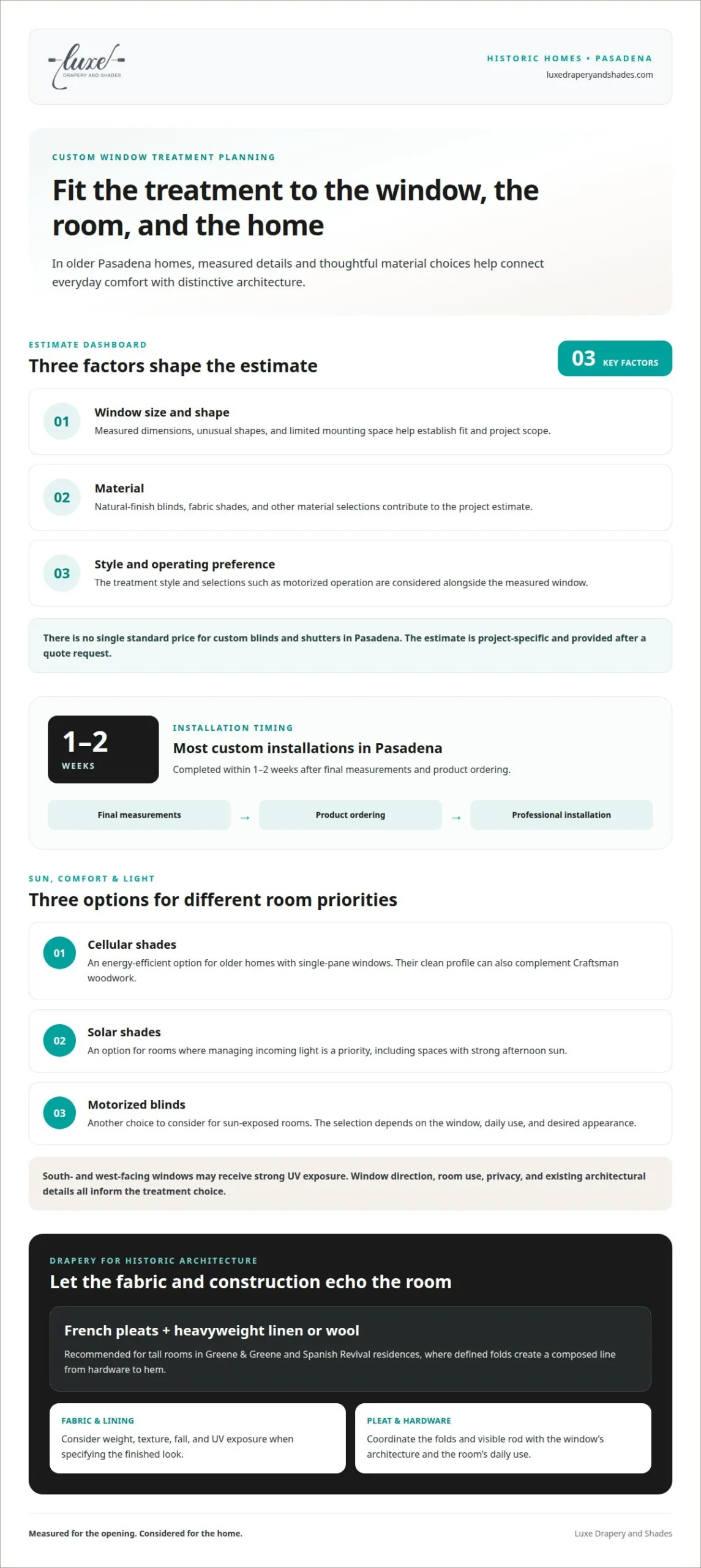
There is no single standard price for custom blinds and shutters in Pasadena. Window size, material, and style affect the estimate. Professional measurement helps establish the fit and project scope.
Consultation and Measurement
A consultation begins by considering each window’s dimensions, shape, and role in the room. The professional measures the openings and notes details that can affect fit, such as an unusual shape or limited mounting space. These measurements help determine which shades or shutters suit the window. They also establish the specifications used for the estimate and subsequent order.
In-Home Estimates
An in-home estimate connects the selected treatment to the actual window and room. The professional can consider the material, style, and operating preference together, rather than pricing from a generic size. For example, a cellular shade and a motorized option involve different selections. The estimate reflects those choices, along with the measured window dimensions. Pricing depends on the project and is provided after a quote request.
Professional Installation
After final measurements and product ordering, most custom window treatment installations in Pasadena are completed within 1-2 weeks. Professional installation puts the ordered treatment in place according to the measured opening and chosen mounting approach. For shutters or shades, correct alignment supports a considered appearance and smooth operation. The installer fits the selected treatment to its specific window, rather than relying on a standard, one-size solution.
Material and design choices shape the estimate alongside window dimensions. A natural-finish blind, an elegant plantation shutter, and a fabric shade each represent different selections. Cellular shades may be considered where energy efficiency is a priority, while motorized operation is another design choice. The consultation and measured estimate bring these factors together, making it easier to compare options for each Pasadena room without relying on a broad price range.
Custom curtains and pleated drapery
In Pasadena’s historic homes, drapery can complement architectural lines while suiting each room’s daily use. Fabric, pleat, lining, and hardware all shape its appearance and function.
Custom Curtains
Custom curtains are shaped around the window’s proportions and the room’s existing palette. Consider how the fabric’s weight, texture, and fall relate to woodwork, wall color, and furnishings. A refined material can soften a formal room, while a quieter fabric can preserve attention on detailed trim. South- and west-facing windows may receive strong UV exposure, making lining an important part of the specification.
Think about how the drapery will be used, too. A living room may call for panels that frame the view, while a bedroom may need fuller coverage. Consider the architecture and daily use together so the finished treatment feels at home in the room.
Custom Drapes
Custom drapes offer a tailored way to bring height, softness, and visual rhythm to formal interiors. For tall rooms in Greene & Greene and Spanish Revival residences, French pleats in heavyweight linen or wool are recommended. The defined folds suit generous windows and create a composed line from the hardware to the hem.
Curtains and drapes are often used interchangeably, but construction and material shape their character. Heavier fabric can give a tall room a more substantial presence; a lighter look may suit a space with delicate detailing. Drapery hardware also contributes to the overall composition, especially when the rod remains visible.
For a considered result, coordinate fabric, pleat, lining, and hardware with the window’s architecture and the room’s use. Explore custom drapery options as you refine those choices for your Pasadena home.
Energy efficiency, heat reduction, and insulation
Older Pasadena homes often balance architectural character with changing indoor comfort. Single-pane windows can make treatment selection especially relevant to insulation. Honeycomb cellular shades are an energy-efficient option for older homes with single-pane windows. Their tailored appearance can also suit Craftsman interiors, where a clean profile complements considered woodwork. Precise measurements help treatments fit distinctive openings and support a composed finish. The best choice depends on window orientation, room use, and the desired balance between light and privacy.
Pasadena’s foothill orientation can bring strong UV exposure to south- and west-facing windows. Lining specification matters for these exposures, particularly where drapery is part of the room’s design. A professional considers the window’s direction alongside the fabric, shade, or blind selected. That approach helps connect the treatment’s practical role with the home’s architecture, rather than treating every opening alike. For example, a sun-exposed living room and a shaded bedroom may call for different choices.
For rooms with strong afternoon sun, solar shades, cellular shades, and motorized blinds are options to consider. Each has a distinct look and function. Solar shades can suit rooms where managing incoming light is a priority; cellular shades are an option for homeowners focused on energy efficiency. Motorized blinds offer another choice for sun-exposed rooms. The right selection depends on the window, daily use, and desired appearance.
Historic homes may have windows with unusual proportions or shapes, so accurate measurements matter for both fit and appearance. During planning, consider orientation, sun exposure, privacy, and existing architectural details together. This helps balance practical priorities with a considered finish, whether the room is a formal Craftsman living area or a quieter bedroom. Rather than using one treatment throughout, choose for each opening and room.
Window treatments suited to historic Pasadena homes
Historic Pasadena windows often have distinctive proportions, so coverings should suit both the architecture and the opening. Custom sizing can accommodate unusual dimensions while preserving privacy and light control.
Custom Versus Ready-Made Treatments
Custom window treatments for historic homes in Pasadena can be sized for non-standard openings, while ready-made options use standard dimensions. Samples help compare fabrics, materials, and colors against existing woodwork before choosing. In a historic district, mounting and visible exterior treatments deserve consideration. Designation-related requirements can vary, so the appropriate approval process depends on the property and proposed work.
Historic Style Compatibility
For a Craftsman home, hardwood plantation shutters or natural-fabric Roman shades can complement its character. Tall formal rooms in Greene & Greene and Spanish Revival residences suit French-pleated drapery in heavyweight linen or wool. Victorian and Spanish Colonial homes call for choices that respond to their individual window shapes, trim, and interior details.
Compare samples with original finishes. Choose colors and textures that support the architecture without distracting from its details. Period interiors also benefit from coordinating natural window light with ambient accents; homeowners seeking traditional handcrafted stained-glass fixtures can explore tiffanylighthouse.co.uk for complementary design inspiration.
Preserving Original Windows
Custom window treatments for historic homes in Pasadena can be sized to fit precise dimensions and support privacy and light control without replacing original windows. Consider treatments and mounting in relation to the frame, trim, and opening. For distinctive historic windows, a tailored fit helps avoid coverings that obscure architectural details or sit awkwardly within the opening.
Materials and Hardware
Choose fabrics, materials, and hardware in relation to the home’s architecture and each room’s use. Natural-fabric Roman shades complement Craftsman character; heavyweight linen or wool suits formal rooms. Faux wood is another material option. Samples help compare colors with existing finishes, while hardware should feel visually compatible with the surrounding trim.
Explore custom treatments for historic windows to consider a tailored direction for your home.
Luxe Drapery and Shades: Custom Drapery
Luxe Drapery and Shades helps homeowners bring historic architecture and tailored window treatments together. Custom drapery suits rooms where fabric, proportion, and pleat matter; Roman shades offer a refined, streamlined look. Roller shades and cellular shades are other options for managing light while complementing a Pasadena home.
For an older home, start with the window’s dimensions, the room’s daily use, and the finish you want. These details help shape a treatment that feels considered rather than generic. Explore fabrics and styles alongside the home’s existing trim, colors, and architectural details.
Contact Luxe Drapery and Shades to discuss custom drapery for your home.
Shape the Next Chapter of Your Pasadena Home
Choose a treatment that feels at home with your architecture and supports how you use each room. For custom window treatments for historic homes in Pasadena, consider how fabric, color, and operation can add comfort without overpowering original details. Samples can help you picture the result in your space.
Luxe Drapery and Shades offers custom drapery, Roller Shades, and Roman Shades for rooms with distinct proportions and design needs. The right selection can make a window feel thoughtfully integrated, not simply covered. Bring your preferred textures, colors, and priorities into the conversation to find a direction that suits your home’s character.
Contact Luxe Drapery and Shades to explore a tailored approach for your windows. Let the details guide you toward a more comfortable, beautifully considered home.
Frequently Asked Questions
Can I See Samples Before Choosing My Window Treatments?
Yes. Samples help you compare fabric texture, color, and finish before choosing. View them beside your Pasadena home’s woodwork and wall colors, since indoor light can change how a shade appears. A fabric that looks warm in one setting may read differently beside darker trim. Compare options in the room where the treatment will be installed.
Can you match window treatments to my Pasadena home’s existing woodwork?
Yes. Window treatments can complement existing woodwork without matching it exactly. Compare samples with the trim’s tone, grain, and finish, then consider the room’s furnishings and natural light. A Roman shade in a related natural tone can create harmony, while a subtle contrast keeps detailed woodwork distinct. The same approach works for homes throughout the Los Angeles area.
What window treatments are best for historic Pasadena Craftsman homes?
Hardwood plantation shutters and natural-fabric Roman shades are recommended options for historic Pasadena Craftsman homes. Shutters can echo the home’s crafted character, while Roman shades offer a softer textile presence. Consider the window’s proportions and the amount of trim you want to keep visible. Samples can help you compare finishes with existing woodwork before settling on a complementary look.
How long does installation take in Pasadena?
Most custom window treatment installations in Pasadena are completed within 1-2 weeks after final measurements and product ordering. This is the typical project timeline from those steps to completion, not a stated duration for the installer’s visit. The process includes accurate measurements, product ordering, and scheduled installation. For a Pasadena home, the final fit depends on the selected treatment and each window’s dimensions.
What custom window treatments suit historic homes in Pasadena?
Custom drapery, Roman shades, plantation shutters, and cellular shades can suit historic Pasadena homes, depending on the room and window. Tailored sizing helps address non-standard openings. A formal room may call for drapery, while a smaller window may suit a shade with a more streamlined profile. Choose materials and colors with the home’s architectural details in mind.
What window treatments improve energy efficiency in older Pasadena homes without damaging historic windows?
Honeycomb cellular shades are an energy-efficient option for older Pasadena homes with single-pane windows. Accurate sizing helps the treatment fit the opening, while the mounting approach should be considered in relation to the original frame. Think about privacy, light, and insulation together so the covering suits the room. Historic windows vary, so consider each opening individually.