

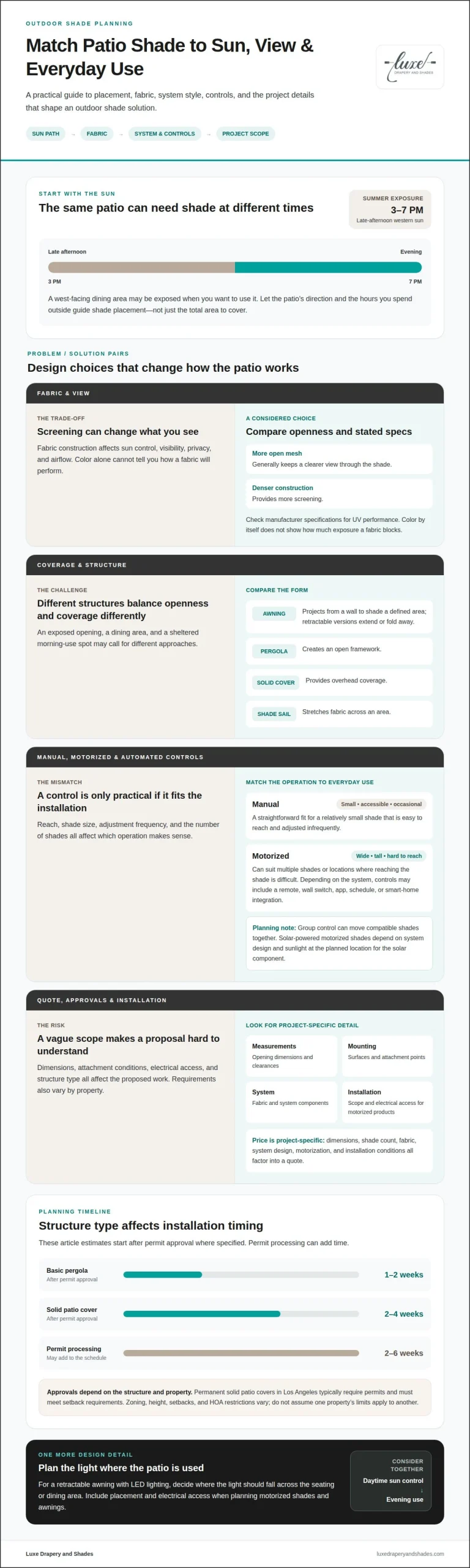
Patio direction shapes where shade is needed and when. Custom patio shade solutions in Los Angeles should account for the sun’s path: late-afternoon western sun can make outdoor spaces difficult to use from 3-7 PM during summer months. The right placement and system can help make the patio more comfortable while preserving its open, considered look.
If one part of your patio is pleasant in the morning but exposed later, its orientation is an important clue. Custom patio shade solutions in Los Angeles should account for how sunlight moves across the space and how you plan to use it, not just how much area needs coverage.
This guide explains how patio orientation affects shade placement, how fabric influences sun control, visibility, privacy, and airflow, and when manual or motorized operation makes sense. It also compares exterior shades with interior window treatments, helping you identify the details that shape a tailored outdoor solution.
Key Takeaways
- Use the patio’s direction and the hours you spend outside to guide where shade should be placed.
- Choose fabric with the balance of sun blockage, visibility, privacy, and airflow that suits the space.
- Match the control method to how often you adjust the shade and how accessible the installation is.
- Understand how exterior shade systems differ from interior treatments, then consider which approach best complements your home.
What Are Outdoor Shades?
Outdoor shades manage direct sun at patios, pergolas, outdoor kitchens, and large exterior openings. An awning projects from a wall to shade a defined area, while a patio shade covers or screens an opening. Placement matters: a west-facing dining area, for example, needs a different approach from a sheltered spot used in the morning.
Outdoor performance depends on the fabric, hardware, installation, angle, and manufacturer specifications. Materials designed for exterior use are selected to suit outdoor exposure, but no single fabric fits every setting. Construction influences sun control, airflow, visibility, and care. A useful quote identifies the proposed fabric and system rather than describing the material only as “durable.”
When reviewing a Los Angeles patio shade proposal, look for clear details about measurements, mounting surfaces, attachment points, clearances, system components, and installation scope. For motorized products, the plan should also address electrical access. These specifics make it easier to understand the proposed work.
Permit requirements depend on the structure. Permanent solid patio covers in Los Angeles typically require permits and must meet setback requirements from property lines. That does not establish the same rule for every awning or pergola; the structure type matters.
Zoning, height, and setback limits vary by property, while HOA restrictions are set out in community governing documents. Review the proposed structure’s location, dimensions, and attachment as part of the planning process. Don’t assume limits for one neighborhood apply to another property.
There is no single price for custom patio covers, pergolas, or retractable awnings. A project-specific quote accounts for dimensions, shade count, fabric, system design, motorization, and installation conditions.
The process begins with measuring the opening and assessing mounting surfaces, attachment points, clearances, and electrical access. Installation timelines vary by structure: a basic pergola typically takes 1-2 weeks after permit approval, while a solid patio cover typically takes 2-4 weeks. Permit processing can add 2-6 weeks.
If you’re planning a retractable awning with LED lighting, decide where the light should fall across the seating or dining area. Motorized patio shades and awnings make adjustment convenient; include placement and electrical access in the design. Together, these choices shape how the outdoor space works from daytime sun control through evening use.
Custom fabrics, colors, and sun blockage
Fabric construction, color, and openness all affect patio shade performance. In California, match these choices to the sunlight, views, and privacy needs around your outdoor space.
Custom Fabric and Color Choices
Start by identifying your priority: stronger sun blockage, a clearer view, airflow, or daytime privacy. Fabric construction affects each, so color alone cannot determine performance. Compare samples with your home’s exterior finishes and landscape; a warm neutral may blend with stone, while a deeper tone creates contrast. For outdoor use, consider the manufacturer’s specifications as well as the fabric’s appearance.
Shade Styles and Mesh Options
Mesh openness affects how much of the view remains visible through a shade. More open fabric generally preserves a clearer outlook, while denser construction provides more screening. Privacy also depends on color, exterior lighting, neighboring sightlines, and whether you use the patio after dark. Pergolas create an open framework, solid patio covers provide overhead coverage, shade sails stretch fabric across an area, and retractable awnings extend or fold away. Each option balances coverage and openness differently.
Compare options by considering the area to cover and the view you want to keep. A mesh shade across a patio opening, for example, can screen the space while preserving some outward visibility. Openness and color work together, so assess both rather than treating them as separate choices.
Heat and UV Exposure Reduction
A shade reduces direct sun on the patio by placing fabric between the sun and the space. Its effect depends on coverage, fabric construction, and placement. Assess UV performance using the fabric’s stated specifications; color alone does not show how much exposure it blocks.
For a Southern California patio, consider when you use it and the direction of incoming sunlight. Choose coverage and fabric openness accordingly: more open mesh retains visibility, while denser fabric emphasizes screening. This comparison helps balance reduced glare and sun exposure with airflow and views.
Manual, motorized, and automated controls
Control type affects how easily an outdoor shade responds as sunlight shifts. Consider how easy it is to reach, how often you’ll adjust it, and whether several structures should move together. A compact shade beside a ground-level dining table has different control needs from a tall screen across a wide opening.
Manual operation can suit a relatively small shade that is easy to reach and adjusted infrequently. It keeps operation straightforward without requiring smart-home integration. For example, you might choose manual control for an accessible patio screen used occasionally. Practical access is key: a control that is comfortable to use at installation should also work well in everyday outdoor living.
Motorized shades can be useful for wide openings, tall installations, multiple shades, or hard-to-reach locations. Depending on the motor and control system, operation may use a remote, wall switch, smartphone app, schedule, or smart-home integration. Group control can move compatible shades together, such as screens along an outdoor dining area. Match the control method to how often you expect to adjust the shades.
Solar-powered motorized shades are another configuration to consider. Their suitability depends on the system design and sunlight at the planned location for the solar component. During planning, account for shaded mounting locations and your preferred control method. This helps distinguish a solar-powered arrangement from a motor using another power setup.
Motorized louvered systems use adjustable overhead slats to manage sunlight over a defined area. They move differently from roller shades, which raise or lower fabric across an opening. A louvered structure may suit an outdoor dining space where overhead sun control is central, while a vertical screen addresses exposure at the side. The layout determines which movement is most useful.
For a tailored setup, map each shade to its access point and intended use. Then decide whether independent controls or grouped operation better suit the space. Lutron lighting control systems can integrate with compatible motorized shades, bringing shade operation into a coordinated home-control approach. Choose automation for practical convenience, not simply because more controls are available.
Exterior and interior shade system differences
The key difference is placement: exterior shades intercept sunlight before it reaches the glass, while interior shades manage light after it enters. This affects how each system serves a room or patio. For example, an outdoor screen can shade a sliding-door opening, while an indoor treatment adjusts glare and privacy from inside.
Exterior installations must suit outdoor exposure and the opening they cover. Depending on the application, systems may use side channels, cable guides, tracks, or guided bottom rails to guide the shade as it moves. The right arrangement depends on the opening and system design, not just the fabric’s appearance.
Interior shades sit inside the home, where access and room use shape the choice. A living room with a bright view may benefit from a treatment that softens glare while preserving visibility. A bedroom may prioritize privacy instead. Interior options also offer varied textures and folds, so a shade can complement furnishings while managing incoming light.
Neither placement replaces every function of the other. An exterior screen can reduce direct sun on a patio before it reaches a large glazed opening; an interior shade can refine brightness after sunlight enters. In a home with varied indoor and outdoor uses, combining systems can address both sides of the glass. Let the goal guide your choice: patio comfort, interior glare control, or both.
For a good fit, match the system to the exposure and daily use of the space. Consider which opening receives direct sun, whether you want to preserve the view, and whether the treatment belongs outside or inside. Then coordinate coverage, fabric, and operation with that purpose. This sequence clarifies the choice without treating every shade as interchangeable.
Explore tailored shade solutions to consider how exterior and interior treatments can work together across your home.
Luxe Drapery and Shades: Custom Drapery
Luxe Drapery and Shades can bring interior light control and outdoor shade planning together in a cohesive design. Choose custom drapery for a tailored finish around windows, or consider roller shades for a streamlined way to manage incoming light.
Roman shades add a soft, structured profile, while cellular shades have a distinct construction. The right choice depends on the room’s light, privacy needs, and the atmosphere you want to create. These interior treatments can complement patio shade decisions by addressing sunlight entering through nearby windows.
For a considered approach to your home’s window treatments, contact Luxe Drapery and Shades.
Shape a More Comfortable Outdoor Living Space
Custom patio shade solutions in Los Angeles start with how you want to use your outdoor space. Consider the atmosphere you want, from an open, sunlit setting to a quieter retreat with more control over light. That direction can guide choices throughout the home, especially where patio doors and nearby windows connect indoor and outdoor living.
Luxe Drapery and Shades offers custom drapery, roller shades, and Roman shades to complement your interior design. These treatments can create a considered transition between the patio and the rooms beyond, with options suited to each space’s light and style.
Share your goals for the space and explore the next step with Contact Luxe Drapery and Shades. A well-chosen shade can make everyday time outdoors feel more inviting.
Frequently Asked Questions
Does the Direction of the Patio Matter?
Yes. Patio orientation helps you identify when direct sunlight reaches the seating area. A west-facing dining space, for example, may need more afternoon coverage, while a patio used in the morning may need shade earlier in the day. Consider where people sit, eat, or gather, then align the coverage with those activities. This helps position the shade where it can make a practical difference.
What About Wind?
Wind can place stress on exposed shade materials and hardware. A retractable system can be drawn back when conditions call for it, following the manufacturer’s operating guidance. For a fixed installation, consider the mounting surface and attachment points during design. Don’t assume every fabric or structure handles wind the same way; product specifications describe the intended conditions.
What custom patio shade solutions are available in Los Angeles?
Los Angeles options include outdoor shades, zip screens, awnings, and pergolas. A zip screen can suit a large exterior opening, while an awning can extend coverage over patio seating. A pergola creates a defined outdoor structure. The right fit depends on whether you want overhead shade, screening at the sides, or both across the spaces you use.
Which patio shade materials work best for Los Angeles sun, heat, and coastal weather?
The best material depends on the balance you want between sun blockage, airflow, visibility, and privacy. For a home near the coast, compare fabric and hardware specifications for the intended outdoor exposure. Color and mesh openness also affect the view and screening. Use the manufacturer’s material guidance to match the shade to its setting, rather than choosing by appearance alone.
What maintenance, wind risks, and warranties should I consider for patio shade solutions?
Follow the fabric and system manufacturer’s care instructions, and keep moving components clear of debris. Wind exposure varies by installation, so operate retractable shades according to their guidance and consider how the mounting points support the system. Review written warranty terms to understand what they cover, including fabric, hardware, installation, and exclusions. These details clarify care and coverage expectations.