

The most opaque fabric isn’t always the best choice. In Los Angeles, the right custom outdoor shade fabrics depend on how you want to use your space, from softening strong sunlight to preserving a view or creating a more private retreat. Openness, color, and weave all affect the look and feel of a shade, while your home’s exposure and design help determine which qualities matter most.
Choosing shade for a patio, balcony, or outdoor living area means balancing practical needs with the atmosphere you want to create. A fabric that suits an open view may not feel right beside close neighboring sightlines. This guide explains how to compare light, privacy, airflow, views, and appearance so you can describe your priorities and make a considered choice.
Start with the specific conditions around your Los Angeles home, then use them to guide fabric selection and the overall design. Luxe Drapery and Shades provides selection assistance, accurate measurements, a comprehensive quote, and a project timeline before ordering and scheduled installation. That process helps bring your priorities into a design shaped around your outdoor space.
Key Takeaways
- Start with how you want to use the outdoor space, then weigh shade, privacy, airflow, and views together.
- Compare custom outdoor shade fabrics by openness, weave, color, and visual character. Treat these as factors to consider, not guarantees of performance.
- Build a clear project brief with the location, sun exposure, preferred view, privacy needs, and design style.
- Use a tailored design process to align fabric choices and outdoor shade solutions with the character of your home.
- Luxe Drapery and Shades guides the project through selection assistance, accurate measurements, a comprehensive quote, ordering, and scheduled installation.
What Custom Outdoor Shade Fabrics Need to Do in Your Space
A patio may need relief from direct sun while retaining the garden or city view that makes it special. That balance is central to choosing custom outdoor shade fabrics. Fabric selection can shape how an outdoor area looks and feels, including how much of the view remains visible and how private or open the setting seems. The right choice depends on where the shade will go and how you plan to use the space, not just on a fabric label.
Start with the outdoor area, not a fabric label
Begin by identifying the location: a patio, exterior window, balcony, or another outdoor area. Note what’s around it, too. An open outlook may be a priority on one side of the home, while a neighboring window or close boundary may make screening more important elsewhere. Rather than starting with a product description, describe the experience you want in each area.
Next, consider when and how you use the space. A patio used for occasional seating may call for a different balance of shade and view than one used regularly for dining or relaxing. Notice when sunlight reaches the area and where it falls. Morning exposure, late-day sun, and shadows from nearby structures are useful details to include in your project brief.
A useful starting point: balance shade, privacy, airflow, and the view you want to keep.
These priorities can compete, so rank them instead of treating every goal as equally important. Is preserving the outlook essential, or would more screening make the space feel more comfortable? Do you want a sheltered-feeling dining area, or one that remains visually open? Naming the trade-offs gives the design process clear priorities to work from.
Consider the Los Angeles setting
In Los Angeles, a home’s orientation, surrounding buildings, landscaping, and nearby views can make each outdoor area distinct. Consider how sunlight moves across the space and whether neighboring homes or public areas affect your sense of privacy. Rather than assuming one solution suits the whole region, focus on the conditions around the specific patio, window, or outdoor living area.
Record what you notice at the times you’re most likely to use the space. A note such as “late-day sun reaches the dining table” or “keep the hillside view visible” is more useful than choosing based on appearance alone. For an overview of one type of outdoor shade structure, the Shade Sail Wikipedia article describes shade sails and their design. Luxe Drapery and Shades’ Los Angeles outdoor shades guide also explores outdoor shading as part of a home’s exterior living spaces.
Once you’ve described the setting and ranked your priorities, fabric selection becomes a more purposeful design decision. You’re defining the balance of comfort, outlook, and privacy that suits the way you live outdoors, not simply choosing a color or texture.
How Outdoor Shade Fabric Properties Shape Light, View, and Privacy
A fabric’s appearance is only one part of the decision. Openness, weave, color, and material can each influence how an outdoor shade looks and feels, but none is a shortcut for predicting every result. Compare these qualities in context: a fabric that suits an open landscape may feel less appropriate where screening is a higher priority.
Keep four goals distinct. UV protection concerns ultraviolet radiation; visible-light filtering describes how daylight enters and appears in the space. Privacy relates to how clearly people can see through the shade, while airflow concerns how freely air moves through it. Appearance and openness alone don’t establish a specific UV rating or guarantee a particular level of privacy or ventilation.
Understand openness, view, and privacy
Openness is a useful way to compare fabrics. Broadly, it refers to how much of the fabric’s surface allows light and a view to pass through. A more open construction may preserve more of an outlook, while a less open one may create a more screened impression. The actual balance depends on the fabric and installation, so treat openness as a comparison point rather than a promise.
Privacy also depends on viewing conditions, including sightlines and differences in light between the shaded area and its surroundings. Consider what you want to see outward and what you’d prefer to screen from nearby. For example, someone who values filtered daylight and a distant view may prioritize openness; someone facing a close neighboring window may put visual screening higher on the list. Those priorities can lead to different design choices.
Compare fabric categories without assuming performance
Knit, woven, and reflective are useful terms for organizing a comparison, not guarantees about how a particular shade will perform. Knit and woven describe construction approaches; “reflective” generally refers to a surface or treatment intended to reflect light or solar energy. Details vary by product, so a category name alone doesn’t establish UV protection, visible-light reduction, privacy, or airflow. Color and texture matter visually, but they aren’t substitutes for verified performance information.
For a useful comparison, consider openness, construction, color, and any documented performance information separately. Relate each option to the conditions in your space rather than expecting one feature to meet every need. A shade that preserves an outlook may provide less visual screening than you want; one that feels more private may change the quality of daylight. Understanding these trade-offs helps you choose a direction that fits the setting.
- For daylight and a view: give openness and the desired outlook particular attention.
- For visual screening: consider sightlines and viewing conditions alongside fabric construction.
- For UV protection: look for relevant product-specific information rather than inferring it from color or weave.
With these distinctions in mind, explore outdoor shading solutions as part of a design conversation shaped around your space, priorities, and preferred outdoor experience.
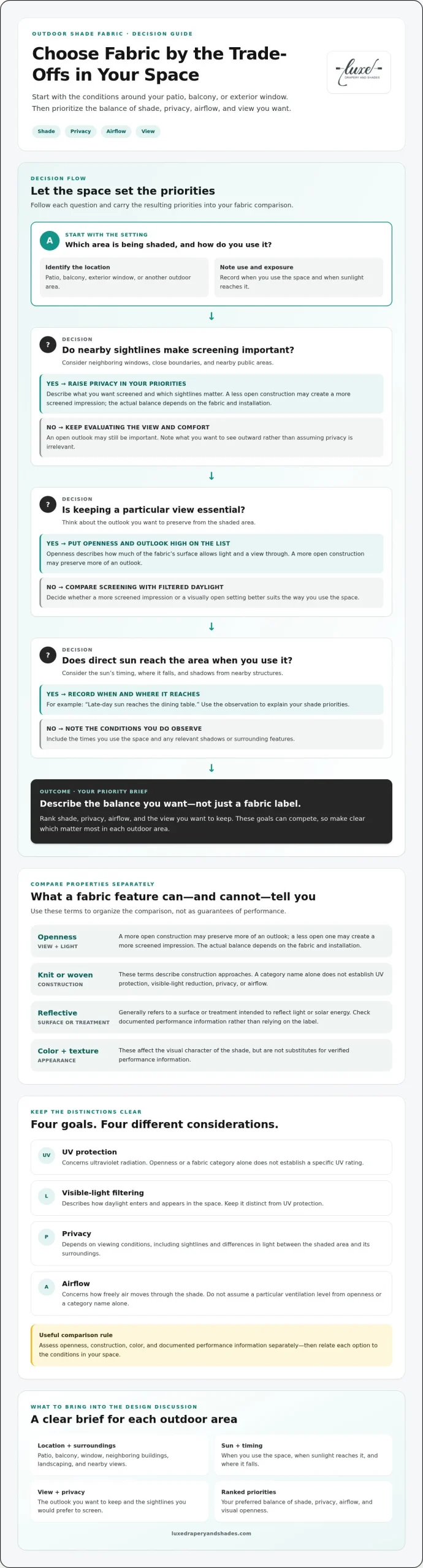
Custom Outdoor Shade Fabrics Compared by Your Priorities
A useful comparison starts with what you do in the space, not with a promise beside a fabric description. A lounge area may benefit from a preserved outlook, while a dining space may call for more visual screening. An exposed window presents a different set of considerations. Use the guide below to rank what matters most, then shape the design around those priorities.
Compare filtered light, privacy, and outward views
There’s often a trade-off between an open outlook and a stronger sense of screening. Your preferred daylight level matters, too. Filtered light may suit a space where you want to retain a bright, open feeling, while screening may take precedence beside close sightlines. These are considerations, not guaranteed fabric outcomes. Privacy and shade can vary with the fabric, installation, and viewing conditions.
The right choice depends on the space’s primary use, because comfort means something different at a dining table, beside a lounge chair, or at an exposed window.
The table offers a starting point for comparing custom outdoor shade fabrics. Its priorities are directional; they don’t describe a specific fabric’s performance.
| Space or priority | Shade | Privacy | Outward view | Airflow | Visual character |
|---|---|---|---|---|---|
| Lounge area | Consider the daylight and sun comfort you prefer while relaxing. | Assess nearby sightlines and how screened you want the seating to feel. | Give the outlook greater weight if it’s central to the setting. | Decide how open or sheltered you want the area to feel. | Relate the fabric’s texture and color to cushions and furnishings. |
| Dining space | Consider how light affects meals at the times you use the table. | Prioritize screening if the dining area feels exposed. | Balance a pleasant view with the desired sense of enclosure. | Consider the airiness you want around the seating. | Coordinate with nearby finishes for a composed outdoor setting. |
| Exposed window | Clarify how much filtered daylight you want indoors. | Consider sightlines from neighboring spaces. | Decide how much of the exterior outlook to retain. | Treat airflow as a separate consideration for the design. | Consider the facade as well as the interior view of the shade. |
Match appearance to the home’s outdoor design
Color and texture help a shade feel considered rather than added as an afterthought. Compare the fabric with the home’s architecture, exterior finishes, and outdoor furnishings. Picture it from both sides, too: the view from a nearby room can matter as much as its appearance across the patio. A well-integrated choice should feel at home in both settings.
As you narrow the options, decide which trade-off you’re most willing to make: more emphasis on filtered daylight, a more screened impression, or retaining the outlook. Luxe Drapery and Shades can help shape an outdoor shade design around those priorities. Explore outdoor shading solutions as you consider the atmosphere you want to create.
A Practical Process for Choosing Custom Outdoor Shade Fabrics
A clear process turns broad preferences into a design that fits the home. Before comparing custom outdoor shade fabrics, gather details about the location and how you want the area to feel. Then use those priorities to guide a tailored design conversation instead of treating fabric as an isolated choice.
Prepare a clear brief for the consultation
Before the consultation, note where the shade will go, how you use the area, when it receives sun, which views you want to preserve, and where privacy matters. Add a few words about the appearance you prefer, such as a subtle texture or a finish that complements the home’s exterior.
Some goals may compete. If you want both an open outlook and stronger visual screening, identify which matters more for that particular space. Luxe Drapery and Shades’ consultation includes selection assistance and accurate measurements, helping connect your brief to the dimensions and character of the area.
- Location and use: Identify the patio, window, or outdoor area, and describe how you use it.
- Exposure: Note when and where sunlight reaches the space.
- View and privacy: Describe what you’d like to see and what you’d prefer to screen.
- Appearance: Consider how the shade should relate to the architecture and furnishings.
- Top priority: Choose the outcome that should guide the design if preferences conflict.
Review the design, quote, and project timeline
Once you’ve outlined your brief, consider the complete outdoor shade design, not just the fabric. Placement, measurements, and the relationship between the shade and its surroundings all inform the selection. Reviewing the design gives you an opportunity to consider whether it reflects your priorities and the area’s intended use.
The consultation includes a comprehensive quote and project timeline, setting out the project before ordering. After selection and measurement, product ordering and scheduled installation follow. Each step builds on the last, from understanding the space to bringing the tailored design into it.
A concise brief makes the next conversation more focused. Begin a tailored outdoor shading conversation with Luxe Drapery and Shades, and bring your priorities for light, privacy, views, and style into the design process.
How Luxe Drapery and Shades Brings an Outdoor Shade Design Together
A considered outdoor shade project begins with the character of the space, then moves through a clear sequence of decisions. Luxe Drapery and Shades specializes in shading and lighting control for interior and exterior living spaces, and offers outdoor shades, awnings, and pergolas. These options help homeowners consider different ways to shape an outdoor area around the home and how they want to use it, without relying on assumptions about fabric specifications or performance.
From selection assistance to accurate measurement
During the consultation, selection assistance helps shape the project around your space and preferences. Your priorities for filtered light, privacy, views, and visual style can guide the discussion of custom outdoor shade fabrics and the overall design. Accurate measurements add project-specific detail to the planning and help align the proposed solution with the area it’s intended to serve.
The consultation also includes a comprehensive quote and project timeline. Together, these steps give you a clearer picture of the proposed project and its planned progression. Rather than treating fabric as a standalone choice, the process considers it as part of the outdoor shade design and the setting it will complement.
From ordering to a considered installation
After selection and measurement, the process continues with product ordering and scheduled installation. Materials ship directly from the manufacturer to your home. This sequence connects the design conversation with the practical steps that follow, moving from planning the space to preparing for installation.
Outdoor shades, awnings, and pergolas each offer a different way to shape an exterior living area. The appropriate direction depends on the home, the location, and the experience you want the space to support. Luxe Drapery and Shades brings these considerations together through a tailored consultation, accurate measurement, and a clear project plan. The result is an outdoor shading decision made in context, with attention to everyday use and the home’s overall aesthetic.
If you’re ready to explore an outdoor shade design shaped around your space, explore outdoor shading with Luxe.
Shape an Outdoor Space That Feels Like Yours
The best outdoor shade design doesn’t simply cover an area. It helps make the space feel more welcoming and connected to the way you live, whether you picture leisurely afternoons, relaxed meals, or a quiet place to unwind. Let that vision guide your next step.
Bring your ideas for custom outdoor shade fabrics into a tailored design conversation. A considered approach can turn your preferences into a solution that fits the architecture and the atmosphere you want to create.
Explore a custom outdoor shading solution with Luxe Drapery and Shades. Start shaping an outdoor space that feels like part of home.