

The cost of motorized roller shades depends on more than the motor. Fabric, window dimensions, power, controls, and installation all shape the project scope. That’s why a product listing can be difficult to compare with a custom solution measured and specified for your rooms.
To decide which features matter, start with the windows where convenient control would make the biggest difference. Then consider the light and privacy you want in each room, along with whether you want shades coordinated with Lutron lighting control. This helps you distinguish essential choices from features you may not need right away.
This guide explains the main factors that shape a motorized roller shade project and how to set priorities without relying on generic price estimates. You’ll also learn how a tailored Los Angeles project brings professional measuring, custom specification, and installation together. With a clear plan, you can compare options by how they fit your space and routines.
Key Takeaways
- The cost of motorized roller shades reflects the full project scope, including window dimensions, fabric, motorization, controls, and installation.
- Compare fabric, opacity, and window conditions with each room’s design and light-control priorities before settling on a specification.
- Start with a sample room or priority window to clarify preferences before extending the plan to more of the home.
- Choose individual, room-level, or integrated control according to how you want the shades to fit your daily routines.
- A tailored Los Angeles project can bring measuring, custom specification, and professional installation together, with roller shades considered alongside other custom window treatments.
What Determines the Cost of Motorized Roller Shades?
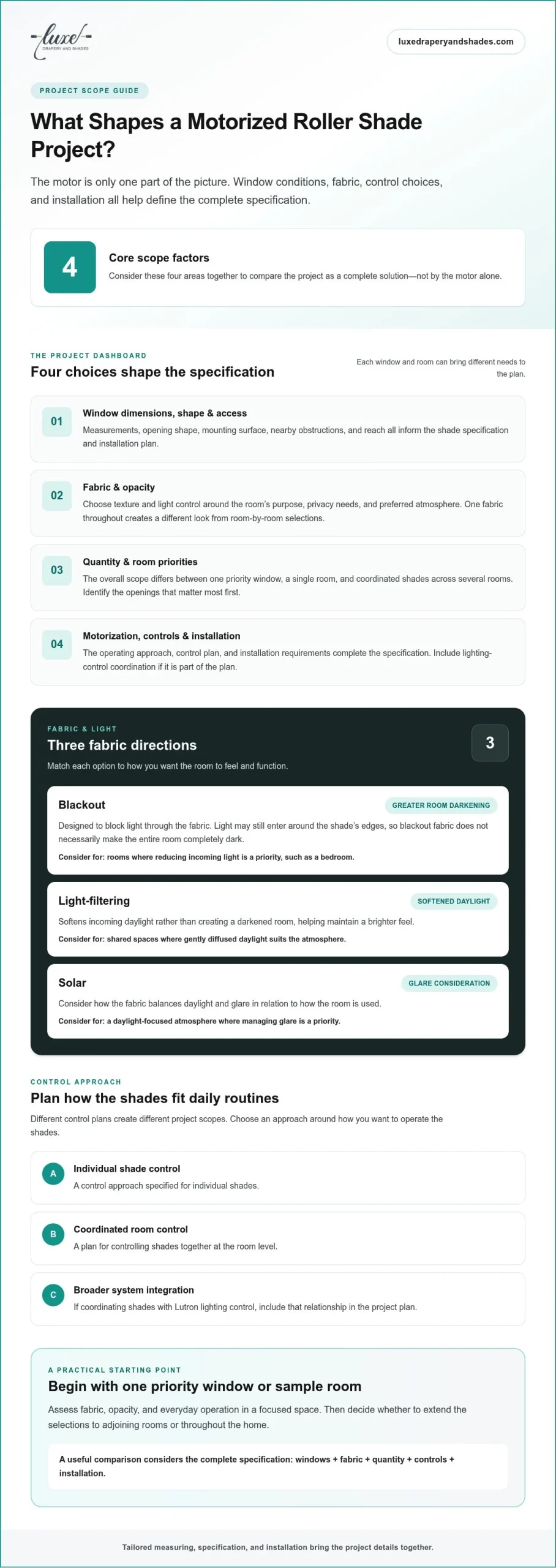
A shade is only one part of a complete project. A custom motorized solution also involves measuring each opening, selecting fabric and an operating approach, choosing controls, and planning professional installation. These details determine the scope, so the cost of motorized roller shades is best understood through the full specification, not the motor alone.
Window shades are a type of window covering, but openings and household needs vary. A standard window and a larger, unusually shaped, or difficult-to-reach opening can call for different measuring and installation plans. The quantity matters, too: treating one room differs from coordinating shades across several rooms.
Which choices influence a motorized roller shade project most?
Some decisions apply to each window; others shape the project as a whole. Consider both as you plan:
- Window dimensions, shape, and access: These inform the shade specification and installation plan. A hard-to-reach opening may require different planning from one that’s easy to access.
- Fabric and opacity: Texture and light-filtering or privacy needs influence each shade’s appearance and function. Using one fabric throughout creates a different look from choosing fabrics room by room.
- Quantity and room priorities: The number of windows affects the overall scope. Identify the most important openings first, then decide whether to extend the same approach to adjoining rooms or the entire home.
- Motorization, controls, and installation: The control approach and installation requirements complete the specification. If you’re considering shades alongside lighting control, include that coordination in the plan.
Starting with a sample room or priority window lets you assess fabric, opacity, and everyday operation before extending those choices throughout the home.
Why is the motor only one part of the overall cost?
The motor operates the shade, but the finished experience depends on how the shade, motor, controls, and installation work together. Individual shade control has a different scope from coordinated room control or integration with a broader system. Luxe Drapery and Shades also plans Lutron shades alongside Lutron lighting-control needs, so those choices can be considered together.
Two motorized roller shade projects can have different totals because their windows, fabrics, control plans, and installation requirements differ. Comparing motors in isolation can overlook the choices that determine whether the complete system suits the space and how you want to use it.
A universal price chart can’t account for every project detail. Professional measuring and a tailored specification give you a more useful way to understand the scope, whether you’re planning one priority window or a coordinated installation throughout your Los Angeles home.
Which Shade, Fabric, and Installation Details Change the Project Scope?
Choose fabric and opacity to suit the room, not just the window. A bedroom may call for greater light control, while a living area might benefit from softened daylight. Window dimensions, mounting conditions, and access also shape the specification and installation plan. Begin by deciding how each space should look and function.
| Choice | What to consider | Design or functional priority |
|---|---|---|
| Blackout fabric | Designed to block light through the fabric; light may still enter around the shade’s edges. | Greater room darkening, such as in a bedroom. |
| Light-filtering fabric | Softens incoming daylight rather than creating a darkened room. | A bright, gently diffused feel in shared spaces. |
| Solar fabric | Consider how the fabric balances daylight and glare for the room’s use. | Managing glare while maintaining a daylight-focused atmosphere. |
| Window conditions | Note dimensions, shape, mounting surface, access, and nearby obstructions. | A tailored fit and an installation plan suited to each opening. |
How do blackout, light-filtering, and solar fabrics differ?
Blackout fabric is an option when reducing incoming light is a priority. It doesn’t necessarily make the entire room completely dark, since light can pass around the edges. Light-filtering fabric softens daylight while keeping the room brighter. Solar fabric is another option when glare is a concern. No category is right for every room: consider its purpose, the privacy you want, and the atmosphere you prefer.
How do window measurements and installation affect the specification?
Accurate measurements help determine whether a shade fits within or over an opening and how it sits in relation to the surrounding trim. Mounting conditions matter, too. Limited clearance, unusual shapes, and less accessible locations can call for different installation planning. The number of windows also matters, especially when you’re coordinating consistent treatments across several rooms.
Project scope depends on the combination of window quantity, dimensions, and installation conditions, not a single measurement alone. Luxe Drapery and Shades brings professional measuring, custom specification, and installation together for tailored Los Angeles projects.
A sample room or priority window can help you experience a fabric and clarify your preferences before extending the selections throughout the home. For broader planning, the Illinois Institute of Technology’s study on energy savings reports a 25% decrease in energy use and a potential cost-recoupment period of 3 to 5 years; individual results can vary. To explore how fabric and installation choices fit your space, review custom motorized roller shade planning.
How Do Motor and Control Choices Affect Motorized Roller Shade Cost?
Motorization and automation are related, but they aren’t the same decision. Motorization moves a shade; broader smart-home integration coordinates shades with other parts of the home. The cost of motorized roller shades depends in part on the control approach that suits your routines and how it fits the project specification.
Consider three ways to plan control:
- Standalone shade control: Operate shades individually. This is a straightforward approach when convenient control at specific windows is your main goal.
- Room-level control: Coordinate shades within a room when you want to adjust several openings as part of one routine. The selected system needs to support the intended arrangement.
- Integrated automation: Plan shade operation alongside a broader home-control system. This requires considering system compatibility and the desired coordination, not simply adding a motor.
Control methods, system requirements, and integration details should be considered together during planning. This helps ensure the finished setup reflects how you intend to use it.
Is standalone shade control different from Lutron integration?
Standalone operation focuses on controlling shades without making broader coordination the central goal. Lutron shade and lighting-control integration can bring window treatments and lighting control into a more coordinated home experience. The right specification depends on the selected system and intended operation, so plan integration around compatibility rather than assuming features.
For example, you might want a frequently used shade to operate independently while coordinating shades and lighting control in a shared living space. Luxe Drapery and Shades plans Lutron shade and lighting-control needs as part of the project and tailors the specification to the home.
Should you automate every window at once?
Not necessarily. A room-first project can work well if you want to prioritize a space where shades are used often or where privacy and glare are daily considerations. A broader plan may suit a home where consistent operation across several rooms is central to the goal. The right scope depends on your needs.
To set priorities, rank windows by:
- Daily use: Which shades do you adjust most often?
- Privacy and glare: Which rooms need more deliberate light or privacy control?
- Ease of access: Would motorization make a hard-to-reach shade simpler to operate?
- Coordination: Should selected rooms operate independently or as part of a larger control plan?
A phased plan can begin with priority rooms while keeping fabric choices and the intended control experience consistent for future additions. Discussing immediate needs alongside longer-term plans helps define a tailored scope without assuming every window must be automated at once.
How Can You Plan Motorized Roller Shades Around a Budget?
Clear priorities make it easier to plan a motorized shade project around your budget without treating every feature as essential. Begin with the rooms and routines that matter most, then balance function, design, controls, and installation. A room-by-room plan can make decisions manageable while helping maintain a consistent look throughout the home.
- Define your goals. Decide what you want motorized shades to do, such as support privacy, manage daylight, or simplify daily operation. Separate must-haves from enhancements you can consider later.
- Prioritize windows. Rank openings by daily use, privacy, sun exposure, accessibility, and household routines. A bedroom, frequently used living area, or hard-to-reach window may be a priority, depending on your needs.
- Select fabric by room. Consider the desired opacity, texture, and design direction for each space. Visually connected windows may benefit from a shared fabric or coordinated palette, even if you address them in stages.
- Choose the control scope. Decide whether individual shade control, room-level coordination, or integration with a broader system best fits your routine. Distinguish essential operation from optional automation features.
- Plan for installation. Include professional measuring, mounting conditions, window access, and the number of openings in the project scope. These details help translate your preferences into a considered specification.
Which windows should you prioritize first?
There’s no universal order. Start with the windows that affect your daily comfort or are less convenient to operate. Privacy in a bedroom may come first for one household; glare in a living space or access to a high window may matter more for another. If several windows are visible together, grouping them in the same phase can help create a cohesive finished appearance.
What should you prepare before requesting a tailored estimate?
Prepare a simple room-by-room list with window locations, approximate dimensions, and photographs. Add a brief note about each space’s privacy and light-control needs, preferred design direction, and any automation goals. You don’t need to settle every detail in advance. A professional consultation can refine measurements, fabric and control specifications, and installation scope for your Los Angeles project.
For a considered starting point, explore a tailored window-treatment consultation. A clear conversation about your priorities can help shape a practical plan, whether you begin with one room or envision coordinated shades throughout the home.
What Can a Custom Motorized Roller Shade Project in Los Angeles Include?
A custom project brings design decisions and practical requirements into one plan. Luxe Drapery and Shades works with residential and commercial clients in Los Angeles, coordinating the process from understanding the space to specifying and professionally installing motorized roller shades. This tailored approach brings the shades, controls, and installation into a coordinated scope.
What happens during a tailored shade and automation plan?
Planning starts with the needs of the space. Window locations, intended use, design preferences, desired light control and privacy, and automation priorities all help shape the specification. A bedroom, a sunlit living area, and a commercial space may call for different fabric and operating choices.
Measurements and mounting conditions then inform the custom specification. The number and dimensions of the openings, chosen fabric, and desired control approach all contribute to project scope. If Lutron shades and lighting control are part of your plans, Luxe Drapery and Shades can coordinate those needs with the window-treatment specification.
Roller shades can also be considered alongside other custom window treatments, such as drapery or Roman shades, when the design calls for layered treatments or different solutions across rooms. The final scope is tailored to the residence or commercial space, so the selections feel intentional together. A clear specification also shows how the choices that affect the cost of motorized roller shades relate to the finished result.
How can professional installation complete the design?
Careful installation brings the specification to life. A well-considered fit supports the intended appearance at each opening, while professional installation completes the project with attention to how the shades operate in their setting. Luxe Drapery and Shades coordinates custom design, measuring, and installation for Los Angeles projects.
Luxe Drapery and Shades is a California licensed and bonded contractor, CSLB #1066068. The team also specializes in Lutron shade and lighting-control integration, bringing those considerations into the project plan and tailoring them to the home’s requirements.
For a project shaped around your space, design preferences, and automation priorities, plan your custom motorized roller shades.
Shape a Shade Plan Around the Way You Live
The cost of motorized roller shades reflects more than a motor. Window dimensions, fabric, control choices, and installation all contribute to the project scope. Prioritizing the rooms and features that matter most can help you create a thoughtful plan, whether you begin with a few windows or want coordinated shades throughout your home.
In Los Angeles, Luxe Drapery and Shades brings custom design, professional measuring, and installation together. The California licensed and bonded contractor, CSLB #1066068, also specializes in Lutron shade and lighting-control integration, planned around your project’s needs.
Bring ease and a considered design to your everyday spaces. Plan your custom motorized roller shades with a scope shaped around your home and priorities.
Frequently Asked Questions
Why do motorized roller shade costs vary from one window to another?
Motorized roller shade costs vary because each window and project has its own requirements. Dimensions, shade quantity, fabric and opacity, mounting conditions, controls, and installation access all affect the specification. A large or hard-to-reach opening may need different measuring and installation planning from a standard window. Compare complete project specifications, not just motor details, to understand the scope for your Los Angeles home.
What is usually included in a motorized roller shade project?
A custom project includes fabric selection, motorization and control specifications, professional measuring, and installation. The scope depends on the space, selected treatments, and desired automation. Before planning, identify the windows and functions that matter most, such as bedroom privacy or convenient operation in a shared living area. Luxe Drapery and Shades tailors design and professional installation for residential and commercial spaces in Los Angeles.
Are battery-powered or hardwired motorized shades less expensive?
Neither power approach is universally less expensive for every project. The overall specification, selected system, window requirements, controls, and installation conditions all contribute to the scope. Consider how each approach suits the actual openings and intended automation rather than assuming the power source determines the total. A useful comparison accounts for the same windows and desired functions, with technical requirements considered for the specific configuration.
Can I motorize only a few roller shades first?
Yes. You can begin with priority windows rather than including every room at once. Consider which openings matter most for privacy, daily convenience, access, or light control. You might start with bedroom shades used every day or a hard-to-reach living-room window, depending on your needs. If you plan to add more later, consider fabric choices and the control approach in advance so the phased project retains a cohesive look and experience.
Does connecting motorized roller shades to Lutron affect the project cost?
Lutron integration can affect project scope because it involves control requirements and may need coordination with a broader lighting-control plan. The details depend on the selected system, windows, and desired functions, so a generic add-on estimate may not reflect your project. Luxe Drapery and Shades specializes in Lutron shade and lighting-control integration in Los Angeles, tailoring the plan to the space and automation goals.
How can I make motorized roller shades more affordable without compromising the design?
Prioritize the windows and functions that matter most, then choose fabric, opacity, and controls to support those needs. A phased plan can focus on selected rooms while keeping the overall design direction in view. Distinguish essential features from optional upgrades, and avoid adding functions that don’t serve your routine. For custom-measured shades, a considered specification provides a clearer basis for decisions than a product’s headline price alone.
Is professional measuring and installation worth including in the budget?
Professional measuring and installation help align the shade specification with actual window conditions and the intended appearance. Measurements, mounting surfaces, access, and control planning all inform the work, so include these details in the project scope from the start. Luxe Drapery and Shades provides custom design and professional installation in Los Angeles, coordinating the details for residential and commercial spaces.