

Blackout vs room darkening shades comes down to how much light you want to keep out: room-darkening fabrics can block 95% to 99% of incoming light, while blackout fabric blocks light through the material itself. Even blackout shades can let light in around the edges, so the fit matters as much as the fabric when you want a darker room.
Both options soften daylight and add privacy, but they create different atmospheres. Room-darkening shades dim a space while preserving some natural brightness; blackout shades block more light through the fabric when a near-dark room is the priority. The best choice depends on the room’s purpose, sunlight exposure, and how you want it to feel throughout the day.
This guide compares light blockage, privacy, and room brightness, then helps you match each option to bedrooms, living spaces, and media rooms. You’ll get a clearer sense of which shade suits your home and when filtered daylight and privacy matter more than maximum darkness.
Key Takeaways
- Choose room-darkening fabric to soften daylight while keeping a sense of brightness; opt for blackout fabric when stronger darkness is the priority.
- Account for light leaking around shade edges, since fabric opacity alone doesn’t determine how dark a room will feel.
- Match the shade to the room’s purpose and sunlight exposure rather than choosing one treatment for every window.
- Balance privacy and natural light by considering when the room is used and how much brightness you want to preserve.
- Explore custom roller or Roman shades when you want light control tailored to a room’s design and daily needs.
What is the Difference Between Blackout and Room Darkening?
The difference comes down to how much light the material blocks and how much slips around the window covering. With blackout vs room darkening shades, fabric opacity and gaps at the edges both affect the room’s actual brightness.
Room-Darkening Shades
Room-darkening shades use dense fabric to reduce incoming sunlight, with some descriptions placing their light reduction at 90% to 95%. They leave a low level of light in the room, unlike blackout fabric, which blocks light through the material. Choose this middle ground for a living room where you want less glare but don’t want to erase daylight.
Blackout Shades
Blackout fabric blocks 100% of light through the fabric, while a correctly installed blackout shade can block up to 99% of incoming light. That still doesn’t mean the entire window becomes completely dark: light can pass through gaps along the top or sides. A shade that covers the glass closely limits those bright outlines more effectively than fabric alone.
Light-filtering shades sit at the brighter end of the range. They soften sunlight while allowing it into the room; light-filtering treatments are described as blocking 25% to 50% of light. For example, a light-filtering shade can reduce glare at a desk while keeping the room visibly sunlit. Its level of light control depends on the material’s openness.
Privacy changes with the light. During the day, light-filtering fabric can obscure details while admitting daylight. At night, an illuminated room may reveal shadows to people outside, so it may not provide enough privacy for a street-facing window. Room-darkening and blackout shades offer greater privacy as the indoor-to-outdoor light balance shifts after sunset.
Check the edges as well as the fabric. With a roller shade, light may show where the material meets the frame, even if the fabric is opaque. A close fit or side channels can reduce gaps along the sides. For example, if a bedroom window shows slivers of light, better edge coverage may help more than choosing darker fabric.
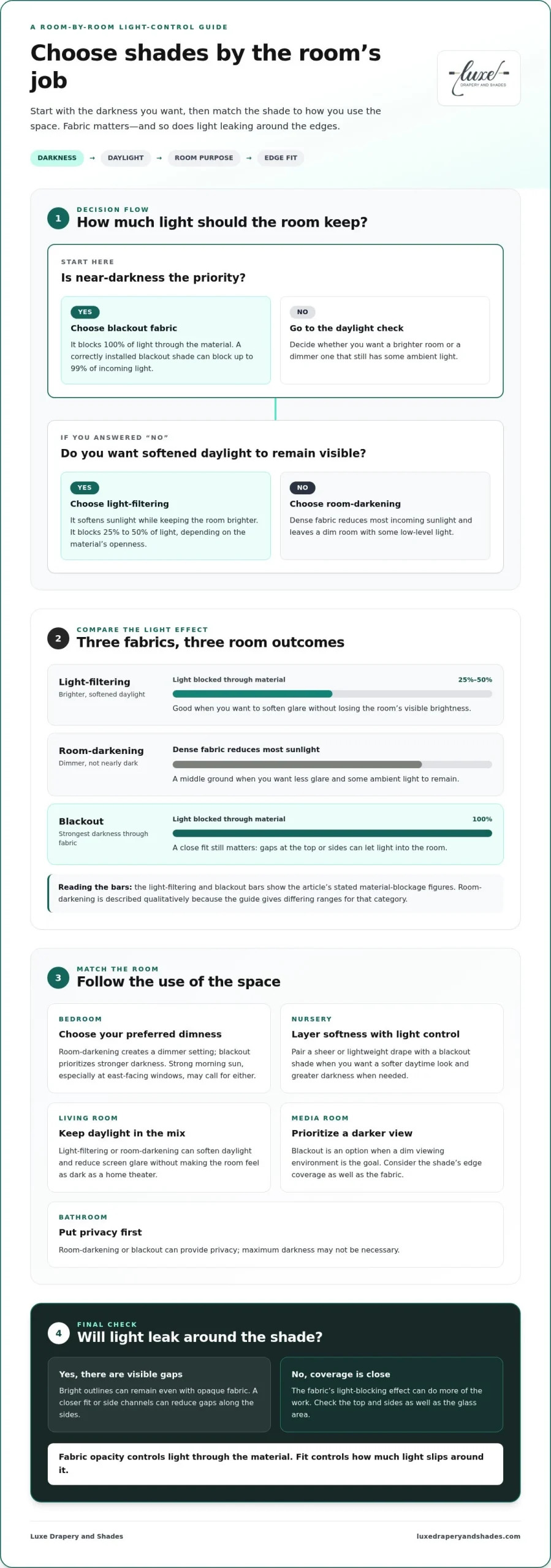
| Shade type | Light through material | Room effect | Privacy at night |
|---|---|---|---|
| Light-filtering | Blocks 25% to 50% | Softened daylight | May show shadows |
| Room-darkening | Reduces most light | Dimmer, not nearly dark | Substantial privacy |
| Blackout | Blocks 100% through fabric | Strongest darkness | Strongest privacy |
For softened sunlight and a brighter room, choose light-filtering shades. For a dimmer space, choose room-darkening; for greater light blockage through the fabric, choose blackout and consider edge coverage.
Choosing shades based on desired darkness and sunlight
Match each window’s sunlight exposure and each room’s purpose to the level of darkness you want. An east-facing bedroom, for example, has different morning light needs from a living room used during the day.
Are blackout shades safe for children, and what cordless options are available? Blackout describes how fabric blocks light, not how a shade operates. For a child’s room, consider cordless or motorized operation, and keep controls out of reach.
Bedroom and Nursery Shades
Bedrooms with strong morning light may benefit from room-darkening or blackout treatments, especially at east-facing windows. A nursery can pair a sheer or lightweight drape with a blackout shade, balancing a softer daytime look with greater darkness when needed. The key difference is the intended atmosphere: room-darkening leaves more ambient light, while blackout prioritizes darkness.
Shades for Different Room Functions
Match the window treatment to the activity. In a living room, room-darkening shades can reduce glare while watching television without making the space feel as dark as a home theater. Blackout shades suit media rooms where a dim viewing environment is the goal. In a bathroom, prioritize privacy; room-darkening or blackout treatments can provide it, though maximum darkness may not be necessary.
Think room by room rather than choosing one fabric for the whole home. A bedroom used for daytime rest may need stronger light control than a bright living room where you prefer natural daylight. A child’s playroom may call for a lighter treatment, while a nursery used for naps may benefit from a darker option. The difference becomes practical when you consider how each space is used.
Sun exposure helps narrow the choice. If direct sunlight enters a bedroom in the morning, room-darkening or blackout treatments can limit it. For rooms with less direct sun, room-darkening may provide the desired dimness without aiming for near-total darkness. Light-filtering is another option when you want to soften sunlight and keep the room brighter during the day.
Use this quick room-by-room guide:
- Bedroom: Choose room-darkening for a dimmer setting, or blackout for stronger darkness.
- Nursery: Layer a sheer or lightweight drape with blackout when you want both a softer look and greater light control.
- Living room: Prefer light filtering or room-darkening when daylight and reduced screen glare both matter.
- Media room: Consider blackout when a darker viewing environment is the priority.
- Bathroom: Focus on privacy first, rather than selecting the darkest treatment by default.
For a tailored approach, room-specific shade planning can help align light control with each space’s use.
Privacy and room brightness
Privacy and brightness depend on fabric opacity, incoming light, and the room’s lighting. A light-filtering shade can soften daylight in a living room yet reveal shadows at night when lamps are on and it’s darker outside. Room-darkening and blackout fabrics provide greater privacy, with blackout offering more blockage through the material.
Consider the light balance at the window, not just the shade label. On a bright summer morning with 10,000 lux at the glass, a shade transmitting 15% would admit 1,500 lux indoors. That can still feel bright, even if the fabric reduces glare. For a media room, a less open fabric may better suit screen viewing; for a reading nook, preserving more daylight may feel comfortable.
Privacy also depends on what someone outside can see. Light-filtering shades can show shadows at night, especially when an interior lamp illuminates someone near the window. Room-darkening shades offer more privacy, while blackout shades provide the strongest barrier through the fabric. For a street-facing bedroom, consider both the view into the room and light escaping around the shade.
Edge coverage affects both visibility and brightness. Side channels run along the sides of a shade, reducing light entering through gaps. In a bedroom facing a neighboring home, limiting those openings can also reduce sightlines around the fabric. A well-covered window creates a more consistent screen than a shade with obvious gaps at its edges.
Insulation is another consideration. Room-darkening shades and blinds can provide some energy efficiency through insulating properties, while blackout shades can offer a secondary insulating measure. In a room that feels chilly near the window, a closed shade adds a layer between the glass and the interior. This is a supplementary comfort benefit, not a replacement for the home’s main insulation.
Choose according to the balance you want in each space:
- For daytime privacy: Select a fabric that obscures views while letting in the amount of daylight you prefer.
- For nighttime privacy: Choose room-darkening or blackout when light-filtering fabric might reveal shadows.
- For a media room: Reduce incoming light to limit screen glare and improve viewing comfort.
- For edge light: Consider side channels to reduce gaps beside the shade.
- For added insulation: Use a closed shade as a secondary layer at the window.
Blackout shades can make it harder for neighbors or passersby to see inside from street level, and can help limit UV exposure when closed. They don’t replace other home security measures. A ground-floor living room, for instance, may benefit from greater privacy after dark, while a bright daytime space may call for more incoming light. Weigh privacy, screen glare, insulation, and visibility separately for each window.
How blackout and room-darkening shades differ
The main difference is how much darkness the fabric can achieve, not simply its color or thickness. Compare material opacity, construction, and room use before choosing between the two.
Blackout Shade Pros and Cons
Blackout shades use opaque fabric, sometimes with a PVC or Mylar liner, to block light through the material. When installed correctly, they can block up to 99% of incoming light. That stronger control can suit nurseries, bedrooms, and media rooms where daylight interferes with the room’s purpose.
The trade-off is reduced daylight when the shade is closed. A room can become difficult to navigate, and light may still outline the shade where gaps remain. Blackout material blocks light through the fabric, but it cannot cover openings around the window by itself.
Room-Darkening Shade Pros and Cons
Room-darkening shades use tightly woven fabric, sometimes with a liner, to reduce sunlight without creating the same near-black effect. They can soften a bright living room or limit screen glare while retaining more ambient brightness than blackout fabric. That balance suits spaces used for a range of daytime activities.
The compromise is that some light passes through the material, and gaps can let in more. Room-darkening shades provide less darkness than blackout shades, though they still offer substantial privacy. If a bedroom doesn’t need complete darkness, this middle ground may preserve more of a daytime feel.
Construction creates another difference. Shades use fabric or a similar material across the window; blinds use slats that tilt to adjust light. Changing the slat angle changes the amount and direction of incoming light. A room-darkening shade filters light through its material, so raising it is the main way to let in more daylight.
Material labels describe the fabric, not every detail of the finished window treatment. Blackout fabric blocks light through its surface, but an uncovered edge can still form a bright line. Room-darkening fabric reduces light through the material without creating the same level of darkness. In either case, the window fit and treatment construction affect the result.
Use these distinctions to compare options for a specific room:
- Choose blackout when stronger darkness is the priority, such as in a media room or a nursery used for daytime rest.
- Choose room-darkening when you want less glare but prefer some ambient light in a living space.
- Compare operating needs by considering whether adjustable slats or a fabric shade better suits the window and your routine.
- Consider edge coverage if a narrow outline of daylight would disrupt sleep or screen viewing.
Neither option is automatically right for every window. You might choose blackout shades for a bedroom and room-darkening shades for an adjacent living room, creating different levels of darkness for each use. Comparing the fabric, window coverage, and desired brightness shows the practical differences more clearly than the product label alone.
What are the pros and cons of blackout versus room-darkening shades?
Both options reduce sunlight, but they trade daytime brightness for stronger light control in different ways. Room-darkening curtains and shades block approximately 90% to 95% of light, while blackout fabric blocks 100% through the material. Your choice depends on whether you value a dimmer room or stronger darkness more.
Blackout Shades: Pros and Cons
Blackout fabric is useful where light control matters most, such as a bedroom used for daytime rest or a media room. Installed correctly, blackout shades can block up to 99% of incoming light. When closed, they can also help reduce UV exposure and potential damage to household belongings.
The trade-off is how little daylight remains. A room can be difficult to navigate with blackout shades closed, and light may still enter around the edges. For example, an opaque shade that leaves a bright outline at the window may not deliver the darkness you expect.
Room-Darkening Shades: Pros and Cons
Room-darkening shades reduce incoming sunlight while preserving more ambient brightness than blackout shades. They can make a living room more comfortable for watching television or working on a laptop by reducing glare. Their softer light control can also suit a bedroom where complete darkness isn’t necessary.
The compromise is that room-darkening treatments provide less darkness than blackout fabric. They can still allow some light into the room, and sunlight may be more noticeable with direct exposure. If faint morning light disrupts sleep, that remaining brightness may outweigh the benefit of a dimmer, more gently lit space.
Compare the practical trade-offs before choosing:
- Blackout: Strongest fabric-level light blockage, with possible edge leakage and a very dark room when closed.
- Room-darkening: A dimmer setting with some ambient light, though less darkness than blackout provides.
- Both options: More privacy than light-filtering treatments, with results shaped by fabric and window coverage.
Consider how you use the room when the shade is closed. A media room used for daytime viewing may benefit from blackout, while a living room used from morning through evening may feel more balanced with room-darkening fabric. In a bedroom, decide whether a small amount of remaining light is acceptable. Different rooms in the same home can have different light-control needs.
Before deciding, identify the drawback you can live with. If preserving daylight matters, choose room-darkening and accept less complete light reduction. If darkness is essential, choose blackout and account for edge coverage. This comparison helps match the treatment to your daily routine.
Explore custom roller shades to consider light control tailored to your windows and room use.
Luxe Drapery and Shades: Custom Drapery
Luxe Drapery and Shades helps shape the light, privacy, and atmosphere in your Los Angeles home with custom window treatments, including drapery. If blackout feels too dark but room-darkening fabric lets in more daylight than you prefer, a tailored treatment can balance coverage with the room’s design.
Roller Shades offer a streamlined look, while Roman Shades bring soft folds to the window. Cellular Shades are another style to consider for different spaces. The right choice depends on the room’s function, its sunlight, and how much brightness you want to retain.
For a considered approach to light control and a cohesive interior, contact Luxe Drapery and Shades to discuss your window treatment needs in Los Angeles.
Shape a Window Treatment Around Your Day
Your windows don’t have to serve the same purpose throughout your home. A considered plan can give each room its own relationship with daylight, from a restful retreat to an open, composed living space. As you decide between blackout vs room darkening shades, look beyond the fabric: consider how the window should look and how the room should welcome light when the shade is raised.
Luxe Drapery and Shades can help bring that vision together with custom drapery, Roller Shades, and Roman Shades. These options let you consider light control alongside the character of your interior, creating a treatment that feels integrated rather than purely practical. Picture how you want each room to feel at different times of day, then contact Luxe Drapery and Shades to explore the right treatment for your Los Angeles home.
Contact Luxe Drapery and Shades to discuss a window treatment suited to your home. A thoughtful choice can make everyday light feel beautifully considered.
Frequently Asked Questions
What Are Blackout Curtains and Shades?
Blackout curtains and shades use opaque material designed to prevent light from passing through the fabric. Curtains hang in panels, while shades cover a window with a mounted fabric panel or other shade construction. For example, blackout drapery can frame a window, while a blackout roller shade offers a streamlined look. In both cases, light can still enter around uncovered edges, so the material and window coverage shape the result.
Are Room Darkening Blinds Worth It?
Room-darkening blinds can be worthwhile if you want to reduce glare while retaining some daylight. Their slats let you adjust how light enters, which can suit a living room used for reading and screen viewing. They also offer privacy and some insulating benefit. Consider the window’s orientation and how you use the room: a dimmer setting may help with television viewing, but be less useful where you want bright daytime light.
How Do I Prevent Light Gaps?
Reduce light gaps by improving coverage around the window, not just by focusing on fabric opacity. A close fit can limit openings, and side channels can reduce light entering along the sides of a shade. If morning light forms bright lines beside a bedroom shade, for example, side channels address those openings. Blackout drapery around a shade can also cover gaps and create a more complete window treatment.
What are the Disadvantages of Blackout Blinds?
Blackout blinds can leave a room too dark for comfortable movement when fully closed, especially if you need to reach furniture or belongings. They may also leave visible light at the edges, despite blocking light through the fabric. In a room used for several activities, that darkness can feel limiting during the day. Consider whether you need full darkness regularly or would prefer a treatment that preserves more ambient light.
What factors set them apart?
Material opacity, shade design, window coverage, and intended room use distinguish these treatments. Tightly woven fabric or a liner reduces incoming light, while opaque blackout material blocks light through the fabric. Installation and edge coverage affect how much light reaches the room around the shade. In a Los Angeles home, consider the window’s direct sun exposure and whether the room is used mainly for sleeping, relaxing, or screen viewing.
What is the difference between blackout and room-darkening shades?
Blackout shades use fabric that blocks light through the material, while room-darkening shades reduce sunlight but let a low level through. Room-darkening is a middle choice if you want a dimmer atmosphere without seeking near-total darkness. It may suit a family room where glare is distracting but some daylight is welcome. Blackout is a better fit when limiting light is the main priority.
How much light do blackout shades and room-darkening shades block?
Room-darkening curtains and shades block approximately 90% to 95% of light, while blackout fabric blocks 100% through the material. These figures describe the fabric, not every beam reaching the room after installation. A shade can leave gaps at its edges, so the room’s brightness also depends on coverage and fit. For instance, a bright outline at a window points to edge leakage, not necessarily light passing through the fabric.
Are blackout shades truly 100% light blocking?
Blackout fabric blocks 100% of light through the fabric, but that doesn’t mean an installed shade creates a completely dark room. Light may enter through gaps at the sides or top. A properly installed blackout shade can block up to 99% of incoming light, while side channels or a close fit can help limit edge leakage. If even narrow light slivers matter, assess the shade’s coverage as well as its fabric.