

A blackout shade can make a room darker without offering the strongest defense against desert heat. Choosing the best window treatments for desert climates means weighing more than light control: consider insulation, glare, privacy, and how each option fits your home.
When afternoon sun makes a room bright and warm, it can be hard to know which treatment to choose. Start with the window’s exposure and the room’s purpose. A living area may need glare control that preserves the view, while a bedroom may call for more privacy and darkness. Fabric, fit, and installation all affect how a treatment looks and functions.
This guide compares roller, honeycomb, Roman, and woven wood shades, along with blinds, shutters, drapery, and exterior shades. Use the practical differences to narrow your choices, then consider custom sizing, layering, and motorization to create a coordinated solution for your Los Angeles home.
Key Takeaways
- The best window treatments for desert climates depend on each window’s exposure, the room’s purpose, and your priorities for light, privacy, and style.
- Compare roller and honeycomb shades, drapery, shutters, and exterior shades by their strengths instead of expecting one option to suit every room.
- Window treatments can help manage glare and comfort, but results vary with glazing, orientation, installation, and product choice.
- Note when direct sun reaches each window, the privacy you need, and any existing window concerns before choosing a treatment.
- A tailored plan can bring custom interior and exterior treatments together with precise sizing, professional installation, and convenient motorized operation.
What Should the Best Window Treatments for Desert Climates Do?
Climate-conscious window treatments help manage incoming light while supporting privacy, comfort, and the room’s design. Depending on the window and product, they can soften glare, filter daylight, or block more light. The best window treatments for desert climates are not one universal style. Their usefulness depends on the home’s glazing, window orientation, installation, and the treatment selected.
Window coverings and replacement windows address different parts of the equation. Shades, drapery, blinds, and shutters adjust light and privacy at the window; replacing glazing changes the window assembly itself. A covering won’t correct every limitation of existing glass, and new glazing won’t provide every preferred level of privacy or light filtering. The two can complement one another, but they aren’t interchangeable.
Solar heat gain coefficient (SHGC) is the fraction of solar radiation that enters a home through a window as heat; a lower SHGC generally means less solar heat passes through the glazing. It’s one factor to consider when evaluating windows, alongside each room’s needs. Coverings provide another way to manage the light that enters and the atmosphere around the window.
Los Angeles isn’t climatically uniform. Coastal conditions and hotter inland areas can create different patterns of sun and warmth, even within the same region. Assess the actual home rather than assuming every window faces the same challenge. For terminology and an overview of styles and materials, see this guide to window blinds.
How do heat, glare, and UV exposure affect room choices?
Direct sun can make screens difficult to view, add warmth near a window, and contribute to fading of furnishings and finishes. The effect depends on orientation and timing: a room with strong morning sun may need a different approach from one that receives direct afternoon light. Glazing and coverings work together, but aren’t substitutes for one another. Glass affects solar transmission; a covering gives you an adjustable layer for light and privacy.
Which window-treatment goals should come first?
Separate functional requirements from aesthetic preferences. First decide whether glare reduction, privacy, filtered daylight, or greater darkness matters most. Then consider appearance and ease of operation. For example, a bedroom may prioritize privacy and darkness, while a living space may call for softened light that preserves an outward view. Note when direct sun reaches each window and how you use the room. In Los Angeles, coastal and inland microclimates make these details especially relevant. A clear priority list makes comparisons more purposeful while leaving room for a cohesive design.
Comparing Window Treatments for Hot, Sunny Homes
Each treatment balances light, privacy, and visual character differently. The right fit depends on the room, window exposure, glazing, and details such as material, opacity, and how closely the treatment fits the opening. Use this comparison to shortlist options, then match them to the conditions of each window.
| Treatment | Light control | Privacy | Visual character and installation context |
|---|---|---|---|
| Roller shades | Varies by fabric opacity, from filtered daylight to stronger light blocking. | Depends on fabric and opacity. | Streamlined profile suits a clean, tailored look; fitted to the window opening. |
| Honeycomb shades | Available in different light-filtering and room-darkening options. | Can provide privacy when lowered; opacity affects how much light passes through. | The cellular construction creates pockets of air, a design feature that can help moderate heat transfer. Fit and window conditions affect results. |
| Drapery | Fabric and lining shape how much light enters. | Can add a substantial layer of coverage when closed. | Softens a room and can frame a window; works alone or layered with a shade. |
| Shutters | Adjustable louvers let you redirect or limit incoming light. | Closed louvers offer privacy, with control varying by angle and construction. | A structured, architectural treatment installed at the window. |
| Exterior shades | Can filter sun before it reaches the glazing, depending on the material. | Privacy and outward visibility vary by screen and lighting conditions. | Installed outside, they can suit exposed windows or outdoor living areas. |
The best category depends on a room’s priorities and conditions, not a single “desert-ready” formula. For more on how placement and construction influence thermal performance, Cornell University’s overview of energy-efficient interior window treatments offers useful background.
When are roller shades or honeycomb shades a thoughtful fit?
Roller shades have a streamlined profile and come in a range of opacity and finish options. That makes them adaptable to bright living spaces as well as rooms where greater light control matters. When comparing fabrics, consider how much daylight and view you want to retain, and how much privacy you need after dark. Honeycomb shades pair a refined profile with a cellular structure designed to trap air. Explore the honeycomb shades guide for more on this shade type; actual performance varies with the window and installation.
Where do drapery, shutters, and outdoor shades make sense?
Drapery adds softness and atmosphere while contributing privacy and another layer of light management. Shutters bring a more structured look and adjustable control. Exterior shades can address sun at the outside of a window or help define a more comfortable patio. Consider how the treatment will complement the room and how you use the space. A tailored plan can bring these choices together; explore custom window treatment design for a considered fit.
Do Window Treatments Really Help With Desert Heat and Harsh Sun?
Window treatments can help manage incoming light and make a room feel more comfortable, but they’re not a guaranteed fix for heat. Their effect depends on the glazing, window exposure, installation quality, treatment materials, and how the household uses them. A shade lowered during the brightest part of the day may serve a different purpose from one that’s usually kept open to preserve a view.
Separate a treatment’s specific function from claims about whole-home energy savings. A covering may reduce glare or increase privacy, but those benefits don’t automatically translate into a particular change in utility use or indoor temperature. Treat claims about energy use, UV filtering, or thermal performance as product-specific. Look for information tied to the exact product and installation rather than assuming all shades perform alike.
What can window coverings reasonably change?
Window coverings give you control over light, glare, and privacy at the opening. Depending on its fabric and construction, a shade can filter daylight or block more of it. Drapery can add a soft layer, and an exterior screen may suit a window or patio that receives sustained direct sun. Layering can offer another level of control. For UV or thermal performance, rely on product-specific ratings or documentation, not category names alone.
Operation matters, too. A treatment that’s easy to adjust can better fit changing sun and household routines. Motorized shades, for example, can make it more convenient to manage multiple windows, but they don’t change the glazing itself. Fit matters as well: gaps around a treatment may affect light control, while the window’s orientation and exposure shape how much sun reaches the room.
What should you not expect a shade to fix?
A window covering can’t repair damaged glazing, stop air leaks, or resolve other building-envelope problems. Nor does it replace insulation, HVAC improvements, or suitable glazing. If a room remains uncomfortable despite adjusted coverings, the cause may be beyond the treatment. A west-facing window with late-day sun may also need a different approach from a shaded window on another side of the home.
Window treatments help manage the experience of sunlight; glazing and building improvements address the window’s underlying performance. The best window treatments for desert climates are chosen for a particular room and used as part of a broader comfort strategy, not as a substitute for assessing the window and home.
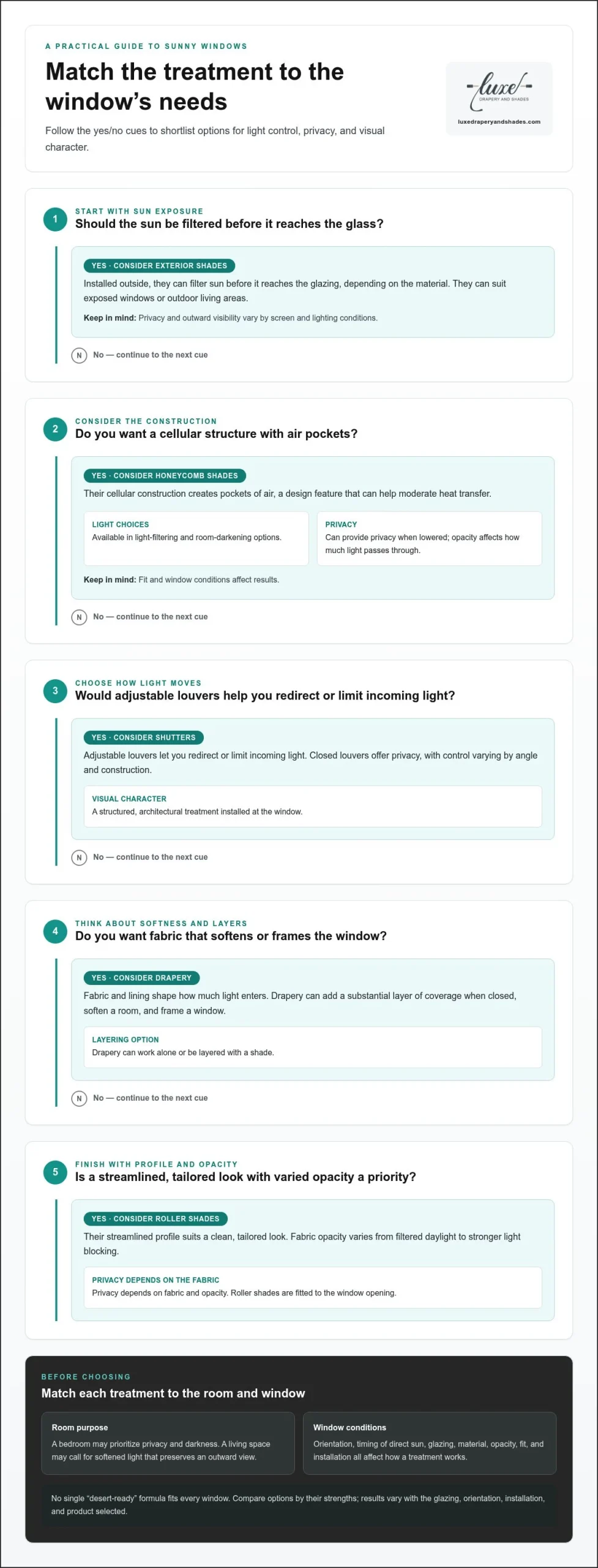
How Can You Choose Window Treatments for Each Room and Window?
A room-by-room plan turns broad preferences into practical choices. Before comparing fabrics or finishes, record how each window behaves and what the space needs. Coastal Los Angeles homes and hotter inland properties can have different sun and comfort patterns, but neither setting tells the whole story. Assess the actual windows in your home.
How should you assess exposure, privacy, and room use?
Walk through the home at different times of day. Note each window’s direction, when direct sun reaches it, where glare falls, whether neighboring views affect privacy, and any existing concerns such as drafts or difficult operation. Assess windows individually, even within one room; exposure and nearby obstructions can vary.
Then work through these five steps:
- Map exposure. Record orientation, direct-sun timing, glare, and the window’s current condition.
- Define room needs. A bedroom may call for greater privacy and light control, while a living room may benefit from filtered daylight and an open view.
- Compare categories. Consider shades, drapery, shutters, or exterior treatments against the needs you’ve identified for each opening.
- Refine the style. Choose a visual character, material, and finish that complement the room and the wider home.
- Plan operation. Decide how often treatments will be adjusted and whether individual or coordinated control best suits your routine.
Glass-facing outdoor areas deserve their own assessment. Depending on the layout, an exterior shade may help create a more comfortable patio environment, while interior treatments address the needs of the room itself. Choose treatments for the conditions of each window rather than assigning the same solution throughout the home.
When should you consider custom sizing and motorization?
Custom sizing and professional installation help create a considered fit for each opening and a polished finish across the room. This is especially useful when windows differ in size or placement, or when the design calls for treatments to align consistently. Motorization can make raising and lowering shades more convenient for hard-to-reach windows or several treatments used together. For an overview of integrated control, explore the Lutron Sivoia motorized shades guide.
Bring your window notes and room priorities into a tailored plan with custom window treatment design.
Create a Desert-Ready Window Treatment Plan With Luxe Drapery and Shades
A thoughtful plan begins with the window, not a one-size-fits-all product. Its dimensions, orientation, existing conditions, and the room’s purpose help shape the treatment choice. From there, select fabric, finish, and operating style to complement the home’s visual palette. This approach brings practical needs and considered design together without assuming every room requires the same solution.
What does a considered design and installation process bring together?
Luxe Drapery and Shades designs and professionally installs custom interior and exterior window treatments for homes and commercial spaces in Los Angeles. Custom sizing accounts for each opening, while professional installation supports a tailored fit and polished appearance. The result is a coordinated design shaped around the home’s windows, the way each room is used, and the look you want to create. Luxe Drapery and Shades is a California licensed and bonded contractor, CSLB #1066068.
How can interior and exterior shading work together?
Interior treatments and outdoor shading can serve complementary roles. Roller or honeycomb shades, drapery, blinds, and shutters shape light, privacy, and style indoors. For a patio or another exposed outdoor area, outdoor shades, awnings, or pergolas can be considered according to the layout and how the space is used. The goal is a coherent plan that relates these areas visually while addressing their distinct needs.
Motorization adds convenience, especially for hard-to-reach windows or multiple treatments used together. Luxe Drapery and Shades integrates motorized treatments with Lutron lighting control systems, creating a coordinated approach to managing shades and lighting. The right configuration depends on the home and how you want to operate its treatments.
For a closer look at a refined interior option, explore custom drapery in Los Angeles. If you’re ready to bring window dimensions, room priorities, and design preferences together, explore a personalized design and installation solution with Luxe Drapery and Shades. A tailored plan can help make the home feel more cohesive, one thoughtfully treated window at a time.
Make Sun Control Part of a Considered Design
The best window treatments for desert climates balance the needs of each window, from managing glare and privacy to complementing the room’s style. Roller and honeycomb shades, drapery, shutters, and exterior shading each offer different advantages. Glazing, exposure, fit, and daily use all influence the result. A room-by-room plan helps you choose with intention rather than expecting one treatment to suit every space.
Luxe Drapery and Shades brings custom design and professional installation to residential and commercial projects in Los Angeles, with motorized treatments and Lutron lighting-control integration for coordinated convenience. As a California licensed and bonded contractor, CSLB #1066068, the team can shape an interior and exterior treatment plan around your home’s windows and design priorities.
Explore a tailored approach to light, privacy, and style with custom window treatments for your home. Contact Luxe Drapery and Shades to plan window treatments suited to your Los Angeles home.
Frequently Asked Questions
What are the best window treatments for desert climates?
The best choice depends on the window’s exposure, existing glazing, room use, privacy needs, and design preferences. Roller shades, honeycomb shades, drapery, shutters, and outdoor shades each serve different purposes. Compare opacity, fit, operation, and appearance rather than choosing one treatment for every room. In Los Angeles, coastal and hotter inland conditions can differ, so consider each window’s orientation and when sunlight reaches it.
Do cellular shades help keep a room cooler in hot weather?
Honeycomb shades have a cellular structure designed to create pockets of air, which may support insulation, but results vary. Product construction, fit, glazing, exposure, and installation all affect how a shade performs in a particular room. Don’t assume every cellular shade offers the same results or a specific energy saving. Consider the room’s light-control needs and review performance information for the product you’re considering.
Are blackout shades better than solar shades for desert sun?
Neither is automatically better; blackout and solar shades serve different priorities. Blackout options are designed to block most incoming light, while solar shades manage brightness and views according to their material and construction. For a bedroom, darkness may be important; in a living area, preserving a view may matter more. Compare the room’s daylight, privacy, and use, and review product-specific details before selecting a treatment.
Can window treatments protect furniture from sun damage?
Some window-treatment materials and configurations may filter or reduce incoming UV exposure, but the level of protection varies by product, glazing, installation, and direct-sun exposure. No treatment should be assumed to eliminate fading. Note how long sunlight reaches furnishings, then review product-specific information about UV performance. A tailored design can help balance light management with views, privacy, and the room’s aesthetic without making unsupported protection promises.
Are exterior shades more effective than interior shades in hot climates?
Exterior and interior shades work in different locations and serve complementary purposes. Exterior shades intercept sunlight before it passes through the glazing, while interior treatments manage light and privacy from inside. The right approach depends on the home’s architecture, window exposure, outdoor layout, and design goals. In Los Angeles, a patio exposed to direct sun may call for a different plan than a shaded interior window.
How do I choose window treatments for a Los Angeles home?
Start with each window’s orientation, direct-sun timing, room function, privacy needs, and existing glazing. Los Angeles conditions vary, so a coastal home and a hotter inland property may have different priorities. Compare treatment categories, materials, opacity, and operation, then consider how they relate to the interior palette and outdoor spaces. Custom sizing and professional installation can help create a considered fit for each opening.