

The most substantial-looking shade isn’t always the most adaptable. Understanding what the difference is between an awning and a pergola starts with how each is built: an awning extends from the home and can retract, while a pergola is a fixed, column-supported structure with an open-beam roof. A canopy, by contrast, stands on its own supports rather than attaching to the house.
When planning an outdoor space, compare more than appearance. The right choice depends on where you want shade, how much flexibility you need, and what kind of shelter you expect in changing weather. This guide compares awnings, pergolas, and canopies by structure, coverage, and installation, then helps you weigh them against your space and priorities. An awning can provide targeted, adjustable shade, while a pergola creates a defined outdoor setting; a canopy offers a freestanding alternative.
Key Takeaways
- Match the structure to the kind of shade and weather protection your outdoor area needs.
- Consider how attachment, footprint, and installation requirements affect the space you have.
- Look beyond appearance: roof design determines how a pergola handles sun, rain, and changing conditions.
- Use the comparison to narrow your options, then explore awnings or pergolas tailored to your home.
Which One Protects You During Bad Weather?
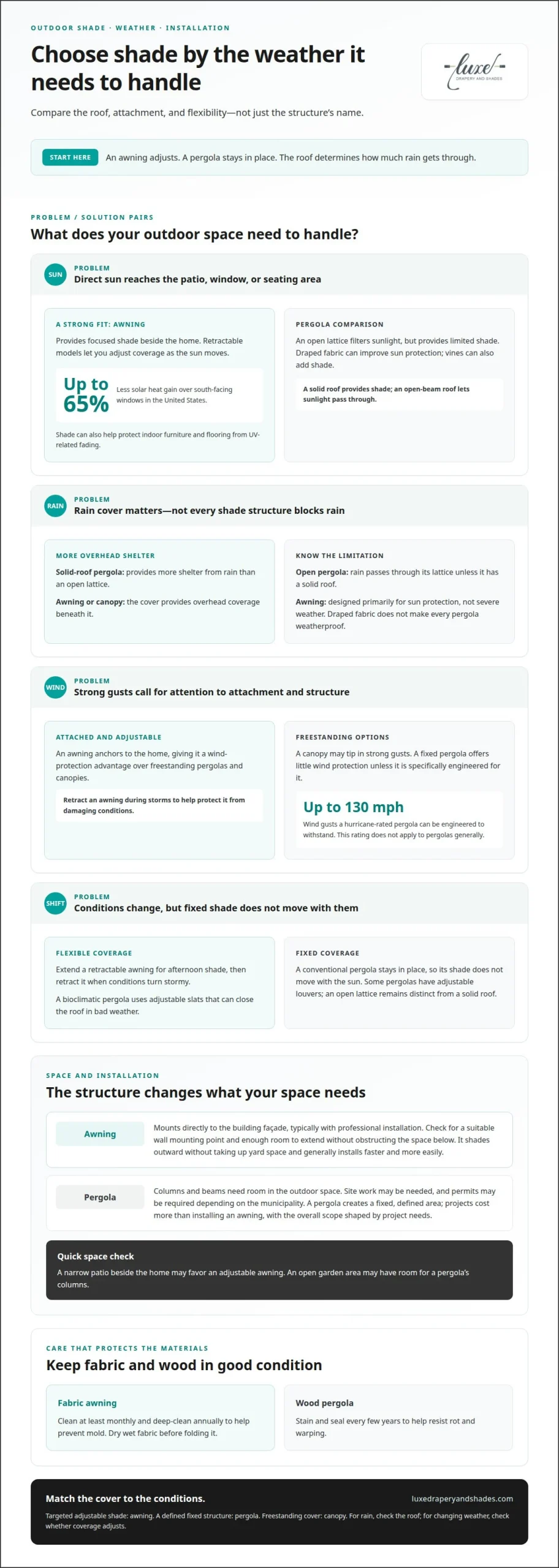
For everyday sun, an awning offers focused shade over a patio, doorway, or window. Its fabric can block direct sunlight from reaching outdoor seating, while a retractable model lets you adjust coverage as the sun moves. Over south-facing windows in the United States, awnings can reduce solar heat gain by up to 65%. That shade can also help protect indoor furniture and flooring from UV-related fading.
Rain protection depends on the roof, not just the structure’s name. A standard pergola has an open lattice, so rain passes through unless it has a solid roof. Draped fabric can improve sun protection, but it doesn’t make every pergola weatherproof. Awnings cover the area beneath them and are designed primarily for sun protection, not severe weather.
Wind calls for a different decision. Because an awning anchors to the home, it has a wind-protection advantage over freestanding pergolas and canopies. Still, retract the awning during storms; putting it away helps protect it from damaging conditions. A canopy may tip in strong gusts. Hurricane-rated pergolas can be engineered to withstand wind gusts of up to 130 mph, but that rating applies to those engineered structures, not pergolas generally.
When weather changes, flexibility matters. A retractable awning can be extended for afternoon shade and retracted when conditions turn stormy. A fixed pergola keeps its structure in place, while a solid roof can provide more shelter from rain. These differences affect comfort and how you use the outdoor space.
| Option | Sun and UV | Rain | Wind and flexibility |
|---|---|---|---|
| Awning | Targeted shade; helps limit fading | Cover overhead | Home-anchored; retractable models adjust |
| Open pergola | Filtered, limited shade | Rain passes through | Fixed; little wind protection |
| Solid-roof pergola | Roof provides shade | More overhead shelter | Fixed structure |
| Canopy | Cover provides shade | Cover overhead | Freestanding; vulnerable to strong gusts |
Choose an awning for adjustable shade close to the house, or a pergola when a fixed outdoor structure better suits your space and shelter needs.
Installation and space requirements
An awning uses the building’s exterior for support. It’s mounted directly to the façade, typically with professional installation. A retractable model can fold into a housing when it isn’t extended, keeping the fabric and frame close to the wall. This setup suits a patio or window where you want shade to project outward without taking up yard space.
Before installation, consider the mounting location and the area the awning will cover. An awning above a door can shade the entrance, while one above a window can shade the glass. The wall needs a suitable mounting point, and the awning needs room to extend without obstructing the space below. It’s a focused way to add shade to an existing exterior, rather than a new freestanding feature.
A pergola requires a different approach because its columns and beams create a structure in the outdoor space. It’s rarely connected to the house, so the layout must accommodate its footprint and supports. Construction can involve additional site work, depending on the property, and permits may be required depending on the municipality. Those considerations can make a pergola project more involved than mounting an awning.
Compare the installation needs against how you use the backyard. An awning generally installs faster and more easily, while a pergola creates a defined area with a fixed position. A narrow patio beside the home may favor an adjustable awning; an open garden area may have room for a pergola’s columns. The choice also affects the budget: pergola projects cost more than installing an awning, though project needs shape the overall scope.
Start by identifying where shade should fall, then consider whether the exterior can support a wall-mounted extension or accommodate a freestanding structure. For tailored shade at windows alongside an outdoor plan, explore custom window treatments.
Pergola structure and roof design
A pergola is an outdoor structure: columns support beams or rafters in an open grid. That framework creates a defined architectural feature, but sunlight still passes through its roof. Vines or a draped cover can soften the aesthetic and add shade, though an open lattice remains distinct from a solid roof. A bioclimatic pergola uses adjustable slats that can close the roof in bad weather.
An awning’s fabric cover extends from a building and attaches to the exterior, commonly shading a window, doorway, or patio. Its wall-mounted design doesn’t require columns across the outdoor area. A retractable awning can extend or fold away as sunlight shifts. Pergolas are fixed structures, although some have adjustable louvers.
Are awnings or pergolas retractable or adjustable? Retractable awnings can extend or retract, while a bioclimatic pergola’s slats adjust to manage light and close the roof. A conventional pergola is fixed, so its shade doesn’t move with the sun.
For a useful comparison, consider the cover as well as the frame. An open pergola offers filtered light, while a solid roof provides more shelter. A fabric awning shades the area beneath it and can retract when you want an open view. Each option balances sunlight, structure, and use of space differently.
How much does it cost to install an awning versus a pergola in the US? The price depends on the project and is provided after a quote request; materials, mounting, and site work affect the scope. Pergola projects cost more than installing an awning.
What are the maintenance requirements for awnings and pergolas? Clean fabric awnings at least monthly and deep-clean them annually to help prevent mold. Dry wet fabric before folding it; wood pergolas need staining and sealing every few years to resist rot and warping.
How awnings, pergolas, and canopies differ
What is the difference between an awning and a pergola in everyday use? An awning extends from a building to shade the area beside it, while a pergola creates a distinct outdoor setting. A canopy is also freestanding, but typically serves as a covered area rather than a permanent architectural addition. These structural differences affect how each option fits the home and its surroundings.
For a compact patio beside the house, a retractable awning can keep the layout open when shade isn’t needed. A pergola may suit a garden where columns can frame a dining or lounge area. A canopy can cover a gathering spot farther from the home, and its support structure can extend beyond the coverage of most awnings.
Roof design shapes the experience beneath each structure. Open pergola beams allow sunlight through, while draped fabric can add shade without making the roof solid. A louvered pergola offers adjustable slats, while a canopy has a covering supported by its own frame. An awning’s attached design makes it a focused option for shade near an exterior wall.
What is the difference between an awning and a pergola when deciding how much flexibility matters? A retractable awning can be extended or stored away, while a pergola remains in place as a lasting feature. A freestanding canopy can be bulky to take down and store, and strong gusts can affect its resistance. The best fit depends on whether you value adjustability, a defined outdoor structure, or coverage away from the home.
Begin by locating the area you want to shade, then consider the footprint and visual character each option brings. For a design that complements your home and outdoor space, explore pergola and awning options.
Luxe Drapery and Shades: Pergolas
Luxe Drapery and Shades offers pergolas and awnings for homeowners shaping a more considered outdoor living space. If you want a defined structure that anchors a seating area, a pergola can help establish the setting. If you prefer shade that extends from the home, an awning offers a different approach. The right fit depends on your layout, desired coverage, and how you want the space to feel and function.
For a cohesive transition between indoors and out, consider how exterior shade relates to your window treatments. Custom Drapery and Roller Shades can complement the interior while outdoor structures shape the space beyond the glass. Together, these choices help create a connected feel throughout the home.
When you’re ready to explore a pergola or awning for your space, contact Luxe Drapery and Shades.
Shape an Outdoor Space That Feels Like Home
Choosing the right option is also a chance to think about how you want to live outdoors. Picture the moments you’d like the space to hold: a quiet morning with coffee, an unhurried dinner, or a comfortable place to gather. Understanding the difference between an awning and a pergola can help turn those plans into a thoughtful design direction.
Let your home’s character guide the next choices. Consider how the outdoor area should relate to the rooms beyond it, and how finishes and textures can create a graceful transition. Luxe Drapery and Shades can bring the vision together with outdoor solutions and complementary interior treatments, including Roman Shades.
When you’re ready to explore a direction for your home, contact Luxe Drapery and Shades. A thoughtfully designed space can make everyday moments feel more inviting.
Frequently Asked Questions
Start Here: What Exactly Is an Awning, Canopy, and Pergola?
An awning, canopy, and pergola differ in how they relate to a building and shape an outdoor area. An awning projects from a home; a canopy is freestanding and supported by its own frame; a pergola is a fixed framework that defines a space. For a Los Angeles home, consider whether you want shade beside a wall or a distinct garden setting.
Which One Should You Choose?
Choose according to the area you want to use and how you want it to feel. A compact balcony or dining spot beside the house may suit an awning, while a larger garden can accommodate a pergola as a separate destination. A canopy can suit a freestanding gathering area. Sketching your furniture placement can help reveal which footprint works best.
What Is a Pergola?
A pergola is a permanent outdoor feature that can give a patio or garden a sense of structure. Think of it as an architectural frame for an outdoor dining table or lounge arrangement. Its roof design affects the space beneath it: open beams preserve a connection to the sky, while adjustable slats offer another way to shape the light.
What Is an Awning?
An awning is a cover attached to a building, often positioned above a window or entry. Its placement can coordinate with the façade and focus shade where it’s most useful. For example, a home with a sunny west-facing sitting area may benefit from a cover extending over that zone, rather than adding a structure across the yard.
What are the Big Differences Between Buying an Awning and Buying a Pergola?
The decision largely comes down to project scope and how the finished space should function. An awning attaches to a building and shades the area beneath its extension. A pergola requires planning for a freestanding outdoor feature, including where its supports and furnishings will sit. Consider how each choice fits the home’s architecture and your preferred outdoor layout.
How do awnings and pergolas differ in structure and materials?
An awning combines a fabric cover with a frame mounted to the home, while a pergola uses columns and beams to create its form. That distinction shapes the visual effect: fabric reads as a projecting cover, while beams create a more architectural presence. Material choices also affect upkeep, especially for outdoor fabric covers and wood structures.