

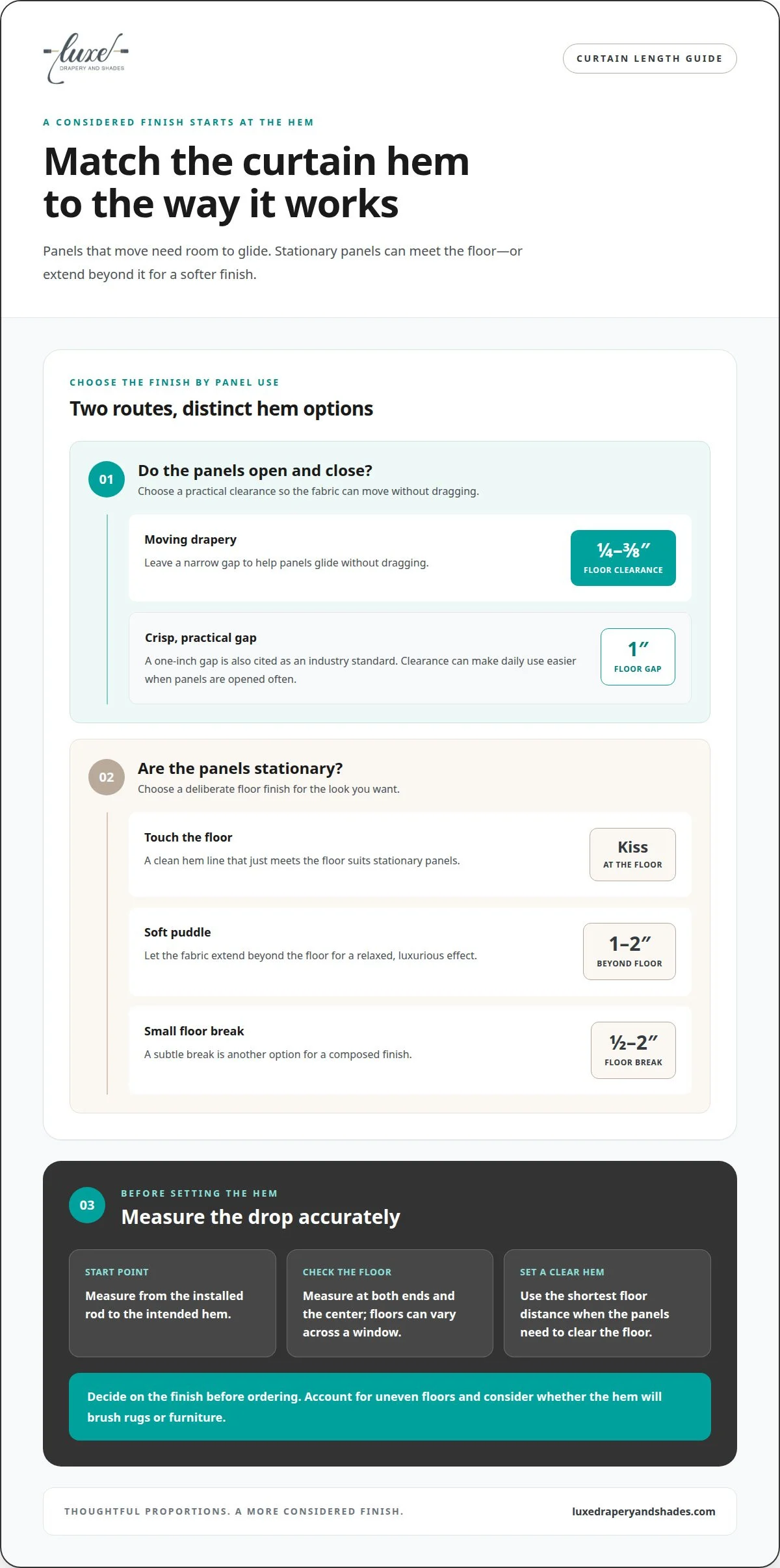
A beautiful fabric can still look unfinished when its proportions are off. Avoiding cheap looking window treatments starts with thoughtful placement: mount curtain rods 4-6 inches above the window frame, or midway between the frame and ceiling in rooms with high ceilings. Let stationary panels just touch the floor or form a slight 1-2-inch puddle; panels that open and close need 1/4″-3/8″ of floor clearance to move without dragging.
It’s easy to focus on color or pattern first, but length, fullness, and fit shape the overall impression just as much. When panels hover awkwardly above the floor or crowd the glass, even a lovely room can feel unfinished.
This guide explains how curtain length and floor clearance create a considered finish, then explores how custom choices in color, fabric, and size bring a window into balance. You’ll also see how drapery and shades can combine softness and style with everyday function, so each treatment feels at home in its space.
Key Takeaways
- Position curtain rods to give windows a taller, more balanced appearance, and choose panel lengths that suit the room’s ceiling height.
- Coordinate color, fabric, pattern, and fullness to create a cohesive look that feels considered rather than overly busy.
- Choose floor clearance according to how the panels work: moving drapes need room to glide, while stationary panels can finish at the floor.
- Pair drapery with shades when you want to balance softness and style with practical light control.
1. Choosing the right curtain length
Set the rod before measuring curtain length, since its height determines the finished drop. Mount it 4-6 inches above the window frame; with high ceilings, place it midway between the frame and ceiling. Extend the rod 6-12 inches beyond the frame so open panels sit outside the glass. For an 8-foot ceiling, 84-inch curtains are often too short unless the rod sits on the frame.
Measure from the rod to the intended hem, not from the top of the window. Check the drop at several points if the floor or ceiling appears uneven. For width, allow panels to clear the glass when open; a stack-back allowance of 30% of the window width, divided between two panels, gives a useful planning reference. These proportions help achieve a balanced appearance rather than making the window seem smaller.
Blinds or shades can be more affordable than curtains when the design calls for a simpler treatment, while curtains add softness and fabric presence. Neither automatically looks better: choose based on the room’s use, desired light control, and overall style. Common installation mistakes include rods mounted just above the trim, panels too narrow to uncover the glass, and hems hovering several inches above the floor.
Renters can refresh a window without permanent changes by using a tension rod or removable hardware suited to the opening. Steam curtains before hanging to release creases, then gather panels into soft accordion folds for 48 hours to help train their shape. Vacuum drapes monthly and launder or dry-clean them annually to keep fabric looking cared for.
For a considered budget approach, look for designer-grade textiles in remnant or clearance bins, where discounts may reach 50-70%. A flat sheet can also become a simple curtain panel when its dimensions and finish suit the window. A more substantial rod or refined finials can elevate the result; treatment cost depends on measurements, fabric, fullness, and hardware, with the exact figure provided in a quote for your case.
2. Color, fabric, and size customization
Choose color in relation to the room’s largest elements: wall paint, flooring, and furniture. Warm white panels, for example, can soften a room with dark wood, while muted green can echo an existing accent. Compare fabric samples beside those surfaces in daylight and evening light. Color shifts as the light changes, so this step helps keep the palette cohesive. For homeowners focused on avoiding cheap looking window treatments, restraint often makes the strongest impression. Avoid high-sheen finishes and overly busy patterns when you want the treatment to complement, rather than compete with, the room.
Fabric affects both appearance and function. Linen, cotton, and velvet each bring a distinct texture and weight to the window. Sheer fabric can keep a room feeling airy, while a more substantial fabric creates a fuller visual frame. Consider how the room is used before choosing: a bedroom may call for a different balance of privacy and softness than a living area. Coordinate the material with nearby upholstery instead of matching every surface exactly.
Proportion matters as much as color. Ready-made curtains are typically made with a single fabric width; custom curtains typically use 1 1/2 to 2 widths or more. For fullness, a useful starting point is fabric totaling two and a half times the finished panel width, or three times for sheers. Functioning panels should also be wide enough to clear the window glass when open. This extra room lets daylight enter and keeps fabric from crowding the view, supporting a tailored look—much like the design found in waterfront destinations such as Edgewater Inn, where framing scenic harbor views is essential to the room’s ambiance.
Custom sizing can address unusual window dimensions and ceiling heights. For instance, a taller room may benefit from longer panels that draw the eye upward, while a broad window needs enough fabric to form graceful folds. Avoiding cheap looking window treatments also means treating color, fabric, and measurements as one design decision, rather than choosing each in isolation. If you’re refining proportions for a specific room, explore custom drapery options as one tailored approach.
3. Allowing panels to kiss or clear the floor
The right hem depends on whether curtains move or remain decorative. For functioning drapery, leave enough clearance for panels to move without dragging. That narrow clearance lets panels open and close without dragging, catching dust, or bunching against the flooring. Measure from the installed rod to the floor, since even a small change in rod position affects the finished length.
Stationary panels can be finished to just touch the floor, creating a clean line at the hem. A slight puddle offers a softer effect: curtains may extend 1-2 inches beyond the floor for a relaxed, luxurious finish. A small floor break of 1/2 to 2 inches is another option. These finishes differ, so choose one intention rather than letting the fabric fall at an accidental length.
A one-inch gap above the floor is also cited as an industry standard for hanging drapes. Use this approach when a crisp, practical finish matters more than a floor-kissing silhouette. Clearance can make daily use easier in a room where panels are opened often. In a formal sitting room with stationary panels, a hem that touches the floor may better suit the overall effect.
Floor levels can vary across a window, especially beside older walls or uneven flooring. Measure the drop at both ends and the center, then use the shortest floor distance when setting a hem that should clear the floor. A panel measured only at the left edge, for example, may drag on the right. Accurate measurements help both panels hang evenly.
Ceiling height and layering also shape the final impression. A puddled hem can add softness beneath long panels, while a clean break keeps layered curtains looking composed. Consider how the fabric gathers when closed and whether the hem will brush rugs or furniture. Decide on the finish before ordering so the drapery feels deliberate and each panel meets the floor in a way that suits its use.
For a softer look, drapes can kiss the floor or extend a few inches beyond it, depending on the style you want.
4. Benefits of custom window treatments
Custom window coverings can be made to suit a window’s dimensions instead of forcing standard proportions into an unusual opening. A precise fit helps panels sit evenly, align with neighboring windows, and finish cleanly beside the trim. In a living room with broad windows, for example, made-to-measure panels can span the full window rather than looking narrow or disconnected. A polished effect comes from relating each treatment to its room.
Custom choices also let appearance and function work together. Consider a bedroom where privacy matters, or a living area where preserving an expansive view is central—a design priority frequently showcased across high-end properties like Luxury Vacation Stays to balance scenic vistas with refined comfort. Fabric, fullness, and operating style can reflect those priorities while complementing the furniture and finishes. A beautiful result doesn’t require the same treatment at every window; a consistent color palette can connect different choices throughout the home.
Layering is a practical way to make a room feel more finished. Pairing shades with drapery brings function, softness, and style together: the shade provides a streamlined layer, while drapery adds visual warmth and frames the window. In a living room, this combination can make a bare window feel integrated with the surrounding furnishings.
Custom work can also help you prioritize. Choose treatments for the windows that shape the room’s appearance most, then keep secondary spaces simpler. This can make a plan feel intentional without treating every opening as a focal point. An expensive fabric alone doesn’t guarantee an elevated finish; proportion, thoughtful coordination, and suitable hardware matter too. Choosing treatments that suit the window and room helps avoid costly mismatches.
The clearest takeaway: custom fit is valuable when standard dimensions, fabric choices, or room needs leave awkward compromises. For a tailored finish, explore custom drapery designed around your windows and living spaces.
Luxe Drapery and Shades
Luxe Drapery and Shades helps bring window proportions, fabric choices, and room function together in a cohesive design. When standard sizes leave awkward gaps or a room needs a more considered finish, tailored options can help the window feel integrated with its surroundings.
Custom Drapery, Roller Shades, Roman Shades, and Honeycomb / Cellular Shades offer different ways to balance softness, light control, and visual simplicity. The right choice depends on the window’s dimensions, the room’s purpose, and the atmosphere you want to create. A thoughtful combination can make each treatment feel purposeful rather than like an afterthought.
For guidance choosing a polished fit for your space, contact Luxe Drapery and Shades.
Make Your Windows Part of the Design
Think of each window as an opportunity to shape how a room feels, not simply a space to cover. A considered treatment can bring visual calm, soften architectural lines, and support how you use the room every day. Avoiding cheap looking window treatments is less about chasing a particular style and more about choosing details that belong naturally in your home.
Luxe Drapery and Shades offers Custom Drapery, Roller Shades, and Roman Shades, with choices shaped around each window and its setting. If you’re ready to translate your ideas into a tailored design, contact Luxe Drapery and Shades. A thoughtful next step can help your windows feel more connected to the home you want to create.
Frequently Asked Questions
What makes window treatments look cheap or high-end?
Precise finishing and visual consistency often distinguish a polished treatment from one that feels unfinished. Look for straight hems, even stitching, clean edges, and hardware that suits the room’s other metal details. A panel with tidy lining and coordinated rings, for example, can feel considered even in a simple fabric. In a Los Angeles home, assess the treatment in both daylight and evening light.
What curtain rod styles and finishes look more expensive?
A simple, substantial rod with refined finials often looks more elevated than ornate hardware competing with the curtains. Choose the finish to relate to nearby details: matte black can echo dark accents, while brushed brass can complement warm-toned fixtures. Keep the rod style consistent across connected rooms. Smooth brackets and neatly finished ends help the hardware appear intentional rather than like an afterthought.
Which colors and patterns help window treatments look timeless rather than cheap?
Timeless treatments often use colors that connect naturally with a room’s permanent finishes, such as a soft stone tone beside pale walls or muted blue that repeats an existing accent. Small-scale stripes or subtle woven texture can add interest without dominating the view. Before settling on a pattern, consider how it relates to rugs, upholstery, and artwork so the window feels connected to the wider scheme.