

A classroom’s window treatment can shape how comfortably the room supports lessons throughout the day. Automated shades for school classrooms in Los Angeles use a motor to raise or lower window coverings, with operation available through controls such as a wall switch or remote, depending on the system.
A shade system can do more than move at the touch of a button. Motorized coverings make large or hard-to-reach windows easier to manage, and compatible controls can coordinate shade movement with other room settings. The best fit depends on the windows, sunlight, privacy needs, and staff routines. This guide covers how automated shades work, what to consider when choosing fabrics and controls, and how planning differs for new and existing school buildings. These details can help you create a practical, composed classroom environment.
Key Takeaways
- Plan power, control locations, and shade measurements early in new construction to support a clean, integrated installation.
- For existing classrooms, the window layout and available infrastructure help determine a suitable motor and installation approach.
- Choose fabric and shade style around classroom needs such as light filtering, privacy, and room darkening.
- Compare the practical strengths of roller, Roman, cellular, and custom drapery options when shaping a cohesive classroom environment.
Automated operation for large or hard-to-reach windows
Motorized window shades let staff adjust larger classroom windows without reaching across furniture or operating each covering by hand. Controls should suit the room’s daily routines, window layout, and lighting needs.
Schedules and Sensor-Based Operation
Schedules can align shade movement with predictable classroom routines, such as lowering window shades before a presentation or raising them at the start of the day. Wall controls and remotes provide direct operation, while mobile apps, compatible voice control, and automation scenes offer additional methods. Sensor-based operation can be considered as a project requirement, with the selected controls designed around the intended response to changing room conditions.
For example, a customized scene can lower shades and adjust compatible interior lighting together. Integration with HVAC or a building management system requires compatible controls and a defined system design; shade automation alone does not provide that connection.
Operation Speed and Reliability
Motor performance depends on the shade’s dimensions, motor, power source, and installation. Larger coverings place different demands on a motor than smaller ones, and frequent scheduled movement makes consistent controls important. Planning should account for the window and intended routine, then match the motor and controls to the project.
Motorized shades and blinds can be operated by touch or voice commands, and compatible smart devices allow remote control. A manual shade, by contrast, does not provide motorized or scheduled movement.
For Los Angeles classrooms, building-code and school-district requirements should be addressed through the project’s applicable plans and standards, including shade mounting and any electrical work. Automated shades don’t automatically qualify for a California energy rebate; eligibility rests on the specific program and project. Commercial window-treatment and controls installers handle school projects, with scope shaped by the building and its control needs.
Compatible controls can coordinate shades and lighting through customized scenes. HVAC or building-management integration requires a compatible system design. For maintenance planning, review the selected system’s care requirements, warranty terms, and serviceability, and consider how use, installation, and operating conditions may affect its lifespan.
Motor types for new construction and retrofit projects
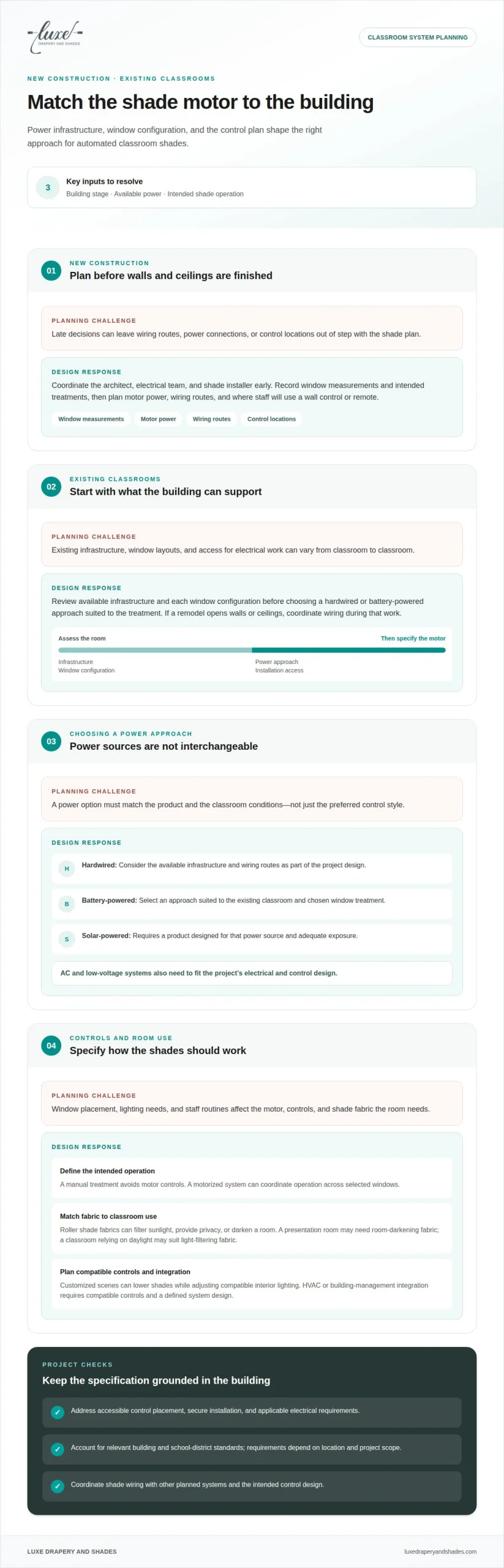
Motor selection begins with the building’s power infrastructure, window configuration, and control plan. In new construction, Los Angeles project teams can plan shade wiring, power, and control locations before walls and ceilings are finished.
For existing classrooms, assess the available infrastructure and choose a hardwired or battery-powered approach suited to the window treatment. Solar-powered systems require a product designed for that power source and adequate exposure; they are not interchangeable with wired or battery options. These factors help determine which motorized shades suit each classroom.
Power is only one design decision. Choose fabric according to how the room is used: roller shade fabrics can filter sunlight, provide privacy, or darken a room. For example, a presentation room may need room-darkening fabric, while a classroom that relies on daylight may suit a light-filtering option. Design choices should also complement the classroom interior and lighting plan.
AC and low-voltage systems also need to fit the project’s electrical and control design. Available power, wiring routes, window placement, and desired operation all shape the system specification. A manual treatment avoids motor controls, while a motorized system can coordinate operation across selected windows.
Lutron shades and motorized blinds can be part of an automated window-treatment plan. Compatible Lutron lighting control systems can coordinate shades with lighting through customized scenes, such as lowering shades while adjusting interior lights. The design should define the intended use and select compatible controls.
Address safety and accessibility in the project design, including accessible control placement, secure installation, and applicable electrical requirements. Building and school-district standards depend on the project’s location and scope, so account for the relevant requirements rather than assuming one rule applies to every school.
For a tailored selection of motorized window treatments, explore motorized shade options alongside the classroom’s power and lighting plan.
Architectural pre-planning and concealed wiring
Concealed wiring starts with coordination. In new construction, the architect, electrical team, and shade installer can align window measurements, motor power, wiring routes, and control locations before walls and ceilings are finished. This lets the project account for the shade system while electrical and architectural plans are still developing.
First, record each window’s dimensions and intended treatment. A large roller shade, for example, needs a mounting position coordinated with nearby ceiling details and the window opening. The selected motor and power source then determine where electrical connections need to reach. The plan should also show where staff will use a wall control or remote, rather than leaving control placement until the last minute.
Next, coordinate concealed routes with the room’s other planned systems. A classroom scene might move several shades together while compatible controls adjust lighting. That integration depends on the selected equipment and control design, so the wiring plan should support the intended operation. Planning these requirements before finishes are installed helps avoid routing conflicts and visible changes later.
Existing Los Angeles schools need a different review. Assess available infrastructure, window configuration, and access for electrical work before selecting a hardwired or battery-powered approach. If a remodel opens walls or ceilings, coordinate wiring during that work. If the finishes remain intact, plan around the existing building and the chosen system’s power needs.
A schedule of openings, shade types, power requirements, and control locations gives the project team a shared reference. It helps keep decisions consistent across classrooms with different window layouts. Before installation, align the specified treatment, motor, wiring route, and controls with the schedule. This makes concealed wiring part of the architectural design, not an afterthought.
Shade fabric and style options
Start with the classroom’s teaching needs, then match the fabric to the desired light level. Roller shades come in fabrics that filter sunlight, provide privacy, or darken a room. A reading area may benefit from filtered daylight, while presentations may call for a darker setting. Window orientation and construction also affect solar heat management, so fabric is only one part of the decision.
For greater flexibility, a dual-shade system combines two fabrics in one window treatment. A light-filtering layer, for example, can suit everyday lessons, while a darker layer supports screen viewing. The window, shade construction, side channels, and installation details can all affect how effectively a shade darkens a room. Choose based on how each classroom is used, not just on a fabric sample.
Style matters alongside performance. Roller shades offer a clean, restrained profile, while Roman shades bring a tailored fabric look. Cellular shades and natural woven shades provide other options for a considered classroom interior. Coordinating coverings with wall colors, furnishings, and other window treatments can create a composed look across rooms with different layouts.
Consider operation alongside fabric. A remote or wall control should make it straightforward for staff to choose the intended setting. In a room with a presentation display, for instance, a control scene could lower a darker fabric and adjust compatible lighting together. Plan the controls and fabric as one system so the desired light level is practical to select during class.
For a classroom-specific fabric and style selection, explore shade options and consider how each covering will support lessons, natural light, and the room’s design.
Luxe Drapery and Shades
Luxe Drapery and Shades can help shape a classroom window-treatment plan around the room’s layout, light needs, and desired finish. When selecting treatments for a school project, the team can consider how custom drapery, roller shades, Roman shades, or honeycomb and cellular shades suit different windows and learning spaces. A bright classroom may call for a different fabric and style than a room used for presentations, so the selection should reflect how each space functions. Thoughtful coordination can bring practical light control and a composed visual feel to the classroom. Contact Luxe Drapery and Shades to discuss your school’s window-treatment needs.
Shape a Classroom Plan That Lasts
Planning automated shades for school classrooms in Los Angeles is an opportunity to make window treatments work in harmony with the learning environment. Consider how each room is used, the atmosphere it should support, and how staff will manage its windows throughout the day. A clear project brief can help turn those priorities into a considered design conversation.
Luxe Drapery and Shades offers custom drapery, roller shades, and Roman shades to suit a school’s aesthetic and functional goals. Each option brings a distinct balance of light management and visual character. Discuss your project’s needs with the team to identify an approach for the classroom spaces.
Contact Luxe Drapery and Shades to begin planning a thoughtful window-treatment solution for your school.
Frequently Asked Questions
What Are Motorized Window Shades?
Motorized window shades use a motor to raise or lower a covering instead of relying on manual operation. In a Los Angeles classroom, staff can use touch or voice commands, or compatible smart devices for remote control. A teacher, for example, can adjust a shade before a lesson without leaving the teaching area.
What types of automated shades can a professional recommend for school classrooms?
Choose motorized roller, Roman, or cellular shades according to the classroom windows, design preferences, and how each space is used. For automated shades for school classrooms in Los Angeles, the selection can account for differences between rooms, such as a media classroom and a reading area. This helps match each window covering to the room’s function and interior.
How can a professional configure automated shades to respond to schedules, sunlight, or classroom occupancy?
For automated shades for school classrooms in Los Angeles, schedules can be set around bell times or other established routines. Sunlight-responsive or occupancy-based operation requires compatible sensors and a system designed to use their input; motorization alone does not provide those responses. The control plan should specify when automation operates and how staff can adjust settings as classroom activities change.
How do wired, wireless, and solar-powered automated shades compare for schools?
Choose hardwired or battery-powered options based on available infrastructure, window configuration, and product requirements. Solar-powered systems require a product designed for that source and adequate exposure; they are not interchangeable with wired or battery options.