

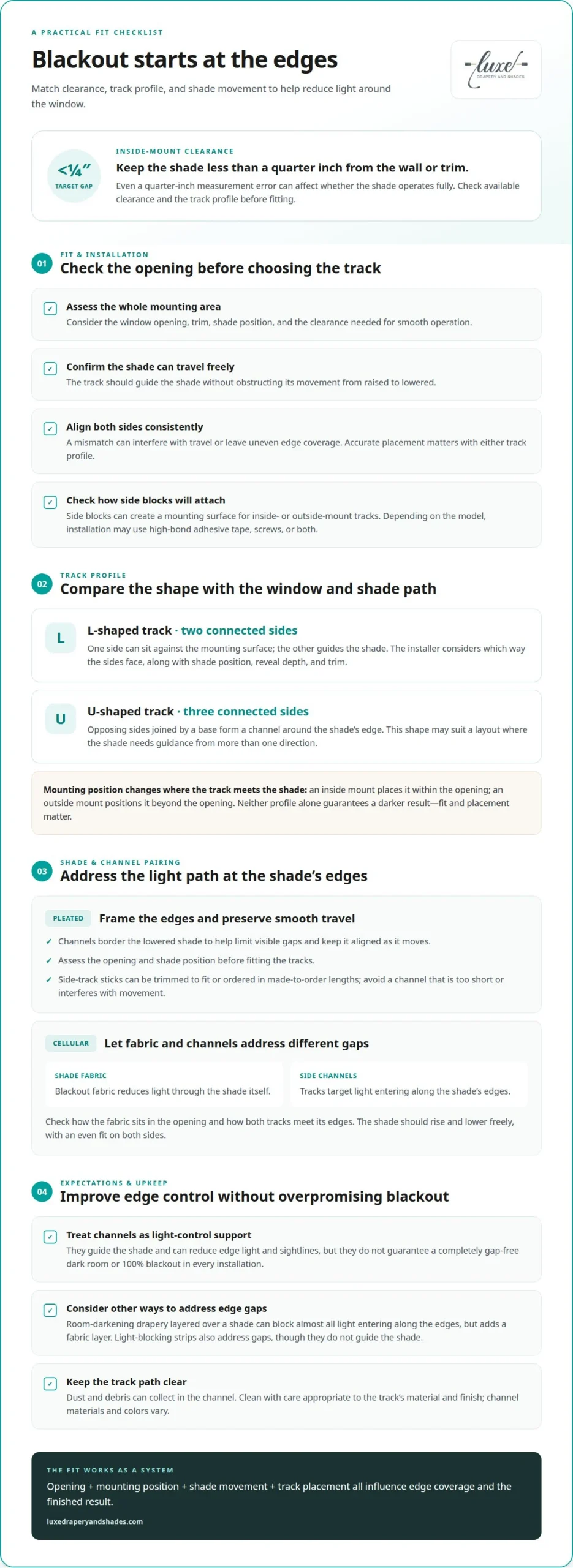
Blackout performance depends on the edges as well as the fabric. For an inside-mount shade, the gap between the treatment and the wall or trim should be less than a quarter inch. Side channels for blackout shades guide the shade as it moves and help limit light along its sides.
A precise fit supports both darkness and smooth operation. Even a quarter-inch measurement error can affect whether a shade operates fully, so check the available clearance and channel profile carefully.
This guide explains the side clearance an inside mount needs, how L-shaped and U-shaped tracks differ, and how room-darkening channels work with pleated and cellular shades. It also covers how the fabric and fit work together to create a more restful, finished room.
Key Takeaways
- Assess the window opening and mounting position together to determine how side blocks can support the shade.
- Compare L-shaped and U-shaped profiles by how each track sits beside the shade and helps limit edge light.
- Pair room-darkening channels with pleated or cellular shades to address light gaps at the sides.
- Consider the shade, track profile, and fit as one coordinated choice for a polished result and a darker room.
How much side clearance for an inside mount shade do I need?
For an inside mount, the gap between the shade and the wall or trim should be less than a quarter inch. The right fit also depends on the shade’s movement and the channel profile.
Side Blocks for Mounted Shades
Side blocks can create a mounting surface for the side track on inside- or outside-mount shades. For an inside mount, consider the opening, trim, shade position, and clearance needed for smooth operation. A correctly measured treatment sits less than a quarter inch from the wall or trim; a quarter-inch measurement error can affect full operation.
Blocking Gaps Around Roller and Cellular Shades
Roller and cellular shades can leave narrow gaps that let light in at the sides. Side channels guide the shade as it rises and lowers, while their shape around the front and back helps block light at the edges. This closer fit can also improve privacy by reducing sightlines around the shade.
Side channels can reduce edge light, but they do not guarantee a completely gap-free dark room in every installation. Channel materials and colors vary, so choose a visible track that suits the window and room finish. Keep the track path clear of dust and debris, using care appropriate to the channel’s finish.
Side Channels Versus Curtains and Strips
Side channels guide the shade and can help reduce light at the edges. Their effectiveness depends on fit and installation. Room-darkening drapery layered over a shade can block almost all light entering along the edges, but adds a fabric layer. Light-blocking strips are another option for addressing gaps, though they do not guide the shade.
L-shaped versus U-shaped side-track profiles
L-shaped and U-shaped describe the track’s cross-section, not the shade fabric. An L has two connected sides; a U has three. The difference affects how each profile sits beside the shade and window reveal, so choose based on the mounting surface and the shade’s travel path.
With an L-shaped track, the installer considers the direction its two sides should face. One side can sit against the mounting surface, while the other guides the shade. The shade’s position, reveal depth, and trim affect alignment. The track must guide the shade without obstructing its movement.
A U-shaped track has opposing sides joined by a base, forming a channel around the shade’s edge. Its three-sided shape may suit a layout where the shade needs guidance from more than one direction. Before choosing its orientation, assess how the shade, window frame, and track meet. Neither profile alone guarantees a darker result; accurate placement matters.
When choosing a profile, compare the mounting surface and how much of the shade’s edge each track can frame. An inside mount places the track within the opening; an outside mount positions it beyond the opening. These locations affect where the track attaches and how it meets the shade. The profile must also let the shade travel freely from raised to lowered.
For either shape, the installer aligns the tracks on both sides so the shade moves evenly. A mismatch can interfere with travel or leave inconsistent edge coverage. The decision is therefore not simply L versus U: the professional weighs the opening, mounting position, shade movement, and desired light control together. For a tailored window-treatment plan, explore custom shade options that suit the room and its light needs.
Room-darkening side channels for pleated and cellular shades
Side channels can help reduce light along the edges of pleated and cellular shades. The fabric, track fit, and installation all affect the room-darkening result.
Channels for Pleated Shades
For pleated shades, side channels address light entering beside the fabric when the shade is lowered. The tracks border the shade’s edges, helping limit visible gaps while keeping the treatment aligned as it moves. This approach can suit rooms where edge light matters as much as appearance.
Before fitting the tracks, assess the opening and shade position. Side-track sticks can be trimmed to fit or ordered in made-to-order lengths. The length should suit the window and shade layout without leaving the channel too short or interfering with shade movement.
Channel placement matters as much as fabric choice. The shade must travel smoothly within the tracks, and both sides should frame it consistently. A careful fit supports a composed appearance and helps reduce light leakage, without implying that pleated fabric alone eliminates every gap.
Channels for Cellular Shades
Cellular shades can also use room-darkening side channels to address light along their edges. Pairing channels with blackout fabric can make a room very dark: the fabric reduces light through the shade, while the channels target side gaps. Each component addresses a different path for light.
For a cellular shade, assess how the fabric sits within the opening and how the tracks meet its edges. The shade should move freely as it rises and lowers. Poor track alignment can affect its travel, while a well-considered fit helps maintain an even finish on both sides.
Side channels improve light control, but no window treatment can guarantee 100% blackout in every installation. Window shape, shade fit, fabric, and track placement all influence the final result. For pleated or cellular designs, these details help set realistic expectations and guide a room-darkening solution suited to the space.
What are side channels for blackout shades?
Side channels are vertical tracks fitted beside a shade to guide its edges. Unlike blackout fabric, which limits light through the shade itself, channels address light entering around the sides. Together, these components create a window-covering system designed for stronger room-darkening.
Each channel sits beside one edge of the shade. As the treatment moves, the tracks guide its sides and help cover the space between the fabric and window frame. For example, a cellular shade can pair blackout fabric with channels to address both light through the material and gaps at the edges. The fabric and tracks do different jobs.
Track profiles vary. L-shaped and U-shaped channels frame the shade edge differently, so the window opening and mounting position help determine the suitable profile. An inside-mounted treatment sits within the frame; an outside-mounted treatment sits beyond it. These positions affect how the tracks align beside the shade.
Installation involves more than attaching two rails. A professional considers the shade’s dimensions, the window opening, and the travel path, then aligns each track so the shade can rise and lower smoothly. Depending on the model, channels may be secured with high-bond adhesive, screws, or both. A precise fit helps keep the tracks aligned and reduce unwanted edge light.
Side channels can improve privacy by limiting gaps around a lowered shade, but they do not create a sealed enclosure. Light may still enter through other parts of the treatment or around the frame. The result depends on the fabric, channel profile, mounting position, and installation. A cohesive system balances light control with smooth movement and a finished appearance.
For a window-specific plan, discuss shade and channel options suited to your room.
Luxe Drapery and Shades
Luxe Drapery and Shades helps match window treatments to your room, light-control goals, and preferred finish. If you’re weighing side channels, shade fabric, and mounting position, a tailored consultation can help clarify how those choices work together.
Options include Roller Shades, Roman Shades, Honeycomb / Cellular Shades, and Custom Drapery. Each contributes differently to a room’s appearance and light management, so the right choice depends on the window and the atmosphere you want. The goal is a considered treatment that balances function with a cohesive interior.
For guidance on window treatments suited to your space, contact Luxe Drapery and Shades.
Shape a More Considered Window Plan
Start by bringing your light-control priorities together with the room’s design. Consider how the treatment should look when raised and lowered, how much privacy the room needs, and whether a layered finish suits the space. These choices turn technical details into a cohesive part of the interior.
Luxe Drapery and Shades offers Custom Drapery, Roller Shades, and Roman Shades, with consultation, measurements, and installation. If you’re considering side channels for blackout shades, discuss your window and goals with our team to connect the shade selection with the look and function you want.
Contact Luxe Drapery and Shades to discuss your window-treatment plans and take the next step toward a more restful, beautifully finished space.
Frequently Asked Questions
Are These the Best Blackout Shades with Side Channels?
Side channels can be a strong choice when your priority is reducing light around a shade’s edges. The best fit depends on the room, window configuration, and desired appearance. A bedroom may call for a different balance of darkness and decorative softness than a living room. Consider how the shade will look and operate, not just its blackout label.
Can a professional trim side channels to fit my window?
Yes, a professional can trim side-track sticks to fit, or use made-to-order lengths. The choice depends on the window opening and the channel system. For a shaped or unusually finished opening, the installer can assess how the track ends should meet the surrounding trim. A clean fit helps the treatment look intentional and keeps the shade’s path clear.
Can they be used on outside mounts?
Yes, side channels can be used with outside-mounted shades. In this layout, the treatment and tracks sit beyond the window opening, so placement must work with the surrounding wall or trim. A projecting sill or casing, for example, can affect track alignment. Consider the mounting surface and shade travel together.
How do you Stop The Light Coming from the Sides of my Roller Blinds?
Side channels can help reduce light passing beside roller blinds by framing the shade’s edges. Blackout fabric or a liner addresses light passing through the material. Room-darkening drapery layered over a blind can also block almost all light entering along the edges. Choose an approach based on whether you prefer a streamlined track or a softer, layered look.
Why Add Side Tracks?
Side tracks guide the shade and help reduce light entering along its edges. They can also support privacy by limiting sightlines beside a lowered treatment. In a Los Angeles bedroom facing a neighboring building, reducing side gaps may be useful alongside the right fabric and placement. Tracks are a functional detail that can contribute to a composed window finish.
Why do my blackout roller shades still let light in?
Blackout fabric limits light through the shade, but light may still enter at the sides or other uncovered edges. The shade’s position, fit, and window opening all affect how much light reaches the room. A professional can assess whether edge channels, a different fabric arrangement, or layered drapery better suits the window and your preferred level of darkness.