

Can a Los Angeles yoga studio welcome the first light of dawn and still create a calm, private setting for evening practice? Yes. Automated shades for yoga studios can be scheduled around the time of day or activity, and smart-device controls make it easy to adjust the room as practice changes. The goal is not to cover every window, but to shape the light with intention.
That flexibility can help a shared studio feel open for an early class and more softly composed as daylight fades. This guide explains how motor power, daily schedules, voice controls, and weather-responsive settings can work together to adapt the space. You’ll also learn what matters when planning shade coverage and automation, so the studio’s light feels considered from morning practice through dusk.
Key Takeaways
- Compare chain-free motorized roller shades with battery-powered options to understand how power choices shape installation.
- Plan schedules and smart-device controls around the studio’s class rhythm, from early sessions to evening practice.
- Consider how shade position can influence sunlight and indoor temperature, helping create a more comfortable practice environment.
- Explore routines that respond to changing conditions, so the studio’s light and privacy can adapt throughout the day.
How are motorized shades powered?
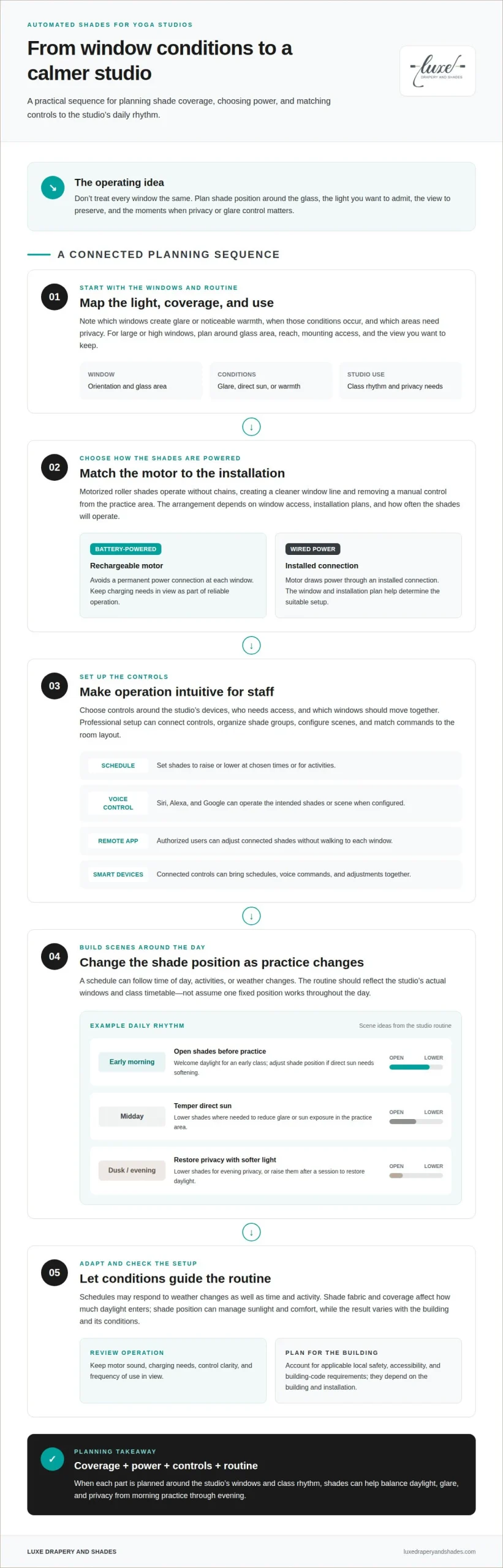
Motorized roller shades move without operating chains, creating a cleaner window line and removing a manual control from the practice area. Their motors use either wired power or battery power. Some motorized shades use battery power instead of a wired connection. The right arrangement depends on window access, the installation plan, and how often shades will operate.
For automated shades for yoga studios, roller shades can balance sun exposure with privacy. Lowering a shade can soften direct daylight during a morning class or screen the room during an evening session. At large or high windows, plan coverage around the glass area and the view you want to preserve. The shade position can then admit daylight while reducing glare or unwanted exposure in the practice area.
Rechargeable motors avoid a permanent power connection at each window, while wired motors draw power through an installed connection. A professional plans the motor and control setup around the window and the studio’s daily use. Motor sound also matters in a quiet practice environment, so the selected motor and scene timing should suit the room’s atmosphere. Schedules can raise or lower shades at set times, for activities, or in response to weather changes.
Safety, accessibility, and building-code requirements depend on the building and installation. Account for applicable local requirements and accessible operation rather than assuming one rule applies to every U.S. studio. For large or high windows, the installation plan should consider reach, mounting access, shade coverage, and consistent operation across the window.
Professional installation typically includes mounting the shades, configuring their controls, and setting schedules for daily routines. Maintenance needs depend on the motor and frequency of use; keeping controls and charging needs in view supports reliable operation. For example, an early-morning scene can open shades before practice, while a dusk setting can restore privacy as daylight fades.
Automated shade scheduling and smart-device control
Schedules and connected controls let a studio adapt daylight to its class routine. A dawn setting and an evening scene can support different levels of light and privacy.
Lutron shades are one named option for studio control. Warranty coverage is defined by the applicable product terms, so those terms matter alongside the system’s intended use.
Voice Control Options
Siri, Alexa, and Google can provide voice control for smart shades. A professional can configure the system so a spoken command operates the intended shades or scene. For example, an instructor might use a voice command to lower shades before a restorative class. The useful choice depends on the studio’s devices, preferred voice assistant, and who needs access.
Remote App Control
An app can give authorized users remote control of connected shades, allowing adjustments without walking to each window. A studio manager could close a sunny facade before class or raise shades after a session to restore daylight. Professional setup connects the controls and organizes shade groups so commands match the room layout. The result is more functional when the app’s controls are clear to the people who use them.
Convenience and Control Choices
Control options can include schedules, voice commands, and adjustments through connected smart devices. Shape the setup around the studio’s routine, such as opening shades before the first class and lowering them for evening privacy. Consider who will manage settings, which windows should move together, and when manual changes are useful. These choices help keep operation intuitive for instructors and staff.
For light control, schedules can respond to time of day, activities, or weather changes. A midday scene can lower shades to temper direct sun, while an evening routine can increase privacy. Shade fabric and coverage influence how much daylight enters, and the chosen settings can protect furnishings from UV exposure. Explore professional shade-control planning to align controls with the studio’s daily rhythm.
Why Smart Shades?
In Los Angeles, sunlight through a west-facing studio window can feel different from morning light on an east-facing wall. A shade changes how much direct sun reaches the interior, affecting brightness and how warm the area near the glass feels. The practical aim is to manage that exposure while keeping the studio comfortable for movement, rest, and focused practice.
Insulation and shade coverage play different roles. Building insulation helps limit heat transfer through the building envelope, while a window shade adjusts light and sun exposure at the glass. A shaded practice area, for example, can feel less exposed to afternoon sun, but a shade does not replace insulation in walls or ceilings. Considering both helps set realistic expectations for room comfort.
Energy use depends on more than window coverings. Outdoor conditions, window orientation, room use, and heating or cooling settings all influence indoor temperature. A studio manager might schedule shades to lower during a sunny afternoon, then raise them when the sun moves away. This helps manage changing light and comfort conditions without assuming one setting suits every class or season.
Smart controls make those adjustments part of a routine. A weekday schedule can lower shades before a warm afternoon class, while an evening scene can balance privacy with softer ambient light. Schedules can also respond to weather changes. The best routine reflects the studio’s actual windows and class timetable, rather than relying on one fixed position throughout the day.
When planning automated shades for yoga studios, note which windows create glare or noticeable warmth and when those conditions occur. A tailored plan can align coverage and control settings with those patterns. This connects shade operation to the room’s use while keeping expectations grounded: shades influence sunlight and comfort, but the result varies with the building and its conditions.
Automated routines and environmental triggers
A useful routine matches shade movement to the studio’s changing conditions, not just a fixed position. In Los Angeles, a class schedule and shifting weather can call for different window settings. A professional can map the studio’s activities, identify the windows that affect practice, and configure schedules around those needs.
Start with the room’s daily pattern. A morning flow, for example, may benefit from a brighter setting, while a restorative session may call for softer daylight. An evening routine can prioritize privacy as daylight fades. Group windows according to their effect on the practice area, so each scene responds to the room instead of moving every shade identically.
Weather-responsive operation adds another layer. Automated shades can be scheduled around weather changes, time of day, or activities. Shape routines around conditions that matter to the studio, such as direct sun reaching a mat area or changing daylight during class. These settings manage light and privacy; they do not replace heating, cooling, or other building systems.
- Map the room: Identify which windows bring glare into instruction or practice areas.
- Match scenes to use: Align shade positions with class activities and the studio’s operating rhythm.
- Account for changing conditions: Use weather-responsive schedules where outdoor changes affect indoor light.
After installation, review each routine in context. A morning scene should suit the light entering the studio, while an evening scene should meet its privacy needs. Clear names also help instructors select the intended setting without guessing between similar commands.
For a coordinated approach to studio window automation, plan your shade routines around your space and class schedule.
Luxe Drapery and Shades
Luxe Drapery and Shades can help turn a studio’s light, privacy, and scheduling needs into a considered window-treatment plan. The right choice depends on the room’s windows, practice schedule, and desired atmosphere, not simply on whether a shade is automated.
For example, Roller Shades can suit a clean, streamlined look, while Roman Shades bring a softer fabric finish. Cellular Shades and Custom Drapery offer other ways to shape the room’s appearance and window coverage. Luxe Drapery and Shades can tailor the selection to the studio’s design and the light conditions that affect each class.
Turn to Luxe Drapery and Shades when you’re ready to plan window treatments around your studio’s daily routine. Contact Luxe Drapery and Shades to discuss your space.
Shape a More Intentional Studio Experience
A studio’s atmosphere is part of how each class begins. Thoughtfully planned automated shades for yoga studios can help the space feel composed across changing practice styles, from an energizing morning flow to a quieter evening session. Consider how the studio should feel at different points in its schedule, then translate those preferences into a cohesive window-treatment plan.
Luxe Drapery and Shades can tailor a plan to the space and its design. Its offerings include Custom Drapery, Roller Shades, and Roman Shades, helping the window treatments complement the studio’s interiors and daily use. Choose a combination that brings function and considered design together without making the room feel overworked.
Start shaping a studio environment that reflects the way you teach and welcome students. Contact Luxe Drapery and Shades to discuss your window-treatment plans, and take the next step toward a more intentional practice space.
Frequently Asked Questions
Can the same space host practice at dawn and dinner at dusk?
Yes, one studio can support both sessions with different shade settings for each part of the day. The arrangement should reflect the windows used by each practice area and whether instructors need clear sightlines. A morning class might favor an open view, while an evening class may call for greater privacy. Distinct scenes help staff adapt the room between classes.
What mesh keeps a practice space calm without closing it in?
The right screen balances the view, privacy, and the studio’s preferred level of openness. For a practice space connected to an outdoor area, an outdoor shade can help manage privacy while allowing the studio to open up on pleasant days. Consider where students face and whether the studio should retain a connection to the outdoors. The best choice depends on those design priorities.
Which fabrics provide the best light control and privacy for yoga classes?
No single fabric suits every class or window. The choice depends on how much daylight the studio wants, the level of privacy needed, and the room’s visual character. A fabric that works in a bright, open practice room may not suit a quiet session that calls for a more enclosed atmosphere. Consider the window’s view and the class experience together.
Are blackout, solar, or light-filtering shades better for yoga studios?
Choose based on the intended atmosphere: blackout shades suit sessions that need minimal incoming light, while light-filtering options soften daylight. Solar shades are commonly selected to manage brightness while retaining a view. Each addresses a different preference, so consider whether the studio prioritizes darkness, diffused light, or a connection to the outdoors. Window exposure and class activities also influence the decision.
What motorized shade systems integrate with Google Home, Alexa, or building controls?
Smart shades can be controlled by voice through Google, Alexa, or Siri. For a broader connected setup, Lutron shades and Lutron lighting control systems can coordinate window treatments with lighting controls. A professional can configure controls around the studio’s devices and the way staff use the space. For example, instructors may need simple voice commands, while managers may prefer app access.
How do automated shades reduce glare and improve temperature control in yoga studios?
Lowering a shade over a sun-exposed window can reduce direct brightness on mats and help limit solar heat entering through the glass. The effect depends on the window’s exposure, shade coverage, and time of day. A west-facing practice area, for example, may need a different setting during afternoon classes than during morning sessions. Shades complement, rather than replace, the building’s heating and cooling systems.