

The best terrace awning fits the space and its sun exposure, rather than simply offering the broadest coverage. European-style awnings in Los Angeles can be tailored to your terrace’s dimensions, preferred look, and how much shade you want throughout the day.
A considered fit matters: the awning should complement the home while making the terrace more comfortable to use. This guide explains how to assess terrace size and sunlight, compare fabric options, understand what shapes custom pricing, and see why specialist installation is part of a well-resolved result. You’ll also find practical points to weigh when choosing an awning, from the area you want to cover to the finish that best belongs with your home. With those details in view, it’s easier to choose a solution that feels intentional, functions well in its setting, and brings welcome shade to outdoor living.
Key Takeaways
- Choose fabric and finish with the terrace’s sun exposure, desired shade, and the home’s overall aesthetic in mind.
- Use the terrace dimensions and the times it receives direct sun to guide the awning’s coverage and placement.
- Compare French- and Italian-inspired details by how their profiles, edges, and visual character complement your home.
- Weigh the flexibility of a retractable design against the consistent coverage of a fixed awning, then consider how custom sizing and specialist installation shape the final fit.
Awning fabrics and materials
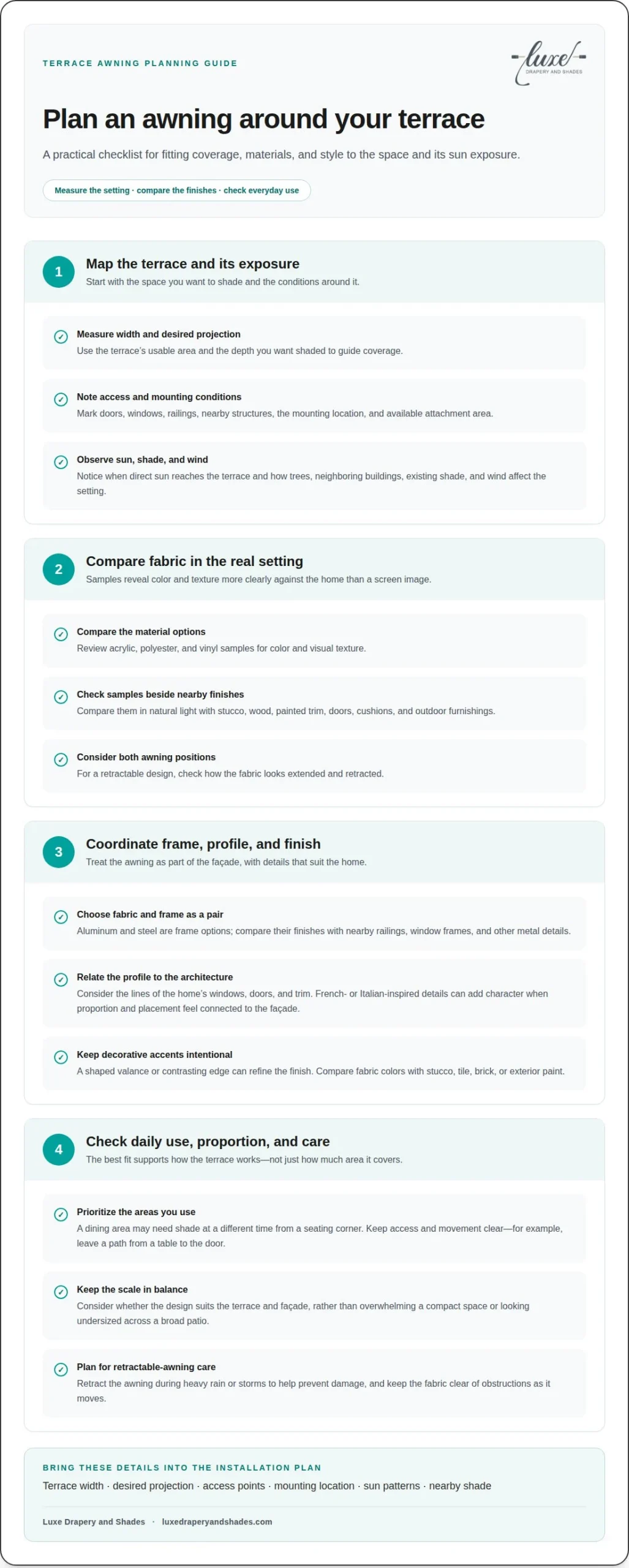
An awning’s fabric influences both the terrace’s appearance and how you use the space. Acrylic, polyester, and vinyl are material categories to compare. Look at color and texture alongside exterior finishes such as stucco, wood, or painted trim. A fabric sample viewed against your home gives you a more useful design reference than a small image on a screen.
Make your choice in stages. First, decide on the look you want, such as a crisp neutral against pale stucco or a deeper tone beside warm wood. Then view samples in the terrace’s natural light and compare them with nearby doors, cushions, and furnishings. For a retractable awning, consider how the fabric looks both extended and retracted. This keeps the choice connected to your home’s overall palette.
- Compare acrylic, polyester, and vinyl samples for color and visual texture.
- Review the fabric beside exterior finishes and outdoor furnishings.
- Consider the appearance when the awning is extended and retracted.
The frame is another visible part of the design. Aluminum and steel are options to consider, and the frame’s finish contributes to the overall look. Compare it with nearby railings, window frames, and other metal details. A coordinated finish creates a cohesive appearance, while a contrasting one can make the awning an architectural accent. Choose the fabric and frame as a pair.
Consider how you’ll use the awning day to day. If it retracts, think about when you’ll extend it for shade and draw it back. Retract an awning during heavy rain or storms to help prevent damage, and keep the fabric clear of obstructions as it moves. In Los Angeles, weigh the look you want alongside the terrace setting and your plans for using the space.
Choosing an awning based on terrace size and exposure
Awning coverage should suit the terrace’s usable area, mounting surface, and exposure to sun and wind. In Los Angeles, building layout and existing shade also affect sunlight on the terrace, as the Centers for Disease Control and Prevention notes.
Measurements and Site Conditions
Measure the terrace’s width and the depth you want to shade, then note doors, windows, railings, and nearby structures. These details help establish where the awning can sit and how far it can extend without obstructing access or movement. The mounting surface matters too: the installation plan needs to account for the location and available attachment area.
Wind, Sun Exposure, and Safety
Notice when direct sunlight reaches the terrace and whether trees, neighboring buildings, or existing shade alter the pattern. A sunny dining area may need coverage at a different time from a shaded seating corner. Consider wind and weather in your plans, and retract the awning during heavy rain or storms to help prevent damage.
Start with how you use the space. If a table sits near the house, the awning may need to shade the dining area while leaving a clear path to the door. Its proportions should also suit the façade: avoid a design that overwhelms a compact terrace or looks undersized across a broad patio.
Before installation, bring together the site details: terrace width, desired projection, access points, mounting location, sun patterns, and nearby shade. These give the design process a practical starting point and help clarify whether one coverage area suits the space or the layout needs a more tailored approach.
For a considered fit, explore custom awning options shaped around your terrace and its exposure.
Decorative French- and Italian-inspired awnings
French- and Italian-inspired awnings add a distinctive architectural accent to a terrace. Treat the awning as part of the façade, not as a separate shade feature. A restrained border can complement French doors, while a richer color can echo terracotta, brick, or outdoor tile. The strongest choice feels connected to details already present on the home.
Begin with the building’s lines. A balanced awning profile can reinforce the composed look of a home with symmetrical windows and formal trim. A more relaxed profile may suit an informal courtyard or stucco exterior. These are design directions, not fixed rules: scale, color, and placement determine how an awning relates to the architecture.
Decorative details should support function as well as appearance. A shaped valance or contrasting edge can give the awning a tailored finish, while the fabric color sets its visual tone. A soft neutral can sit quietly against pale stucco; a deeper accent can frame a terrace entrance. View samples beside the façade and nearby finishes before settling on a palette.
- Match the architecture: Relate the awning’s profile to the home’s windows, doors, and trim.
- Refine the palette: Compare fabric colors with stucco, tile, brick, or exterior paint.
- Keep details intentional: Use an edge or valance as a considered accent.
A retractable awning changes appearance as it extends or retracts. Consider both positions: how the fabric looks overhead and how the façade appears when the awning is drawn back. This is especially useful for a terrace visible from the street or interior rooms. A clear design brief can bring together style, weather considerations, and daily use.
In Los Angeles, choose a style that suits the home and how you use the terrace. French- or Italian-inspired details can add character, while careful attention to proportion and finish keeps the look refined.
How do retractable European awnings compare with fixed awnings for Los Angeles homes?
A retractable awning extends over the terrace when you want shade and retracts when you prefer open sky. A fixed awning stays in place, providing a consistent covered area. For Los Angeles homes, choose according to how you use the outdoor space and whether you want the façade’s appearance to change throughout the day.
For a terrace used for sunny breakfasts and evening gatherings, a retractable design lets you adjust coverage as activities change. It also offers two different looks: fabric overhead when extended, and a more open façade when retracted. That flexibility can suit a space where you want control over light and view.
A fixed design may suit a defined area that benefits from continuous overhead coverage. For example, a patio beside a frequently used doorway may benefit from steady shade and a consistent visual frame. Since the awning stays in place, its proportions and position become lasting parts of the exterior composition, alongside nearby windows.
- Choose retractable when adjustable coverage and an open-sky option matter.
- Consider fixed when a consistent covered zone suits the terrace’s everyday use.
- Compare both positions against windows, doors, and the home’s exterior lines.
Think through your daily routine before choosing. Does the terrace serve several purposes, such as dining, reading, and entertaining? Would you rather reveal the sky when shade isn’t needed, or keep a defined area covered? These practical questions connect the awning style to how the space functions, rather than appearance alone.
Both styles call for thoughtful placement and a design that complements the home. Heavy rain or storms are a reason to retract an awning, helping prevent damage. To explore a tailored approach, discuss awning options for your home.
Luxe Drapery and Shades: Awnings
Luxe Drapery and Shades helps create outdoor comfort with awnings selected for your terrace, sun exposure, and home’s architectural style. When you’re ready to turn those choices into a tailored installation, the team can bring useful shade and a considered exterior finish together.
For a cohesive design, connect the outdoor palette with your interior window treatments. Custom Drapery, Roller Shades, and Roman Shades can complement your home’s overall style while keeping the terrace in focus.
Share the area you want to shade and the style you have in mind. Luxe Drapery and Shades can help bring those choices together. Contact the team to discuss your awning project.
Shape an Outdoor Space That Feels Like Home
Treat the terrace as an extension of your home’s character, not simply an outdoor area to furnish. The right awning can shape its atmosphere, whether you imagine quiet mornings, relaxed evenings, or a welcoming setting for guests. For European-style awnings in Los Angeles, start by picturing how you want the space to feel and how its design can connect with the rooms beyond it.
That vision can guide choices that feel personal rather than prescribed. Consider the colors, architectural details, and everyday routines that make your home distinctive. A tailored design brings those elements together, creating a more cohesive sense of comfort indoors and out.
When you’re ready to explore the possibilities for your home, contact Luxe Drapery and Shades. A considered design begins with the feeling you want to create, and your terrace can become a beautiful place to begin.
Frequently Asked Questions
What awning for terraces?
Choose an awning based on the terrace’s main use and the coverage you want. A fixed design may suit a dining area where you want shade throughout regular use. If you’d like to adjust coverage as the day unfolds, a retractable style offers flexibility. Consider how the awning will look from inside the home as well as from the garden.
What are European-style awnings and what designs are available in Los Angeles?
European-style describes an aesthetic direction, not one specific awning design. European-style awnings in Los Angeles can draw on French- and Italian-inspired looks, with choices shaped by profile, fabric color, and decorative edging. A subtle finish can complement a restrained exterior, while a bolder border can frame an entrance or terrace. Tailor the design to the home’s architecture and outdoor setting.
How much do European-style awnings cost in Los Angeles, including installation?
The price of European-style awnings in Los Angeles depends on the project and is provided after a quote request. Custom dimensions, fabric selection, awning style, operating method, and installation conditions shape the project scope. A straightforward mounting area has different requirements from a site with obstacles or a complex layout. A project quote brings the design choices and installation needs together for your home.
What materials and fabrics are best for awnings in Southern California weather?
No single fabric suits every Southern California terrace. Compare acrylic, polyester, and vinyl against the outdoor conditions and care requirements stated for each material. Consider the direction and intensity of sunlight at your site, then weigh fabric suitability alongside color and texture. Review the fabric’s stated performance for outdoor use rather than choosing by appearance alone.
How long does awning installation take, and what steps are involved?
Installation timing follows the project timeline established during consultation. The process starts with selection, measurements, and a quote. Once the design is set, precise measurements support product ordering. Materials ship directly from the manufacturer to your home, and installation is scheduled. The chosen awning and site conditions shape the project requirements and timeline.
What warranties and maintenance do European-style awnings require?
Retract awnings during heavy rain or storms to help prevent damage, and keep the fabric clear of obstructions as it moves.