

The shade that works hardest may sit outside the room. When comparing interior solar shades vs exterior shades, exterior shades have an advantage for reducing solar heat gain because they block sunlight before it reaches the glass; interior shades filter sunlight after it enters. Neither is universally better: the right fit depends on your priorities and the window’s exposure.
Both options can soften glare and help protect furnishings from sunlight, while preserving a view through suitable mesh. The practical differences are weather exposure, upkeep, installation, and everyday operation. Exterior shades face the elements, so wind and storms matter; interior shades stay sheltered and are generally simpler to maintain.
This comparison explains how the two options differ and what to consider for sunny Los Angeles windows. Use it to decide which shade placement suits your home, comfort, and the way you want each room to feel.
Key Takeaways
- Choose exterior shades when stopping sunlight before it reaches the glass is your priority; interior shades filter light once it has entered.
- Weigh outdoor exposure and upkeep alongside heat control, since exterior shades face weather while interior options stay sheltered.
- Consider how each shade will be installed and operated, especially for hard-to-reach windows or locations exposed to wind.
- Compare heat management, daylight, view, and maintenance together to find the placement that best suits each room.
Interior vs Exterior Solar Shades: Which One Is Best?
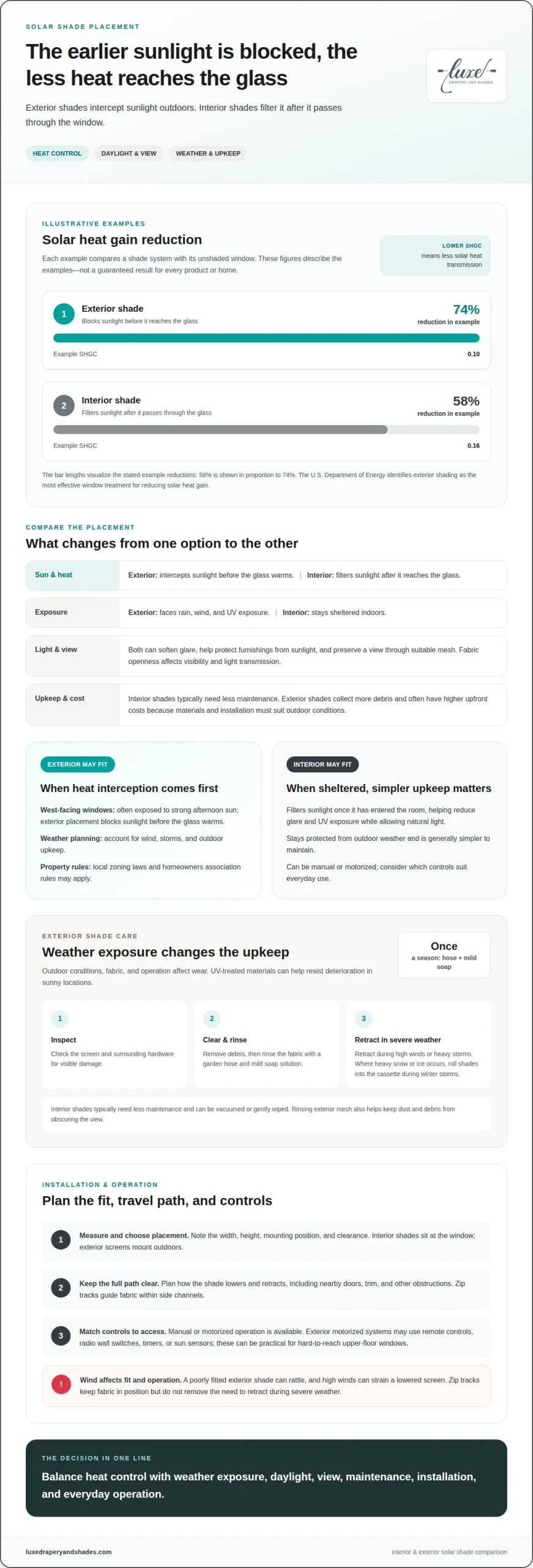
Shade placement affects when sunlight becomes heat: exterior fabric blocks it before it reaches the glass, while interior fabric filters it afterward. The U.S. Department of Energy identifies exterior shading as the most effective window treatment for reducing solar heat gain.
Interior Shade Heat Gain
An interior solar shade filters sunlight after it passes through the glass, reducing glare and UV exposure while allowing natural light into the room. In one example, an interior shade system’s solar heat gain coefficient (SHGC) was 0.16, a 58% reduction compared with the unshaded example. Fabric openness also affects visibility and light transmission.
Exterior Shade Heat Control
An exterior shade blocks sunlight before it reaches the window, limiting the heat absorbed by the glass and transferred indoors. One example system had an SHGC of 0.10, a 74% reduction compared with the unshaded window. Exterior placement can also help protect furnishings from UV exposure, but the shade faces weather and needs periodic upkeep.
Shade Placement and Heat Transfer
The main difference is whether solar energy reaches the glass before it is filtered. With an interior shade, the glass absorbs some incoming energy; an exterior shade intercepts sunlight first. For example, an SHGC of 0.10 indicates less solar heat transmission than 0.16. SHGC helps compare heat performance, while fabric openness affects light and view.
| Option | Heat control | Exposure | Key trade-off |
|---|---|---|---|
| Interior shade | Filters sunlight after it reaches glass | Protected indoors | Light and glare control |
| Exterior shade | Blocks sun before it reaches glass | Exposed to weather | Earlier heat interception |
Choose by balancing heat control with weather exposure, daylight, and upkeep.
West-Facing Windows and Hot Climates
For west-facing windows exposed to strong afternoon sun, an exterior shade is generally the stronger choice for heat control because it blocks sunlight before the glass warms. The trade-offs are outdoor exposure and maintenance. Exterior shades may also be subject to local zoning laws and homeowners association rules, so review the requirements that apply to your property.
Exterior shade weather resistance and maintenance
Outdoor shades face rain, wind, and UV exposure that indoor treatments avoid. Upkeep and wear depend on the conditions, fabric, and operation.
Weather Resistance and Durability
Because exterior shades must withstand changing weather, outdoor exposure affects their condition more than it does an interior roller shade. UV-treated materials can help resist deterioration in sunny locations. Retract exterior screens during heavy storms or high winds to reduce exposure. Where heavy snow or ice occurs, roll shades into their cassette during winter storms.
Maintenance Considerations
Exterior mesh collects debris and dirt more readily than fabric protected indoors. Check the screen for damage and clear debris a few times a year to support smooth operation. For routine cleaning, use a garden hose and mild soap solution once a season. Interior shades typically need less maintenance and can be vacuumed or gently wiped.
Maintenance also helps preserve the outdoor view. Rinse dust and debris from the mesh so buildup doesn’t obscure visibility. Solar shades aren’t blackout coverings: their open fabric allows some daylight and visibility, and clean fabric helps maintain that balance. Exterior shades often have higher upfront costs than interior options because their materials and installation must suit outdoor conditions.
- Inspect the screen and surrounding hardware for visible damage.
- Clear debris, then rinse the fabric with a hose and mild soap solution.
- Retract the shade during high winds or heavy storms.
For a considered fit between outdoor exposure and a home’s design, explore custom shade solutions.
Exterior shade installation and operation
Measure the width and height, then note the intended mounting position and clearance. Accurate measurements help achieve a good fit. Interior shades sit at the window; exterior screens mount outdoors. The installation method and hardware depend on where the shade will be secured.
For interior shades, measure the frame or opening, then decide whether the treatment will sit inside or outside it. Placement affects how the shade aligns with the glass and surrounding trim. Roller shades can be manual or motorized, so consider which controls will be convenient for everyday use.
Exterior installation must account for the outdoor mounting surface and the screen’s path as it lowers and retracts. Keep the fabric clear of doors, trim, and other obstructions. Zip tracks hold fabric within side channels, providing a guided fit that differs from a shade mounted inside the window.
Exterior screens may be operated manually or with motorization. Motorized systems can use remote controls, radio wall switches, timers, or sun sensors. These controls can be practical for upper-floor windows where a manual control is difficult to reach. A sun sensor can trigger operation in response to sunlight.
Wind affects both fit and operation. A poorly fitted exterior shade can rattle, while high winds can strain a lowered screen. Retract exterior screens during high winds or heavy storms. Zip tracks keep fabric in position, but they don’t remove the need to retract the shade during severe weather.
- Measure the width and height, and identify the mounting position.
- Plan the shade’s full travel path, including nearby doors and trim.
- Choose manual or motorized operation based on access and routine use.
These considerations help match installation and controls to each window. For an exposed or hard-to-reach opening, prioritize a secure fit, unobstructed movement, and convenient operation.
Interior and exterior shade comparison
Interior solar shades provide room-side light control and a refined finish; exterior shades intercept sunlight outdoors. The better choice depends on whether your priority is managing daylight, protecting interiors, or reducing sun exposure before it reaches the glass.
Interior Solar Shade Advantages
Interior solar shades are sheltered from outdoor weather and can be coordinated with blinds or drapery for a considered look. Their mesh filters glare and UV rays while retaining some daylight and visibility. A tighter weave offers more sun protection but reduces the view, so choose fabric to suit the room’s needs.
Adjustable window shades let you manage incoming light throughout the day. For example, lower a shade during bright afternoon sun, then raise it to restore the view. Cellular shades can also trap air for insulation, providing a different comfort benefit from solar mesh.
Interior Solar Shade Drawbacks
An interior shade filters sunlight after it passes through the glass, so it cannot block heat as early as an exterior treatment. That distinction matters in rooms where cooling is a priority. Solar mesh also provides limited privacy, especially at night when interior lights are on, so it may not replace a blackout shade.
The National Institute of Standards and Technology notes that exterior screens and shades with film significantly reduce natural illumination compared with clear glass. Interior options provide adjustable light control, but their fabric still affects daylight and the view. Choose the fabric’s openness with both in mind.
For a balanced decision, consider how each room is used. A living room might benefit from an interior solar shade that softens glare while preserving the outdoor view; a space where daytime cooling is the priority may benefit more from an exterior barrier. Layering an interior shade with drapery adds another way to manage light, while blackout fabric suits a need for darkness.
Choose interior shades for sheltered operation, design flexibility, and adjustable light. Choose exterior shades when early sun interception and outdoor protection matter more. To explore a tailored combination for your windows, compare custom window treatment options.
Luxe Drapery and Shades
Luxe Drapery and Shades helps you coordinate window treatments with your home’s light, comfort, and style. When weighing interior and exterior shade placement, consider how each room uses daylight, how much glare you want to manage, and whether a softer look or insulation matters most.
Interior options include Roller Shades, Roman Shades, Honeycomb / Cellular Shades, and Custom Drapery. Each offers a different way to shape light and complement a room’s design. The right choice depends on the space’s function and the look you want to create.
For guidance matching window treatments to your priorities and interiors, contact Luxe Drapery and Shades.
Make the Choice That Fits Your Home
Choosing between interior solar shades and exterior shades can shape how each room feels throughout the day. Start with the windows that most affect comfort, then consider the atmosphere you want: softened daylight, a clearer view, or a tailored design that feels cohesive with the room.
Not every window needs the same treatment. A sunlit living space and a restful bedroom may call for different options, even in one home. Thinking room by room helps align light control, privacy, and style with the way you use each space—a balance frequently highlighted in luxury coastal homes and real estate showcases like brianliberto.com, where expansive glass requires thoughtful shading to protect interiors while preserving scenery.
Luxe Drapery and Shades can help you refine those priorities into a considered window-treatment plan. If you’re ready to explore options suited to your home, start a conversation about your windows. A thoughtful choice can bring lasting ease and elegance to everyday living.
Frequently Asked Questions
Can exterior solar screens be used indoors?
Solar shades can be mounted indoors, but then they function as interior shades rather than exterior barriers. Sunlight reaches the glass before passing through an indoor screen, so the screen does not intercept solar energy outside the window. For a living room where glare is the main concern, an interior screen may suit the goal; for heat control before sunlight reaches the glass, exterior placement is the key difference.
Can you use outdoor shades inside?
Outdoor shades are designed for exterior placement, so they are not a direct substitute for a room-side window treatment. Their mounting position and operation are planned around outdoor openings and conditions. For an indoor space, choose a treatment intended for interior windows, considering the room’s light, view, and desired privacy. A roller shade, for example, can serve as an interior window covering.
Do solar shades block the view from outside?
Solar shades can make it harder to see indoors during the day, but they don’t guarantee privacy. Mesh openness and lighting conditions affect visibility; after dark, interior lights can make it easier for people outside to see in. If evening privacy matters, pair a solar shade with another window treatment, such as drapery, rather than relying on mesh alone.
What’s the difference?
The main difference is where the shade sits: inside or outside the window. Placement affects how sunlight is filtered, how much weather the material encounters, and how the shade is mounted and operated. For instance, an exterior screen suits a patio opening, while an interior treatment can coordinate with furnishings and other room-side coverings.
Which blocks more heat: interior or exterior?
Exterior shades generally block more solar heat because they intercept sunlight before it reaches the glass. The U.S. Department of Energy identifies exterior shading as the most effective window treatment for reducing solar heat gain. For a sun-exposed room, consider the window’s orientation and shade placement alongside the daylight and view you want, rather than letting fabric alone decide.
How do interior and exterior solar shades differ in heat and glare reduction?
Both options can filter bright sunlight and reduce glare, but placement affects heat control. An exterior shade intercepts sunlight before it warms the glass, while an interior shade filters light after it passes through the window. Fabric openness also affects light and visibility: a tighter mesh reduces transmission, while a more open weave preserves more of the view.