

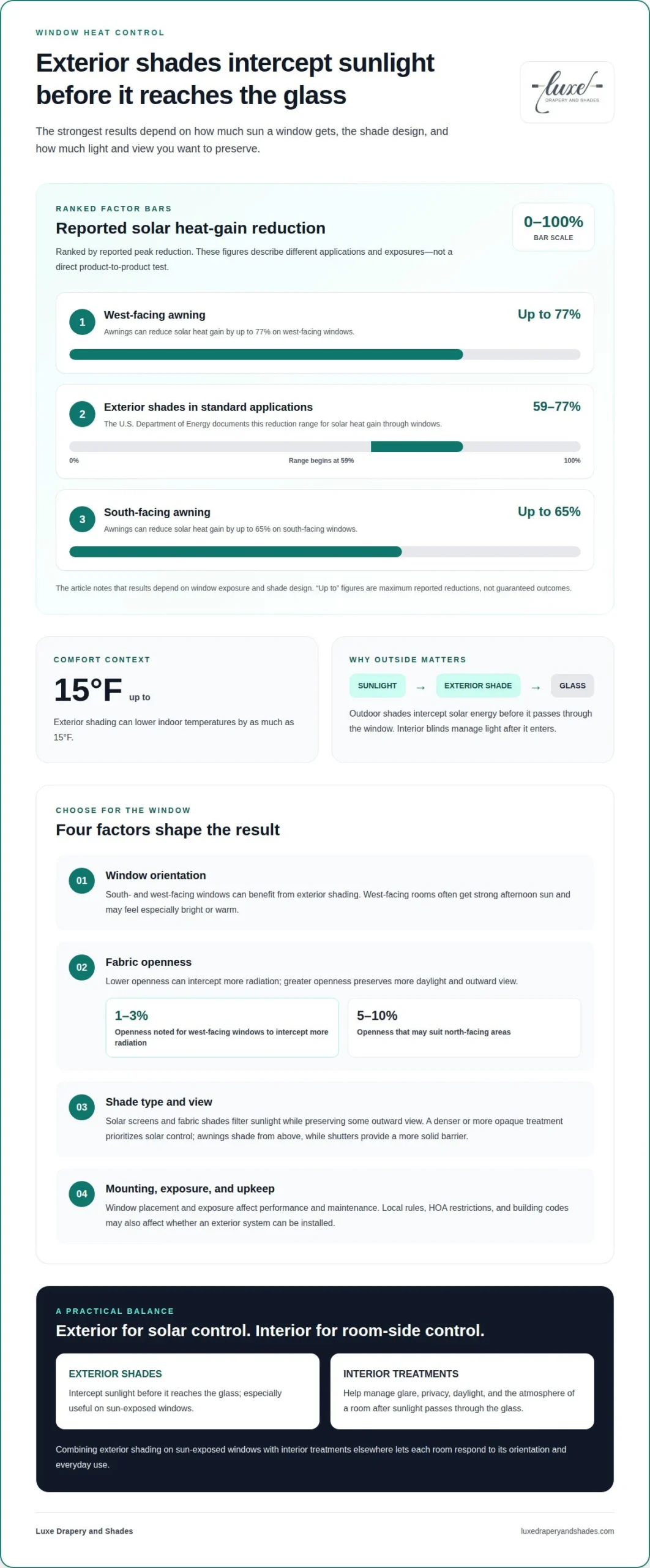
The most effective place to stop sunlight-driven heat is outside the glass. Exterior window shades for heat reduction generally outperform interior blinds because they intercept solar energy before it passes through the window; the U.S. Department of Energy describes exterior shading as the most effective way to reduce solar heat gain. Awnings can reduce solar heat gain by up to 65% on south-facing windows and up to 77% on west-facing windows.
Interior blinds still help manage glare and daylight, but if warm afternoons make certain rooms uncomfortable, exterior window shades for heat reduction can help address the problem before sunlight reaches the glass. Understanding where the heat enters makes it easier to choose a practical solution.
This article explains how sunlight warms a room, compares exterior shades with interior treatments, and looks at how fabric openness and mounting affect performance. You’ll learn which details matter for your windows, comfort, and view.
Key Takeaways
- Exterior shades intercept solar energy before it crosses the glass, while interior blinds manage sunlight after it enters the room.
- Window orientation helps determine shade needs: west-facing windows often face intense afternoon sun, while other exposures call for different balances of light and view.
- Fabric openness and density influence how much sunlight is filtered, how much view remains, and how the room feels.
- Mounting and exposure affect shade performance and upkeep, so consider the window’s placement alongside local sun and weather conditions.
Do exterior window shades block heat better than interior blinds?
Generally, yes: exterior shades intercept sunlight before it reaches the glass, limiting heat gain earlier than interior blinds can. The difference matters most on sun-exposed windows, where afternoon light can quickly warm a room.
Blocking Solar Heat Before It Reaches Glass
An exterior shade screens sunlight outdoors, reducing the solar energy that strikes the glass and becomes indoor heat. Sunlight that passes through glass can warm surfaces and furnishings, even if you later lower an interior blind.
Solar screens and fabric shades filter light while preserving some outward view; their openness and density shape that balance. Awnings also shade the glass from above, while shutters provide a more solid barrier. For south-facing windows, awnings can reduce solar heat gain by up to 65%; for west-facing windows, up to 77%.
Exterior Solar Screens Versus Interior Blinds
An exterior solar screen intercepts sunlight before it reaches the window; an interior blind or roller shade manages light after it enters. This gives outdoor screens an advantage for reducing solar heat gain. Interior treatments remain useful for glare control, privacy, and shaping a room’s atmosphere.
The U.S. Department of Energy documents 59% to 77% reduction in solar heat gain through windows with exterior shades in standard applications. The outcome depends on exposure and shade design. A screen that filters bright afternoon sun can preserve a view, while a more opaque exterior treatment prioritizes blocking radiation.
Heat Reduction and Approval Considerations
Exterior shades can reduce solar heat gain by 59% to 77% in standard applications, according to the U.S. Department of Energy. Awnings can reduce it by up to 65% on south-facing windows and up to 77% on west-facing windows; exposure and shade type influence the result.
Approval requirements vary by property and installation. Local rules, HOA restrictions, and building codes may affect whether an exterior system can be installed. Rebates and tax incentives also depend on the specific program and product, so review the applicable requirements before choosing a fixed awning or another exterior system.
Exterior shades compared with interior window treatments
Exterior and interior treatments affect comfort in different ways: one limits sunlight before it enters, while the other manages light indoors. Window orientation, privacy needs, cooling, and the character of your space all help determine the right balance.
Comparing Interior and Exterior Performance
Exterior shades intercept sunlight outdoors, while interior blinds adjust it after it passes through the glass. Exterior window shades for heat reduction can be especially helpful during Los Angeles summers, when limiting direct sun may ease cooling demands.
Exterior shading can lower indoor temperatures by as much as 15°F. Interior treatments still offer valuable control over privacy, glare, and atmosphere without changing the facade. Their effect on heat depends on fit and how much air they trap near the window. For a layered look, compare interior shade options with the needs of each room.
Interior shades can soften direct daylight and help limit sun exposure on furnishings. UV performance depends on the treatment material, so appearance alone won’t tell you how much protection it provides. Neither option guarantees an increase in home value. Exterior shading can complement the facade, while interior treatments create a considered finish.
Windows and Orientations That Benefit Most
Windows exposed to strong direct sun can benefit most from exterior shades, especially those facing south or west. West-facing rooms often receive afternoon sun, making shading useful when those spaces feel particularly bright or warm.
Fabric openness helps tailor the balance: 1-3% openness can intercept more radiation on west-facing windows, while 5-10% openness may suit north-facing areas. A more open screen preserves more daylight and view; a denser fabric prioritizes solar control. A thoughtful plan for exterior window shades for heat reduction also considers the exposure and view you want to preserve.
Interior blinds are useful when privacy, room-side light control, or a cohesive interior scheme is the priority. Combining exterior shading on sun-exposed windows with interior treatments elsewhere lets each room respond to its orientation and daily use.
How sunlight entering windows contributes to indoor heat
Sunlight passing through glass can warm a room’s surfaces, which is one reason windows affect indoor comfort. Understanding this helps explain how shading choices influence heat gain and glare.
Sunlight and Indoor Heat Gain
Sunlight entering through windows becomes indoor heat as radiation warms floors, furnishings, and other surfaces. In cooling seasons, about 76% of sunlight falling on a standard dual-pane window enters the home as heat. Even insulated glazing can therefore admit substantial solar energy on a clear afternoon. In a west-facing living room, direct sun may warm the floor and furnishings before evening.
Seasonal Energy Control with Adjustable Shading
Adjustable shading lets you limit direct sun during hot periods and admit more daylight when conditions are cooler. The useful setting depends on the season, weather, window orientation, and how you use the room. For example, lowering shades during strong afternoon sun can limit heat entering a frequently used space; raising them later lets in daylight and restores the outdoor view.
Automated shade systems can adjust around sunlight patterns rather than relying on someone to operate them. Systems programmed during peak sunlight hours can reduce energy use by about 25%. A schedule that lowers shades between 10 AM and 4 PM can help manage intense daylight, while seasonal adjustments preserve useful sun at other times.
Glare and UV exposure are separate comfort concerns. A shade can soften direct sunlight on a screen or reading area, while its fabric affects how much light passes through. In a bright home office, filtering the window light can make the space more comfortable without darkening the entire home.
Shutters provide another way to adjust daylight. Angled louvers redirect incoming sun while preserving some view. Adjusting their position to the season and weather can help balance brightness, privacy, and indoor warmth throughout the day.
Fabric durability and mounting options
Fabric choice and mounting affect an exterior shade’s performance, appearance, and response to weather. Consider each window’s exposure alongside the balance of shade, view, and comfort you want.
Fabric Durability in Different Weather
Outdoor fabrics vary in how they handle sun and moisture, so consider the weather exposure when choosing a shade. Solution-dyed acrylic and coated fiberglass fabrics can handle light to moderate rain, but retracting shades during high winds or severe storms is recommended.
That rain guidance does not establish how a fabric performs in snow. Consider snow exposure separately rather than assuming a fabric suited to rain will handle accumulated snow. Direct sun can also affect fabric over time, so account for each window’s exposure and how you plan to use the shade throughout the seasons.
For routine care, clean outdoor shade fabric with a soft brush and mild soap solution. Avoid pressure washing, which can damage the fabric weave. This gentle approach helps maintain the shade without force that could compromise its surface.
Mounting Options for Exterior Shades
Mounting describes where a shade attaches in relation to the window, such as inside the opening or across its exterior. Placement affects coverage, appearance, and how much sunlight enters around the edges. Before measuring, identify the opening, the mounting surface, and any nearby trim or obstructions.
Measure the window’s width and height at the intended mounting position, then check that the chosen placement can cover the glass. Accurate measurements help the installed shade align with the opening and limit uncovered areas. The mounting surface also needs to support the shade’s hardware.
Exterior shades may leave marks on walls, deteriorate under sun exposure, or fail to cover a window fully. Factor these practical considerations into your choice of placement and fabric. Interior treatments offer a different kind of light control, managing sunlight after it enters the room.
Explore custom outdoor shade options to consider a tailored approach to your windows and mounting needs.
Luxe Drapery and Shades: Custom Drapery
Luxe Drapery and Shades helps homeowners complement exterior shading with thoughtfully selected interior treatments. If you want to soften daylight, refine privacy, or create a more cohesive room, Custom Drapery can bring a tailored finish to the window. Roller Shades, Roman Shades, and Honeycomb / Cellular Shades offer additional interior options for managing light and comfort.
Exterior shades address sunlight before it reaches the glass; interior treatments shape the room’s atmosphere once daylight enters. Choosing one or combining both depends on your window exposure, preferred light, and design priorities. Luxe Drapery and Shades can help you explore interior treatments suited to your home.
Contact Luxe Drapery and Shades to discuss options for your home.
Shape a More Comfortable Window Experience
Choosing exterior window shades for heat reduction is about more than temperature. Consider how you use each room: a bright living space may call for filtered daylight, while a bedroom may benefit from greater privacy and a softer atmosphere. Pairing exterior shading with an interior finish can make each window feel considered in every season.
Luxe Drapery and Shades offers Custom Drapery, Roller Shades, and Roman Shades to support a considered interior design. These options can complete a room’s look while helping you manage light and privacy. Discuss the windows and spaces you’d like to refine with our team.
Contact Luxe Drapery and Shades to explore a tailored direction for your home. A thoughtful window treatment can make everyday comfort feel beautifully at home.
Frequently Asked Questions
Can the shades be removed for winter?
Some exterior shades retract for seasonal use, while removal depends on the mounting design. A retractable shade stays attached and moves out of the way; taking one down requires a system designed to detach. In Los Angeles, consider whether you want year-round exterior coverage or prefer to clear the window seasonally. This affects convenience, storage, and how the facade looks when the shade is not in use.
Can you see through outdoor solar shades?
Yes, outdoor solar shades can preserve an outward view, though visibility depends on fabric openness and screen density. Openness factors commonly range from 1% to 14%: a more open weave allows more light and view through, while a tighter weave filters more. Consider the view from both inside and outside, since daylight and nighttime lighting can change how clearly the fabric reads.
How much do outdoor window shades cost?
Project pricing is provided after a quote request and depends on the specific requirements. Factors can include window dimensions, fabric, mounting, and whether the shade is manual or motorized. A straightforward opening differs from a home with multiple windows and varied exposures. Luxe Drapery and Shades provides quotes for projects in Los Angeles based on their individual requirements.
Should I choose black or white mesh to block heat?
Choose mesh by considering fabric openness, density, color, and the view you want, rather than color alone. Color and openness affect how much heat the shade blocks or diffuses, but color by itself does not determine performance. If outward visibility matters in a bright room, compare samples against the actual window and daylight. Also consider how the shade looks alongside the exterior finish.
What types of exterior window shades are best for reducing heat?
Solar screens, exterior fabric shades, and awnings are common choices for limiting solar heat gain. A screen filters light across the glass, while an awning shades the window from above. Exterior shutters offer a more solid barrier when reduced visibility is acceptable. The right fit depends on window orientation, preferred daylight and view, and how the treatment complements the home’s exterior.
How do exterior solar shades compare with interior blinds and window film?
Exterior solar shades intercept sunlight before it crosses the glass; interior blinds and window film manage light at the window or indoors. Exterior shading is generally more effective at reducing solar heat gain, while blinds offer room-side control over privacy and light. Film provides another way to manage sunlight at the glass. For a Los Angeles home, consider window exposure, the view, and your preferred interior finish.