

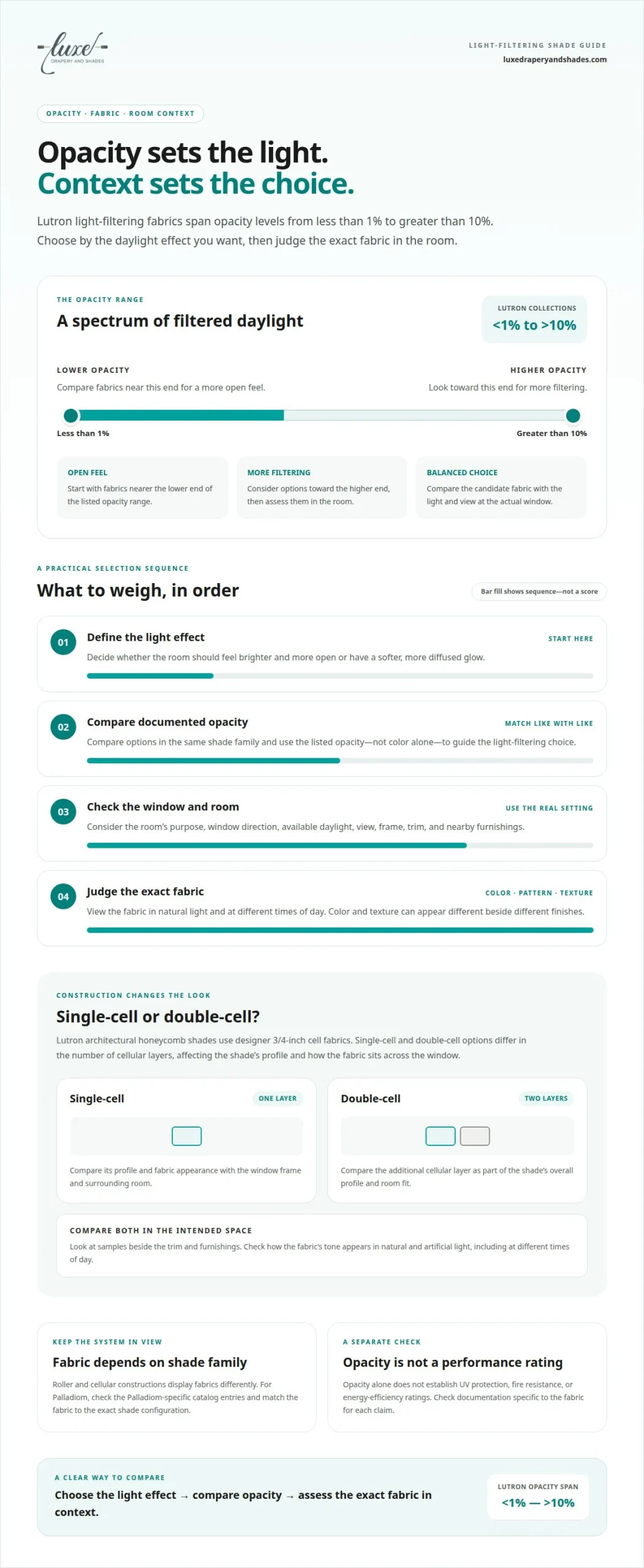
The right light-filtering shade isn’t simply the one that lets in the most daylight. Lutron shade fabric collections span opacity levels from less than 1% to greater than 10%. That range gives you room to shape the light in a space while considering the view and the atmosphere you want indoors.
It’s easy to focus first on a fabric’s color or texture, but opacity strongly affects how a shade looks when daylight passes through it. A sheer, luminous effect calls for a different fabric than a soft, diffused glow.
This guide explains light-filtering opacity, how single- and double-cell fabrics differ, and which details can help narrow your options. Weigh daylight, privacy, and interior style together so your choice works in the room, not just as a fabric sample.
Key Takeaways
- Use fabric opacity, which ranges from less than 1% to greater than 10%, to guide how much daylight you want to filter.
- Compare single- and double-cell fabrics by how their construction supports the light and feel you want in a room.
- Explore how fabric selection for Palladiom shades can shape the finished look, then narrow options by color, pattern, and texture.
- Consider custom window treatments when you want light control and a cohesive look tailored to your interior.
Light-filtering fabric opacity
Light-filtering fabrics offer different degrees of opacity. That range gives you distinct choices for shaping daylight without treating every fabric as equally transparent. Compare the stated opacity alongside the room’s purpose, the direction of its windows, and the daylight you want to preserve. A bright living area and a bedroom used for daytime rest may call for different fabric choices.
Start with the effect you want, then narrow your options by fabric and color. Compare like with like: review the same shade family and opacity information for each candidate. A pale sample and a deeper tone can look different in the same room, so consider both the listed value and how the fabric looks beside your furnishings.
- For a more open feel: Compare fabrics nearer the lower end of the listed opacity range.
- For more filtering: Look at options toward the higher end, then assess their appearance in the room.
- For a balanced choice: Compare candidate fabrics against the light and view from the actual window.
Can you order Lutron shade fabric samples, and how? Choose the shade family, fabric, and color you want to evaluate, then use the sample-order option in Lutron’s United States catalog. Seeing the material in your room helps you judge its color and texture in natural light.
Are Lutron shade fabrics rated for UV protection, fire resistance, or energy efficiency? Opacity alone doesn’t establish any of these ratings. Treat each as a separate performance claim and look for documentation specific to the fabric, rather than assuming an opacity value guarantees another property.
Where can you find the current Lutron shade fabric catalog in the United States? Visit Lutron’s official United States website and its shade-fabric catalog. Match each catalog entry to its shade family before comparing fabrics, so the material suits both the window treatment and the room.
When comparing Lutron shade fabric collections, use a simple sequence: choose the desired light effect, compare opacity values, and assess the exact fabric in context. This makes your selection more deliberate than choosing by color alone.
Light-filtering single- and double-cell fabrics
Lutron architectural honeycomb shades use designer 3/4-inch cell fabrics. Their cellular construction gives the window treatment a defined, dimensional appearance. Single-cell and double-cell options differ in the number of cellular layers. That distinction affects the shade’s profile and how the fabric sits across the window. Compare the construction alongside color and light-filtering preference, rather than choosing by appearance alone.
Start with the room and window where the shade will go. A shallow frame may make the shade’s profile an important consideration, while a prominent window may draw attention to the fabric’s texture and folds. Compare single- and double-cell samples in the room beside nearby finishes. Because natural and artificial light can change how a fabric’s tone appears, assess it at different times of day.
For a considered comparison, use these steps:
- Choose the shade family: Start with honeycomb or cellular construction.
- Compare cell layers: Review single-cell and double-cell fabrics as separate options.
- Assess the setting: Consider the window frame, surrounding trim, and room palette.
- Review the fabric: Look at its surface and color in the intended space.
Are Lutron shade fabrics available in motorized roller and cellular shades? Lutron offers motorized shade options, roller shades, and architectural honeycomb shades. Choose a fabric from the relevant shade family, since roller and cellular constructions display fabric differently.
Cell depth matters visually, but it isn’t the only decision. A restrained fabric can keep the window treatment quiet, while a more pronounced texture can make it a considered design element. For a coordinated result, compare cellular fabrics with the room’s drapery and other window treatments before settling on a finish. Explore motorized cellular shades as part of that window-treatment planning.
These starting prices distinguish the listed fabric options and can be considered alongside the room’s desired light level.
Light may enter around the sides and bottom bar of Lutron blackout shades, especially with an inside mount. Consider these edges in the intended window when evaluating the level of light control you want.
Which Lutron shade fabrics are available for Palladiom shades?
For Palladiom shades, choose from fabrics designated for the Palladiom system. Match each fabric to the specific shade configuration before deciding. Lutron’s light-filtering fabrics span opacity levels from less than 1% to greater than 10%. That broad range describes light filtering across Lutron fabrics, not a named Palladiom fabric list. Use the current Lutron catalog to identify Palladiom-compatible selections and their exact names.
First, define the room’s priorities. A living room with a garden view may call for fabric that preserves daylight, while a bedroom may need a different level of filtering. Compare Palladiom options by their documented light-filtering properties, surface appearance, and color. Don’t assume appearance alone indicates opacity. Keep the system and fabric names together as you compare options.
A practical selection sequence helps keep the decision clear:
- Identify the system: Select Palladiom, rather than another Lutron shade family.
- Set the light preference: Decide whether the room needs a brighter or more diffused effect.
- Compare compatible fabrics: Use Palladiom-specific catalog entries and exact fabric names.
- Assess the room: View shortlisted colors beside the window trim and furnishings.
For example, a pale fabric may look different against dark trim than beside a light wall. View samples in daylight and evening light to see how their color and texture work with the interior. This also helps separate visual preference from performance details, which should come from the fabric’s product information.
Make the final comparison specific: note the Palladiom system, fabric name, color, and stated opacity. Lutron’s overall light-filtering range can help define the effect you want, while the current Palladiom catalog shows the options for that system. This avoids relying on a general collection description and gives you a clear basis for comparing compatible fabrics with the room’s design and daylight needs.
What colors, patterns, and textures are offered in Lutron shade fabrics?
Compare Lutron fabrics by their exact catalog entries, not broad color labels. The current United States catalog shows options for each shade family. Use the fabric names to distinguish colors, patterns, and surface textures. A warm neutral, a cool neutral, and a textured weave can each look different beside the same wall.
Start with the room’s fixed finishes. Compare fabric colors with the wall paint, window trim, flooring, and upholstery. For example, place a sample beside a pale oak floor and charcoal window frame to make undertones easier to spot than on a small swatch alone. Check it in daylight and evening light, since lighting changes how color appears.
Patterns and textures also shape a window’s visual presence. A subtle surface can sit quietly beside patterned upholstery, while a more pronounced weave can add detail to a restrained room. These are design considerations, not fixed rules. Compare the fabric at the window, where you’ll see its color and surface across a larger area.
- Color: Compare samples with the room’s paint and trim.
- Pattern: Consider nearby textiles, such as a patterned rug.
- Texture: View the surface beside smooth finishes, such as glass or painted wood.
- Shade family: Match each fabric entry to the intended Lutron shade type.
Keep the selection process precise: note the catalog’s fabric name, color, and shade family together. Then compare your shortlist in the room instead of relying on a screen image. This helps prevent choosing a fabric for color alone when its texture or pattern may compete with existing details.
Ready to bring fabric and interior finishes into one considered composition? Explore tailored window-treatment possibilities and consider how each selection will complement the room.
Options include warm and cool neutrals, patterns, and textures from subtle surfaces to more pronounced weaves.
Luxe Drapery and Shades: Custom Drapery
Luxe Drapery and Shades offers Custom Drapery to complement your selected light-filtering shades and create a considered finish. Choose custom drapery when you want the window treatments to work with the room’s palette, proportions, and furnishings.
For a layered look, pair drapery with Roller Shades, Roman Shades, or Honeycomb / Cellular Shades. The right combination depends on the window and the atmosphere you want. Consider how the drapery’s color and texture relate to the shade fabric, then coordinate both with nearby finishes for a composed interior.
Contact Luxe Drapery and Shades to discuss Custom Drapery for your space, or visit the website.
Shape a More Considered Window
Let your Lutron shade fabric collections inform more than the window treatment. Use the selected material as a starting point for the room’s visual rhythm, balancing it with furniture, wall finishes, and changing daylight. A thoughtful choice can make the window feel integrated with the room rather than like a separate feature.
As you move from inspiration to planning, consider how the window treatment should fit the room’s overall character. Luxe Drapery and Shades can help you bring that perspective to Custom Drapery, Roller Shades, and Roman Shades, with selections tailored to the surrounding interior. Start a conversation about the atmosphere you want and the details that matter in your home.
Contact Luxe Drapery and Shades to begin shaping a window treatment that feels at home in your space. A considered detail can make the whole room feel more complete.
Frequently Asked Questions
How do Lutron shade fabric collections differ in light filtering and privacy?
Fabrics vary in how much daylight they let through and how much visual separation they provide. In a street-facing living room, weigh filtered daylight against views from outside. Privacy can also feel different after dark, when interior lights are on. Consider the room’s use and window exposure, then choose a fabric that balances the atmosphere you want with the visibility you’re comfortable with.