

Custom motorized drapery cost depends on more than the motor. Window dimensions, fabric, track requirements, and whether the system uses battery power or a wired connection all shape the project. Pricing is provided after a quote request. The right setup also depends on how you want the drapery to move and fit into daily life.
Convenience matters, as do a polished finish and intuitive controls. This guide explains how motorized drapery works, what distinguishes battery-powered from hardwired systems, and which design and installation details affect the overall cost. You’ll also learn how remote, app, and voice controls can make opening and closing drapery feel like a natural part of your home’s routine.
Key Takeaways
- Match the power source to the home: battery systems suit simpler installations, while hardwired systems are better aligned with permanent setups.
- Choose controls around daily routines, from scheduled movement to remote, app, or voice operation.
- For a useful per-window budget, consider the drapery, track, motor, and installation together rather than judging the motor alone.
- Compare the full window-treatment design with your needs; fabric weight, lining, and fit can shape both the finished look and the project scope.
Battery-powered and hardwired systems
Motorized drapery uses battery power or a wired electrical connection. That choice affects installation, daily operation, and how the system responds if household power is interrupted. Battery-powered systems are generally easier to install and may suit renters who want to avoid permanent electrical work. Hardwired systems connect to the home’s electrical supply, making them a more permanent option for long-term installations.
For example, a battery-powered track may suit a bedroom where adding wiring would disrupt finished walls. A hardwired track may be a better fit for a living room with frequent daily use and planned smart home integration. Battery-powered options may allow DIY installation, while hardwired installations may require professional work. Window size, drapery weight, and track configuration also affect the setup.
Consider power interruptions before choosing a system. Whether a system can operate during an outage depends on its available backup or manual controls. Manual operation varies by system. Battery-powered drapery can operate while its battery has charge, but the motor still needs power. Identify the system’s manual control method before installation.
Battery charging is another practical consideration. Rechargeable batteries need to be recharged when their power runs low, so consider how accessible the motor will be. Solar power is a separate charging arrangement, not an automatic feature of every battery-powered system. A compatible solar panel must be part of the setup for sunlight to contribute to charging.
- Choose battery power for simpler installation and flexibility in a rental home.
- Choose hardwiring for a permanent setup where dependable, regular operation is the priority.
- Before installation, understand the manual operation method and plan how to recharge any battery.
Power requirements can affect equipment and installation work, which in turn shapes custom motorized drapery cost. Matching the system to each window and room’s use helps create a seamless result.
Hardwired motorized drapery systems are described as more reliable and best suited to permanent installations. Consider how long you plan to keep the system when choosing between power options.
Motorized drapery operation and controls
Choose controls based on who uses each room and how you want the drapery to move. A remote offers direct operation, while smartphone apps and voice commands can connect motorized drapery with a smart home. For example, you could open bedroom drapery in the morning and close living-room curtains later in the day.
Scheduling movement can help manage indoor warmth or coolness as the seasons change. Heavier fabric, especially with a liner, can add insulation at a window. Motorized drapery operates without cords, which may make it a more suitable choice around children and pets. The effect on energy use depends on the window covering and how it is used.
How do custom motorized drapes compare with motorized shades and blinds in cost? The U.S. Consumer Product Safety Commission states that motorization adds hundreds of dollars to the price per unit for drapes. Drapery fabric and track requirements differ from shade and blind assemblies, so compare complete systems rather than the motor alone.
How do fabric, dimensions, and lining affect custom motorized drapery prices? Wider or taller windows require different fabric quantities and track configurations, while fabric weight and lining influence the design. Pricing depends on the project and is provided after a quote request. Fabric, dimensions, lining, motor, controls, and installation all shape the cost.
How much does professional measuring and installation cost for motorized drapes? The cost depends on window access, measurements, track placement, and the power setup. Accurate measuring helps align the drapery with the window and supports smooth operation.
What extra costs apply for smart-home integration, remotes, and hubs? The answer depends on the control components needed to operate the drapery and connect it with the home’s system. What warranty and maintenance costs should buyers expect? Warranty coverage follows the product terms; routine care includes dusting and replacing batteries when needed.
Are there rebates or tax incentives for energy-efficient motorized window treatments in the United States? Eligibility depends on the applicable program and qualifying criteria; motorized operation alone doesn’t establish eligibility. For a considered control plan, explore motorized drapery design options.
Any added cost depends on the control components needed, such as a remote or connections for app or voice operation, and how they connect with the home’s system.
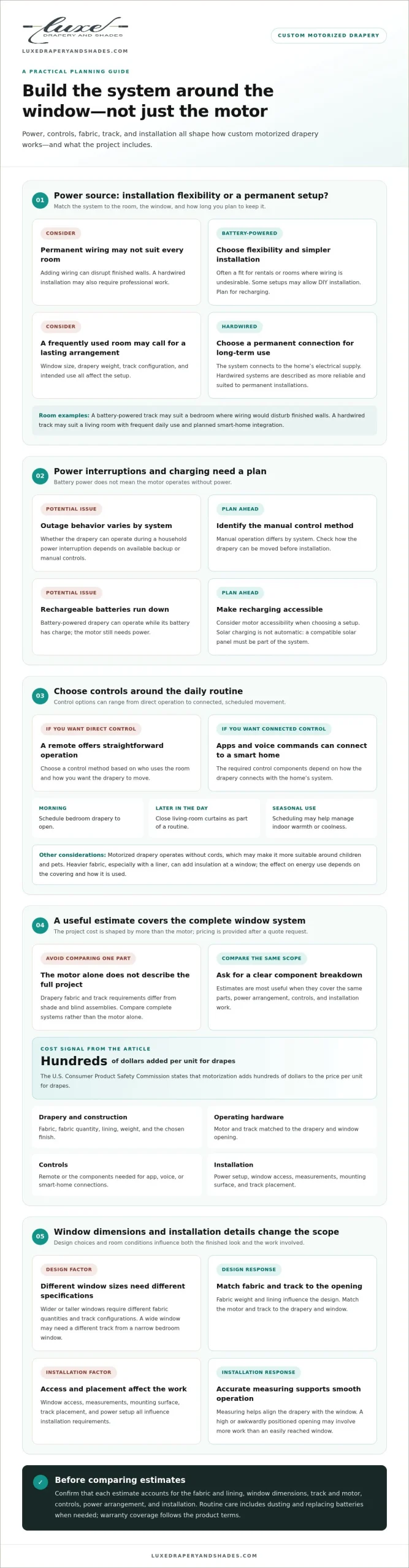
Cost of custom motorized drapes in the United States
In the United States, a custom motorized drapery project involves several cost components, not just a motor. Fabric, lining, track, control method, and installation all shape the finished system. For example, a wide window may need a different track configuration from a narrow bedroom window. Comparing estimates is most useful when they cover the same components.
Start by separating the drapery from the operating hardware. Fabric choice affects how much material the window requires, while lining changes the construction. The motor and track must suit the drapery and window opening. A remote or smart-home control may add equipment beyond the basic operating system. Ask for a clear breakdown of these elements when reviewing an estimate.
Installation requirements also influence the total. Battery-powered and hardwired setups use different power arrangements. Window access, mounting surface, and track placement can affect the work involved. For instance, a high or awkwardly positioned opening may need more involved installation than an easily reached window. Measuring and specifying the full setup helps you compare like with like.
- Fabric and lining: Consider material, coverage, and the chosen finish.
- Track and motor: Match the hardware to the window and drapery.
- Controls: Include the intended remote or smart-home operation.
- Installation: Account for power, access, and mounting conditions.
Assess custom motorized drapery cost per complete window treatment, with components and installation clearly stated. A motor-only figure doesn’t describe the full project. For example, two windows in the same room may need different track lengths or fabric quantities. Compare the written scope, including drapery, hardware, controls, and installation, before choosing a design for your home.
What is the average cost per window for custom motorized drapery?
A per-window estimate is based on the finished treatment, not a universal average. The total depends on the window’s dimensions, fabric, lining, motorized track, selected controls, and installation. A compact bedroom window and a broad living-room opening may need different material quantities and hardware, even in the same home.
For a useful comparison, ask for each window’s scope to be itemized. Separate the drapery and lining from the track, motor, controls, and installation. Then compare estimates that cover the same elements. One estimate may include a remote, while another may cover hardware alone. Those totals do not represent equivalent projects.
Window shape and placement matter, too. A wide opening, bay window, or high-mounted track can change fabric requirements and installation work. A lined treatment differs from an unlined one in material and construction. A split-draw arrangement, where panels meet in the middle, may require a different track setup from a single panel that opens to one side.
For a project with multiple windows, list each opening separately before combining the totals. Record its width, height, desired fabric, lining, control method, and access conditions. This makes it easier to understand why one window costs more than another and to distinguish a genuine design difference from a difference in what each estimate includes.
For a precise per-window budget, pricing depends on the project and is provided after a quote request. Fabric, dimensions, lining, track, motor, controls, and installation shape the amount. A tailored estimate should show how those choices affect each opening, rather than rely on a broad average that may not match your home.
Ready to plan the details of your windows? Request a tailored drapery quote to shape a considered design around your rooms and requirements.
There is no single average per-window price. The amount is set by a tailored quote based on the window and selected fabric, lining, track, motor, controls, and installation.
A window treatment expert can design, measure, and install motorized drapery to help ensure it fits properly and operates correctly. In one case, homeowners struggled with difficult-to-operate windows for two years before motorized curtains were installed.
Luxe Drapery and Shades: Custom Drapery
Luxe Drapery and Shades offers Custom Drapery for homeowners who want a treatment shaped around their room, preferred fabric, and desired finish. It can suit windows that do not fit ready-made dimensions or spaces where drapery should complement a considered interior. For motorized projects, fabric, lining, and window dimensions help define the finished look and project scope.
Different window treatments can meet different needs around the home. Roller Shades offer a streamlined profile, while Roman Shades bring folded fabric into the design. Honeycomb / Cellular Shades are another option when you prefer a structured shade. Comparing styles room by room can help clarify where drapery works best and where a shade suits the space.
For a tailored discussion of your windows and design preferences in Los Angeles, contact Luxe Drapery and Shades.
Shape a More Considered Window Design
Start by picturing how you want each room to feel, then let that guide your window design. A softly framed bedroom, a composed living room, or a space that benefits from a cleaner profile may each call for a different treatment. The right choice should suit both the architecture and your everyday routine.
For Los Angeles homeowners weighing custom motorized drapery cost, a focused conversation can turn broad preferences into a clear direction for your windows. Luxe Drapery and Shades offers Custom Drapery, Roller Shades, and Roman Shades, giving you distinct design approaches to consider throughout your home.
Bring your ideas, room priorities, and preferred aesthetic into the next conversation. Share your window-treatment vision with Luxe Drapery and Shades, and take a thoughtful step toward a home that feels beautifully resolved.
Frequently Asked Questions
How much do motorized drapery tracks and motors cost?
There is no standard price for a motorized track and motor. The amount depends on track length and configuration, motor and control choices, and installation conditions. For a Los Angeles home, compare estimates that list the track and motor separately from fabric, controls, and labor. This makes it easier to see what each per-window proposal includes. A project estimate is provided after a quote request.
Are battery-powered motorized drapes cheaper than hardwired systems?
Not necessarily. Battery-powered systems can avoid electrical wiring work, but the total still depends on the track, motor, controls, and installation. Hardwired systems may involve additional electrical work, while battery-powered operation requires charging. For a practical comparison, request estimates for the same window and drapery design, then compare the equipment and work included in each option rather than judging by power source alone.