

A louvered pergola may recover 60-80% of its cost at resale, while the benefits of a louvered pergola roof also include more comfortable, versatile outdoor living. Adjustable slats let you manage sunlight and airflow, and closing them can help protect a patio from direct sun and light rain without creating a sealed indoor space.
That balance matters: a beautiful outdoor feature can add everyday enjoyment, but its long-term appeal also depends on how it performs and how much care it needs. Compared with wood, an aluminum louvered roof can offer a lower-maintenance option, while wood pergolas need refinishing every 2-3 years.
This guide explains how louvers work, what to expect from rain drainage, and how a pergola can support patio, poolside, and outdoor-kitchen use. It also weighs lifespan and resale value so you can judge whether the structure suits your home, priorities, and outdoor space.
Key Takeaways
- Adjustable louvers let you balance shade, natural light, and airflow as the sun moves; some designs can block up to 90% of direct sunlight.
- A closed roof can help shelter a patio from light rain, while built-in channels may direct water through the pergola posts. It doesn’t create a sealed indoor space.
- Consider how the pergola will support everyday use, from outdoor dining to evening entertaining; the surface beneath can be up to 15°F cooler.
- A well-designed outdoor room can strengthen a home’s appeal, but resale value depends on how naturally the structure fits the property and its use.
- Quality louvered pergolas are estimated to last 15 to 25 years with proper upkeep, making material choice and maintenance part of the long-term decision.
Adjustable louver operation
Adjustable roof slats let you shift a backyard pergola between open sky and filtered shade. Their position controls how much light and airflow reach your outdoor living space.
Louver Position and Roof Operation
A louvered roof changes position as connected slats pivot together through a mechanical linkage or motorized drive. Manual systems typically use a crank, while motorized versions adjust with a control. This makes it easier to respond as the sun moves or plans change. For example, open the roof for a brighter breakfast, then angle the slats for afternoon shade.
Sunlight and Shade Control
Angling the louvers changes how much direct sunlight reaches the space below. A partially open position can soften glare while preserving natural light; closed slats provide deeper shade. Some louvered pergola engineering can block up to 90% of direct sunlight. In a backyard seating area, that range allows you to adjust for a bright midday meal or a cooler place to relax.
Ventilation Through Adjustable Louvers
Opening or angling the roof gives warm air room to rise and escape, which can make a covered patio feel less stuffy than one beneath a fully closed roof. Slats can block direct sun while allowing natural airflow and light. A partly open setting, for instance, can provide shade while preserving a breeze.
In Los Angeles, a permit is required for a louvered pergola attached to a home or larger than 120 square feet. Requirements vary by location, size, and whether the structure connects to the house, so local building codes matter during planning.
Plan on cleaning louvered pergola roofs at least twice a year with mild detergent, water, and a soft cloth. Inspect fasteners annually, clear debris from louver crevices, and keep moving parts properly oiled to help prevent operating damage.
Common drawbacks include moving parts that need care and a roof that doesn’t make a sealed indoor room. Debris can interfere with louver operation, while steel’s weight can overtax motorized components and rust can add maintenance work.
When choosing a roof system, compare manual and motorized operation, the louver linkage, and features such as rain or wind sensors. Consider the finish and choose controls that suit how you use the space. These details affect day-to-day convenience and upkeep.
Because the roof slats move together, you can balance sunlight and airflow by changing their position rather than relying on fixed coverage. Adjust the roof with a crank or motorized control as sunlight shifts through the day to help reduce heat and glare. Opening or angling the blades gives warm air a route out, which may make the area feel less stuffy. An angled position can also screen direct sun while retaining natural airflow and light.
Rain protection and drainage
Closed louvers help shelter outdoor seating from direct sunlight and light rain. The roof’s drainage design and structural rating affect how it performs in changing weather.
Protection When Louvers Are Closed
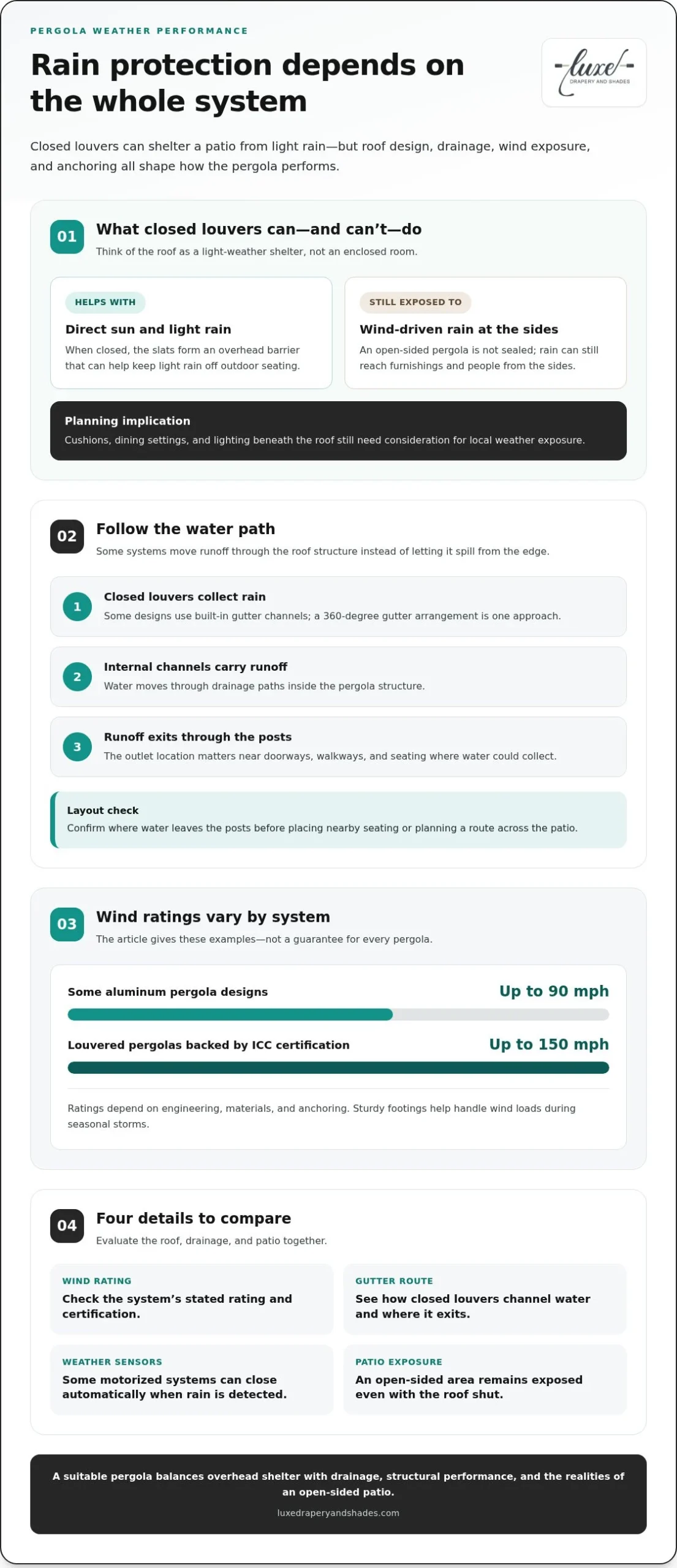
Closed louvers form an overhead barrier that helps keep light rain off a patio, but they do not create a sealed indoor room. Keep that in mind when placing cushions, dining settings, or lighting beneath the roof. Even when a system is designed to channel rain, wind-driven rain can still reach an open-sided area.
Some motorized systems include weather sensors that close the louvers automatically when rain is detected. This can be useful if a sudden shower might catch guests or furnishings outside. Sensors add convenience, but do not replace suitable roof design and drainage.
Light Rain and Water Drainage
Some louvered pergolas use built-in gutter channels to collect rainwater when the roof is closed. Internal drainage paths then carry water through the structure and down through its posts. A 360-degree gutter arrangement is one design approach, directing runoff away from the roof edge instead of letting it spill onto patio furniture.
When planning the patio layout, consider where water exits the posts. Drainage placement matters near doorways, walkways, and seating, where runoff could otherwise collect. A traditional pergola does not provide the same adjustable closed roof surface, so rain management differs.
Aluminum pergola wind ratings depend on design: some structures may be rated for up to 90 mph, while louvered pergolas backed by ICC certification can withstand winds of up to 150 mph. Structural performance depends on the system’s engineering, materials, and anchoring; sturdy footings help handle wind loads during seasonal storms.
Year-round outdoor living depends on more than closing the roof. Consider the structure, drainage route, and patio exposure together. A covered dining area beside an open garden, for instance, remains exposed at its sides even when the louvers are shut. Lighting can extend evening use, but fixtures and furniture still need suitable protection from local weather.
Before choosing a roof system, compare its stated wind rating, gutter route, and available weather sensors. Check how closed louvers channel water and where runoff leaves the posts. These practical details help determine whether the design suits a sheltered dining nook or a more exposed backyard. For added side protection, Luxe Drapery and Shades offers outdoor shading options that can complement a pergola without changing how its roof drains.
Some high-quality louvered pergola systems use built-in gutter channels to route rainwater through internal drainage paths and down through the posts when the roof is closed. Louvered roof systems are engineered for the changing weather conditions of Los Angeles, California.
Resale value and return on investment
A louvered pergola can make a patio feel like a defined outdoor room, adding functional space without enclosing it. One estimate places resale cost recovery for a louvered pergola at 60-80%. Treat that figure as a potential return, not a guaranteed increase in a home’s sale price. Buyers weigh the structure alongside the property’s condition, layout, and usable outdoor space.
Value starts with daily utility. Adjustable shade, a sheltered dining area, and room for entertaining can make an outdoor structure feel integrated with the home. In Los Angeles, staged outdoor rooms with pergolas are claimed to sell 15% faster. That figure describes a market claim, not a promise for an individual listing, but it illustrates why presentation and practical use matter.
Installation choices shape the project’s appeal and long-term value. Partnering with experienced professionals like Black Bear Construction helps ensure a custom design that fits the patio, complements the home, and leaves clear paths, which looks far more intentional than an oversized structure. Screens and lighting can further define the space, while a powder-coated finish can support a coordinated appearance. Buyers notice how these details work together, not just the roof mechanism.
Cost depends on the project’s size, materials, screens, automation, and installation. The price depends on the case and is given after a quote request. These factors also affect the value calculation: a larger outdoor structure with additional features represents a different investment from a simpler design. Consider how often you’ll use each feature before deciding which additions deserve priority.
Compare likely use with the investment rather than focusing only on resale. For example, a household that dines outside often may value a shaded seating area immediately, even before a future sale. A household that rarely uses its backyard may place less value on the same improvement. The 60-80% recovery estimate provides context, while personal enjoyment and property fit complete the picture.
Presentation matters at resale. Keep the pergola visually aligned with the home and maintain its working parts, finish, and surrounding patio. In a Los Angeles listing, staged outdoor rooms with pergolas are associated with a 15% faster sale, so clean furnishings and a clear dining or lounging arrangement can help buyers understand the space. The structure should read as usable, not as a maintenance project.
Before committing, weigh the project’s features against the outdoor space they serve. A well-proportioned roof, useful screens, and considered lighting can create a coherent setting; additions that do not improve daily use may not be worthwhile. The strongest value case connects the structure to a clear purpose, such as shaded meals, relaxed entertaining, or a more inviting backyard. That practical fit supports enjoyment now and buyer appeal later.
Patio, pool, and outdoor-kitchen applications
A louvered pergola can define an outdoor space for dining, lounging, or entertaining. In Southern California, 81 days per year may bring rain, wind, or temperatures that make an uncovered patio unusable.
On a patio, the structure can create a distinct place to read, share meals, or gather with guests. Open the roof for sunlight or close it for overhead shade. This flexibility suits different routines, from a quiet morning coffee to an evening dinner. A good layout keeps movement between the house, seating, and garden clear.
By a pool, the pergola can provide a shaded area for resting between swims. Louvered systems can lower surface temperatures underneath by up to 15°F. Retractable screens may help block low-angle sun, insects, and additional heat entering from the sides. Their position matters: screens can offer more enclosure when needed, then retract to keep the poolside area open.
An outdoor kitchen benefits from a roof that adjusts to changing light during meal preparation and dining. Closed louvers can help shelter the cooking and eating area from light rain, while open sides preserve an outdoor feel. Plan the structure around the kitchen layout, including paths between food preparation, serving, and seating. Keep the dining area accessible without interrupting movement around the cooking zone.
Lighting expands how homeowners use the space after sunset. Integrated LED lighting can extend pergola use into the evening, while heaters can add another option for cooler gatherings. Retractable screens, vinyl panels, lighting, and heaters are available additions to louvered roof systems. Each feature serves a different purpose, so choose based on whether the main use is poolside lounging, outdoor dining, or entertaining.
Year-round use depends on matching the structure to the outdoor space and the activities it supports. A poolside retreat may benefit from screens, while a dining patio may call for lighting. Homeowners who host evening meals can prioritize a clear table area and lighting; those relaxing beside a pool may value shade and airflow. A louvered pergola expands your options, but does not turn an open patio into an enclosed room.
Think of comfort as a combination of overhead coverage, side protection, and a functional layout. An outdoor kitchen, for instance, needs convenient circulation as well as a pleasant dining area. A poolside structure may call for open views and flexible shade. Match each feature to a specific activity to create a considered outdoor living space without adding elements that do not serve your routine.
Lifespan compared with wood pergolas
Material choice shapes how long a pergola keeps working and how much attention it needs. A quality louvered pergola is estimated to last 15 to 25 years with proper upkeep. Aluminum louvered systems are also described with lifespans of 20 or more years, while some estimates reach 25-30+ years. These ranges reflect different systems and conditions, not one fixed lifespan.
Traditional pergolas are listed with a lifespan of 10 to 15 years. Wood pergolas need refinishing every 2 to 3 years, and wood can warp or rot without regular care. Those changes can affect both appearance and function. For example, movement in a wood frame can interfere with a motorized louver system and cause it to jam or fail.
Aluminum is a common material for louvered pergolas because it is durable, corrosion-resistant, and relatively low maintenance. It can suit homeowners looking for outdoor features without frequent refinishing. Aluminum still benefits from routine care. Cleaning and inspections help maintain the structure and make it easier to spot loose fasteners or debris before they affect moving parts.
Basic upkeep is specific. Clean louvered pergolas at least twice a year with mild detergent, water, and a soft cloth. Inspect fasteners, bolts, and screws annually. Clear debris from louver crevices, and keep louvers properly oiled to help prevent operating damage. These simple tasks support smooth movement and protect the roof system’s function.
Motorized systems introduce components that wood structures don’t have, including drives and, in some designs, weather sensors. Sensors can connect with louver controls to respond to rain or wind, adding convenience to outdoor living. Keeping the louvers clear and maintaining their moving parts matters because debris or wear can disrupt operation. The structure’s material and its moving mechanism both influence long-term care.
Compare the full maintenance pattern, not just the expected years of service. Wood may call for recurring refinishing every 2 to 3 years, while aluminum generally requires occasional cleaning and basic care. A shaded seating area used daily may justify a durable, adjustable roof; a rarely used corner may need a simpler structure. Choose materials that suit the space and the attention you’re willing to give them.
For a long-term outdoor project, weigh lifespan, upkeep, and how the structure will function in your routine. Aluminum offers corrosion resistance and less refinishing, while wood brings a different material character and recurring care. Explore pergola options to consider how a structure can complement your outdoor living space.
Luxe Drapery and Shades: Custom Drapery
Luxe Drapery and Shades helps bring a considered look indoors with custom drapery. After planning a pergola, homeowners may also want to refine the light, privacy, and atmosphere inside, especially near doors and windows that connect to the patio.
Choose Roller Shades for a clean, streamlined look, Roman Shades for softly tailored folds, or Cellular Shades for a distinctive window treatment. These options can complement your interior while supporting everyday needs. The right choice depends on the room, desired light control, and existing design.
For a conversation about Custom Drapery and window treatments for your home, visit Luxe Drapery and Shades.
Shape an Outdoor Space That Feels Like Home
The benefits of a louvered pergola roof matter most when its design supports the way you want to live outdoors. Before settling on a structure, picture a favorite moment there: a quiet morning, an unhurried dinner, or a gathering that flows naturally from inside to patio. Let that vision guide decisions about placement, furnishings, and the visual connection between your home and garden.
Then consider the rooms that open onto the outdoor area. Thoughtful window treatments can complement your home’s architecture and create the desired mood indoors. Luxe Drapery and Shades offers custom drapery, Roller Shades, and Roman Shades to help shape that interior experience.
Explore how these details could come together in your home, and take the next step at Contact Luxe Drapery and Shades. A well-considered design can make everyday living feel more intentional, indoors and out.
Frequently Asked Questions
Does It Boost Your Home’s Value?
A louvered pergola can strengthen a home’s appeal by making outdoor space feel more usable and intentional. One benefit of a louvered pergola roof is that it helps define an outdoor living area that complements the property. Its contribution depends on how well it suits the home and daily activities. In Los Angeles, a thoughtfully arranged patio can help buyers picture using the backyard.
What Is a Louvered Roof?
A louvered roof uses angled slats that pivot to change the amount of sky, light, and airflow above an outdoor area. The slats move together through a manual mechanism or motorized system. For example, adjust the roof over a dining table as sunlight shifts instead of relying on one fixed level of shade. The structure remains open-sided unless additional enclosures are added.
Are louvered pergola roofs waterproof in heavy rain?
No. A closed louvered roof can offer some rain protection, but it does not create a sealed indoor space. Some systems channel water through internal gutters and posts, but an open-sided pergola remains exposed to rain blowing in from the sides. For a gathering during a downpour, move cushions and table settings indoors rather than relying on the roof alone. It provides outdoor shelter, not complete weatherproofing.
How does a louvered pergola compare with a fixed-roof pergola or retractable canopy?
The benefits of a louvered pergola roof include adjustable overhead coverage, while a fixed roof provides consistent shade. A retractable canopy can be drawn back, but its surface does not adjust by pivoting individual slats. Choose according to how you use the area: adjustable louvers suit a patio where light changes through the day, while fixed coverage may suit a seating zone that needs steady shelter.