

What if the finishing touch for a window is the detail that brings every layer together? When searching for custom valances and cornices Los Angeles homeowners often begin with a style question, then consider how a top treatment will work with the shades or drapery already in the room.
A valance typically adds a soft, fabric-framed finish, while a cornice creates a more structured profile. Either can shape the window, but proportion, material, and the coverings beneath it determine whether the result feels polished or out of place.
This guide explains how valances and cornices differ, what each can contribute, and how to weigh style, scale, and fabric as part of the whole window. You’ll also find practical ways to coordinate a top treatment with shades or drapery. Luxe Drapery and Shades helps Los Angeles homeowners plan window treatments with selection assistance and accurate measurements.
Key Takeaways
- Compare the softer profile of a valance with the defined shape of a cornice, then consider which suits your window and room.
- Coordinate color, texture, and visual weight with existing shades or drapery so the top treatment feels integrated.
- When considering custom valances and cornices in Los Angeles, begin with the window, its current coverings, and the finish you want.
- Accurate measurements help shape a cohesive plan for the full window, not only its upper edge.
- Luxe Drapery and Shades supports window-treatment planning with consultation, selection assistance, measurements, a comprehensive quote, and a project timeline.
Custom Valances and Cornices in Los Angeles: What Each Adds to a Window
A valance is generally a soft fabric treatment at the top of a window. A cornice has a more structured, defined profile. Both can visually complete a window and connect its shades or drapery with the surrounding room. That distinction is a useful starting point, but not the whole decision: proportion, material, and nearby furnishings all affect the result.
For homeowners researching custom valances and cornices Los Angeles, the key question is how the upper treatment will relate to the entire window. It might introduce a subtle contrast, echo the room’s existing lines, or create a visual transition between the covering and the wall. The most successful choice looks intentional alongside the elements already in place.
How a valance frames a Los Angeles window
A valance can soften the window’s upper edge and add color or texture through fabric. Its shape and fullness determine whether the effect feels restrained or decorative. F&R Interiors, for example, presents simple, box-pleated, and balloon valances as different style options. These examples illustrate how much the silhouette can vary, but no one style suits every room. A quieter fabric can complement an understated interior, while a more expressive treatment can bring character to a space that welcomes decorative detail.
Consider the covering below it, too. A valance above a Roman shade can create a coordinated, layered appearance. Paired with drapery, it can visually connect the fabric at the top with the panels below. To judge the balance, compare the treatment’s fullness and visual weight with the window and its existing covering. A window valance can take many forms, as outlined in this overview of the window valance. Its appearance is best assessed in context rather than chosen by label alone.
How a cornice changes the window’s visual profile
A cornice gives the upper part of a window a more structured presence than a softly draped treatment. Its defined outline can complement crisp architectural lines or create a deliberate contrast with softer furnishings. Look at the window’s shape and surrounding lines, including nearby trim, furniture, and the geometry of the existing shade or drapery. The goal is visual harmony, not an exact match.
Before choosing, step back and assess the window as part of the room. Is the current covering visually light or substantial? Does the space feel tailored, relaxed, or richly layered? A top treatment with comparable visual weight can help the arrangement feel balanced. A contrasting profile can instead make the window a focal point. Color and texture matter as much as shape: repeating a tone already in the room creates continuity, while a considered contrast draws the eye upward.
A valance or cornice is more than a decorative cap. It changes how the window reads within the interior. Consider the existing covering, the room’s character, and the window’s proportions together so the finished composition feels considered from top to bottom.
Valance and Cornice Styles: Compare the Look Before You Choose
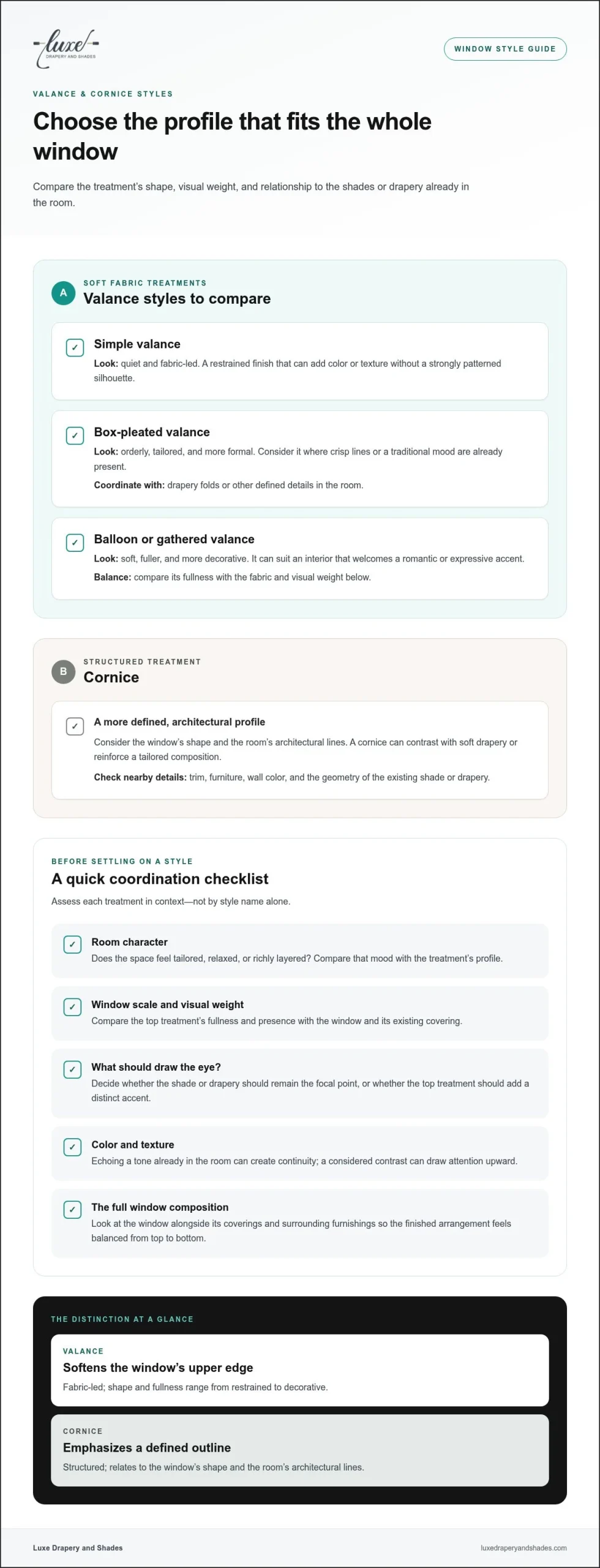
Once you know the effect you want, compare treatments by how they’ll sit with the window covering and the room. A simple valance can add a quiet finish; a pleated or gathered silhouette brings more visible detail. A cornice emphasizes a defined outline. As a guide: valances tend to soften a window’s upper edge, while cornices make it feel more architectural.
F&R Interiors offers simple, box-pleated, and balloon valances as examples of how soft treatments can vary. Use them to compare visual character, not as one-size-fits-all recommendations. The right direction depends on the room’s formality, the window’s scale, and whether the existing shade or drapery should remain the focal point.
Simple valance
Visual character: quiet, fabric-led finish. Room fit: a useful direction when you want a restrained detail. With existing coverings: can add color or a clean upper edge without introducing a strongly patterned silhouette.
Box-pleated valance
Visual character: orderly and tailored, with a more formal impression. Room fit: consider it where crisp lines or a traditional mood are already present. With existing coverings: its structured rhythm can relate to drapery folds or other defined details.
Balloon or gathered valance
Visual character: soft, fuller, and more decorative. Room fit: suits interiors that welcome a romantic or expressive accent. With existing coverings: balance its fullness with the fabric and visual weight below.
Cornice
Visual character: a defined, structured profile. Room fit: consider it alongside the window’s shape and the room’s architectural lines. With existing coverings: it can contrast with soft drapery or reinforce a tailored composition. A general explanation of the architectural cornice provides useful context for the term’s architectural associations.
Soft valance styles: simple, pleated, and gathered looks
A simple shape is a flexible starting point when you want to introduce subtle color or texture, or give the upper edge a more considered finish. Box pleating reads as more tailored and formal than a plain treatment. Balloon or gathered styling creates a softer, more decorative effect. Compare each option with the room’s existing lines and the visual weight of the shade or drapery beneath it.
Structured cornices and coordinating materials
A cornice shifts attention from fabric movement to a more architectural outline. Consider how its color relates to the wall, trim, and existing coverings. For example, a tone that echoes nearby wood details can help connect the window to the room. These are design considerations rather than fixed rules. For custom valances and cornices Los Angeles projects, planning the whole window helps keep each choice in proportion.
If you’re coordinating shades or drapery with your room’s palette, Luxe Drapery and Shades’ window-treatment consultation can help you consider the window as a complete composition.
How to Coordinate a Los Angeles Valance or Cornice with Existing Treatments
Begin with what’s already at the window. Identify whether the main covering is drapery, a roller shade, a Roman shade, or blinds. Then decide what you want to preserve about its appearance. A top treatment can echo the existing covering, introduce a considered contrast, or give the window a stronger frame. Starting with the current setup keeps the decision connected to the room rather than making it an isolated choice of fabric or shape.
Pairing a top treatment with shades, blinds, or drapery
Compare the covering’s lines and visual character. Drapery brings fabric folds into the composition, while roller shades and blinds often have a cleaner profile. Roman shades bring their own fabric presence and can form part of a layered look. A tailored top treatment may complement an orderly window; a softer one may create contrast. For ideas about selecting drapery as part of an overall design, explore this custom drapery guide. A Roman shade buying guide can also help you consider the shade’s role in the finished composition.
Decide which layer should lead. If the existing shade has a noticeable texture or pattern, a quieter top treatment can let it remain prominent. If the covering is visually simple, a more distinctive upper detail can bring interest to the window. Neither choice is automatic. The aim is to choose deliberately which layer should stand out and which should support it.
Balancing color, texture, and proportion
Exact color matching isn’t necessary for a coordinated result. Look for a relationship between colors and materials instead. A top treatment might repeat a tone from the drapery, pick up an accent elsewhere in the room, or offer a subtle contrast against the wall. Texture matters as well: consider how a smooth-looking shade, woven surface, or richly textured fabric will read beside the other finishes.
Proportion is a visual judgment, not a fixed formula. Consider the window’s scale, the apparent weight of its existing covering, and how much attention the upper treatment will draw. A dramatic shape may suit a spacious room with layered details, while a quieter profile may feel more at ease in a restrained interior. Step back and view the whole room, including nearby furniture, trim, and dominant colors, before settling on a direction.
For custom valances and cornices Los Angeles homeowners are considering, check the complete arrangement: the covering, top treatment, and surrounding palette. Luxe Drapery and Shades’ consultation and selection assistance can help organize choices across shades, blinds, and drapery while keeping the room’s overall character in view.
Plan Custom Valances and Cornices: Measurements, Windows, and Room Style
A considered plan begins before you choose a fabric or silhouette. Take stock of the window, the coverings already in place, and the feeling you want the finished space to have. This sequence makes decisions about custom valances and cornices Los Angeles homeowners are considering more deliberate and keeps the top treatment connected to the whole room.
- Identify the window. Note its general shape, how it relates to nearby trim, and what draws your eye. A broad window, a narrow one, or a group of windows may call for different visual approaches.
- Record the existing covering. Identify whether the window has drapery, a shade, blinds, or another treatment. Consider its color, texture, and visual weight, and how it sits in relation to the window.
- Define the desired look. Decide whether you want a softer, more decorative finish or a clean, structured profile. Consider what should remain prominent and what the upper treatment should contribute.
- Plan the measurements. Once you’ve considered the window and design direction, accurate measurements can inform the project plan and the visual balance of the complete arrangement.
What to consider before measuring
Look closely at the window’s shape and the position of existing coverings. Note whether the shade or drapery sits within the window area or relates visually to the surrounding wall and trim. Gather room images or make a short reference list of colors and textures you’d like to complement. These details clarify the intended look without committing you to a particular treatment too soon.
Consider the room’s character as well. A tailored interior may call for a different visual direction than a relaxed, layered space. Look at nearby furniture, wall color, and other prominent finishes, then decide whether the window should blend into the scheme or provide a subtle focal point. Measurements are most useful when they support a clear design intention.
Why accurate measurements shape the finished look
Precise measurements give the planning process a reliable foundation. They help account for the relationship between the window and its existing coverings, and support decisions about how the finished treatment will appear in the space. Without a clear picture of the window’s dimensions and context, it is harder to judge proportion and visual balance with confidence.
Luxe Drapery and Shades’ window-treatment consultation includes accurate measurements and selection assistance, along with a comprehensive quote and project timeline. This process brings practical details and design preferences into one plan. Explore Luxe’s window-treatment consultation to develop a considered approach for your Los Angeles home.
Create a Cohesive Los Angeles Window Design with Luxe
A polished window treatment considers the whole composition, not only its upper edge. A valance or cornice may inspire the look, but the shades, drapery, blinds, or shutters around it also shape how the window belongs in the room. For homeowners exploring custom valances and cornices Los Angeles, the next step is to bring those ideas into a practical plan for the coverings and design choices that define the space.
From design inspiration to a considered plan
Start with the qualities you want to preserve in the room: its palette, architectural character, and how existing window coverings relate to the furnishings. During consultation, Luxe Drapery and Shades provides selection assistance for window-treatment projects, helping you consider drapery, shades, blinds, shutters, and automation in relation to the room. This whole-window perspective keeps individual selections connected to the atmosphere you want at home.
For example, if your room already has a distinct color story, consider how a shade or drapery will fit alongside it. If you’re updating several windows, think about how the treatments will relate from one space to another while still responding to each window. The aim is a thoughtful scheme, not a uniform look applied without regard to the room.
What to expect from consultation through installation
Luxe’s process brings practical planning into the design conversation. Consultation includes selection assistance, accurate measurements, a comprehensive quote, and a project timeline. These steps organize the choices and details of the window-treatment project, so you can understand the proposed scope and plan for what comes next.
After the products are ordered, installation is scheduled. Materials ship directly from the manufacturer to the home. This creates a clear progression from selecting window coverings to arranging their installation.
As you consider the finishing details, keep the original design goal in view: the upper treatment should feel connected to the coverings beneath it and to the room as a whole. Luxe’s consultation and measurement process can help you develop a cohesive plan around its drapery, shade, blind, shutter, and automation offerings, with the window’s overall character at the center.
Explore Luxe’s shading and automation solutions as you shape a considered window design for your Los Angeles home.
Shape a Window Design That Feels Like Home
The most rewarding window design feels at ease with the room around it. As you explore custom valances and cornices Los Angeles homes can incorporate, let your priorities guide the next step: what should the window express, and how should its coverings relate to the rest of your space?
Luxe Drapery and Shades can help translate those preferences into a considered plan for your window treatments. Consultation brings selection assistance and accurate measurements together with a comprehensive quote and project timeline, followed by scheduled installation. Each stage supports a thoughtful process that keeps the details of your home in view.
Explore Luxe’s whole-home shading solutions and take the next step toward a cohesive window design for your Los Angeles home.