

A layered window can feel composed, not crowded. The key to how to layer shades and drapes is to give each treatment a distinct role, then bring them together through thoughtful color, texture, and proportion.
Start by deciding which layer should manage light and privacy, how much room the treatments need to operate, and where each one will sit. A shade can provide a streamlined foundation, while drapery adds softness, visual depth, and a finished frame. The right balance depends on the room, your daily routine, and the materials you choose.
This guide explains how to assign each layer a purpose, coordinate patterns and tones, and plan placement and measurements. You’ll also learn how a custom consultation can bring the details together, from selection assistance and accurate measurements to a comprehensive quote and project timeline. For Los Angeles homes, a considered plan can help each element work in harmony with the room and the way you use it.
Key Takeaways
- To decide how to layer shades and drapes, start with your needs for daylight, privacy, and everyday use, then assign each treatment a distinct role.
- Explore how Roller Shades, Roman Shades, Cellular Shades, and Woven Wood Shades can pair with drapery to suit different design priorities.
- Plan placement and proportions together so both layers have room to operate without crowding the window.
- Coordinate color, texture, and visual emphasis to create a layered look that feels intentional rather than busy.
- A custom consultation can bring choices and measurements together, with a comprehensive quote and project timeline to guide the next steps.
What Does It Mean to Layer Shades and Drapes?
Layering shades and drapes means using two coordinated window treatments at the same window, with each contributing a different quality. A shade sits close to the window for a streamlined look, while drapery adds fabric and frames the opening. The goal isn’t simply to add more material. Decide what the window needs to do, then make each treatment contribute something distinct.
A useful way to think about window treatment choices is to separate practical function from visual character. Light and privacy needs can guide the shade selection; drapery can contribute color, texture, softness, or a stronger sense of finish. The roles may overlap, but they shouldn’t compete. Defining each layer’s main job makes it easier to choose materials and proportions that feel considered rather than crowded.
What Does Each Layer Contribute?
A shade creates a clean, tailored foundation close to the window. Depending on the selection, it can be adjusted as daylight or privacy needs change. Drapes add a more expressive fabric layer around the opening, bringing softness and connecting the window to the room’s palette and furnishings.
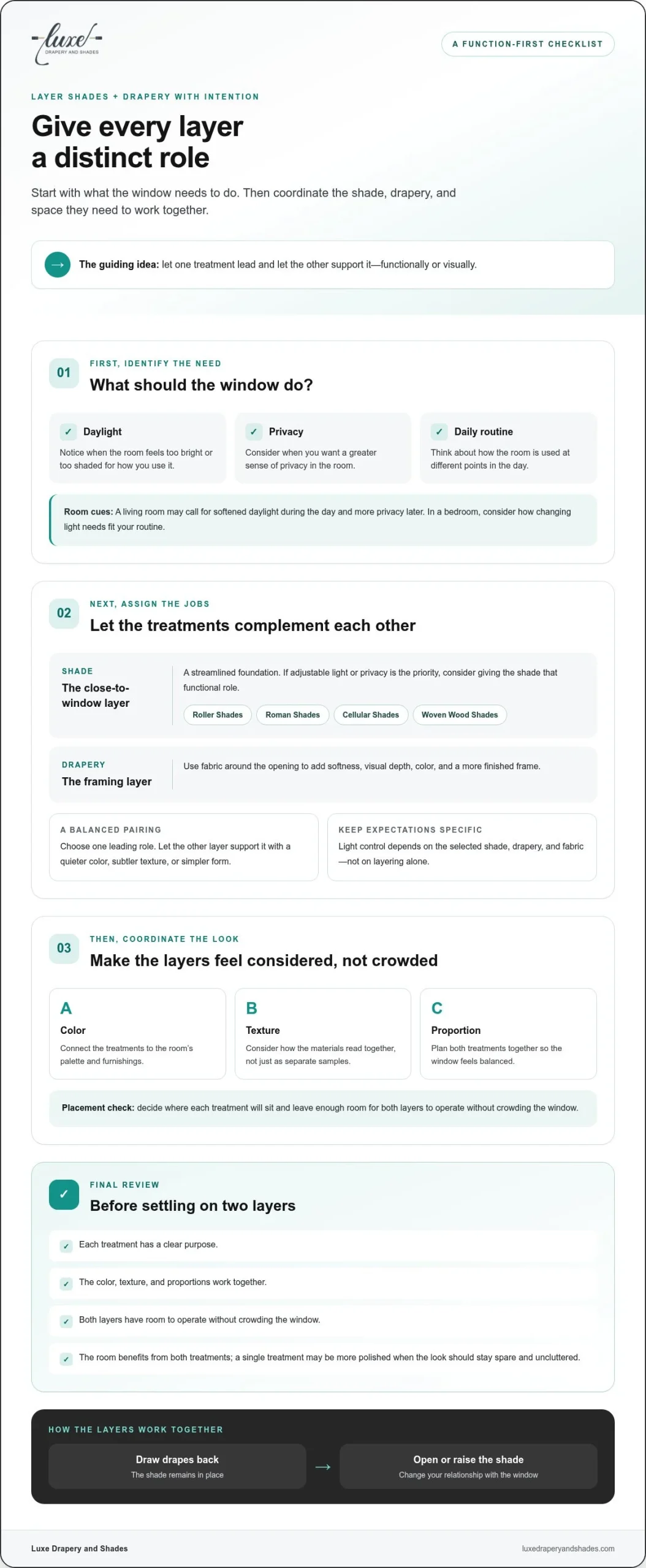
Each layer can be used on its own or in tandem. Draw the drapes back and the shade remains in place; open or raise the shade when you want a different relationship with the window. Together, the treatments let you adjust the look and use of the window throughout the day. For a balanced composition, give one layer the leading role and let the other support it with a quieter color, subtler texture, or simpler form.
When Does a Layered Window Make Sense?
Consider the rhythm of the room. In a living space, you may want softened daylight during the day and more privacy in the evening. A bedroom may call for flexible light management alongside the softness of fabric at the window. Separate layers give you options without requiring the drapes to handle every practical and decorative role.
Layering can work especially well when a window is a focal point that needs both everyday utility and visual presence. The combination can add depth to a room with restrained furnishings or give a prominent opening a more finished look. Still, two treatments aren’t essential everywhere. If the room calls for a spare, uncluttered look, or the window has a simple role, a single treatment may be the more polished choice.
As you consider how to layer shades and drapes, start by identifying what you want the window to do and what you want it to contribute to the room. That distinct-role principle keeps the choices purposeful and gives you a useful starting point for selecting shade and drapery pairings.
How to Choose Shades and Drapes by Function First
A polished pairing starts with the window’s needs, not a fabric swatch. Before choosing colors or textures, consider the light you want, the privacy you need, and how the room is used throughout the day. Then give each treatment a clear purpose. This keeps two layers from feeling excessive: each is there because it contributes something useful, not simply because more fabric looks luxurious.
- Identify the need. Think about daylight, privacy, and the room’s everyday routines.
- Assign each layer a role. Decide what the shade should manage and what the drapery should add.
- Consider appearance. Choose colors, textures, and proportions that support those roles and suit the room.
Start With Light, Privacy, and Daily Use
Notice when the room feels too bright, exposed, or shaded for the way you use it. In a living room, you might want softened daylight during the day and a greater sense of privacy later. In a bedroom, consider how changing light needs fit your routine. These observations help narrow your choices without assuming every room needs the same solution.
Light control depends on the selected shade, drapery, and fabric, not on layering alone. A combination doesn’t automatically provide a particular level of coverage or darkness. Decide what you want to adjust, then select treatments suited to that priority. If you’re unsure where to begin, note what you’d like the window to do at different points in your day.
Assign the Shade and Drapery Different Jobs
If adjustable light or privacy is your first concern, consider giving the shade the functional role. Roller Shades, Roman Shades, Cellular Shades, and Woven Wood Shades each bring a different look to the window. The right choice depends on the room and your preferences. Drapery can then frame the opening and introduce fabric, color, and softness without carrying the entire practical brief.
Both treatments can contribute to function and style, but choosing a distinct priority for each makes the result easier to coordinate. For instance, a shade may handle the adjustment you want during the day, while drapery lends the room a more composed frame. Or the fabric treatment may be the visual focus, with a quieter shade as its companion. Consider how the materials, colors, and fullness will read together, not just as separate samples.
This is the heart of how to layer shades and drapes: let daily needs lead, make the roles complementary, and refine the look once the practical direction is clear. If you’d like help coordinating options for your space, a custom window treatment consultation can bring selection assistance and accurate measurements into the planning process.
Which Shade and Drapery Pairing Fits Your Room?
The right pairing depends on the room’s priorities and the visual character you want at the window. Use the comparison below to narrow your options, not as a fixed formula. The fabric, color, and proportions of both treatments, along with the room’s furnishings and light, will shape the finished look. Each combination can be tailored to feel quiet and seamless or more richly layered.
| Shade style | Drapery effect | Design priority it may suit |
|---|---|---|
| Roller Shades | Adds softness and fabric around a clean-lined shade | A restrained, streamlined composition |
| Roman Shades | Introduces another fabric element beside or behind drapery | A tailored look with layered material and detail |
| Cellular Shades | Can be balanced by drapery with a simple profile or subtle texture | A pared-back pairing where the shade is the quieter layer |
| Woven Wood Shades | Pairs natural-looking texture with the softness of fabric | A window composition with tactile contrast |
Pair Streamlined Shades With Soft Drapery
Roller Shades and drapery create a measured contrast: a clean-lined shade sits close to the window, while fabric panels bring a softer frame. For a serene effect, consider drapery in a tone that relates to the shade or nearby furnishings. If you want more definition, a considered shift in color or texture can give the drapes presence without making both layers compete for attention.
For example, a neutral shade with softly textured drapery can keep the composition calm, while a more expressive drapery color can draw the eye to the window. These are design directions, not prescribed pairings. The right choice depends on the palette, scale, and character of your room. Explore fabric choices and tailored details in this guide to custom drapes.
Bring Texture Into the Window Composition
Roman Shades or Woven Wood Shades can create a more tactile starting point. With Roman Shades, consider how the shade’s fabric relates to the drapery: similar tones can create a cohesive effect, while a deliberate difference in texture adds depth. Woven Wood Shades bring visible material character, so drapery in a complementary, less prominent texture can help the full window feel balanced.
Keep the palette considered. A textured shade and a richly patterned drape may both draw attention, so letting one take the lead can make the pairing feel composed. For product-specific inspiration, read the Lutron Roman Shades guide. As you decide how to layer shades and drapes, use the table to identify a starting point, then weigh the room’s light, existing finishes, and desired visual emphasis before settling on materials.
How to Plan Placement, Proportion, and Installation
A layered window needs a plan that accounts for the architecture as well as the materials. The shade and drapery should feel composed together, but each also needs enough space to move and serve its purpose. Before ordering, consider the window frame, surrounding wall, how each treatment will operate, and how the fabric will relate to the room.
- Read the window context. Note the frame, nearby walls, trim, and any features that could affect where treatments sit.
- Plan placement. Decide where the shade and drapery will sit in relation to each other and the opening.
- Consider proportion. Think about drapery length and fullness, as well as the visual weight of both layers in the room.
- Measure and coordinate. Confirm the dimensions and treatment choices together before product ordering.
Plan the Position of Both Treatments
The window frame and available wall space shape the placement options. Look at the full area around the opening, not only the glass. Nearby trim or limited wall space may influence how the drapery frames the window and where the shade sits. Sketching the proposed arrangement or noting these details can help clarify the composition before selections are finalized.
Plan for operation as well as appearance. A shade needs room to move, and drapery should be able to open and fall without pressing against or obstructing the other layer. Consider how the treatments will sit when open and closed. Placement isn’t a finishing detail to solve after choosing fabrics; it’s part of the design and informs proportion and function from the start.
Measure and Coordinate Before Ordering
Accurate measurements help translate the intended arrangement into a fitted window treatment. Dimensions matter alongside decisions about placement, drapery length, fullness, and how the shade relates to the frame. Considering these choices as one plan can help prevent a treatment from feeling out of scale or leaving too little room for the layers to work independently.
Coordinating shade and drapery choices before ordering also gives installation a clear direction. During a consultation, Luxe Drapery and Shades provides selection assistance, accurate measurements, a comprehensive quote, and a project timeline. The installation process includes precise measurements, product ordering, and scheduled installation; materials are shipped directly from the manufacturer to your home. For ideas on tailored fabric and design choices, explore this guide to custom drapery in Los Angeles.
A well-planned layered window brings practical details and visual balance into the same composition. For help coordinating shade and drapery selections and measurements for your space, request a custom window treatment consultation.
Create a Custom Layered Look With Luxe Drapery and Shades
A layered window comes together through a series of connected decisions: what you want the shade to do, how the drapery should frame the room, and how both treatments will fit and operate. Luxe Drapery and Shades brings those choices into one considered plan, pairing custom drapery with shade options suited to your space and preferences.
From Design Inspiration to a Considered Selection
Begin by requesting a quote and sharing what you have in mind for the room. You might prefer a streamlined shade with understated fabric panels, or a more tactile combination that gives the window visual presence. Selection assistance helps you consider shade function, drapery, and the room’s existing style together, so the choices are coordinated rather than made in isolation.
There’s no single formula for how to layer shades and drapes. A consultation can help translate your priorities, such as adjustable light, privacy, fabric texture, and color, into a direction suited to your home. Accurate measurements are part of the consultation, along with a comprehensive quote and project timeline. These details give you a clearer view of the proposed selections and next steps, without prescribing one look for every window.
Motorized shades and blinds can also be part of the plan. They can be controlled by touch or voice commands and managed remotely through smart devices. Luxe Drapery and Shades also integrates Lutron shades and lighting control systems. Consider these options alongside the visual relationship between shade and drapery, and how you want to operate the treatments.
From Accurate Measurements to Installation
Once the selections are coordinated, precise measurements inform product ordering and the planned installation. Dimensions and placement decisions help guide how each treatment fits within the overall composition, while advance coordination gives the shade and drapery a shared plan. Materials are shipped directly from the manufacturer to your home, and installation is scheduled as part of the process.
From selection assistance through ordering and scheduled installation, each stage supports the transition from an idea to a finished window. The result is shaped by the choices made for your particular space, including the shade style, drapery fabric, proportions, and how the treatments work together. A thoughtful process keeps practical details aligned with the atmosphere you want to create.
For a tailored consultation that brings shade and drapery choices together for your home, explore Luxe Drapery and Shades and request a quote for your layered-window project.
Bring Your Window Vision Into Focus
A well-considered window treatment does more than finish a room. It shapes the light, softens the architecture, and creates a sense of ease throughout the day. As you think about how to layer shades and drapes, let your home’s character and your routines guide the choices. There’s no need to make every window match; a thoughtful plan can give each space its own balance while keeping the home visually cohesive.
Start with the window you’re most ready to reimagine. Consider the atmosphere you want to create, the way you use the room, and the details that draw your eye. Those preferences are a useful starting point for a tailored design conversation with Luxe Drapery and Shades in Los Angeles.
Explore a tailored layered-window design with Luxe Drapery and Shades, and take the next step toward a window that feels at home in your space.
Frequently Asked Questions
Can you layer shades and drapes on a sliding glass door?
Yes, a sliding glass door can have both, provided the treatments are planned around how people enter and exit. Consider the door’s direction of travel, handle access, and the space available for drapery when it’s open. Keep the shade and fabric from interfering with the doorway or one another. In Los Angeles homes with doors opening to patios or balconies, preserving a clear path is especially important.
Can you layer motorized shades with drapes?
Yes. Motorized shades can be paired with drapes, and the shades can be controlled by touch, voice commands, or a smart device for remote management. As you plan the arrangement, consider where controls will be convenient and how the drapes will sit around the window. This pairing can suit a room where easy shade adjustment matters alongside the softer, more finished presence of fabric.
Do shades and drapes need to be the same color?
No, matching colors aren’t necessary. A shared undertone can help different shades feel harmonious, while a gentle contrast can give the window definition. For example, a warm neutral shade could sit with drapery in a related deeper tone, or patterned fabric might be balanced by a solid shade. Consider the room’s wall color, upholstery, and flooring so the window feels connected to its surroundings.
Should drapes touch the floor when layered with shades?
They can, but floor-length drapes aren’t the only suitable choice. The right hem depends on the room’s look, the window’s position, and practical needs such as furniture near the sill or floor. A tailored hem can create a crisp finish, while fabric that reaches the floor may feel more formal. Before selecting a length, consider how the panels will hang and whether they’ll clear nearby furnishings.
Can existing shades be paired with new drapes?
Often, yes. Start by assessing whether the existing shade operates smoothly and whether its color, texture, and position can work with the new fabric. A neutral shade may offer flexibility; a prominent pattern or strong color can guide the drapery selection instead. Check the window and surrounding wall dimensions before choosing panels, so the new treatment can frame the opening without blocking the shade.
How do you keep layered window treatments from looking crowded?
Give the eye a clear focal point. If the drapery has a pronounced pattern or rich texture, consider a quieter shade; if the shade is visually distinctive, simpler fabric may create a calmer balance. Also account for how much space the drapery occupies when open, especially near furniture or a doorway. For how to layer shades and drapes in a compact Los Angeles room, a restrained palette and clean arrangement can help preserve visual breathing room.