

The toughest-looking shade isn’t always the best choice for a home with pets. Claws, chewing, and climbing can challenge delicate materials, while loose fabric or accessible operating cords may invite curious paws. Choosing pet-proof window coverings means looking beyond durability: light control, privacy, safety, and the room’s design all matter.
No material is immune to damage, so start with your pet’s actual habits rather than a product label. Compare roller shades, faux wood blinds, plantation shutters, and drapery by how your pet interacts with them, how they affect the room, and what they’ll take to maintain. Motorized shades can reduce access to operating cords, though they don’t prevent contact with the shade itself. With the right style, fit, and placement, you can make a more considered choice for your household.
Key Takeaways
- Think of “pet-proof” as a practical guide, not a promise that a covering can withstand every scratch, chew, or climb.
- Compare roller shades, faux wood blinds, shutters, and drapery by your pet’s habits, as well as by cleaning, light, privacy, and style needs.
- Use a simple selection process: observe your pet, assess the window, rank your priorities, then narrow down suitable styles.
- Consider how fabric, slats, and operating elements create different trade-offs; motorized shades can reduce access to operating cords.
- Custom fit and professional installation can help pet-proof window coverings complement your room and its architecture.
What Does Pet-Proof Window Coverings Really Mean?
“Pet-resistant design can reduce exposure to everyday wear, but no window covering guarantees protection from a determined pet.” That distinction is useful before you compare styles. Pet-proof window coverings is practical buying shorthand, not a promise that a shade, blind, shutter, or drapery will remain untouched. The right choice depends on what your pet does around the window and which parts of the treatment they can reach.
Scratching can snag or mark an exposed surface. Climbing may put pressure on a shade or blind, while chewing can target dangling or accessible elements. Shedding brings a different concern: lint and fur may collect on fabric or between slats. Even a pet that doesn’t damage coverings may paw at a moving shade or investigate the view from behind drapery. Your pet’s size, temperament, access, and established habits all help define a sensible choice.
It also helps to know what you’re comparing. Window coverings include a range of options designed for privacy, light management, and visual character. A broad overview of the types of window coverings can provide useful context, but your pet’s behavior and the room’s needs should guide the decision.
Which pet behaviors matter when choosing window coverings?
Observe your pet at the window rather than relying on a “pet-friendly” label. Cats may climb onto a sill, paw at slats, or use nearby fabric as a route upward. Dogs may brush against a covering, nose at a lower edge, or chew an element they can reach. These are possibilities, not rules. Individual habits matter more than species alone.
- Does your pet jump onto the sill or press against the glass?
- Can they reach operating elements, slats, or hanging fabric?
- Do they scratch, chew, shed heavily, or simply watch the outdoors?
For a week, notice where and when contact happens. This can help you identify whether the main concern is claws, fur, access, or repeated movement around the window. That observation is more useful than choosing by label alone.
Can practical window coverings still feel beautifully considered?
Absolutely. A room’s covering can be chosen for its material and silhouette while also shaping light, privacy, and atmosphere. A clean-lined shade may suit a pared-back interior; shutters or blinds can bring structure, while drapery adds softness and visual height. Each style has different points of exposure for a pet to investigate, so consider the full window and its surroundings.
Think about daily use as well as appearance. Does the room need filtered daylight, greater privacy, or a softer finish? How close does your pet get to the treatment? No material is invulnerable to persistent claws or chewing. A considered choice balances likely wear with the comfort and character you want the room to retain.
Pet-Friendly Window Covering Materials and Styles, Compared
No single style suits every pet or room. A cat that climbs and paws at slats creates different concerns from a dog that brushes past a window or noses at fabric. Compare the covering’s exposed surfaces and operating elements alongside its contribution to light, privacy, and the room’s overall character.
Material and operating style matter together: the surface your pet can reach is only part of how a window covering will perform in daily life.
| Style | Claw exposure | Cleaning | Light and privacy | Visual character |
|---|---|---|---|---|
| Roller shades | A smooth, continuous surface avoids individual slats, though exposed fabric may still attract paws or claws. | A streamlined profile has fewer separate surfaces to dust; care depends on the fabric. | Light and privacy vary with the selected shade and how it is positioned. | Simple, clean-lined, and understated. |
| Faux wood blinds | Slats and reachable edges may invite pawing or chewing; the amount of exposure depends on placement. | Individual slats may need attention as dust and fur settle on them. | Adjustable slats let you alter light and sightlines; privacy depends on their position. | Structured, with a familiar blind profile. |
| Plantation shutters | Slats and reachable edges remain accessible to curious pets. | The frame and slats create surfaces to dust. | Adjustable louvers allow changes to daylight and privacy. | Architectural and composed. |
| Custom drapery | Accessible fabric may be pulled, climbed, or clawed, especially near a sill or pet perch. | Fabric can collect fur; suitable care depends on the material. | Fullness and placement shape light, privacy, and softness. | Textural, tailored, and expressive. |
How do roller shades and faux wood blinds compare?
Roller shades offer a streamlined choice if you prefer a simple visual profile. Their fabric can still be vulnerable if your pet paws at the window, so consider whether the shade hangs within easy reach. Faux wood blinds bring a slatted look, with surfaces a climbing or curious pet may investigate. With either style, look at reachable edges and operating elements, not just the main material.
When might shutters or drapery suit a pet-friendly interior?
Plantation shutters bring a defined architectural presence, while custom drapery softens a room with fabric and tailored fullness. For drapery, consider how close the hem sits to your pet’s usual route or resting place. Fabric that brushes a favored perch may be more tempting than fabric kept out of reach. A considered plantation shutter design can also complement the room’s proportions and trim.
To explore how shutter proportions and details shape a room, Luxe Drapery and Shades’ Plantation Shutters in Los Angeles guide offers further style context. For a tailored comparison of coverings for your home, explore custom window covering options from Luxe Drapery and Shades. No choice is immune to persistent contact, but matching the style to your pet’s access and your design priorities makes the trade-offs clearer.
How to Choose Pet-Proof Window Coverings for Your Home
A thoughtful selection starts with your household, not a product label. Use this four-step process to compare pet-proof window coverings against the room’s daily needs, including privacy, daylight, and the atmosphere you want to create.
- Observe your pet. Notice whether they climb onto the sill, paw at the glass, brush against fabric, or show interest in operating elements. Focus on what happens regularly, not just what might happen.
- Assess the window. Consider its height, shape, nearby furniture, and how much of the covering your pet can reach. In Los Angeles, note how the window’s sun exposure affects your preferences for filtered light, shade, and privacy throughout the day.
- Rank your needs. Decide what matters most in that room: limiting reachable surfaces, managing daylight, maintaining privacy, or creating a particular design effect. Several priorities can coexist, but ranking them makes trade-offs clearer.
- Compare styles. Consider roller shades, faux wood blinds, plantation shutters, and drapery in light of your observations. Think about how each option’s material, profile, and operation fit both your pet’s habits and your interior.
Match the covering to the room and the pet
Room use matters. A living room where a dog regularly lounges beside the window may need a different approach from a guest room your pets rarely enter. Check whether a deep sill, sofa, or nearby chair creates an appealing place to climb and watch outdoors. Custom dimensions can also account for unusual window proportions, helping the finished treatment relate neatly to the opening.
Think about the view and the room’s purpose, too. A bedroom may call for greater privacy, while a living space may benefit from preserving daylight. A tailored covering can address those needs without treating every window in the home identically. The goal is a considered fit for the opening and its use, not a universal solution.
Consider cords, controls, and everyday use
Look closely at how a covering operates and whether cords or other hanging elements sit within your pet’s reach. Motorized shades offer a different operating experience and can reduce access to operating cords, though they don’t make a shade immune to pet damage. Consider how often you adjust the window treatment and whether convenient operation matters in that room.
Custom measurement and professional installation help tailor a covering to the window and its surroundings. For additional context on motorized shades, the Lutron Sivoia in Los Angeles guide can help you explore that design direction. Luxe Drapery and Shades designs and installs custom treatments for Los Angeles homes. Custom window coverings can be selected with the room, its proportions, and household routines in mind.
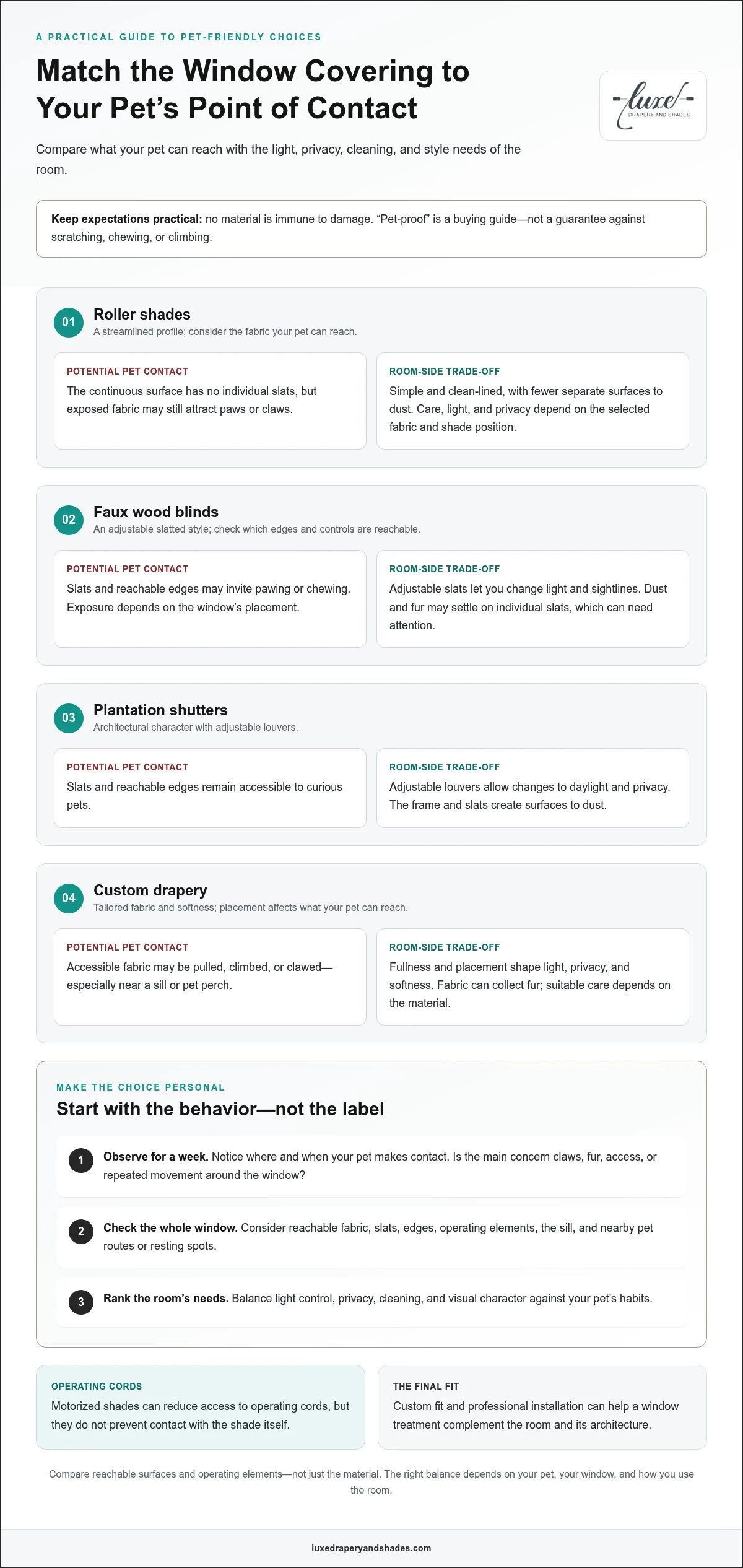
Pet-Proof Window Coverings: Trade-Offs Worth Considering
The best choice depends on the behavior you’re trying to manage, not on a universal ranking of window treatments. A cat that paws at slats, a dog that noses at fabric, and a pet that simply watches from the sill create different considerations. Each style balances access, appearance, light control, privacy, and daily care differently.
Picture the window in use. A smooth, minimal profile may keep the look composed, while structured finishes introduce slats or louvers a curious pet can reach. Layered textiles bring softness and visual depth, but fabric near your pet’s usual path may collect fur or attract attention. No style is automatically the safest or most durable choice for every household.
What compromises come with different covering styles?
Consider which surfaces your pet can touch and how you’ll maintain them. Slats and frames may require attention between or around their components; fabric can show fur or contact, depending on its placement and material. These are practical factors to weigh, not guarantees of damage or measures of performance.
Before narrowing the options, choose your leading concern. Is it reducing access to fabric, preserving an uncluttered look, adjusting daylight, or creating a more private room? Rank those priorities, then weigh the visual effect of a minimal shade, a structured shutter, or soft drapery against what your pet can reach. A clear priority makes compromises easier to judge.
When could motorized shades be part of the solution?
Motorization changes how you operate a shade. Instead of reaching for a manual control, you can use a motorized option, which may reduce your pet’s access to operating cords. It doesn’t prevent a pet from scratching, climbing, or contacting the shade itself, so consider motorization as one part of the room’s solution, not a promise of protection.
Luxe Drapery and Shades works with motorized shades and integrates them with Lutron lighting control systems. For a broader look at connected controls, the Lutron Home Automation in Los Angeles guide offers relevant system context. Think about how operation fits your household routine, then balance that convenience with the shade’s placement, the room’s light and privacy needs, and your pet’s access.
Everyday details matter. A covering that suits a quiet bedroom may not be the right fit for a busy living area where pets gather by the window. Choose with the room’s real use in mind, and let durability concerns inform the design without eclipsing comfort or character. For a tailored approach, explore custom window covering solutions for your home.
Create a Tailored Pet-Friendly Window Treatment in Los Angeles
A successful window-covering project begins with the way your household uses each room. Luxe Drapery and Shades designs and professionally installs custom window coverings for Los Angeles homes, helping homeowners consider pet habits alongside the architecture, light, privacy, and overall feel of a space. The goal isn’t to promise damage-proof performance. It’s to create a tailored solution that makes sense for the room and the people and pets who live in it.
The process moves from conversation to installation. First, discuss which pets use the room and what they do near the window. Then compare styles such as roller shades, faux wood blinds, plantation shutters, and custom drapery, weighing their appearance and practical trade-offs. Once you choose a direction, the design can be tailored to the window and interior, followed by professional installation. Each step keeps household needs and design intent in view.
What to prepare before a window-covering consultation
A few observations can make the design conversation more useful. Note which pets enter the room and whether they climb, scratch, nose at the window, or rest nearby. Identify your priorities, such as greater privacy, filtered daylight, ease of operation, or a refined finish. Also share details that shape the project, including an unusually proportioned window, furniture near the sill, distinctive trim, or existing colors and materials you want to complement.
These details help clarify which trade-offs matter most. A window beside a favorite pet perch, for example, may call for a different approach from one in a room pets rarely enter. The right choice depends on the setting, rather than a product label alone.
How custom design brings the room together
Tailored dimensions help a treatment relate to the window’s proportions, while considered materials and silhouettes can echo the room’s architecture and furnishings. A streamlined roller shade, the structured character of faux wood blinds or plantation shutters, and the softness of custom drapery each create a distinct effect. Matching the treatment to both the opening and the interior helps the window feel like an intentional part of the room.
Luxe Drapery and Shades is a licensed and bonded California contractor, CSLB #1066068, and provides professional installation of custom interior window coverings. For Los Angeles homeowners considering pet-proof window coverings, a design consultation brings household routines, window details, and style preferences into the same conversation. Explore custom window coverings and consider how a tailored design can support your home’s comfort and character, without assuming any covering can withstand every pet or habit.
Make Your Windows Work Beautifully for Your Household
Your home’s needs can change as pets grow, routines shift, or a room takes on a new purpose. Treat your window coverings as part of that evolving environment. The most useful choice isn’t one that promises to withstand every curious paw. It’s one that reflects how your household lives while contributing to a room you enjoy spending time in.
As you consider pet-proof window coverings, bring a clear picture of your priorities to the design process: what your pet can reach, how you use the space, and the atmosphere you want to create. A tailored approach can turn those everyday details into thoughtful design decisions, from the covering’s proportions to the way it complements the architecture.
Luxe Drapery and Shades brings custom design and professional installation to Los Angeles homes, with expertise in motorized shades and Lutron lighting control integration. Explore custom window coverings for your home and take the next step toward a window treatment that feels considered, comfortable, and distinctly yours.
Frequently Asked Questions
Can pet-proof window coverings be made for unusually shaped windows?
Yes, custom window coverings can be tailored to unusual window dimensions and architectural details. Share the opening’s shape, nearby furniture, and how your pet uses the area so those conditions inform the design. For example, a window set above a built-in bench may need different proportions from a tall, narrow opening beside a bookcase. In Los Angeles, custom design can help bring the treatment into harmony with the room’s light, privacy needs, and existing finishes.
Are pet-friendly window coverings suitable for sliding glass doors?
Yes, they can be considered for sliding glass doors, with everyday movement through the doorway central to the decision. Note which side pets use, whether they brush against the treatment, and how much access the covering needs to leave clear. A treatment should suit the door’s dimensions while supporting the room’s privacy and daylight preferences. In a Los Angeles home, consider how the adjoining space is furnished and used throughout the day.
Can motorized window coverings help in a home with pets?
Motorized shades can change how you operate a covering and may be useful if reachable cords are a concern. They don’t prevent pets from scratching or contacting the shade, so consider the material and placement as well as the control method. For instance, a window behind a sofa may present different access concerns from one beside your pet’s usual resting spot. Choose motorization for its operating experience, not as a guarantee against damage.
Do pet-friendly window coverings work in rooms with multiple pets?
Yes, but account for each animal’s habits rather than assuming they’ll interact with a window in the same way. One pet might settle on a chair while another climbs onto the sill or investigates moving fabric. Observe which animals enter the room and what routes they take near the window. That detail can help you choose a treatment for the room’s actual use and maintain a coordinated look across your Los Angeles home.
Can I keep my existing drapery style in a pet-friendly room?
Yes, your existing drapery style may remain part of the room’s design, depending on how it fits your household’s routines. Look at where the fabric falls in relation to a pet’s bed, favorite perch, or path through the room. You might also consider whether the current fullness and placement support the privacy and light you want. Custom drapery can be designed around the room while retaining the character you value.
Should I choose different window coverings for each room if I have pets?
That can be a practical choice because rooms differ in use, window proportions, and the way pets access them. A living room where animals gather may call for a different approach from a study they rarely enter. Select each treatment according to its setting, then carry a consistent design thread through related finishes, shapes, or tones. This lets the home feel cohesive without requiring every window to have the same covering.