

A living room can feel sunlit and comfortable without leaving the windows bare. The right light filtering shades for living rooms soften Los Angeles daylight, helping maintain an inviting atmosphere while easing glare. The key is choosing a fabric and style that suit your windows, daily routine, and privacy needs.
A shade’s label alone won’t tell you exactly how it will look in your room. Fabric construction, color, window placement, and outdoor light all affect the result. Privacy changes after dark, too, when interior lights are on, so consider how the living room is used throughout the day.
This guide explains what light filtering means in everyday use and how roller, Roman, honeycomb, and woven wood shades compare. You’ll find practical ways to balance softened daylight, privacy, and style, plus tips for planning measurements and optional motorization. The aim is a shade choice that feels comfortable and considered in your home.
Key Takeaways
- Light-filtering fabrics soften daylight rather than fully block it. Check the effect in your room at different times of day.
- Daytime privacy depends on the fabric and the balance of light indoors and outside. Silhouettes may be visible after dark.
- Compare roller, Roman, honeycomb, and woven wood shades by their appearance, light quality, privacy needs, and fit with your living room.
- Before choosing light filtering shades for living rooms, note window direction, direct sun, glare, privacy needs, and how you use the space.
- A tailored plan can bring window dimensions, room style, and practical needs together, with motorization as an optional convenience.
What Light-Filtering Shades Do for a Los Angeles Living Room
Light-filtering shades soften incoming daylight without fully blocking it. Their fabric diffuses some of the light passing through the window, creating a gentler effect than uncovered glass while keeping the room bright. In a living room, that can mean reducing a sharp patch of sun on the sofa or easing glare on a screen without making the space feel closed off.
A concise definition: Filtered light is daylight softened as it passes through a shade, not darkness created by blocking it entirely. The result depends on the fabric and the room, so light filtering shades for living rooms won’t look identical from one home to another. Window coverings can serve several purposes, including managing sunlight and privacy, as described in this overview of window coverings.
How filtered daylight changes the feel of a room
Compare sitting in a direct beam of afternoon sun with relaxing in a room where that light is softened. Direct sun can create bright contrasts across the floor and furniture. Filtered daylight tends to spread more gently through the space. The change can make reading, conversation, or watching a screen feel more comfortable while preserving a naturally bright atmosphere.
The window’s surroundings affect the result. A window facing strong direct sun may feel different from one shaded by a nearby building or trees. Pale walls and floors can reflect daylight into the room, while darker finishes may absorb more of it. Fabric color and construction also influence how much light seems to pass through and the tone it takes on. Consider the shade as part of the room’s overall palette, not as an isolated layer.
Light filtering, sheer, and blackout: what each means
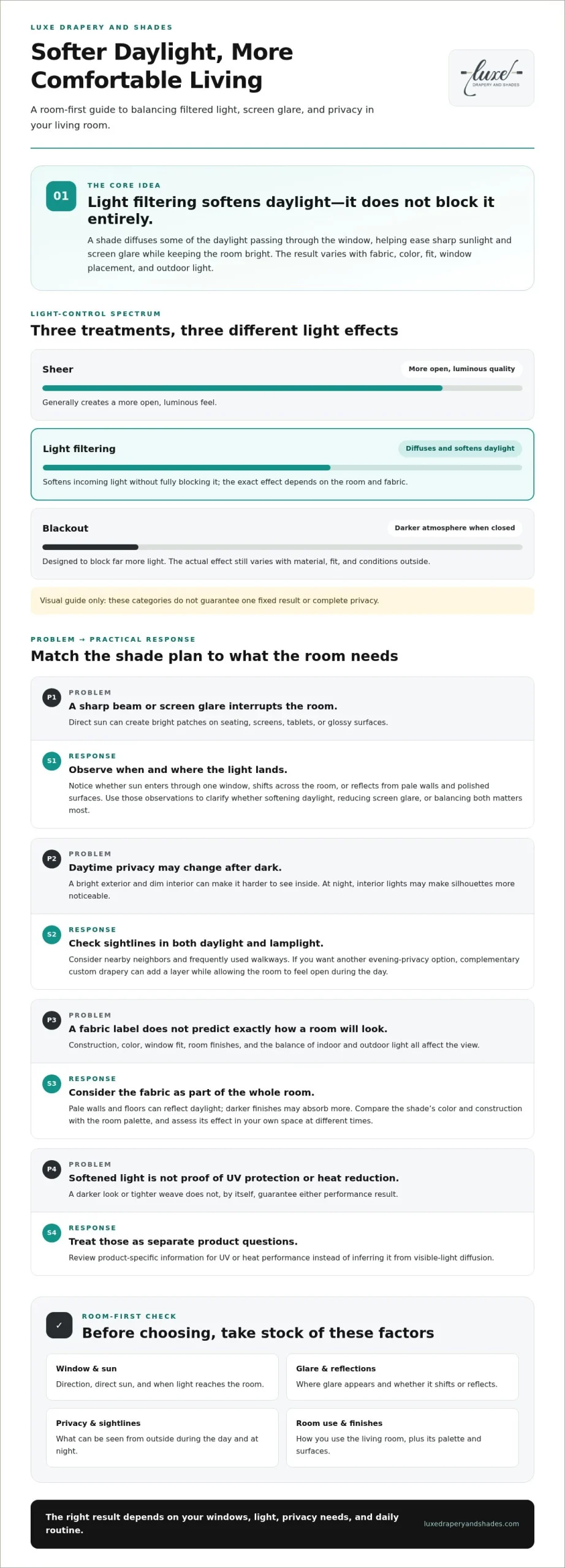
These terms describe different approaches to daylight, but they don’t promise one fixed result. Sheer treatments generally create a more open, luminous quality of light. Light-filtering shades diffuse daylight and soften its intensity. Blackout options are designed to block far more light, creating a darker atmosphere when closed. The actual effect can vary with the material, fit, and conditions outside.
Light filtering is not the same as blackout, and it doesn’t automatically mean complete privacy. During the day, a bright exterior and a darker interior may make it harder to see inside. That balance can shift after sunset when lamps are on, and silhouettes may be visible through some fabrics. For privacy-sensitive spaces, consider the room’s lighting and what can be seen from outside at different times.
Start with the living room’s purpose. If you want soft daylight for everyday use, a light-filtering option may suit the mood. If you need a more open, sheer look or deeper light control, compare those categories in the context of your room. The best choice supports how you use the space.
Light, Privacy, and Glare: What to Expect from Shade Fabrics
A shade’s effect depends on more than its light-filtering label. Fabric construction, color, how closely the shade fits the window, and the balance between indoor and outdoor light all influence what you see from inside and outside. A fabric that feels luminous in a bright room may look quite different as evening falls.
Privacy is relative to the light: as the balance between indoor and outdoor brightness shifts, so can the view through a shade. During the day, a bright exterior may make it harder to see into a room. At night, lamps and other interior lights can make silhouettes more noticeable. Light-filtering fabric doesn’t guarantee complete privacy, particularly after dark.
Daylight and privacy are connected
Consider the window at different times of day. With strong daylight outside and a dimmer interior, the view through a shade may differ from what you see when the room is lit at night. The weave, color, and fit all play a part, so appearance alone isn’t a reliable measure of privacy. If the living room faces a close neighbor or a frequently used walkway, include those sightlines in your decision.
One treatment may not meet every need. A shade can soften daytime light, while a complementary layer of custom drapery can add another option for evening privacy and a more finished look. Layering also lets the room feel open during the day and more enclosed when desired. For a broader look at layered drapery in Los Angeles, consider how fabric and shade can work together as part of the room’s design.
Managing bright Los Angeles windows and screen glare
Direct sun can create a bright patch across a television, tablet, or glossy tabletop, making the room less comfortable even if the rest of the space feels pleasant. Before selecting a fabric, observe when sunlight reaches the living room and where glare appears. Note whether it comes through one window, shifts across the room, or reflects from pale walls and polished surfaces. These details help clarify whether your priority is softening daylight, reducing screen glare, or balancing both.
Visible-light diffusion shouldn’t be treated as proof of UV protection or heat reduction. Those are separate performance considerations, and claims depend on the specific shade and fabric. Review product-specific information rather than assuming that a darker appearance or tighter weave guarantees a particular result. For general industry information on window-covering standards and guidance, visit the Window Covering Manufacturers Association.
For a living room with changing light, a tailored selection can account for the window’s dimensions, sun exposure, sightlines, and daily use. Explore a tailored shade plan that brings those practical needs into the room’s overall design.
Compare Light-Filtering Shade Styles for Living Rooms
The right shade balances visual character with the way you want daylight to feel. A streamlined profile can keep a room’s architecture in focus, while folded fabric or a natural weave adds presence at the window. Light filtering shades for living rooms come in several styles, and the fabric and construction shape the final effect. Use this comparison as a starting point, then consider how each option relates to your furnishings, privacy needs, and window dimensions.
| Style | Appearance | Light character | Privacy considerations | Room fit |
|---|---|---|---|---|
| Roller shades | Clean, streamlined surface | Influenced by the selected fabric | Depends on fabric, fit, and indoor-outdoor light balance | Works well with simple lines and contemporary interiors |
| Roman shades | Soft folds create a layered look | Shaped by fabric choice and folds | Varies with material and how the shade sits at the window | Suits rooms that benefit from a more tailored, decorative detail |
| Honeycomb shades | Structured, dimensional profile | Depends on the fabric and shade configuration | Consider the specific fabric and window fit | A natural option for rooms where a defined, orderly profile feels right |
| Woven wood shades | Visible natural texture and variation | The weave contributes to the appearance of filtered light | Varies with the weave and surrounding light conditions | Pairs well with organic materials and rooms that welcome texture |
Roller and Roman shades: clean lines or soft detail
Roller shades keep the window treatment visually quiet, making them a considered choice when you want furnishings, artwork, or architectural details to lead. Fabric selection gives this simple form its character, from an understated appearance to a visible textural accent. Roman shades bring a different presence: fabric folds add dimension and give the window a softer, more layered feel. If you’re drawn to that tailored quality, explore the Los Angeles Roman shade buying guide. The choice often comes down to whether the room calls for architectural simplicity or a more decorative focal point.
Honeycomb and woven wood shades: texture and structure
Honeycomb shades have a composed, structured look that can suit a living room where visual order matters. Their construction is distinctive, but don’t assume a particular level of insulation or light control from the category name alone. Those qualities depend on the specific product and should be evaluated using its details. Woven wood shades, by contrast, make the material itself part of the design. Their visible weave introduces organic variation, which can complement wood furniture, natural finishes, or a neutral palette.
Look at the whole room before deciding. If patterned upholstery, textured rugs, and detailed furnishings already draw the eye, a simpler shade may create balance. In a restrained interior, the weave of a woven wood shade can add warmth without introducing another strong color. Each style offers a distinct visual character, so choose the one that feels composed with the room and its natural light.
Choose Light-Filtering Shades with a Room-First Plan
A considered shade choice begins with the room, not a fabric sample in isolation. In Los Angeles, daylight can shift noticeably across a living room, so note what happens at the windows before choosing a style, finish, or control. This sequence turns everyday observations into practical design priorities.
Start with the windows and the way you use the room
Track which windows receive direct sun and when it lands on seating, screens, or reflective surfaces. Decide whether daytime privacy matters more than evening privacy, or whether both are priorities. Also note wide glazing, bay windows, deep trim, nearby buildings, trees, or other obstructions that shape the light and affect how a treatment fits.
- Observe the daylight. Check the room at different times of day. Record window direction if known, direct sun, and when glare becomes distracting.
- Map the view. Note sightlines from neighboring homes, walkways, and the street. Separate daytime privacy needs from those that arise after dark.
- Describe how you use the room. Consider reading, entertaining, watching television, or working. Regular activities help clarify which windows need the most attention.
- Compare styles and finishes. Consider shade construction alongside wall color, flooring, upholstery, and major furnishings. Look at material samples in the room’s changing light before settling on a tone or texture.
- Plan operation and fit. Think about window access, the number of shades, and how often you’ll adjust them. Manual operation may suit an easily reached window. Motorized shades can be convenient for hard-to-reach windows or coordinated routines. Include window dimensions and architectural details in the final selection.
Narrow the choice by finish, operation, and fit
A finish that looks subtle in a showroom may read warmer, cooler, or more prominent beside your own walls and furnishings. View samples near the window in both brighter and softer conditions, and consider how the material looks with the shade raised and lowered. For connected control as part of a broader design plan, explore motorized shades and Lutron integration. Custom measurement brings the selected treatment into relationship with the window’s dimensions and the room’s architecture.
Before a design consultation, make a quick checklist:
- Window direction, direct sun, and glare times
- Daytime and evening privacy priorities
- Room activities and key seating or screen locations
- Window dimensions, trim, and nearby obstructions
- Preferred material appearance and manual or motorized operation
Bring these observations together with your preferred shade style to shape a plan around the room’s actual light. Plan custom living-room shades with tailored selections, professional measurement, and installation.
Create a Tailored Living-Room Shade Plan with Luxe Drapery and Shades
A cohesive window treatment begins with the room as a whole. Window dimensions, changing daylight, architectural details, furnishings, and privacy needs all shape which shades feel right. For Los Angeles living rooms with several windows, a tailored plan can account for differences in sun exposure while keeping the overall design visually considered.
Luxe Drapery and Shades brings custom design, professional measurement, and installation together in one process. Rather than choosing a shade by appearance alone, the team considers how its fabric and style relate to the room, along with how each window is used. That approach turns ideas about light filtering shades for living rooms into selections suited to the home.
From design priorities to a cohesive window treatment
Begin with the priorities you’ve identified: softer daylight, a streamlined profile, added texture, or a specific approach to privacy. The design plan connects those goals with shade style, material appearance, and the room’s palette. In a living room with a sunny picture window and a more sheltered side window, for example, each opening can be considered individually while contributing to a harmonious overall look.
Precise measurement helps align the chosen treatment with the window’s dimensions and surrounding trim. Professional installation completes the design, bringing the selected shades into place with attention to fit and the room’s architecture. The result is a coordinated plan shaped by practical needs and aesthetic intent, not a one-size-fits-all choice.
Add motorized control to the room’s design
Motorized shades may suit windows that are difficult to reach or a household routine that calls for adjusting several treatments regularly. They can also be considered early in the design process, so operation feels integrated with the room rather than added as an afterthought. Luxe Drapery and Shades offers motorized shades and Lutron integration as part of a broader window-treatment plan.
Connected control can support everyday convenience, with selections coordinated around the home’s design and practical use. The focus is on choosing a control approach that complements the space, whether you want easier access to tall glazing or a cohesive experience across multiple windows.
A thoughtful plan brings together measurements, daylight, shade style, material character, and how you want to operate each treatment. Luxe Drapery and Shades designs and professionally installs custom window treatments for homes in Los Angeles, tailoring selections to the room and its natural light. Explore custom window treatments for a living-room project and discover a solution shaped around how you want the space to feel.
Shape a Living Room That Feels Just Right
Start by deciding how you want the room to feel during the hours you use it most. Perhaps you want a softer afternoon glow, a calmer setting for screen time, or a finish that brings greater harmony to the room. Keeping that intention in view can make choices about light filtering shades for living rooms feel more personal and less driven by trends.
A considered window treatment is part of the atmosphere you create at home. Luxe Drapery and Shades is a licensed and bonded California contractor, CSLB #1066068, bringing care and craftsmanship to each project. If you’re ready to explore options shaped around your living room, explore custom shades for your living room.
With the right balance of daylight, material, and design, your windows can become a quiet source of comfort and beauty every day.
Frequently Asked Questions
Can light-filtering shades be paired with drapery?
Yes, shades and drapery can be combined for a layered look. A streamlined shade can sit close to the window while drapery panels frame the opening and add softness. Consider how the panels will stack when open, whether they’ll overlap the shade, and how their colors relate to the sofa, rug, or other large furnishings. Thoughtful proportions help the combination feel composed rather than crowded.
How should I clean light-filtering shades?
Care depends on the shade’s material and construction, so follow the manufacturer’s instructions for your specific selection. Gentle dusting can help with routine upkeep, but avoid applying water or cleaning products unless the care guidance permits it. A woven material and a smooth shade fabric may require different approaches. If a mark persists, use material-specific advice rather than assuming the shade can be washed or spot-treated.
Are light-filtering shades suitable for bathrooms?
They may be suitable if the selected material is appropriate for the bathroom’s moisture conditions. “Light filtering” describes daylight control, not whether a fabric can withstand humidity or splashes. Consider the window’s proximity to a shower or sink, the room’s ventilation, and how much privacy the opening needs. For a bathroom in a Los Angeles home, prioritize material suitability and care guidance alongside the desired light and appearance.
Can custom light-filtering shades fit bay windows?
Yes, custom shades can be planned for bay windows, with attention to each window section and the angles where they meet. The depth of the frame, trim, and available mounting space can affect how the shades align. Decide whether you want each section to operate separately or prefer a coordinated visual effect across the bay. Clear measurements and photos of the window can help guide the design discussion.
Do light-filtering shades always need to be drilled into the frame?
No, the mounting method depends on the window, shade design, and installation approach. An inside mount sits within the frame, while an outside mount attaches beyond it. Either choice can affect the finished appearance and available clearance. Don’t assume a no-drill approach will suit every custom shade or window. A design and measurement review can account for frame material, trim, nearby hardware, and the fit you want.
Are light-filtering shades a good choice for a living room used for movies?
They can work if you mainly want to soften daylight, but they aren’t intended to create complete darkness. Think about when you usually watch movies and whether sunlight reaches the screen at that time. If daytime viewing is a regular activity, consider a complementary treatment or a different opacity for stronger light control. A tailored plan can address screen placement and the room’s other uses without making the living room feel overly dark all day.