

What if a skylight could bring in beautiful daylight without leaving you to manage glare, warmth, or a hard-to-reach shade by hand? For Los Angeles homeowners searching for automated shades for skylights Los Angeles homes, the right system can make overhead light easier to manage throughout the day while complementing the room’s design.
It’s natural to focus first on the motor, but a comfortable result depends on the shade’s fit, material, and opacity working together. The right combination can soften bright sun, preserve a light and airy feel, or create a darker setting when the room calls for it. Convenient controls make adjustments simpler, even when a skylight sits high above the floor.
This guide covers how to choose a shade’s appearance and opacity, what to consider about automation, and why a skylight’s shape and position matter. You’ll also see how custom design and professional installation bring these details into balance, with Lutron integration as an option for coordinated shade and lighting control. The goal is a considered solution that feels effortless to use and at home in your Los Angeles interior.
Key Takeaways
- Match shade opacity to how you use the room, from softening daylight to creating a darker setting.
- Compare roller and cellular shades by their light effect, room needs, and design considerations rather than assuming one option suits every skylight.
- For automated shades for skylights Los Angeles homes, consider the opening’s dimensions, slope, and shape as part of a tailored design.
- Plan the shade, operating mechanism, controls, and installation together for convenient everyday adjustment.
- Consider how the shade will complement surrounding finishes and whether coordinated shade and lighting control suits your home.
Why Automated Skylight Shades Matter in Los Angeles Homes
A skylight can draw daylight deep into a room, but overhead sun may also create glare, make a space feel warmer, or change its atmosphere as the day progresses. An automated skylight shade is a fitted window covering that can be adjusted without reaching up to operate it by hand. In Los Angeles, the room’s orientation, the glazing, and the path of direct sun all influence how much light enters and when shading may be useful.
The aim isn’t necessarily to darken the room or conceal the skylight. Thoughtful shading lets you moderate brightness while preserving the architectural character that made the overhead opening appealing. Shade opacity can also support privacy, particularly where nearby buildings or upper-level sightlines look into a room. At night, the right covering can offer a more settled, private feel without dominating the interior during the day. For a general overview of skylight forms and uses, see Skylight.
What makes skylight shading different from ordinary window treatments?
A skylight sits overhead, often on a slope, so it can be difficult to reach and needs a precise fit. Fixed, sloped, and unusually shaped skylights each present different design considerations; a solution suited to one opening may not suit another. Room use and sightlines matter, too. A bedroom may call for greater light control, while a living area may benefit from a softer, filtered effect.
Glazing and orientation shape the experience as much as the shade itself. A skylight that receives direct sun at certain times can create a sharper pool of light than one with more indirect exposure. Notice when glare affects reading, screen use, or relaxation, and whether the room tends to feel warm beneath the opening. These observations help guide the balance between daylight, opacity, and visual openness without assuming that one shade choice fits every Los Angeles home.
When does motorization make everyday use easier?
Motorized shades are window coverings operated by a motor and control system rather than by hand. They’re especially convenient when a skylight is high, angled, or otherwise difficult to access. Depending on the controls selected, remote adjustment or scheduled operation can help maintain a consistent level of daylight as the sun shifts, without requiring a climb or daily manual reach.
That convenience makes it easier to respond to changing conditions: soften strong overhead light during the brightest part of the day, then open the shade to welcome daylight back in. For homeowners seeking coordinated shade and lighting control, Lutron integration can bring those elements into a considered smart-home plan. The most successful design pairs convenient operation with a tailored fit, so the shade manages light while the skylight remains an intentional part of the room.
How Automated Skylight Shades Work: Fit, Fabric, and Control
An automated skylight shade brings together four elements: a fitted shade, a motor or operating mechanism, a way to control it, and installation planned around the specific opening. Each part matters. A carefully selected fabric won’t perform as intended if the shade doesn’t suit the skylight’s dimensions or slope, and convenient controls are most useful when the system is designed for the room’s routine.
For automated shades for skylights Los Angeles homes, design starts with the opening’s width, length, angle, and shape. A standard rectangle, a sloped opening, and an unusual form can call for different fitting considerations. Professional planning and installation help align the shade with the skylight and surrounding finishes while accounting for how it will move during everyday use.
How do fabric and opacity change the light in a room?
Light-filtering fabric softens incoming daylight while keeping the room bright. Room-darkening fabric limits more light for a more subdued atmosphere. These effects aren’t interchangeable. A bedroom may benefit from stronger light control, while a living space may feel better with a filtered glow that retains an airy quality. Fabric color and finish also influence how prominent the shade appears against the ceiling and how it complements the room’s palette.
Think about both the view beneath the skylight and the view of the shade itself. A restrained finish can sit quietly within a minimal interior, while a more textured look may add visual warmth. Choose a fabric that supports the room’s use without diminishing the skylight’s architectural presence.
What should homeowners know about automated controls?
Motorization makes an out-of-reach skylight shade easier to operate through a control system instead of requiring a manual reach. A remote offers direct adjustment when you want it. Scheduled movement can make shade positions more consistent through the day, while smart-home integration can connect shade operation with a broader home-control setup. The right approach depends on how you prefer to manage light.
Lutron integration can bring shades into a coordinated lighting-control approach, helping the room’s natural and electric light feel more considered together. Luxe Drapery and Shades designs and professionally installs custom shading in Los Angeles, tailoring fit and operation to the home. If you’re considering an integrated solution, explore Lutron shade and lighting control as part of your project planning.
Compare Automated Skylight Shade Options for Los Angeles Rooms
Start with the effect you want from the skylight, then compare shade construction and appearance. Roller and cellular shades can both be motorized, but their visual character and fabric options differ. Neither is right for every opening: room orientation, daily routines, desired darkness, and the skylight’s shape all help determine a good fit.
| Shade type | Light effect | Room fit | Design considerations |
|---|---|---|---|
| Roller | Varies with fabric opacity, from filtered daylight to stronger light reduction. | Suited to rooms where a streamlined treatment is preferred and the opening accommodates the shade. | Offers a clean, simple appearance; fabric color and finish shape how prominently it reads against the ceiling. |
| Cellular | Depends on the selected fabric and opacity, with options for softer or more limited light. | Worth considering when a more structured, layered shade profile complements the room and skylight. | Its cell-like construction creates a distinct texture and profile; confirm the design suits the opening’s dimensions and slope. |
Are roller or cellular shades better for a skylight?
Roller shades are a natural choice for a minimal interior, where a smooth, understated treatment supports the room’s lines. Cellular shades have a layered construction that gives them a more dimensional appearance. The best match depends on the skylight’s form, the available fit, and whether you prefer a discreet finish or visible texture. Compare fabric and opacity alongside shade type rather than choosing by category alone.
Which opacity suits bedrooms, living rooms, and workspaces?
A bedroom may call for stronger light control, especially if bright overhead light interferes with rest. In a living area, filtered daylight can soften glare while preserving a welcoming, open atmosphere. For a home office, consider how overhead brightness interacts with screens and whether you’d rather maintain a daylight feel or reduce light more substantially. The room’s orientation and periods of direct sun help clarify those priorities.
Keep two decisions distinct: the shade you want to see and the way you want to operate it. A preferred roller or cellular fabric can be paired with a control approach chosen separately, such as remote operation or scheduled movement. Motorization makes adjustment more convenient for a hard-to-reach opening; it doesn’t determine the shade material or opacity. For automated shades for skylights Los Angeles homeowners are considering, this distinction helps keep design, light management, and everyday use in balance.
Plan a Skylight Shade Project: Measurements, Design, and Installation
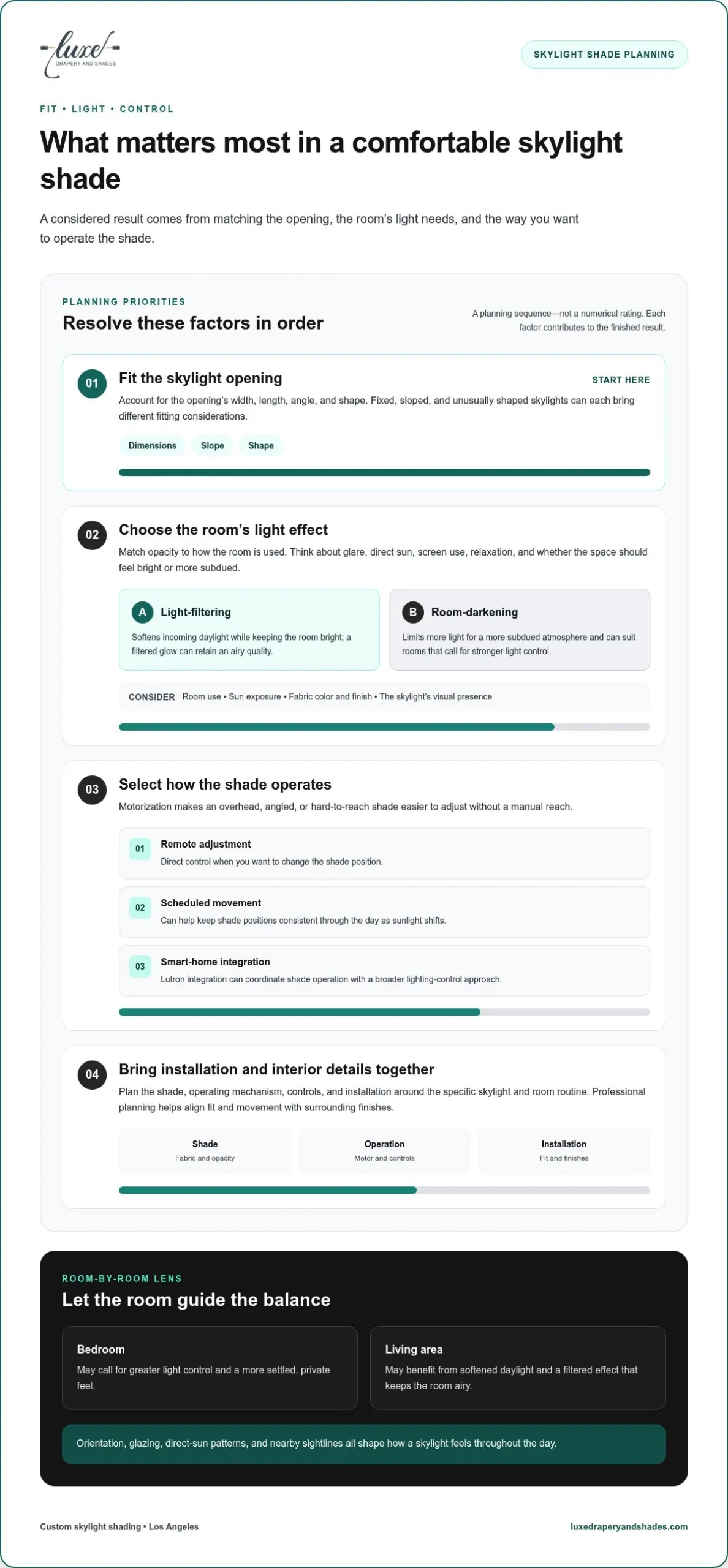
A skylight shade project works best when practical needs and interior details are considered together. For automated shades for skylights Los Angeles homes, the opening’s dimensions, slope, and shape help guide a tailored fit, while room use and preferred operation shape the design. A clear sequence keeps these decisions connected, from initial priorities through installation.
- Clarify the room’s priorities. Note when sunlight causes glare, whether privacy matters, and how much daylight you’d like to retain.
- Consider the skylight itself. Its position, opening shape, slope, and accessibility influence the shade design and how it will operate.
- Choose the visual and functional direction. Compare fabric, opacity, color, and finish with the room’s existing palette and the light effect you want.
- Plan the controls. Decide whether remote adjustment, scheduled movement, or a broader smart-home approach best fits your daily routine.
- Complete professional installation. The tailored shade and selected automation approach come together in a solution designed for the opening and interior.
What details help shape a tailored skylight shade?
Start with how the room is used, your preferred daylight level, and the degree of privacy you want. Then consider whether the skylight is fixed, sloped, or unusually shaped, how easily it can be reached, and what trim or architectural details surround it. Fabric texture, color, and finish can echo nearby materials or provide a subtle contrast, helping the shade feel integrated rather than added as an afterthought.
What happens during professional design and installation?
Consultation and careful measurement establish the foundation for a considered custom fit. The design brings the opening’s dimensions and slope together with fabric choice, room needs, and the preferred operating method. Installation planning then accounts for how the selected shade and automation will sit within the space, with attention to the skylight and surrounding finishes.
Luxe Drapery and Shades designs and professionally installs custom window coverings and smart-home shading in Los Angeles. As a licensed and bonded California contractor, the company holds CSLB license #1066068. Design and installation expertise carry the project from measured opening to finished detail.
Ready to plan a tailored skylight shade? Explore custom skylight shade design with Luxe Drapery and Shades.
Bring Automated Skylight Shades into Your Los Angeles Home
A well-considered skylight shade balances the character of the opening with how you want the room to feel and function. Bring the key decisions together: the skylight’s dimensions, slope, and shape; the room’s daylight and privacy needs; the fabric’s opacity and finish; the preferred controls; and professional installation. Each choice informs the next, creating a solution that feels intentional rather than simply added on.
For homeowners exploring automated shades for skylights Los Angeles, tailored design brings practical considerations into harmony with the home’s interior. Luxe Drapery and Shades designs and professionally installs custom window coverings and smart-home shading, with expertise in motorized shades and Lutron shade and lighting-control integration.
How can skylight shades complement a connected home?
Automated shades can be considered alongside lighting routines, so daylight and electric lighting work together as part of the room’s atmosphere. Remote or scheduled shade operation may suit a household that prefers convenient, consistent adjustments. Lutron integration is another option for homeowners planning a connected interior and seeking coordinated shade and lighting control. For more detail about motorized shade systems, explore the Lutron Sivoia guide as part of your research.
What is the next step toward a more considered skylight?
Begin by defining the experience you want: softened daylight for a living space, stronger light control for a bedroom, greater privacy, or convenient operation from a control system. Note how the skylight is positioned and what details surround it. These priorities give professional design a clear foundation for considering a tailored shade, its appearance, and how it will be operated and installed.
If your plans extend to wider home automation, the Los Angeles Lutron home automation guide can help frame the larger system conversation. Luxe Drapery and Shades brings custom design, motorized shade expertise, and professional installation together for Los Angeles homes. Consider how you want light to move through your room, then take the next step toward a skylight treatment designed around your home.
Shape Skylight Light Around Your Home
A considered skylight shade starts with the opening itself, then brings room use, desired opacity, appearance, and controls into balance. The right fit can soften strong overhead daylight while preserving the architectural character of the skylight. With automated shades for skylights Los Angeles homeowners can make everyday adjustments more convenient, even when an opening is difficult to reach.
Custom design and professional installation connect these choices, from selecting a shade finish to planning how it will operate. Luxe Drapery and Shades brings expertise in motorized shades and Lutron lighting-control integration to residential and commercial projects. The company is a licensed and bonded California contractor, CSLB #1066068.
Let your skylight support the atmosphere you want throughout the day. Explore custom motorized shading for your Los Angeles home and take the next step toward a more comfortable, beautifully considered space.
Frequently Asked Questions
Can automated shades be installed on skylights?
Yes, automated shades can be designed for many skylight openings, with fit planned around the opening’s dimensions, slope, and shape. A motorized operating system makes the shade easier to adjust when the skylight is high or hard to reach. Because skylights vary, the shade design and installation need to suit the particular opening rather than assume a standard window treatment will fit.
Are automated skylight shades worth it in Los Angeles?
They can be worthwhile if overhead sun creates glare, the room feels warmer, or the skylight is difficult to reach for manual adjustment. For automated shades for skylights Los Angeles homeowners should weigh room orientation, glazing, daily use, and preferred light control. The benefit is convenient control over daylight and room atmosphere; the right choice depends on the home and the experience you want, not a promised energy saving.
Which shade material is best for a skylight?
There isn’t one material that suits every skylight. Roller shades offer a streamlined look, while cellular shades have a layered construction and a more dimensional profile. Consider the opening’s dimensions and slope, the room’s style, and the light effect you want. Fabric opacity matters too: a light-filtering option softens daylight, while a more opaque choice limits more incoming light.
Can automated skylight shades be connected to smart home controls?
They may be operated by remote controls, scheduled movement, or a smart-home system, depending on the selected setup. Lutron shade and lighting-control integration can suit homeowners who want shading and lighting to form part of a coordinated control approach. Planning starts with how you want to adjust the shade day to day, then considers how that preference fits the home’s broader automation plans.
Do automated skylight shades block all sunlight?
Not necessarily. The amount of daylight that remains depends on the shade fabric’s opacity, how it fits the opening, and the installation. Light-filtering fabrics soften incoming light rather than darken the room, while room-darkening options reduce more. If you want the room to feel darker, discuss that goal during design and consider how the skylight’s shape and fit affect the finished result.
How are automated skylight shades measured and installed?
Professional planning considers the skylight’s width, length, slope, shape, access, and nearby trim or finishes. These details help tailor the shade and plan its operation for the opening. Luxe Drapery and Shades provides custom design and professional installation in Los Angeles for residential and commercial projects. The company is a licensed and bonded California contractor, CSLB #1066068.