

What if the brightest room in your home is also the one quietly changing your favorite furnishings? Sunlight brings warmth and natural light, but prolonged exposure can fade upholstery and rugs, alter wood finishes, and affect artwork. If you’re wondering how to protect furniture from sun fading, start by managing how much light reaches each surface.
Ultraviolet radiation plays a role, but it isn’t the only contributor. Visible light and solar heat can also affect dyes and materials over time. You can reduce exposure without turning a welcoming room dark. This guide covers practical ways to manage light, from adjusting furniture placement to choosing window coverings that fit your windows, furnishings, and design preferences.
You’ll also learn how to build a simple routine for adjusting coverings as daylight and room use change. Custom drapery or shades may suit windows that are difficult to cover with standard options, while motorization can make regular adjustments more convenient. The goal is a thoughtful balance: protect the pieces you love while keeping the light and atmosphere that make your home feel inviting.
Key Takeaways
- Learn how to protect furniture from sun fading with a layered approach that balances light control and your room’s style.
- Identify which furnishings and windows receive the most direct daylight before deciding what to adjust.
- Compare furniture placement, adjustable window coverings, and material-specific care to find practical options for your space.
- Build a simple routine for adjusting coverings as daylight and room use change.
- See when a tailored shading plan may help accommodate your window dimensions, design preferences, and furniture layout.
How Sunlight Fades Furniture, and What You Can Prevent
Fading is a gradual change in color or material caused by light and other environmental conditions. Sunlight can contribute through ultraviolet radiation, visible light, and solar heat. These influences may alter material compounds over time, a process described as the process of photodegradation. The pace and visible effect depend on the item and its setting, so no single prevention step can promise that furnishings will remain unchanged.
That distinction helps set realistic expectations for how to protect furniture from sun fading: reduce repeated exposure where practical, and follow the care guidance for each piece. Light management is different from spill and stain protection. A treatment intended to guard against liquids or everyday messes may not address fading from sunlight.
Which furniture and finishes are most vulnerable to visible change?
Upholstery, rugs, wood finishes, and artwork can all show changes after repeated exposure, but they don’t respond uniformly. Textile dyes and fibers, wood finishes, and artwork materials can affect what changes and how noticeable it becomes. Existing wear and condition matter, too. Check the manufacturer’s or a conservator’s care guidance for the specific material instead of assuming that similar-looking pieces need identical care.
Why windows, exposure time, and room use matter
Furnishings beside a window or in a recurring path of direct daylight may receive more consistent exposure than pieces elsewhere. The pattern can shift as daylight moves, so consider how the room is used as well as where the sun falls. In Los Angeles homes, assess each room rather than relying on broad assumptions about local conditions.
Spend a day noticing where bright patches travel and which pieces sit in them during the hours you use the room. A rug may receive direct light while a chair stays shaded, or only a sofa’s arm may be exposed. This check helps identify the areas to address before you change the layout or choose a window covering.
Exposure is cumulative, and daily habits can affect how consistently a furnishing sits in direct light. Note when the room is occupied, whether coverings are usually open, and whether a piece stays in the same position. These observations provide a practical starting point without requiring you to give up the natural light that makes a space feel welcoming.
How to Reduce Sun Exposure Without Losing Natural Light
Protective changes don’t have to mean keeping every window covered. First identify which furnishings receive the most direct daylight. Then adjust placement where practical, manage light with adjustable coverings, and check how the room feels afterward. This sequence focuses effort on the areas that need attention while helping preserve the daylight you enjoy.
Start with furniture placement and a simple exposure check
Notice where direct light falls during the hours you typically use each room. A bright patch that crosses a sofa in the afternoon may call for a different response than a window that illuminates a rug for much of the day. If possible, move a vulnerable piece out of that concentrated path or rotate movable items periodically. Room layouts can limit those options, and rotation won’t reverse fading that has already occurred.
For textiles, the Canadian Conservation Institute explains how light fades and weakens textile fibers. Its guidance is a helpful reminder to consider both the appearance and condition of upholstered furnishings, not color alone.
Use shades and drapery to manage daylight on your terms
Window coverings offer an adjustable layer of control, though they can’t guarantee that furnishings will never fade. Roller shades, Roman shades, blinds, and drapery can suit different preferences. Some arrangements soften or diffuse incoming light, while others provide a more substantial barrier when you want less daylight. The effect depends on the specific covering and how it’s used, so don’t assume every material or style performs the same way.
Open coverings when you want a bright, airy room. Adjust them as the sun reaches an exposed area or when that room isn’t in use. In a layered arrangement, a shade or blind can offer convenient adjustment, while drapery can add a considered finish and another way to manage light. Choose based on the window, nearby furnishings, and how much daylight you want to retain.
Combining thoughtful placement with adjustable coverings is often more practical than relying on one measure alone.
After making a change, observe the room again at the times you’re home. If a furnishing still sits in a strong patch of light, adjust its position or the covering where possible. Motorized shades can make consistent adjustments more convenient. For a tailored option, explore custom window treatments suited to your windows and interior style.
Furniture-Fading Solutions Compared: Placement, Window Treatments, and Care
The right approach depends on whether you can move the furniture, how much daylight you want to retain, and what care the material allows. Use this comparison to decide where to begin. For broader ideas to prevent sun damage, consider placement and window coverings alongside guidance specific to each item.
| Approach | Effort | Daylight impact | Flexibility | Suitable for fixed furniture? |
|---|---|---|---|---|
| Furniture placement | Low to moderate, depending on the room | Usually minimal | Changes when you rearrange or rotate movable pieces | Limited, since fixed pieces can’t be repositioned easily |
| Adjustable window coverings | Varies with the covering and daily use | Can be adjusted to balance brightness and shading | High, with control at the window | Yes, particularly when the exposed furniture can’t move |
| Material-specific care | Depends on the item’s care instructions | Usually little direct effect on room brightness | Limited to the approved care method | Yes, but it doesn’t manage the light reaching the piece |
Use care products cautiously. Don’t assume a polish, fabric treatment, or protective cover prevents fading unless its instructions specifically support that use and the product is suitable for the material. Something intended for spills or routine upkeep isn’t automatically a solution for light exposure. Check the manufacturer’s care guidance first.
When repositioning furniture or using protective covers makes sense
Rearranging can help if a chair, rug, or side table repeatedly sits in direct light and the room has a practical alternative layout. Rotate movable items when appropriate, but don’t expect this to restore color that has already changed. Covers may suit periods when a piece isn’t in use, though covering frequently used furniture can affect comfort and the room’s appearance. Check care instructions before using covers or treatments.
When custom shades or drapery may be the better fit
Window coverings are worth considering when furnishings are fixed, exposure is concentrated near a particular window, or you want more control than occasional rearranging allows. Window dimensions, room function, preferred daylight, and interior style all shape the choice. Consider custom drapery, roller shades, Roman shades, blinds, or shutters for the specific opening and nearby furnishings. Motorized shading may make regular adjustments more convenient. Consult the relevant product guidance to confirm that a motorized option suits your window and needs.
Window coverings offer an adjustable way to respond to changing daylight, especially when nearby furniture can’t be moved. Pair that flexibility with sensible positioning and material-appropriate care for a more considered plan for how to protect furniture from sun fading.
A Step-by-Step Routine to Protect Furniture from Sun Fading
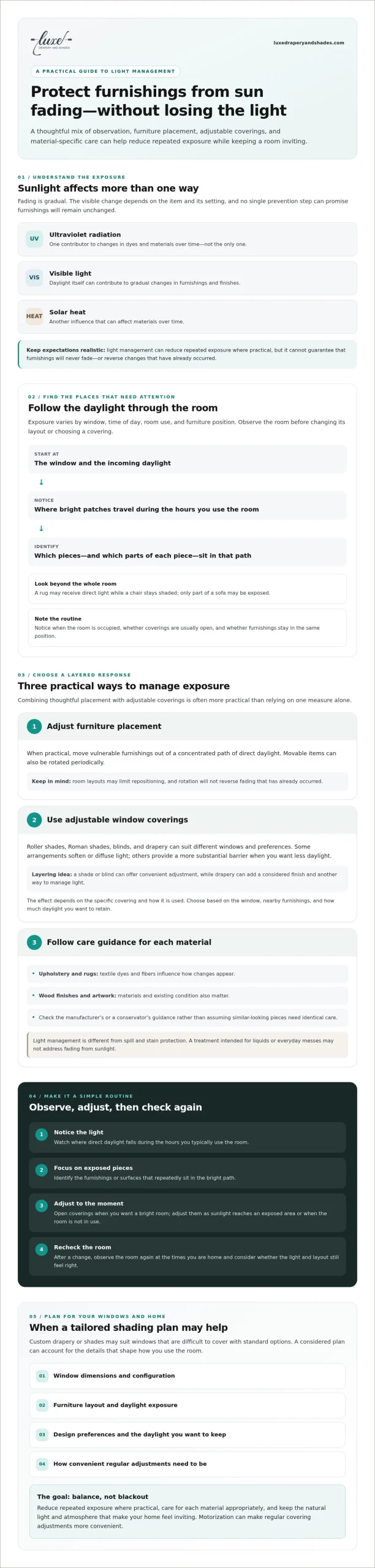
A useful routine starts with observation, not a major room overhaul. Whether you rent or own, identify the most exposed furnishings, make adjustments that suit your space, and review them over time. If the layout is fixed or you can’t alter the windows, focus on the choices available to you, such as adjusting existing coverings and following care guidance for each item.
Assess the room before choosing a protective measure
Begin with the windows and furnishings closest to them. During your usual time at home, notice where direct daylight reaches and when it’s strongest. Include bright areas on the floor, since rugs and low furniture may receive exposure even when larger pieces seem shaded. Identify items that can’t be moved and any visible changes you’d like to monitor.
Consider the room as a whole before changing anything. Privacy needs, how you use the space, desired daylight, and existing coverings all affect which measures feel practical. Renters can often start by adjusting current coverings or moving portable pieces. Homeowners may have more flexibility to consider changes to the window treatments.
Create a consistent routine for everyday light control
Use this checklist as a starting point, then adapt it to your room:
- Identify priority areas. Note the furnishings and windows receiving the most consistent direct light.
- Make a practical adjustment. Move or rotate a piece if the layout allows, or adjust the existing covering to reduce exposure at the relevant time.
- Match the routine to room use. Close or adjust coverings when the room is unused or direct light reaches a vulnerable area, then reopen them when you want more daylight.
- Check periodically. Look over the same furnishings and note any visible changes. Follow the manufacturer’s care instructions before cleaning or applying any product.
- Refine gradually. If a piece remains in direct light, try a different covering position or placement where possible, then observe how the room works.
Consistency matters more than a complicated schedule. Motorized shades can make regular adjustments more convenient, but manual coverings can also support a routine. You don’t need to eliminate natural light entirely. Make considered changes and adjust based on how the room feels and where your furnishings sit.
If your windows or layout make daily light management difficult, explore custom window treatments suited to your space and preferred balance of daylight and shading.
Choosing a Long-Term Window-Shading Plan for Your Home
A simple routine may be enough if you can adjust existing coverings and move the most exposed furnishings. A tailored window solution may be worth exploring when a key piece can’t be relocated, light reaches it repeatedly, or current coverings don’t suit your privacy and daylight preferences. If you’re considering how to protect furniture from sun fading over time, aim for a workable balance, not a promise that furnishings will never change.
Window dimensions, room function, furniture placement, and interior style all influence what makes sense. A treatment should feel at home in the room while giving you a practical way to manage incoming light. Consider the window and nearby furnishings together rather than selecting a covering in isolation.
What to consider when exploring custom window treatments
Before comparing options, note the room’s exposure, the materials of nearby furnishings, your privacy needs, and how much natural light you want to preserve. Then consider how different categories fit your preferences:
- Drapery can complement a room’s decorative scheme while adding an adjustable layer at the window.
- Roller and Roman shades offer distinct looks and ways to adjust daylight.
- Blinds and shutters provide adjustable options to consider alongside the window’s proportions and the room’s design.
The right choice depends on the specific opening and how you use the space. Discuss fit, operation, appearance, and your desired light level with a shading professional. Luxe Drapery and Shades designs and professionally installs custom interior window treatments, with options tailored to each space rather than a one-size-fits-all approach.
How motorized shades can support a consistent routine
Motorization can make it more convenient to adjust coverings as daylight and room use change. It isn’t essential: a thoughtful manual routine can also help you manage light. Luxe Drapery and Shades specializes in integrating motorized shades with Lutron lighting control systems. Discuss your needs and available options without assuming a particular setup or outcome.
Custom shading is one layer in a broader plan that may also include sensible furniture placement and care suited to each material. If you’re in Los Angeles and weighing a lasting change, explore custom window treatments with Luxe Drapery and Shades. A conversation about your windows, furnishings, and preferred daylight can help you decide whether a tailored approach feels right for your home.
Preserve the Light and the Furnishings You Love
Sun fading develops through ongoing exposure, and different materials may respond in different ways. A considered plan starts with noticing where daylight falls, then combines practical furniture placement, adjustable window coverings, and care suited to each piece. These steps can help you manage exposure without giving up the natural light that gives a room its warmth.
No single measure prevents every change, but steady adjustments can make protection part of everyday room care. If you’re deciding how to protect furniture from sun fading over the long term, consider how your windows, furnishings, privacy needs, and preferred light work together.
Luxe Drapery and Shades offers custom interior and exterior shading tailored to each space, with professional installation and expertise integrating motorized shades with Lutron lighting control. Explore custom window treatments for your home and consider an approach that complements your furnishings and interior style.
With the right balance of light and shade, your home can remain bright, welcoming, and thoughtfully cared for.
Frequently Asked Questions
Can you stop furniture from fading in sunlight?
You can reduce the risk, but you can’t guarantee that furniture will never change with time. Exposure duration, light levels, materials, and finishes all affect how fading appears. To understand how to protect furniture from sun fading, start by noticing which pieces receive direct daylight. Then consider practical steps such as adjusting window coverings, repositioning movable items, and following care instructions for each material.
Do window shades prevent furniture from fading?
Window shades can reduce or manage the daylight reaching furnishings, but they don’t guarantee that fading will stop. The effect depends on the shade’s material, how it fits the window, and whether it’s adjusted when light reaches the room. Choose a shade to suit your preferred balance of brightness, privacy, and light control, and use it alongside other measures such as moving a vulnerable item out of direct exposure.
Does UV light cause furniture to fade?
Yes, ultraviolet light contributes to fading, but it isn’t the only factor. Visible light and solar heat can also affect dyes, finishes, and other materials over time. Fabrics, wood finishes, rugs, and artwork may respond differently, so there isn’t one universal risk level. Limiting prolonged exposure can help, while material-specific care guidance can inform how to look after each piece.
Can I protect furniture from sun fading without making a room dark?
Yes. Managing exposure doesn’t require keeping every window covered all day. Adjust existing shades, blinds, or drapery when direct light falls on a vulnerable furnishing or when the room isn’t in use, then reopen them when you want more daylight. You can also move a piece slightly if the layout allows. Try gradual adjustments and observe the room’s light and comfort before making bigger changes.
Do curtains or blinds work better to protect furniture from fading?
Neither is always better. The right choice depends on the window, room design, privacy needs, desired daylight, and how you want to adjust the covering. Blinds offer adjustable slats, while drapery has a different look and operation. Shades are another option. Compare how each suits the specific window and furnishings, and don’t assume a covering eliminates all fading. Its usefulness depends on fit, material, and everyday use.
Should I move furniture away from a sunny window?
If a piece sits in direct sunlight for long periods, moving it farther from the window can reduce concentrated exposure. Even a modest repositioning may change where the light falls, though room layouts can limit what’s practical. Rotating movable pieces may help vary exposure, but it won’t reverse existing fading. If furniture can’t be moved, consider adjusting the window coverings when direct light reaches it.
Can motorized shades help protect furniture from sun fading?
Motorized shades can make it more convenient to adjust window coverings consistently as daylight and room use change. They’re an option, not a requirement: a manual routine can also help manage exposure. In Los Angeles, Luxe Drapery and Shades offers motorized shading and expertise integrating shades with Lutron lighting control systems. Discuss the window, room, and desired operation to determine whether motorization suits your needs.
What should I do if my furniture has already faded?
First, reduce further direct exposure where practical by adjusting coverings or changing the item’s position. Check the manufacturer’s care instructions before cleaning or applying any product, since an unsuitable treatment could affect the material or finish. Moving or rotating furniture generally won’t reverse fading. For valuable, antique, or delicate pieces, consult a qualified furniture restoration professional or conservator before attempting color repair.