

The most sumptuous fabric isn’t always the best choice for a window. A heavy weave can create a beautifully tailored silhouette, but the room’s light, privacy needs, and daily use matter just as much. Choosing the best fabrics for custom drapery means looking beyond color and texture to how each material hangs, filters sunlight, and fits your routine.
A fabric sample can look appealing and still leave you unsure how it will behave across a full window, especially in a sunny room or a bedroom where privacy matters. This guide compares popular drapery fabrics by appearance, light control, and care, with room-by-room considerations to help you narrow the options. You’ll also learn how lining can change a panel’s look and function, and what to check when reviewing samples with a design professional. The goal is a choice that suits the room and feels comfortable to live with.
Key Takeaways
- Choose the best fabrics for custom drapery by balancing a room’s light, privacy needs, desired drape, and everyday use.
- Compare linen, cotton, velvet, and polyester by texture and care, while remembering that weave and finish influence performance too.
- Consider opacity separately from lining. The right lining or layered treatment can refine light control and privacy.
- Review fabric samples in the room during the day and evening, then confirm care requirements before deciding.
- A tailored design consultation can bring fabric, lining, fullness, and window conditions together for a considered result.
Best Fabrics for Custom Drapery: Start With What the Room Needs
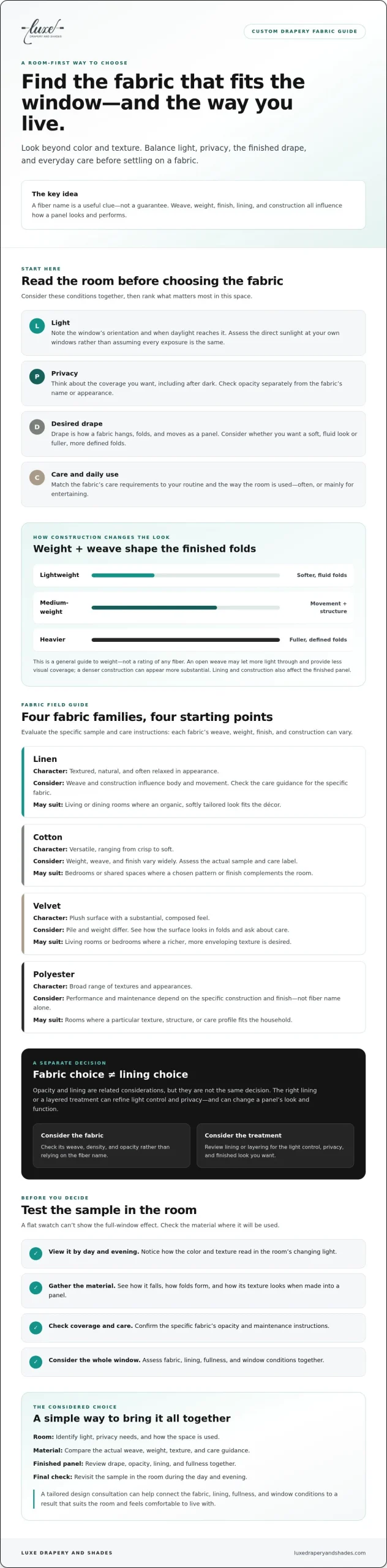
The best fabric for custom drapery is the one that suits the room’s light, privacy needs, desired silhouette, and daily use. Color and texture set the mood, but they’re only part of the decision. Consider how much light you want to admit, how much coverage the window needs, and what level of care fits your routine.
Custom drapery is made to be seen at the window, where scale, natural light, and finished folds can change how a fabric looks. A swatch in a styled image may appear airy or richly textured, but it can read differently in your home. Assess fabric alongside its weight, weave, lining, and construction, not by appearance alone. For a foundational overview of curtain materials and styles, consider how window treatments balance visual appeal with practical functions.
Which room conditions should guide a fabric choice?
Start with the window and the way you use the room. Note its orientation, when daylight reaches it, the privacy you want after dark, and whether the space is used often or mainly for entertaining. In Los Angeles, assess the direct sunlight at your own windows rather than assuming every exposure is the same. Then rank your priorities. A soft, decorative look may lead in a living room, while privacy or easier upkeep may matter more in a bedroom or busy family space.
How do weight and weave change the finished drape?
Lightweight fabrics tend to form softer, more fluid folds. Medium-weight options can balance movement and structure, while heavier fabrics generally create fuller, more defined folds. The weave matters too. An open weave may allow more light through and provide less visual coverage, while a denser construction can appear more substantial. Weight and fiber content don’t tell the whole story, since lining and fabric construction also affect the finished panel.
Drape is the way a fabric hangs, folds, and moves when it’s made into a window panel. Look beyond a flat sample: notice how the material falls when gathered and how its texture reads against the room’s finishes. A design consultation can help assess fabric, lining, fullness, and window conditions together, so the final choice feels considered and suits everyday use.
How Linen, Cotton, Velvet, and Polyester Behave as Drapery Fabrics
Each fiber family offers a different starting point for the look and feel of custom drapery, but the name on a fabric label doesn’t tell the whole story. Weave, weight, finish, lining, and construction influence how a panel hangs, how much light passes through, and what care it may require. Use this comparison as a guide, then evaluate the specific fabric sample and its care instructions.
| Fabric | Visual character | Considerations | Possible room applications |
|---|---|---|---|
| Linen | Textured, natural, and often relaxed in appearance | Weave and construction affect the panel’s body and movement. Check care guidance for the specific fabric. | Living or dining rooms where an organic, softly tailored look suits the décor |
| Cotton | Versatile, with a look that ranges from crisp to soft | Weight, weave, and finish vary widely. Assess the actual sample and care label. | Bedrooms or shared spaces where a chosen pattern or finish complements the room |
| Velvet | Plush surface with a substantial, composed feel | Pile and weight differ between fabrics. Consider how the surface looks in folds and ask about care. | Living rooms or bedrooms where a richer, more enveloping texture is desired |
| Polyester | Broad range of textures and appearances | Performance and maintenance depend on the specific construction and finish, not fiber name alone. | Rooms where a particular texture, structure, or care profile fits the household |
When might linen or cotton suit a custom drapery design?
Linen can bring visible texture and a relaxed character, though its feel and finished folds vary by weave and construction. Cotton is also adaptable: different weights, weaves, and finishes can create anything from a crisp, structured look to a softer panel. For either fabric, let the sample and care label guide your expectations. Fiber names are useful clues, not a substitute for checking the specific material.
When might velvet or polyester be worth considering?
Velvet’s plush surface and substantial feel can lend a room depth, but pile and weight vary. One sample may hang quite differently from another. Polyester spans a broad range of textures and constructions, so don’t assume every option looks or behaves alike. Handle samples, gather them to see how folds form, and check opacity and maintenance instructions before deciding.
As you compare the best fabrics for custom drapery, consider how the material will look in the room and feel in everyday use. A tailored design conversation can connect fabric character with lining, fullness, and the window itself. Explore custom drapery design in Los Angeles to begin considering those details together.
How to Compare Drapery Fabrics for Sunlight, Privacy, and Care
A fabric choice has to work across more than one condition. A bright window may call for a different combination of fabric and lining than a shaded one, while a bedroom’s privacy needs differ from a living room’s. Include care preferences in the decision: a material that looks beautiful but requires more attention may not suit every household. Compare these factors together rather than choosing by color or texture alone.
What should Los Angeles homeowners consider about sunlight?
Notice which windows receive direct sun and at what time of day. A window exposed in the morning may have a different pattern from one that receives afternoon sun. Color, fiber, weave, lining, and exposure can all influence how fabric looks over time, so don’t assume a material is fade-resistant based on its fiber name. Ask for guidance specific to the fabric you’re considering, especially for a window with prolonged direct exposure.
How should privacy, lining, and maintenance affect the decision?
Think about the room after dark as well as during the day. Consider how visible the window is from outside and how much privacy you want while the room is lit. Unlined drapery preserves the face fabric’s direct appearance. Lining adds another layer, and a layered treatment can offer more flexibility. Don’t assume either approach provides blackout conditions without product-specific confirmation.
Lining changes both a drapery panel’s light control and its finished appearance. It can affect how the fabric hangs and how the window treatment looks from inside the room, so weigh those details alongside the face fabric.
- Unlined: Consider this when you want the face fabric’s texture and light transmission to remain prominent.
- Lined: Discuss the intended degree of light control and how added structure may change the panel’s look.
- Layered: Pairing drapery with another window treatment can provide options for adjusting light and privacy through the day.
Care deserves the same attention as appearance. Check the specific fabric’s instructions instead of assuming a fiber is easy to clean. Ask what routine the material requires, whether it suits your household, and how you’ll manage long-term upkeep. The best fabrics for custom drapery are those whose light, privacy, and care characteristics align with the way you live, not simply those that look appealing in a sample.
A Practical Checklist for Choosing Custom Drapery Fabric
A thoughtful fabric decision comes from checking how a sample looks and functions in the actual room. Use this sequence to keep the choice grounded in your space instead of relying on a small swatch or an appealing image alone.
- Define the room’s needs. Note how the space is used, the privacy you want, and your preferred atmosphere.
- Assess the windows. Consider their dimensions, light exposure, and relationship to nearby furniture and finishes.
- Compare samples at home. Look at color, texture, scale, and how the fabric gathers.
- Decide on lining. Discuss how it may influence light control, the panel’s appearance, and its structure.
- Confirm care. Review the specific fabric’s instructions and whether they suit your household routine.
How should you evaluate fabric samples at home?
Place each sample beside the flooring, upholstery, and wall finishes it will meet. Check it in daylight and again under your usual evening lighting, since color and texture can look different under different light. Handle the material, then fold or gather it to see how its weight, surface, and folds read. If the window is a focal point, consider whether the pattern or texture feels balanced at the scale of the room.
What should you confirm before approving custom drapery?
Before approving the design, review the intended fullness, finished length, heading style, and hardware required to support the treatment. Confirm that measurements reflect the window and planned installation rather than relying on assumptions. A qualified design professional can help connect those details to the space and desired finish.
Also revisit lining, privacy expectations, care instructions, and any performance claims specific to the fabric. Ask what product guidance supports a claim instead of treating it as universal. For broader context, you can consult the guide “Custom Drapes Los Angeles: The Ultimate Luxury Guide to Bespoke Window Treatments.”
Taking time to assess the best fabrics for custom drapery makes it easier to move from an attractive sample to a considered window treatment. To discuss fabric, measurements, lining, and installation for your space, explore custom drapery design in Los Angeles.
Create a Considered Custom Drapery Plan With a Los Angeles Design Professional
A fabric decision becomes clearer when it’s considered as part of a complete window treatment. Room use, daylight, fabric character, lining, and care all shape the result, while dimensions and hardware determine how the drapery will sit and operate. Bringing these elements together helps translate an appealing sample into a finish that feels right for the space.
What can a custom drapery consultation help you resolve?
A tailored design consultation can connect fabric and lining choices with the window’s dimensions, desired fullness, and hardware requirements. Bring room photographs, notes on privacy and light, and questions about maintenance. That context helps a design professional discuss how the treatment should look and function. If you’re also considering another window treatment nearby, such as Roman shades, discuss how the options might work together visually and practically.
Luxe Drapery and Shades designs and professionally installs custom drapery for residential and commercial spaces in Los Angeles. Each project is tailored to the space, with material considered alongside the details that shape the finished effect. Professional installation brings those decisions together at the window.
How do fabric and motorization work together?
Consider fabric and drapery hardware together, especially if you’re interested in motorized operation. Fabric weight, construction, and intended fullness can affect which hardware configuration is appropriate. Don’t assume every fabric suits every setup. Ask a professional to confirm compatibility for the specific material and window, and discuss how you want the treatment to operate day to day. Motorized shades may also be relevant when planning coordinated window treatments, depending on the room and your priorities.
The best fabrics for custom drapery aren’t chosen by appearance alone. A considered plan weighs the fabric’s character against the room’s use, light, privacy, care needs, and desired finish, then confirms how the treatment will be measured and installed. If you’re ready to bring those choices into focus, discuss a tailored custom drapery consultation with a Los Angeles design professional.
Choose Drapery That Feels at Home in Your Space
The best fabrics for custom drapery are chosen for more than their appearance. Room use, sunlight, privacy, fabric weight and weave, lining, and care all influence how a treatment looks and lives over time. Comparing samples in your own lighting, then considering how they’ll hang at the window, can help turn a beautiful idea into a practical choice.
A tailored design process brings those details together. Luxe Drapery and Shades designs custom drapery for Los Angeles homes and provides professional installation, with selections shaped around the space and the finish you want. Fabric and hardware can be considered alongside dimensions, lining, and how you’ll use the treatment each day.
When you’re ready to explore options for your home, explore custom drapery for your Los Angeles home. Contact Luxe Drapery and Shades to discuss a custom drapery design and professional installation for your space.
Frequently Asked Questions
What is the best fabric for custom drapery?
There’s no universal best fabric for custom drapery. The right choice depends on how you use the room, how much light reaches the window, the drape you prefer, privacy needs, and care expectations. Lining can also change a panel’s appearance and light control. Compare actual samples in the intended room, and check fabric-specific details and care guidance before deciding which option suits your home.
Is linen a good fabric for custom drapes?
Linen can suit custom drapery if you’re drawn to natural texture and a relaxed appearance. Its suitability depends on the finish you want, the fabric’s construction, whether you plan to add lining, and how its care requirements fit your routine. Linen fabrics can differ, so examine the actual sample in your room’s light and ask the supplier to clarify its care guidance before making a final choice.
Which drapery fabric is best for a sunny room?
No single fabric is automatically best for every sunny room. Sun exposure, color, weave, fiber, and lining all influence how a treatment looks and ages. Note when direct sun reaches your window, then review performance information for the specific fabric you’re considering. Don’t assume any material is fade-proof. A design professional can help you discuss lining or layered options suited to your light-control preferences.
Are lined drapes better than unlined drapes?
Lining isn’t automatically better. It’s a design and functional choice that can change a panel’s opacity, finished appearance, and how it hangs. The right option depends on your privacy needs, preferred light, fabric, and room use. An unlined treatment may suit a different look or function than a lined one. Before choosing, confirm the specific lining’s properties and how it will work with the selected fabric.
Is velvet a practical fabric for everyday drapery?
Velvet can bring rich texture and a substantial appearance to everyday drapery, but practicality depends on its specific construction, the room, and its care instructions. Velvet fabrics vary in weight and surface, so don’t assume they all hang or perform alike. Handle a sample, gather it to see how folds form, and verify the cleaning guidance with the supplier before deciding whether it fits your household routine.
How do I choose drapery fabric for a Los Angeles home?
Start with each window’s sunlight, the room’s purpose, privacy needs, and the atmosphere you want to create. Check samples in your home’s actual lighting, and review fabric-specific guidance for exposure and care. Los Angeles homes vary in orientation, shade, and window conditions, so the local climate alone can’t determine the right fabric. A tailored assessment of your space can help refine the choice.
What should I bring to a custom drapery consultation?
Bring room photographs, approximate window information, inspiration images, and a short list of priorities such as privacy, light, appearance, and maintenance. Color or material samples from nearby furnishings can help show how the drapery should relate to the room. Exact measurements and fabric recommendations should be confirmed through the provider’s consultation and installation process, where the window conditions and desired finish can be considered together.