

Your outdoor motorized screens are more than just a functional barrier; they’re a sophisticated architectural investment that demands the same level of stewardship as a high-end vehicle. In Los Angeles, where coastal salt air meets the fine dust of the canyons, maintaining outdoor motorized screens can feel like a delicate balancing act. You likely understand that preserving the seamless operation of your zip screens is essential for maintaining the effortless transition between your indoor and outdoor living spaces. However, the fear of accidentally damaging sensitive components or specialized mesh often leads homeowners to hesitate.
Mastering this specialized form of property care doesn’t have to be a source of anxiety. This guide provides the professional clarity you need to protect your investment from the unique environmental pressures of Southern California. You’ll discover a safe, effective cleaning routine that addresses everything from salt encrustation to Santa Ana wind debris. We’ll also outline exactly when to seek expert calibration to ensure your system continues to glide with quiet confidence. By following these curated care techniques, you’ll extend the lifespan of your shading system and ensure your home remains an inviting sanctuary for years to come.
Key Takeaways
- Understand why proactive stewardship is essential for preventing motor fatigue and preserving the refined aesthetic of your exterior shading system.
- Discover the precise sequence for maintaining outdoor motorized screens, ensuring every component is safely cleaned to avoid mechanical damage.
- Learn how to mitigate localized environmental threats, from corrosive salt air in coastal estates to the abrasive dust typical of the Los Angeles basins.
- Identify the subtle signs of fabric telescoping and track friction that indicate when a system requires professional calibration rather than simple DIY care.
The Importance of Proactive Maintenance for Luxury Motorized Screens
High-end motorized screens are far more than simple window coverings; they are precision-engineered architectural elements that define the modern Los Angeles home. While many manufacturers suggest these systems are low maintenance, the reality of Southern California’s microclimates requires a more attentive approach. Maintaining outdoor motorized screens is a specialized form of property stewardship that balances mechanical care with the preservation of high-value fabrics. Without consistent attention, the very features that provide comfort can become sources of mechanical frustration.
A proactive care routine prevents the most common failure points in luxury shading systems. When dust or salt air accumulates in the guide tracks, it creates friction that forces the motor to work beyond its intended capacity. This increased resistance often leads to thermal overload or premature motor burnout, requiring technical intervention that could have been avoided. By prioritizing regular inspections, you ensure that your investment continues to glide with the quiet confidence expected of a premium home accent.
Protecting Your Smart Home Investment
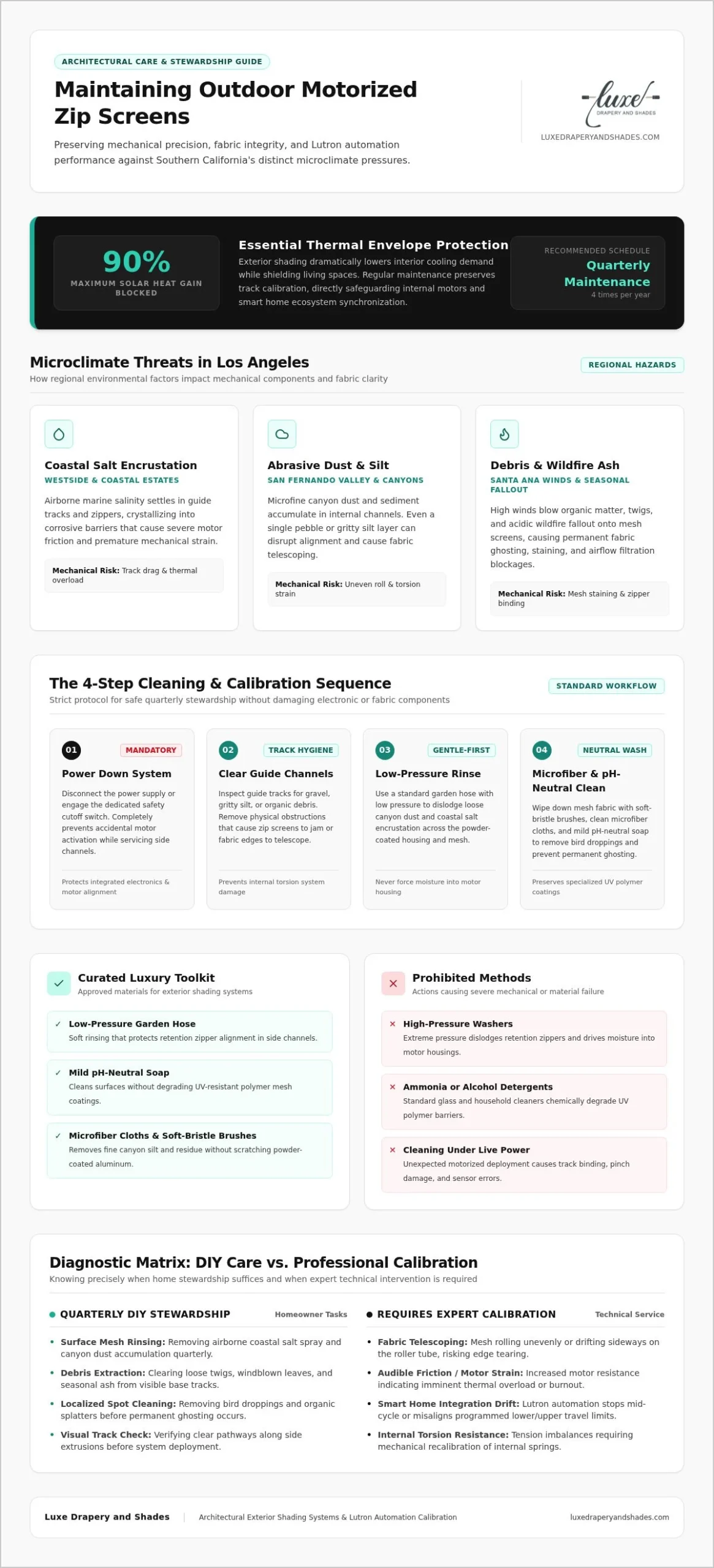
Modern exterior shading is an essential component of your home’s thermal envelope. These systems block up to 90% of solar heat gain, significantly reducing the energy required to cool your interior spaces. Because many of these installations are integrated with Lutron home automation, any physical obstruction in the tracks can disrupt the delicate calibration of your smart home ecosystem. A single pebble or a buildup of gritty silt can cause a zip screen to “telescope” or roll unevenly, potentially damaging the fabric edges and the internal torsion system. Consistent track hygiene is the simplest way to protect these high-precision components from unnecessary strain.
Preserving Aesthetic Integrity
The visual appeal of your outdoor shades relies on the clarity of the mesh and the pristine finish of the powder-coated aluminum housings. In Los Angeles, organic debris, bird droppings, and even wildfire ash can settle on the screen surface. If left unaddressed, these contaminants can cause permanent staining or “ghosting” on the fabric. Beyond the visual impact, there is a functional benefit to cleanliness; when you deploy a clean screen, the air filtered into your patio or pergola remains fresh and free of trapped allergens. Regular rinsing ensures the transparency of the mesh remains intact, allowing you to enjoy your coastal or canyon views without the distraction of accumulated grime.
Maintaining outdoor motorized screens isn’t just about functionality; it’s about honoring the design intent of your living space. A well-cared-for system remains a silent, elegant partner in your home’s daily rhythm, providing shade and privacy exactly when needed while remaining virtually invisible when retracted.
A Step-by-Step Guide to Cleaning Your Motorized Screens
Cleaning your motorized screens is a refined ritual of preservation that safeguards the clarity of your views and the longevity of your system. In Southern California, the ideal cadence is a quarterly cleaning schedule. This frequency allows you to stay ahead of the fine dust common in the San Fernando Valley and the salty mist of the Westside before they can cause mechanical friction. Maintaining outdoor motorized screens requires a patient approach; rushing the process with aggressive tools can lead to costly repairs.
Before you begin, always power down the system. Disconnecting the power source or engaging the safety cutoff ensures the motor won’t activate unexpectedly while you’re working. This step is non-negotiable for protecting the integrated electronics and the high-precision alignment of your zip screens. Once the system is secure, follow the “gentle-first” rule. Never use high-pressure washers, as the force can dislodge retention zippers from their tracks or drive moisture into the sensitive motor housing. A standard garden hose with a low-pressure setting is all you need.
The Cleaning Toolkit for Luxury Screens
A curated toolkit ensures you don’t inadvertently damage the specialized coatings on your mesh. You’ll need soft-bristle brushes, microfiber cloths, and a mild, pH-neutral soap. Avoid household detergents or window cleaners that contain ammonia or alcohol, as these can degrade the UV-resistant polymers in the screen fabric. For estates with grand, high-mounted housings, a telescoping soft-wash pole allows you to reach the cassette without the risks associated with ladders. Using the right materials is the first step in protecting your architectural investment.
The Professional Cleaning Process
Start with a thorough dry-brushing of the mesh while it’s fully deployed. This removes loose dust, smog particulates, and cobwebs before they become a muddy slurry during the wet wash. Once the surface debris is gone, gently apply your mild soap solution with a soft cloth, working from the top down. Pay close attention to the side tracks; these channels must remain clear of grit to prevent the motor from straining. Finally, wipe down the protective aluminum housing and the bottom bar using a microfiber cloth to maintain the luster of the powder-coated finish.
The most critical step is the drying phase. In Los Angeles’ low-humidity climate, mesh typically requires a 20 to 30 minute natural air-dry window. You should never retract a wet screen into the overhead cassette. Stagnant moisture trapped inside the dark housing fosters mildew and can cause the fabric to “telescope” or roll unevenly. If you’re unsure about the specific requirements for your custom installation, consulting a professional design specialist can provide peace of mind during your seasonal maintenance routine.
Seasonal Care and Environmental Protection in Los Angeles
Los Angeles is defined by its microclimates. From the cooling marine layer in Santa Monica to the intense heat of the San Fernando Valley, maintaining outdoor motorized screens requires a strategy tailored to your specific zip code. The environmental pressures here are unique; a system that thrives in the high desert of Santa Clarita faces entirely different challenges than one installed on a Malibu bluff. Understanding these seasonal shifts is the key to preserving your architectural investment.
The intense Southern California UV index is a constant factor. While luxury mesh is engineered for resilience, prolonged exposure to high-energy radiation can eventually affect the integrity of unprotected polymers. Seasonal inspections ensure that the UV-resistant coatings remain effective and that the fabric hasn’t developed “memory” from being left in one position too long. Winter preparation is equally vital. Although heavy rain is infrequent, ensuring that drainage channels and cassette housings are clear of debris prevents water from pooling near motorized components during rare but intense atmospheric river events.
Coastal Maintenance Strategies
In coastal areas like the South Bay and Pacific Palisades, salt air is the primary mechanical adversary. Salt crystallization acts as a fine abrasive, grinding down the precision-machined tracks and potentially leading to galvanic corrosion. A “salt flush”-a gentle freshwater rinse of the tracks, zippers, and housing every two to four weeks-is essential for preventing this encrustation. In these high-corrosion zones, the frequency of dry lubrication should increase to ensure the system continues to glide with its signature silent operation.
Wind and Debris Management
Santa Ana wind events pose the most significant physical risk to exterior shading. With gusts often reaching 40 to 70 mph across the Los Angeles basins, manufacturers recommend retracting all screens when wind speeds exceed 30 mph. After a wind storm, it’s critical to inspect your zip screens for twigs or grit trapped in the side channels. Even small amounts of debris can trigger obstacle detection sensors, causing the motor to halt or the fabric to roll unevenly.
Testing these safety sensors during peak leaf-fall seasons ensures they remain responsive to any resistance. Furthermore, verifying that the bottom seal remains intact and flush with the floor is necessary to block pests and the fine, alkaline silt often carried by desert winds. After regional wildfire smoke events, a prompt rinse is recommended; ash can become caustic when mixed with morning dew, potentially staining the fabric if not addressed. By adapting your care routine to the rhythm of the Los Angeles seasons, you ensure that maintaining outdoor motorized screens remains a simple, rewarding part of your home’s upkeep.
Troubleshooting and Mechanical Maintenance of Motorized Systems
Maintaining outdoor motorized screens involves a keen eye for mechanical nuance and a respect for the precision engineering within the motor housing. While these systems are designed for longevity, the interplay of moving parts requires periodic observation to ensure they operate with the effortless grace intended by their designers. Troubleshooting is not merely about fixing a failure; it’s about identifying subtle shifts in performance before they escalate into significant mechanical strain.
One of the most visible indicators of a system in distress is “telescoping,” where the fabric rolls unevenly onto the tube. This often occurs if the screen has been retracted while wet or if a gust of wind has shifted the fabric’s alignment. If you notice the edges of the mesh beginning to fray or the bottom bar hanging at a slight angle, it’s a sign that the internal tension requires professional calibration. Addressing these alignment issues early prevents the fabric from rubbing against the protective cassette, which can lead to permanent aesthetic damage.
Limit switches are the silent guardians of your system’s integrity. These internal settings ensure the motor stops exactly where it should, preventing the fabric from over-extending or the motor from straining against the housing. It’s wise to test these limits seasonally. If the screen no longer closes flush with the floor or stops short of its intended height, a simple reset of the electronic limits can often restore perfect functionality. For wire-free, battery-operated systems, maintaining a consistent charging protocol ensures that the motor always has the torque required to overcome initial inertia, especially during the cooler Los Angeles winter months.
Track and Alignment Precision
Lubrication is a delicate matter that requires the correct chemistry to avoid attracting the very grit you’re trying to manage. While it might be tempting to reach for a standard household oil, petroleum-based lubricants are strictly prohibited. These substances attract airborne dust and smog particulates, creating a gummy residue that actually increases friction. Instead, manufacturers mandate the exclusive use of dry-film lubricants, such as dry silicone spray or graphite. These products provide a slick surface that allows the retention zippers to glide through the side guides without leaving a sticky film that could degrade the vinyl components.
Automation and Sensor Calibration
In a sophisticated Lutron Sivoia ecosystem, mechanical health is tied directly to digital performance. Sensors for wind and sun must be kept clear of debris to ensure they trigger the correct emergency retraction during Santa Ana wind events. If your system has recently experienced a power surge or a smart home update, it’s essential to verify that the obstacle detection remains responsive. This feature is critical for preventing motor burnout; if the screen encounters a forgotten patio chair, the motor should automatically reverse. If your system feels unresponsive or the automation feels “out of sync,” it may be time to consult with our technical specialists to perform a comprehensive system diagnostic and recalibration.
When to Call the Experts: Professional Maintenance vs. DIY
While the routine care outlined in previous chapters empowers homeowners to manage day-to-day hygiene, certain aspects of maintaining outdoor motorized screens require the expertise of a licensed professional. High-end systems are complex mechanical assemblies. They demand a specialized touch to ensure they continue to function as intended within the architectural fabric of your home. There is a clear threshold where DIY efforts should transition to professional stewardship to avoid unintentional damage to the precision-engineered components.
Professional maintenance is often the difference between a system that lasts a decade and one that requires premature replacement. Beyond simple cleaning, expert technicians possess the diagnostic tools to assess the internal health of the motor and the structural integrity of the mounting hardware. Documented professional inspections every three to four years are frequently required to keep manufacturer warranties valid. This documentation serves as a formal record of your commitment to preserving your property’s high-value assets.
Signs You Need a Professional Inspection
If your system begins to exhibit behaviors that deviate from its signature silent operation, it’s time to consult an expert. Grinding or clicking noises emanating from the motor housing are often early warning signs of gear wear or internal debris that a standard rinse cannot reach. You should also watch for:
- Visible fraying along the edges of the mesh or damage to the retention zippers.
- Inconsistent response to remote triggers or wall switches.
- Screens that fall out of sync with your automated smart home scenes.
- Visible “telescoping” that persists after basic track cleaning.
These issues often suggest that the track alignment has shifted or the internal tension requires recalibration. Addressing these technical nuances early prevents the motor from working under unnecessary strain.
The Luxe Drapery and Shades Professional Standard
Our comprehensive inspection goes far beyond a surface-level check. As a licensed California contractor, we provide a deep-dive analysis of your system’s performance. This includes re-tensioning the internal torsion springs to ensure the fabric remains taut and calibrating the motor limits to prevent housing collisions. We also inspect the weather stripping and bottom seals to ensure your thermal envelope remains intact. This periodic “Tune-Up” is an investment in the long-term atmosphere and comfort of your home, ensuring that maintaining outdoor motorized screens remains a worry-free experience.
Schedule a professional consultation for your Los Angeles outdoor screens to ensure your shading system remains a seamless, elegant element of your luxury living space.
Securing the Longevity of Your Architectural Investment
Your motorized screens are essential elements of a beautiful living space, offering both sanctuary and style. By adopting a refined routine for maintaining outdoor motorized screens, you protect the high-precision motors and custom finishes that define your home’s exterior. Whether you’re mitigating the corrosive effects of South Bay salt air or clearing the fine dust carried by Santa Ana winds, consistent stewardship ensures your system remains a silent, reliable partner in your daily comfort.
While seasonal cleaning is a personal ritual of care, the technical nuances of automation and mechanical alignment often benefit from a specialized expert’s eye. As a Licensed California Contractor (CSLB #1066068) specializing in Lutron systems, Luxe Drapery and Shades has served estates in Los Angeles, Torrance, and the South Bay since 2020. We understand that high-end home accents deserve professional calibration to perform at their peak for years to come. Protect your investment with a professional consultation from Luxe Drapery and Shades. Embrace the effortless luxury of a well-maintained home, where every detail is curated for your ultimate peace of mind.
Frequently Asked Questions
How often should I clean my outdoor motorized screens in Los Angeles?
You should clean your screens on a quarterly basis to manage the unique environmental demands of the Los Angeles area. Property owners in coastal zones like Santa Monica or Pacific Palisades may need to rinse their systems every two to four weeks to prevent salt encrustation. Conversely, those in the San Fernando Valley should focus on monthly track vacuuming to remove the fine, gritty dust that can strain high-precision motors.
Can I use a pressure washer to clean my zip screens?
You should never use a pressure washer on your luxury zip screens. The intense force of a high-pressure stream can dislodge the retention zippers from their tracks and drive moisture into the sensitive motor housing. This often leads to electrical failure or permanent fabric distortion. Instead, use a standard garden hose on a gentle setting combined with a soft-bristle brush to preserve the aesthetic and mechanical integrity of the system.
What is the best lubricant for motorized screen tracks?
The only safe options for maintaining outdoor motorized screens are dry-film lubricants, such as dry silicone spray or graphite. You must avoid petroleum-based products like standard WD-40 or grease at all costs. These oily substances attract Los Angeles smog particulates and desert silt, creating a sticky residue that increases friction and degrades vinyl components. A light application of dry lubricant ensures the side guides remain slick without attracting abrasive debris.
My motorized screen is rolling up unevenly; how do I fix telescoping?
Telescoping occurs when the fabric rolls unevenly, often due to trapped debris or retracting the screen while wet. To address this, fully deploy the screen and inspect the side channels for obstructions like twigs or grit. Clean the tracks thoroughly and ensure the fabric is completely dry before attempting to retract it again. If the uneven rolling persists, the internal tension likely requires professional calibration by a licensed contractor to prevent permanent fraying.
Should I leave my outdoor screens down during a Santa Ana wind event?
It is essential to retract your outdoor screens whenever wind gusts exceed 30 mph. During Southern California Santa Ana events, wind speeds across the Los Angeles basins frequently reach 40 to 70 mph, which can pull the fabric out of the tracks or bend the aluminum side guides. While zip-track systems are resilient, they are not designed to withstand extreme wind loads while deployed. Retracting them into the protective cassette is the safest protocol.
Do motorized screens require professional servicing every year?
A comprehensive professional tune-up is recommended every three to four years for high-end motorized installations. While homeowners can manage routine cleaning, a licensed specialist should periodically inspect the motor alignment, re-tension internal springs, and verify the calibration of Lutron or smart home sensors. This proactive stewardship ensures the system continues to glide silently and remains covered under manufacturer warranties, which often require documented professional maintenance for long-term validity.
How do I clean the salt buildup off my screens if I live near the beach?
Coastal homeowners should perform a freshwater salt flush every two to four weeks. Salt air is corrosive and can lead to crystallization within the tracks, causing the motor to work harder than necessary. Gently rinse the mesh, side guides, and the exterior of the cassette housing with a low-pressure hose to dissolve mineral deposits. This simple ritual prevents galvanic corrosion and maintains the pristine appearance of custom powder-coated finishes in environments like Malibu or the South Bay.
What should I do if my motorized screen gets stuck halfway?
If your screen stops unexpectedly, first inspect the side tracks for physical obstructions that might have triggered the obstacle detection sensors. Check your power source or battery levels, as low voltage can cause the motor to stall. You can also try a system reset through your remote or Lutron interface. Never attempt to force the screen manually; instead, contact a technical specialist to diagnose whether the issue is a mechanical misalignment or an electronic limit switch failure.