

Choosing between wood blinds and plantation shutters is rarely a matter of simple aesthetics; it is the difference between selecting a versatile accessory and commissioning a permanent architectural upgrade for your home. For those weighing the merits of wood blinds vs plantation shutters in a Westside estate, the decision carries significant weight. You’re likely balancing the need to protect fine interiors from the relentless Southern California sun with a desire for absolute privacy. It’s a common dilemma to feel caught between the tactical flexibility of premium coverings and the enduring structural presence of window furniture.
We understand that a home in Los Angeles deserves more than a standard solution. In the following guide, you’ll discover the definitive differences between these two luxury treatments to determine which investment best enhances your home’s aesthetic and resale value. We’ll examine how plantation shutters act as a powerful insulating barrier with an R-value reaching up to 3.17, providing nearly double the insulation of a standard double-pane window. You’ll also learn how motorized wood blinds integrate into sophisticated smart home systems to manage light with effortless precision. From 25-year lifespans to architectural impact, we provide the clarity you need to transform your windows into a lens for a better lifestyle.
Key Takeaways
- Distinguish between “window furniture” that adds permanent architectural value and premium blinds that offer tactical design flexibility for your interior spaces.
- Evaluate the thermal efficiency and light-control nuances of wood blinds vs plantation shutters to safeguard your home’s fine finishes from the intense Los Angeles sun.
- Explore the long-term equity advantage of plantation shutters, which are appraised as permanent fixtures and offer exceptional durability compared to standard coverings.
- Identify the ideal aesthetic pairings for your property, whether complementing the crown molding of a traditional estate or the clean lines of a modern coastal retreat.
- Understand how professional, bespoke installation addresses the unique structural nuances of older windows while enabling seamless integration with Lutron smart home systems.
Defining the Architectural Difference: Window Furniture vs. Window Treatments
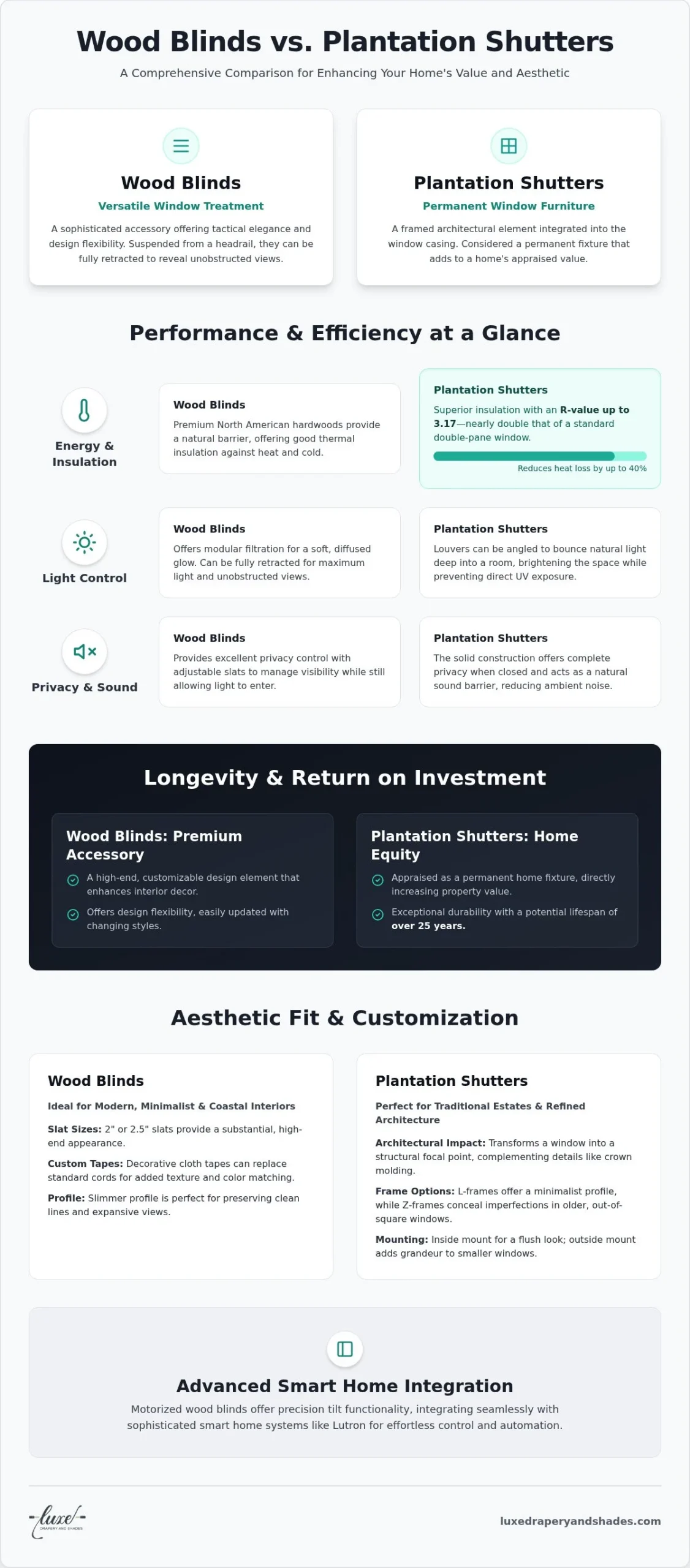
The distinction between these two options begins with how they interact with your home’s physical structure. While a window blind is a sophisticated treatment suspended from a headrail, a plantation shutter is a framed architectural element. This structural permanence is the primary reason designers and real estate professionals refer to shutters as “window furniture.” Unlike temporary coverings that you might swap out with changing trends, shutters are integrated directly into the window casing. They become a fixed asset of the property, often increasing the appraised value of a home because they’re viewed as a permanent improvement rather than a mere accessory.
When weighing the merits of wood blinds vs plantation shutters, the depth of your window casing plays a decisive role in the final silhouette. An inside mount offers a clean, flush appearance that preserves the room’s dimensions, while an outside mount can lend a sense of grandeur to smaller windows. We prioritize the use of premium North American hardwoods for both selections. These materials offer superior grain consistency and structural integrity, ensuring that whether you choose the architectural weight of a shutter or the graceful suspension of a blind, the result is a refined addition to your living space.
The Anatomy of Plantation Shutters
A bespoke shutter is defined by the precision of its components. The horizontal louvers, vertical stiles, and the tilt rod work in harmony to orchestrate light and shadow. For Los Angeles estates with intricate original moldings, the choice of frame is essential. We often utilize L-frames for a minimalist, contemporary profile that sits inside the opening. Conversely, Z-frames are excellent for older homes, as they provide a decorative transition that can elegantly conceal windows that are slightly out-of-square. This creates a finished, intentional look that transforms a simple opening into a structural focal point.
The Sophistication of Custom Wood Blinds
Custom wood blinds offer a different level of tactical elegance. We frequently recommend 2-inch or 2.5-inch slat sizes to provide a more substantial, high-end appearance that mimics the look of a shutter while maintaining the versatility of a blind. For a truly curated aesthetic, decorative cloth tapes can replace standard cords. These tapes add a layer of rich texture and can be color-matched to your existing upholstery or wall treatments. Because they maintain a much slimmer profile, wood blinds are an ideal choice for minimalist interiors where you want the ability to fully retract the treatment and let the coastal views take center stage.
Performance Comparison: Light Control, Privacy, and Energy Efficiency
The intense Southern California sun demands a strategic approach to light management. When evaluating wood blinds vs plantation shutters, consider how each treatment protects your home’s most valuable assets. Premium hardwoods act as a natural shield for curated art collections and custom flooring, preventing the fading caused by relentless UV exposure. Shutters provide a robust, fixed barrier that can be adjusted to bounce light off the ceiling, while blinds offer a modular approach to filtration that allows for a softer, diffused glow throughout the room.
Thermal management is where the architectural structure of plantation shutters truly excels. These fixtures offer an R-value between 2.77 and 3.17, providing almost double the insulation of a standard double-pane window. In the peak of a Westside summer, this translates to a significant reduction in solar heat gain. During cooler months, they can reduce heat loss by up to 40%. Beyond temperature, the solid mass of the wood provides natural acoustic benefits. The sound-dampening qualities of shutters create a serene sanctuary, effectively buffering the ambient noise of densely populated luxury neighborhoods.
Smart Control: Integrating with Lutron Systems
Modern luxury is defined by effortless control and seamless integration. Our motorized wood blinds offer precision tilt functionality that pairs perfectly with Lutron home automation. You can schedule specific “scenes” that align with your daily rhythm. Imagine your window treatments automatically adjusting to block the harsh afternoon glare in a Bel Air foyer while maintaining your view of the canyon. This quiet technology ensures your home environment remains perfectly balanced without manual intervention.
Operational Nuances and Daily Use
Living in coastal environments like Santa Monica or Malibu requires materials that withstand the salt air and humidity. While both options utilize high-grade finishes, shutters are often the more efficient choice for long-term maintenance. A simple wipe of the wide louvers is all it takes to keep them pristine. Wood blinds require a bit more attention to individual slats, though their lighter profile makes them easier to retract fully. For households with children or pets, the cordless nature of shutters or our motorized blind options ensures a safe, cord-free environment. If you’re looking to elevate your space with these high-performance features, we invite you to explore our bespoke collection of window accents.
Longevity and ROI: Why Shutters Are Considered Home Equity
Deciding between wood blinds vs plantation shutters is often a choice between an operational design element and a capital improvement. In the high-stakes Los Angeles real estate market, this distinction carries significant financial weight. Plantation shutters are classified as permanent fixtures. Because they are integrated into the window’s architecture, they remain with the property when it changes hands. This allows appraisers to include them in the home’s valuation, effectively transforming a design choice into a form of home equity.
The lifespan of these treatments reflects their structural nature. A bespoke set of plantation shutters is built to last 20 years or more, often outliving the paint on the walls. In contrast, even the highest quality premium wood blinds have a typical lifespan of 7 to 10 years. While blinds are durable, their mechanical components and suspension systems are subject to more wear than the solid frames of a shutter. Over time, the cost-to-value ratio shifts in favor of shutters, as they require minimal maintenance and offer long-term repairability rather than total replacement.
Investing in Plantation Shutters
The financial profile of a shutter is unique. They are the only window treatment that can often be financed into a home mortgage during a renovation or purchase. This makes them an attractive option for homeowners in the South Bay looking for long-term energy savings. The superior insulation reduces the strain on HVAC systems, providing a subtle but consistent reduction in utility costs over decades. For a deeper analysis of these financial benefits, we recommend consulting our Plantation Shutters Guide.
The Value Proposition of Premium Wood Blinds
While shutters offer structural equity, premium wood blinds provide an exceptional value proposition for specific areas of the home. They offer a lower entry point for achieving a sophisticated, high-end aesthetic in secondary bedrooms or guest suites. Blinds offer a level of flexibility that many modern homeowners appreciate. If your interior design preferences shift toward a different wood stain or a more minimalist palette in five years, blinds are easily updated. They allow you to enjoy the rich texture and “wood look” of luxury materials without the permanent architectural commitment of a shutter system.
Stylistic Selection: Matching Your Los Angeles Home’s Architecture
The architectural diversity of Los Angeles requires a nuanced approach to window design. When choosing between wood blinds vs plantation shutters, the structural era of your home serves as the primary compass. Traditional estates in Pasadena or Hancock Park often feature intricate crown molding and wainscoting. In these spaces, wood blinds offer a classic silhouette that complements existing woodwork without overwhelming the room’s historical details. Conversely, the expansive Modern Coastal residences of the South Bay benefit from the clean, bold lines of large-louver shutters. These treatments frame the horizon, acting as a minimalist extension of the home’s contemporary frame. By choosing wider louvers, you maximize the view of the Pacific while maintaining the ability to deflect the harsh afternoon glare that reflects off the water.
For Spanish Colonial and Mediterranean properties, the thick, plaster walls provide a unique opportunity for deep-set shutters. These installations lean into the furniture-grade philosophy, creating a sense of weight and permanence that standard coverings cannot replicate. Many homeowners find success in a transitional approach, mixing treatments within a single residence to suit the specific needs of each environment. This stylistic debate of wood blinds vs plantation shutters often finds its resolution in the specific functional needs of each room. You might choose the architectural presence of shutters for the public-facing facade while opting for the lighter touch of wood blinds in private upstairs quarters.
Room-by-Room Recommendations
In the living room, full-height plantation shutters create an unmistakable statement of luxury and structural intent. For a dedicated home office, however, the precision-tilt of wood blinds is often superior for managing screen glare throughout the day. In private quarters, we recommend layering custom drapes in Los Angeles over shutters. This combination provides total blackout capabilities while adding a soft, tactile finish to the room’s architectural foundation, ensuring a restful sanctuary that remains isolated from the city’s ambient light.
Color and Finish Trends for 2026
The coming year sees a move toward organic modernism, with natural wood stains highlighting the raw beauty of North American hardwoods. While classic white shutters remain a timeless staple for coastal brightness, we’re seeing an increase in custom paint matching. Whether you’re aligning with a specific Farrow & Ball tone or a Benjamin Moore palette, a bespoke finish ensures your window treatments feel like an original part of the interior design. To begin curating a look tailored to your home’s unique geometry, schedule a professional design consultation with our team today.
The Bespoke Advantage: Professional Customization and Installation
The choice between wood blinds vs plantation shutters is only half of the equation; the other half is the precision of the execution. Ready-made “Big Box” solutions often fail to account for the unique character of luxury Los Angeles architecture. In many older estates, windows are rarely perfectly square. A millimetric deviation can lead to unsightly light gaps or mechanical friction that degrades the product over time. Professional measurement ensures that your investment fits the actual geometry of your home, rather than a generic standard.
Our process begins with a curated design consultation. We bring the showroom to you, allowing you to evaluate high-end materials under your home’s specific lighting conditions. As a licensed California contractor, we provide a white-glove installation service that respects the integrity of your interior. This expertise is particularly critical for large-scale motorized projects where electrical precision and seamless integration are paramount. A professional installation ensures that the weight of your treatments is properly supported and that all motorized components operate with silent, fluid motion.
Customization Beyond the Basics
Bespoke design allows for aesthetic refinements that mass-market products cannot offer. For those seeking a modern, unobstructed view, hidden tilt rods in plantation shutters eliminate the traditional central bar. This creates a cleaner, more contemporary silhouette. Shutters also excel where other treatments fail: specialty shapes. Whether your home features grand arches, rakes, or circular windows, custom shutters can be crafted to match these architectural footprints perfectly. For the ultimate in convenience, we often pair these treatments with Lutron Sivoia systems. This integration ensures your window furniture moves with the same quiet elegance as the rest of your smart home.
Your Next Steps in Window Design
Preparing for an in-home consultation is a simple but rewarding process. Start by observing how light moves through your rooms at different times of the day. This helps us determine whether the tactical light control of wood blinds or the structural insulation of shutters is more appropriate for each space. During our visit, you’ll have the opportunity to view samples against your existing wall colors and upholstery. This tactile experience is essential for finalizing a selection that feels intentional and cohesive. Whether you’re planning a 2026 home refresh or a complete renovation, our goal is to ensure your window treatments act as a lasting lens for a more beautiful lifestyle.
Curating Your Vision for a Refined Home
The choice between wood blinds vs plantation shutters ultimately rests on how you envision the future of your living space. Whether you seek the enduring architectural legacy of “window furniture” or the tactical elegance of motorized blinds, your selection serves as a foundational element of your home’s character. By prioritizing high-grade North American hardwoods and professional bespoke installation, you ensure that your window treatments provide superior UV protection and thermal insulation for years to come.
As a Licensed and Bonded California Contractor (CSLB #1066068) with over five years of dedicated service to the Los Angeles luxury market, we bring technical precision to every project. Our expert Lutron Certified Installers are ready to help you elevate these functional accents into a lens for experiencing a better lifestyle. We invite you to schedule your curated design consultation with Luxe Drapery and Shades today. We look forward to partnering with you to transform your home into a sanctuary of light and comfort.
Frequently Asked Questions
Are plantation shutters more expensive than wood blinds?
Plantation shutters typically require a higher initial investment compared to premium wood blinds because they’re permanent architectural fixtures. While wood blinds offer a sophisticated look at a lower entry point, shutters are appraised as part of your home’s equity. This cost reflects the materials, complex framing, and specialized installation required to integrate them into your home’s structure. Over time, the 25-year lifespan of shutters often justifies the higher upfront cost.
Can I motorize both plantation shutters and wood blinds?
You can absolutely integrate motorization into both options to enhance your home’s convenience. We specialize in Lutron lighting control systems that allow for precision tilt in wood blinds and automated louver adjustment in plantation shutters. Motorized wood blinds are particularly effective for hard-to-reach windows in grand Los Angeles foyers. These systems allow you to synchronize your window treatments with your daily schedule, ensuring your fine interiors are protected without manual intervention.
Do plantation shutters really increase the resale value of my Los Angeles home?
Plantation shutters are one of the few window treatments that appraisers consider a permanent part of the home. Because they’re integrated into the window casing, they stay with the property during a sale. Research indicates that high-quality shutters can offer up to a 75% return on investment. In competitive markets like Pasadena or Beverly Hills, these architectural upgrades signal a high standard of maintenance and luxury to potential buyers.
Which is easier to clean: wood blinds or plantation shutters?
Plantation shutters are significantly easier to maintain due to their wide, stable louvers. A quick wipe with a microfiber cloth is usually sufficient to remove dust from the solid wood surfaces. Wood blinds require a bit more patience, as each individual slat must be dusted or wiped. The fixed frame of a shutter also prevents the rattling or shifting that can occur when cleaning suspended blinds, making them a preferred choice for high-traffic areas.
Are wood blinds or shutters better for privacy in high-traffic areas?
When comparing wood blinds vs plantation shutters for privacy, shutters offer superior directional control. You can tilt the louvers to allow light in from the top while completely obscuring the view from the street level. This is particularly valuable in densely populated luxury neighborhoods where homes are situated close together. While wood blinds provide excellent privacy when closed, shutters offer a more structural, secure barrier that feels like an extension of your walls.
Can I install plantation shutters on windows with a shallow depth?
Shallow window depths don’t preclude the use of shutters if you use the right framing. We utilize specialized Z-frames or L-frames that mount to the outside of the window casing, creating the necessary clearance for louver operation. This technique is common in older Los Angeles estates where modern window depths weren’t a standard design consideration. An outside mount can actually enhance the window’s presence, making it appear larger and more architecturally significant.
How do I choose between real wood and faux wood for my South Bay home?
The choice depends on the specific environment of your South Bay residence. Real North American hardwoods offer a rich grain and lightweight structure that’s ideal for large windows and grand living spaces. However, for high-moisture areas like master bathrooms or kitchens, faux wood blinds or composite shutters are more resilient. They won’t warp or peel when exposed to humidity, ensuring your window treatments maintain their pristine appearance even in coastal air.