

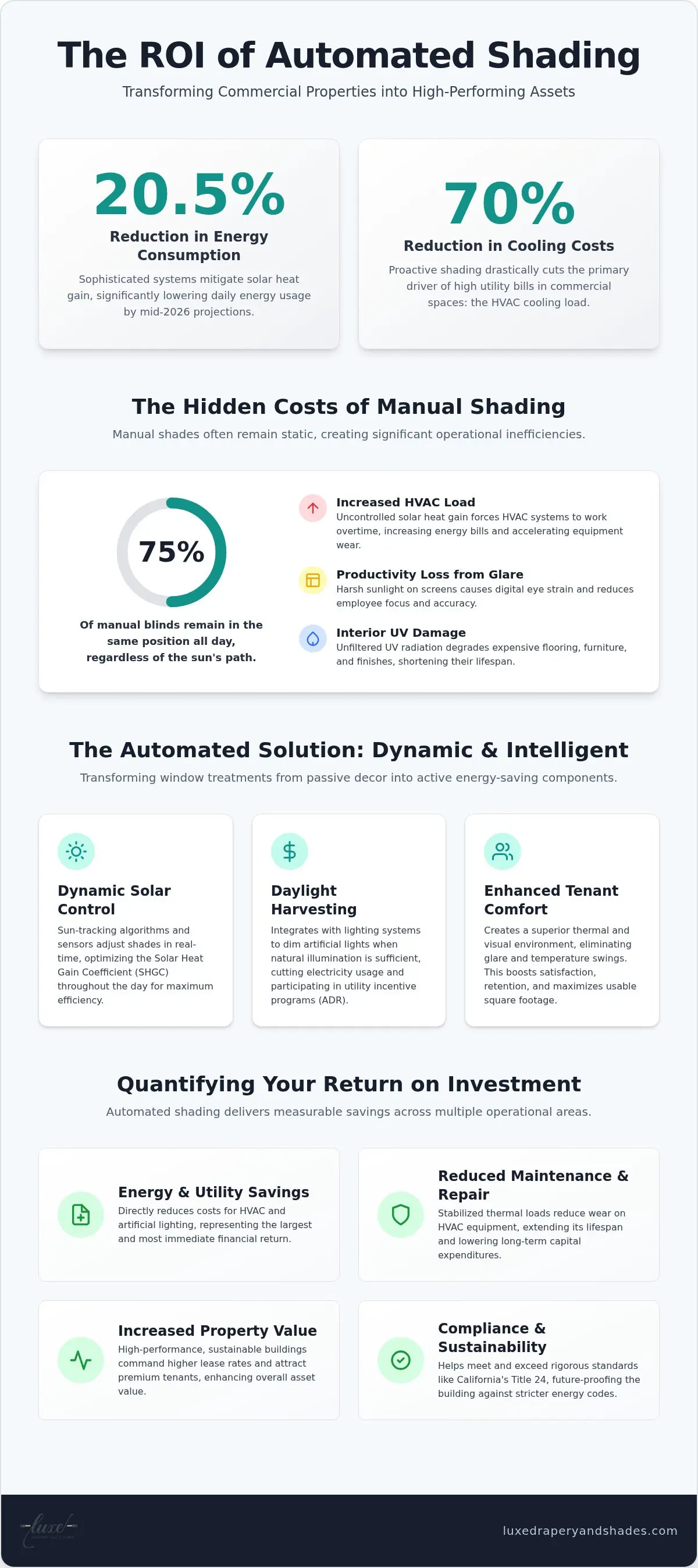
Did you know that by mid-2026, sophisticated automated shading systems are reducing commercial energy consumption by as much as 20.5% while simultaneously cutting cooling costs by up to 70%? In the competitive Los Angeles real estate market, managing solar heat gain is no longer a matter of simple comfort; it’s a critical operational strategy. You likely recognize the mounting pressure of high utility bills and the rigorous demands of the 2025 California Title 24 standards. We understand that for a property to truly stand out, every architectural choice must justify its presence through both performance and elegance.
This strategic guide explores the ROI of automated shading in commercial buildings, offering a refined perspective on how intelligent daylighting controls transform a property into a high-performing asset. You’ll discover how these systems drive measurable energy savings, enhance tenant retention through superior thermal comfort, and fulfill local sustainability mandates. We’ll provide a clear framework for calculating your return, navigating current utility incentives, and integrating technology that mirrors the visual order of a well-designed environment. By the end, you’ll see why these automated solutions are essential for the modern, luxury commercial landscape.
Key Takeaways
- Understand why manual shades often remain static and how dynamic automation eliminates the hidden operational costs of solar heat gain.
- Calculate the true ROI of automated shading in commercial buildings by analyzing reductions in HVAC demand and the benefits of daylight harvesting.
- Enhance property value and tenant satisfaction by providing a climate-controlled environment that maximizes usable square footage throughout the day.
- Navigate the complexities of California Title 24 requirements with high-performance solutions like Lutron Sivoia for seamless building integration.
- Discover the benefits of a professional Los Angeles partnership that bridges the gap between sophisticated design and technical installation.
The Hidden Costs of Manual Shading in Modern Commercial Architecture
Modern architecture celebrates the transparency of glass, yet this aesthetic choice often introduces a hidden financial burden. We define automated shading not merely as a motorized window covering, but as a dynamic, data-driven response to shifting environmental conditions. Unlike traditional treatments, these intelligent systems integrate with building automation systems to adjust in real-time. The reality of manual shades is stark; industry observations reveal that 75% of blinds remain in the same position all day, regardless of the sun’s path. This human inertia negates the potential for energy management, turning high-performance windows into passive heat traps that compromise the ROI of automated shading in commercial buildings.
In Los Angeles, the relentless solar load translates directly to operational strain. When shades remain open during peak afternoon hours, HVAC systems must work overtime to combat intense solar heat gain. Conversely, when shades are left closed on clearer days, occupants often resort to lighting overrides, engaging high-wattage overhead lights even when ample natural light is available. This inefficiency erodes the bottom line, as energy is wasted at both ends of the building’s environmental control spectrum.
The Glare-Productivity Connection
Visual comfort is the delicate state in which the eyes can perceive the environment without strain or distraction from excessive brightness. When harsh sunlight hits a computer screen, employee focus and accuracy plummet. It’s not just a minor annoyance; chronic glare contributes to digital eye strain and increased absenteeism in poorly managed thermal environments. By automating the response to specific sun angles, you create a workspace that respects the biological needs of its inhabitants, fostering a culture of quiet, uninterrupted productivity.
HVAC Overworking and Equipment Longevity
The financial impact of manual shading extends deep into the mechanical room. Inconsistent thermal loads cause HVAC units to cycle frequently, accelerating wear on expensive compressors and fan motors. Beyond the machinery, the Los Angeles sun is unforgiving to interior aesthetics. Unfiltered UV radiation degrades premium flooring, bespoke furniture, and delicate finishes, significantly shortening their replacement cycles. Proactive shading acts as a protective layer, preserving the curated atmosphere of your property while ensuring mechanical equipment reaches its full intended lifespan through stabilized temperature control.
To further improve mechanical efficiency, property owners can look to specialized ventilation solutions; for example, Ductospreaislados SA de CV provides pre-insulated ducting systems that work alongside HVAC units to minimize energy loss.
Quantifying the ROI: Energy Efficiency and Operational Savings
Realizing the full ROI of automated shading in commercial buildings requires a shift from viewing window treatments as decor to seeing them as active energy components. A 2026 study of a commercial high-rise documented energy savings between 20% and 35% through precision automation. These figures stem from a 20.5% reduction in daily energy consumption, primarily by mitigating the cooling demand that typically spikes during a Los Angeles afternoon. This isn’t just a projection; it’s a realized outcome of precision control that directly impacts the bottom line.
Daylight harvesting represents the second pillar of operational savings. By syncing shades with intelligent lighting controls, buildings can reduce electricity use by dimming artificial lights when natural illumination is optimal. This synergy is particularly effective during peak load events. When heatwaves strain the local grid, “Automated Demand Response” (ADR) programs offer financial incentives for buildings that automatically reduce their energy load. Automated shades provide a non-disruptive way to shed peak demand without sacrificing tenant comfort.
The Science of Dynamic Solar Shading
The Solar Heat Gain Coefficient (SHGC) measures how effectively a window blocks heat from sunlight. While static glass has a fixed SHGC, automation optimizes this value dynamically. Advanced sun-tracking algorithms adjust shade positions based on the sun’s exact coordinates, outperforming simple timers that can’t account for cloud cover or seasonal shifts. In cooler months, these systems even provide winter heat retention by creating an insulating air pocket, further stabilizing the building’s thermal envelope and reducing heating costs.
Calculating Your Payback Period
While initial installation requires capital, the payback period has shortened significantly. Recent 2026 data indicates that with utility incentives and projected energy costs, the payback for a commercial high-rise can be as low as 4.4 years. This calculation factors in reduced maintenance costs, as motorized systems experience less mechanical stress than shades handled manually by tenants. Maximizing the ROI of automated shading in commercial buildings is most pronounced in structures with high glass-to-wall ratios, where solar gain is the primary driver of HVAC costs. Exploring the transformative power of high-quality motorized shades can reveal hidden efficiencies in your specific property layout.
Beyond Energy: The ROI of Tenant Retention and Building Value
While energy metrics provide a clear fiscal baseline, the true ROI of automated shading in commercial buildings extends into the sophisticated world of asset valuation and tenant stability. In the Los Angeles Class-A real estate market, automation has transitioned from a premium amenity to a foundational expectation for high-value leases. Modern tenants seek environments that prioritize wellness and effortless functionality. By integrating intelligent shading, property owners can reclaim valuable square footage. Perimeter desks, often left vacant during peak sun hours due to thermal discomfort and screen glare, become viable workspaces 100% of the day. This maximization of floor plate utility directly supports higher price-per-square-foot valuations.
These systems also play a pivotal role in achieving prestigious green building certifications. Automated shades contribute significant points toward several standards, including:
- LEED Certification: Improving energy performance and indoor environmental quality.
- WELL Building Standard: Enhancing occupant health through optimized natural light and thermal control.
- Aesthetic Consistency: Ensuring a uniform building facade that reinforces a brand’s standard of quality.
Beyond the technical points, there is the “Quiet Luxury” factor. The silent operation of precision-engineered motorized shades creates a professional atmosphere of calm and order. It’s an evocative sensory benefit that suggests a high standard of management and care for the tenant experience. When a space feels curated and responsive, it elevates the entire professional lifestyle of the occupants.
Attracting High-Value Tenants in Los Angeles
Smart building features act as a powerful differentiator in a crowded market. When a space intuitively responds to the environment, it reshapes the office culture, making it feel more innovative and attentive. For instance, data from global office tower studies indicates that implementing automated shading can lead to a 30% drop in occupant complaints regarding glare and temperature. In Los Angeles, where the sun is a constant architectural factor, this level of responsiveness justifies premium rents and fosters long-term tenant loyalty.
Architectural Preservation and UV Protection
The harsh Southern California sun is a silent predator of interior finishes. Automated systems safeguard high-end assets by proactively blocking harmful UV radiation before it enters the space. This protection extends the lifespan of luxury custom drapes, premium flooring, and curated artwork that define a Class-A interior. Additionally, automation ensures the building maintains its visual integrity from the exterior. By aligning shades uniformly across all floors, property managers avoid the cluttered, mismatched look of manual treatments, preserving the property’s sophisticated silhouette against the city skyline.
Implementation Strategy: California Compliance and System Integration
Achieving a high ROI of automated shading in commercial buildings requires a technical foundation that matches its aesthetic ambition. It’s not enough to simply install motorized hardware; the system must communicate seamlessly with other building components to justify its investment. Lutron Sivoia has emerged as the commercial gold standard, offering the near-silent operation and reliability necessary for large-scale Los Angeles projects. This hardware represents a standard of service and quality that discerning property owners expect. Whether you’re designing a new glass-wrapped tower or retrofitting a historic mid-rise, the choice between hardwired power and wireless communication depends on the existing infrastructure and the desired level of control.
Integration with Building Management Systems (BMS) is where true operational efficiency is realized. By utilizing BACnet or KNX protocols, your shading system becomes part of a unified, intelligent ecosystem. This allows shades to move in concert with HVAC and lighting, ensuring the building operates at peak performance without the need for manual intervention. The result is a clean and uncluttered environment that responds intuitively to the movement of the sun, reflecting a sophisticated approach to modern property management.
Navigating California Title 24 Requirements
The 2025 version of the California Building Energy Efficiency Standards, which became effective on January 1, 2026, places significant emphasis on mandatory daylighting controls. In any enclosed space where general lighting exceeds 75 watts within a daylit zone, automatic controls must dim the lights based on available natural light. Automated shades serve as the essential partner to these lighting controls, managing the input of light to prevent glare while maximizing energy harvesting. This performance-based compliance strategy gives architects and engineers the flexibility to design beautiful, light-filled spaces that remain efficient. Engaging a licensed and bonded California contractor ensures that your shading installation meets these specific prescriptive and legal mandates with professional precision.
Choosing Between Roller Shades and Exterior Zip Screens
Selecting the right hardware involves balancing interior comfort with exterior performance. Internal roller shades are the preferred choice for sophisticated glare control and privacy, offering a clean silhouette that complements high-end interiors. However, for maximum heat rejection, exterior zip screens provide a superior solution by blocking solar energy before it ever touches the glass. This proactive approach significantly reduces the solar heat gain common in Southern California architecture. Maintenance for these systems is streamlined; while interior shades require minimal care, exterior solutions are engineered for durability against the coastal elements, making them a robust long-term investment. To ensure your project meets these high standards, consider a consultation with a Los Angeles Lutron integration expert.
Partnering for Precision: Luxe Drapery and Shades’ Approach
Transforming a commercial vision into a high-performance reality requires more than just selecting a product; it demands a partnership rooted in technical mastery and aesthetic sensitivity. At Luxe Drapery and Shades, we view window treatments as essential elements of a building’s biological and financial health. Our approach is tailored to the specific architectural nuances of Los Angeles, ensuring that every installation respects the property’s design while maximizing its operational potential. We don’t just install shades; we curate environments that respond intuitively to the world outside.
As certified experts in Lutron lighting and shading, we specialize in the seamless communication between natural and artificial light. This meticulous coordination is what secures the long-term ROI of automated shading in commercial buildings. By fine-tuning algorithms and commissioning systems for peak efficiency, we ensure your investment continues to pay dividends long after the initial installation. We focus on the nuances of interior comfort, suggesting a brand that cares about the long-term atmosphere of our clients’ spaces.
Meticulous execution is guaranteed by our status as a licensed and bonded California contractor (CSLB #1066068). This certification is vital for commercial projects, providing the security and professional accountability required for high-stakes real estate assets. We bridge the gap between sophisticated interior design and rigorous engineering standards, positioning our team as a trusted partner in the building improvement process.
The Luxe Drapery Commercial Process
Our workflow begins with a detailed solar load analysis, identifying exactly how the Southern California sun interacts with your building’s orientation. This data informs our programming, allowing us to create bespoke schedules that minimize glare without sacrificing the view. For properties undergoing renovation, we specialize in techniques that minimize disruption, ensuring that tenant productivity remains high during the transition. By leveraging Lutron Home Automation principles for commercial scale, we provide holistic building control that feels both intuitive and invisible.
Schedule a Professional Commercial Assessment
The path to a more efficient, high-value property begins with a localized energy and glare audit. We invite facility managers and property owners to experience the transformative power of our work firsthand. Our portfolio includes successful installations across the Westside and South Bay, where we’ve helped Class-A buildings redefine their tenant experience through quiet luxury and smart technology. It’s time to elevate your property’s standard of service and quality. Optimize your building’s performance with Luxe Drapery and secure your asset’s future in the 2026 market.
Securing Your Building’s Future through Intelligent Design
The shift toward automated environments is no longer a trend; it’s a fundamental requirement for the modern Los Angeles property. By transitioning from static treatments to dynamic, sensor-driven systems, you reclaim control over solar heat gain and operational costs. We’ve explored how these solutions fulfill the rigorous 2025 California Title 24 mandates while simultaneously elevating the tenant experience through superior visual and thermal comfort. Securing the long-term ROI of automated shading in commercial buildings is as much about architectural preservation as it is about energy harvesting.
As a Certified Lutron Platinum Dealer and a licensed California contractor (CSLB #1066068), our expert Los Angeles installation team bridges the gap between technical compliance and quiet luxury. We invite you to move beyond the limitations of manual shading and embrace a more sophisticated standard of property management. It’s time to transform your building into a responsive, high-performing asset that reflects a commitment to quality and craftsmanship.
Request a Commercial Shading ROI Assessment today to discover the hidden potential within your floor plate. We look forward to helping you curate a workspace that inspires productivity and enduring value.
Frequently Asked Questions
How much can automated shading actually save on commercial energy bills?
Automated shading systems can reduce a commercial building’s daily energy consumption by up to 20.5%. In high-rise environments, studies from 2026 have documented energy savings ranging from 20% to 35% through precision solar management. These reductions are primarily achieved by mitigating cooling demand during peak afternoon hours, ensuring that HVAC systems aren’t overworking to compensate for solar heat gain through expansive glass facades.
Does automated shading help with California Title 24 compliance?
Yes, automated shading is a critical component for meeting the 2025 California Title 24 energy efficiency requirements. As of January 1, 2026, the code mandates automatic daylighting controls in enclosed spaces where general lighting exceeds 75 watts. Intelligent shades manage the input of natural light, allowing lighting systems to dim appropriately while preventing the glare that often leads tenants to override automated sensors.
Can I retrofit automated shades into an existing Los Angeles office building?
Retrofitting is entirely feasible for existing Los Angeles properties through advanced wireless communication and battery-powered technologies. While new construction often favors hardwired Lutron Sivoia systems, retrofits can utilize ultra-reliable wireless protocols that minimize structural disruption. This flexibility allows older Westside mid-rises to achieve the same energy efficiency and aesthetic standards as modern South Bay developments without the need for extensive rewiring.
What is the difference between Lutron Sivoia and standard motorized shades?
Lutron Sivoia represents the pinnacle of precision engineering, offering near-silent operation and perfect alignment that standard motorized shades cannot match. While entry-level motors provide basic movement, the Lutron ecosystem ensures that all shades move in unison with remarkable accuracy. This level of “Quiet Luxury” is essential for Class-A commercial environments where the sound of a motor shouldn’t distract from a professional atmosphere.
How do automated shades integrate with my existing Building Management System (BMS)?
Integration is achieved through industry-standard communication protocols such as BACnet and KNX, allowing the shades to become a native part of your BMS. This connectivity enables the shading system to share data with HVAC and lighting controls. By working in concert, these systems optimize the building’s thermal envelope in real-time, which is a significant factor in maximizing the ROI of automated shading in commercial buildings.
What happens to automated shades during a power outage?
Most professional commercial systems include manual overrides or are programmed to return to a fail-safe position during a power loss. High-end Lutron installations often incorporate battery backups or low-voltage power panels that maintain functionality for essential zones. This ensures that even during grid instability, the building’s interior remains protected from excessive heat gain and the facade maintains its uniform, sophisticated appearance.
Are exterior zip screens better than interior shades for commercial ROI?
Exterior zip screens are technically superior for heat rejection because they block solar radiation before it penetrates the window glass. While interior shades are excellent for glare control and privacy, exterior solutions can cut cooling costs more aggressively by preventing the “greenhouse effect” within the building. For Los Angeles properties with high solar exposure, the increased thermal performance of exterior screens often leads to a faster return on investment.
How long does it typically take for an automated shading system to pay for itself?
The payback period for an automated shading system in a commercial high-rise is currently estimated at approximately 4.4 years. This calculation, based on 2026 energy projections, factors in utility incentives, reduced HVAC maintenance, and improved tenant retention rates. When considering the ROI of automated shading in commercial buildings, property owners should also account for the preserved value of interior finishes and the ability to command premium lease rates.