

What if the most exquisite textile in the showroom is actually the wrong choice for your sun-drenched Los Angeles estate? Selecting the right types of drapery fabric is less about following trends and more about understanding the architectural physics of your home. It’s easy to feel overwhelmed by a sea of silk, linen, and velvet swatches, especially when the wrong choice might lead to unsightly sagging or premature fading under the intense coastal light. A beautiful drape should maintain its integrity and color for years, acting as a testament to both craftsmanship and thoughtful selection.
You likely recognize that window treatments are more than just functional covers; they’re the tactile elements that define a room’s atmosphere and soul. This guide will help you discover the essential characteristics of premium materials so you can select the perfect textile for your aesthetic and functional needs. We’ll explore which fibers offer the greatest longevity in high-traffic areas, how fabric weight influences the elegant “hang” of a bespoke installation, and why your choice of material is the critical foundation for seamless motorization and Lutron integration.
Key Takeaways
- Learn how various types of drapery fabric dictate the architectural “hang” and long-term durability of your custom window treatments.
- Distinguish between the lustrous appeal of silk and the relaxed, coastal elegance of linen to match your home’s specific design language.
- Evaluate the performance benefits of synthetic blends and heavy velvets for optimal light blocking and resistance to the California sun.
- Gain insights into how fabric weight and “stack back” influence both the room’s footprint and the seamless operation of motorized hardware.
- Discover how professional tailoring and specific header styles transform raw textiles into sophisticated and functional design statements.
The Foundation of Window Design: Why Drapery Fabric Choice Matters
In the curation of a high-end interior, the window treatment serves as a soft architectural boundary. While hardware provides the necessary structure, the fabric provides the soul. Understanding the diverse types of drapery fabric is the first step in any professional consultation. It’s the single most influential factor in how your window treatments will hang, move, and age over time. Choosing a textile is not merely a decorative decision; it’s a commitment to the long-term atmosphere and functionality of your living space.
Professional designers define drapery fabric as a specialized category of textiles engineered specifically for vertical suspension. Unlike upholstery fabrics, which are built to withstand friction and tension, drapery must resist the constant pull of gravity and the degradation of UV exposure. This brings us to the concept of “drape,” which is the way a fabric falls and holds its shape. A textile with a superior drape will create elegant, consistent folds that remain crisp even after years of use. Beyond aesthetics, your fabric choice dictates the acoustics of a room, the level of privacy you enjoy, and how beautifully natural light is filtered into your home.
Fiber Content vs. Weave: Understanding the Basics
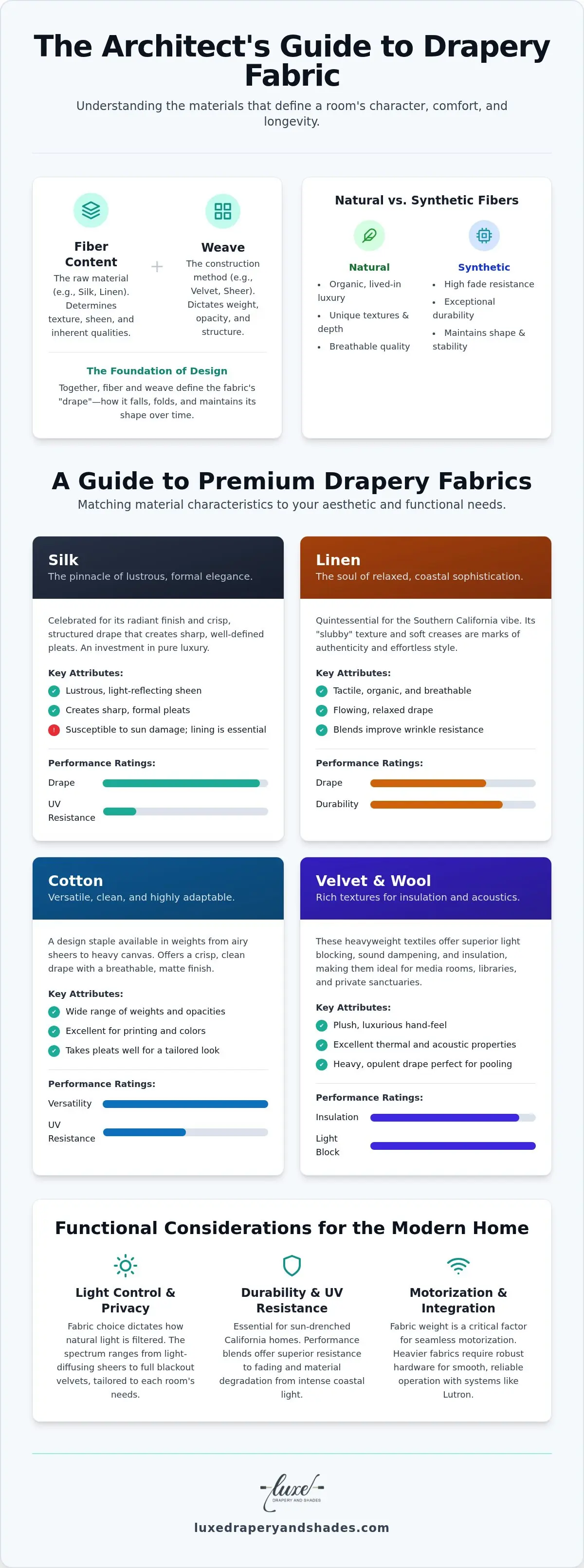
To select the right material, you must distinguish between fiber and weave. Fiber refers to the raw material itself, such as silk, linen, or cotton. Weave describes how those fibers are constructed into a finished textile, such as velvet, damask, or sheer. The fiber choice determines the fundamental sheen and texture of the window treatment. For example, silk offers a natural luster that reflects light beautifully, while linen provides a matte, organic feel. In the specific climate of Los Angeles and the South Bay, fiber selection is critical. Certain natural fibers may be more susceptible to the intense coastal sun, making the choice of weave and weight essential for ensuring the fabric doesn’t become brittle or lose its structural integrity over time.
Natural vs. Synthetic: A Modern Perspective
The choice between natural and synthetic fibers often involves a balance of aesthetic soul and modern durability. Natural fibers like silk and linen are prized for their unique imperfections and “breathable” quality, which adds a sense of lived-in luxury to a room. However, modern synthetics have evolved significantly. Performance fabrics are now a staple in luxury design, offering incredible fade resistance and stability that natural fibers sometimes lack. These blends are particularly useful for high-traffic areas or large floor-to-ceiling windows where the fabric is under constant environmental stress. Opting for a custom solution means you don’t have to choose one over the other; instead, you select the exact blend that meets your home’s specific needs for both beauty and longevity.
Natural Luxury: Silk, Linen, and Cotton Drapery Fabrics
Natural fibers represent the hallmark of a bespoke home; they bring an organic warmth and a sensory depth that synthetic alternatives strive to emulate. Among the various types of drapery fabric, these materials are prized for their unique personality and the way they interact with the specific light of a room. While each fiber offers distinct benefits, they all share a common thread: they elevate the window from a functional necessity to a curated design statement. Selecting a natural textile is an investment in the tactile soul of your environment.
- Silk: Often considered the pinnacle of textile design, silk is celebrated for its lustrous finish and a crisp, structured drape that creates sharp, elegant pleats.
- Cotton: This versatile fiber is a staple for those seeking a breathable, matte finish; it’s available in weights ranging from airy sheers to heavy, structured canvases.
- Wool: An underrated luxury choice, wool provides exceptional natural insulation and superior sound dampening, making it ideal for private libraries or media rooms.
Linen: Capturing the Southern California Coastal Vibe
Linen has become the quintessential choice for Westside Los Angeles interiors, where a relaxed yet sophisticated aesthetic is paramount. The beauty of linen lies in its “slubby” texture, those intentional irregularities in the weave that catch the light and provide a tactile, organic feel. While some homeowners worry about the inherent “wrinkle” factor, designers view these soft creases as a mark of authenticity and effortless luxury. For those in the South Bay or other humid coastal environments, we often recommend high-end linen blends. These provide the same coveted look while offering improved dimensional stability, ensuring your drapes maintain their length even as the coastal air shifts.
Silk and the Importance of UV Protection
In the expansive, sun-drenched estates of Los Angeles, silk requires a specialized approach to ensure its longevity. Because silk is a protein fiber, it is particularly susceptible to “sun-rot,” a process where intense UV exposure causes the fibers to become brittle and eventually shatter. To preserve the integrity of this exquisite material, interlining is not an option; it is a necessity. A thick, protective layer between the silk and the window acts as a shield, while also adding a luxurious fullness to the drape’s appearance. When selecting these high-value textiles, a professional Luxe consultation ensures your investment is protected by the right lining and hardware. Silk is a protein fiber that requires professional lining to prevent shattering from UV exposure.
Rich Textures and Performance: Velvet and Synthetic Blends
While natural fibers capture the organic soul of a room, certain environments demand a more substantial presence or specialized resilience. Moving beyond the airy qualities of linen and cotton, we enter the world of weighted textiles and engineered fibers. Exploring these specialized types of drapery fabric reveals how modern technology and traditional weaving techniques converge to solve complex design challenges. Whether you’re seeking absolute darkness for a restful suite or a material that can withstand the intense glare of a floor to ceiling window, these selections offer a sophisticated solution without compromising on aesthetic depth.
In the hierarchy of textiles, these materials often serve as the workhorses of a luxury home. They provide the necessary density for light control and the structural stability required for large scale installations. We often categorize these into two primary groups:
- Velvet: A heavy, opulent textile characterized by its soft pile and exceptional light blocking capabilities.
- Polyester Blends: The modern standard for durability, offering incredible fade resistance and a wide variety of finishes.
- Acrylic and Rayon: Engineered fibers that mimic the drape of silk or the texture of wool while providing superior moisture resistance.
- Faux Silk: A high performance alternative that captures the luster of genuine silk but resists the sun rot mentioned in previous sections.
The Opulence of Velvet for Home Theaters and Bedrooms
Velvet is defined by its “pile,” the raised surface of the fabric that gives it its signature softness. This unique construction does more than just look beautiful; it’s an acoustic marvel. The dense fibers naturally absorb sound and light, making it the premier choice for home theaters and primary bedrooms where tranquility is a priority. Cotton velvet offers a matte, historical feel, while silk velvet provides a shimmering, fluid movement. For the cooler evening temperatures often felt in the South Bay, synthetic performance velvet is an excellent choice. It provides the same cozy insulation and rich texture while remaining much easier to maintain than its natural counterparts.
High-Performance Synthetics: Durability Without Compromise
Modern polyester blends have evolved into sophisticated textiles that can easily fool the eye of a connoisseur. These fabrics are engineered to resist the bleaching effects of the California sun, ensuring that deep hues and intricate patterns remain vibrant for years. For homes with pets or active children, these performance materials offer a level of ease that natural fibers cannot match. They resist wrinkling and hold their shape with remarkable consistency. This stability also makes them a smart investment for commercial Los Angeles spaces or high traffic areas where the drapery must look pristine every day with minimal intervention. By selecting a high end synthetic, you’re choosing a material that works as hard as it looks, providing a lasting standard of excellence for your estate.
Functionality First: Selecting Fabric Based on Room Needs
The selection of specific types of drapery fabric is where architectural intent meets daily lifestyle. In the high-end residential estates of the South Bay and Los Angeles, a room’s primary function, whether it’s an airy morning room or a secluded master suite, dictates the textile’s technical requirements. You must consider how much space a fabric occupies when drawn open, a factor known as the “stack back.” Heavier textiles require more wall space to accommodate their volume, whereas sheers offer a more compact footprint. This balance ensures your window treatments don’t inadvertently crowd your architectural views or diminish the room’s sense of scale. Beyond aesthetics, the weight and opacity of your chosen material directly impact the ambient temperature and the longevity of your interior furnishings.
Sheers and Voiles for Sun-Drenched Westside Windows
Westside Los Angeles homes often feature expansive glass that invites the Pacific light, yet this brilliance can be overwhelming without proper diffusion. Sheers and voiles act as a sophisticated filter, softening the glare while preserving the visual connection to your landscaping. Layering these delicate materials with heavier drapes allows for a versatile lighting scheme that adapts throughout the day. For those seeking inspiration on how to combine these elements, our guide to custom drapes Los Angeles explores the art of the multi-layered window treatment. This approach provides privacy during the day without sacrificing the airy, coastal atmosphere that defines Southern California luxury.
Blackout Fabrics and Linings for Optimal Sleep
Achieving total darkness in a primary suite requires a choice between blackout-woven fabrics and specialized blackout linings. While some heavy velvets naturally block a significant portion of light, adding a high-quality lining is the only way to ensure a total blackout effect. This isn’t just about sleep quality; it’s a matter of thermal efficiency. During intense Los Angeles summers, these lined treatments serve as a critical barrier against radiant heat, which helps in reducing the strain on your air conditioning system. By choosing the right types of drapery fabric paired with thermal linings, you create a sanctuary that remains quiet and cool regardless of the temperature outside. It’s a functional investment that pays dividends in daily comfort. To find the perfect balance of opacity and elegance, you can schedule a personalized textile consultation with our design experts.
The Luxe Difference: Tailoring and Smart Integration
The transformation of raw textiles into a definitive design statement depends entirely on the precision of professional tailoring. While understanding the various types of drapery fabric is essential, it’s the execution of the header style and the quality of the finish that determines how those materials behave in your home. A pinch pleat, for instance, requires a fabric with enough body to hold its structure, creating a rhythmic, architectural fold that remains consistent from the rod to the floor. Without this expert touch, even the most expensive silk or velvet can lose its intended impact, appearing limp rather than luxurious. Tailoring is the bridge between a simple length of cloth and a bespoke architectural element.
Selecting the right header style isn’t just an aesthetic choice; it’s a functional one that interacts with the weight and memory of the fabric. Heavier textiles, like the rich velvets discussed in previous sections, require robust tailoring to ensure they stack neatly when opened. Lighter sheers need a delicate hand to maintain their ethereal quality without appearing fragile. This level of craftsmanship ensures that your window treatments don’t just hang; they perform with a quiet confidence that complements the rest of your interior design.
Integrating Fabric with Lutron Motorization
In a modern luxury estate, the synergy between textile and technology is paramount. The weight of your chosen material significantly influences the selection of motorized drapery hardware. Heavy linens or interlined silks require high torque motors to ensure a smooth, silent glide that defines the “quiet luxury” of an automated home. By integrating your drapes with a Lutron system, you move beyond manual adjustment to a lifestyle where your home breathes with the sun. These systems provide more than just convenience; they offer a sophisticated layer of protection for your investment. By automating closures during the peak UV hours of the Los Angeles afternoon, you shield delicate types of drapery fabric from the fading and fiber degradation that we’ve explored throughout this guide.
The Role of Custom Lining in Fabric Preservation
While the face fabric captures the eye, the lining is the silent guardian of your window treatments. In a premium installation, the lining is just as important as the decorative textile for ensuring longevity and structural integrity. For high end estates, we often recommend the addition of interlining. Interlining is a flannel-like layer placed between the face and lining to enhance the drape’s fullness. This extra layer provides superior thermal insulation and gives lighter fabrics a more substantial, opulent “hand.” It acts as a buffer against the intense California sun, ensuring that your drapes remain a beautiful part of your home for years to come. Because these multi-layered, heavy luxury textiles require precise tension and secure mounting, professional installation by a licensed California contractor (CSLB #1066068) is a non-negotiable requirement for a safe and flawless finish.
Elevating Your Vision with Bespoke Textiles
Selecting the ideal material for your home is an act of balancing sensory beauty with technical resilience. You’ve discovered how the various types of drapery fabric, from the organic texture of coastal linen to the acoustic depth of velvet, serve as the essential foundation for a room’s character. Whether you’re optimizing for a restful primary suite or a light filled living area, the right choice ensures your window treatments remain as durable as they are exquisite. In the intense light of Los Angeles, this decision becomes even more critical for the longevity of your interior.
Ready to transform your living space? Book a curated fabric consultation with Luxe Drapery and Shades to explore our exclusive collections and find the perfect match for your home. We look forward to helping you refine your home’s unique aesthetic with confidence and expertise.
Frequently Asked Questions
What is the best fabric for drapes that block out light?
Velvet is the premier choice for light blocking due to its dense pile and heavy weight. While the textile itself provides significant opacity, we always recommend pairing it with a high quality blackout lining for absolute darkness. This combination is particularly effective in home theaters and primary suites throughout Los Angeles where controlling ambient light is essential for comfort and privacy.
Which drapery fabrics are the easiest to maintain?
High performance polyester blends are the easiest to maintain because they resist fading and wrinkling far better than natural fibers. These modern textiles are engineered to hold their shape and color even in high traffic areas of the home. They don’t require the delicate handling of silk, making them a practical yet sophisticated choice for families with children or pets who still desire a luxury aesthetic.
How do I choose between linen and silk for a Los Angeles home?
Choose linen for a relaxed coastal aesthetic or silk for a formal, lustrous atmosphere. In the South Bay, linen is prized for its breathable, slubby texture that complements an organic design. Silk offers an unmatched sheen but requires heavy interlining to survive the intense Southern California sun. Your decision should align with both the room’s level of formality and its daily UV exposure.
Can any drapery fabric be used with motorized hardware?
Almost any fabric can be motorized, provided you select hardware with the appropriate torque for the textile’s weight. Heavy velvets or interlined silks require robust motors, such as those found in Lutron systems, to ensure a smooth and silent operation. We carefully match the motor’s capacity to your chosen types of drapery fabric to guarantee long term reliability and seamless performance.
What is the most durable fabric for sun-facing windows?
Solution dyed acrylics and specialized polyester performance blends are the most durable options for windows with direct sun exposure. These materials are designed to resist the bleaching effects of UV rays, unlike natural silk which can become brittle over time. When selecting types of drapery fabric for sun drenched Westside estates, prioritizing fade resistance ensures your window treatments remain vibrant and structurally sound for years.
Why should I choose custom drapery fabric over ready-made options?
Custom fabrics offer superior quality, specialized linings, and an exact architectural fit that ready made options cannot match. Ready made curtains often lack the necessary density and interlining required to protect your home from heat and light. Customization allows you to select high value textiles that are specifically tailored to the unique dimensions and environmental needs of your Los Angeles property.
Does fabric weight affect the price of custom drapes?
Fabric weight does influence the overall price because heavier textiles often use more raw materials and require reinforced drapery hardware. A dense velvet or a multi layered interlined drape puts more physical demand on the installation system than a lightweight sheer. While the initial investment may be higher, the improved insulation and superior “hang” provide a more substantial and lasting design statement for your estate.
What are the most popular drapery fabrics for modern interiors in 2026?
Modern interiors in 2026 are trending toward tactile bouclés, sustainable hemp blends, and performance sheers with a subtle metallic luster. These fabrics emphasize sensory luxury and environmental consciousness without sacrificing durability. Homeowners are increasingly seeking textiles that offer a unique “hand” and a sophisticated visual depth, moving away from flat materials toward those with rich, organic weaves that catch the light beautifully.