
What if your window treatments were more than just a finishing touch, but the very soul of your home’s architectural identity? It’s easy to feel overwhelmed by thousands of low-quality fabric swatches that promise elegance but deliver disappointment. You’ve likely worried about choosing luxury drapery fabrics that look beautiful on a hanger but fail to drape correctly or fade under the relentless sun. We understand that selecting the right material is a high-stakes decision for your living space, especially when you’re looking for that perfect balance of quiet luxury and long-term performance.
This guide helps you discover the essential characteristics of premium textiles and provides the expertise needed to select the perfect luxury drapery fabrics to elevate your home’s aesthetic. We’ll explore the distinct qualities of silk, linen, and velvet, focusing on the tactile nature of warm minimalism that defines modern luxury. You’ll gain the confidence to choose materials that are compatible with motorized hardware, ensuring your finished window treatments look like a curated work of art. From understanding fiber integrity to mastering light-filtering performance, we’ll provide the roadmap for a sophisticated home transformation.
Key Takeaways
- Understand how fiber origin and weave complexity dictate the “hand” of a textile, ensuring your drapes hang with effortless grace.
- Explore the distinct sensory and performance advantages of premium materials like Belgian linen and Italian silk within the modern estate.
- Learn how to balance fabric weight with motorized hardware for a flawless integration with Lutron smart home systems.
- Discover how to tailor your selection of luxury drapery fabrics to iconic Los Angeles styles, ranging from coastal minimalism to high-drama interiors.
- Recognize why the bespoke design process and professional installation are vital for transforming functional items into works of art.
The Anatomy of Luxury Drapery Fabrics: Defining the Standard
True luxury is rarely found in the loudest patterns; it resides in the quiet integrity of the weave. For the discerning homeowner in Los Angeles, luxury drapery fabrics represent more than a window covering. They are a lens for experiencing a better lifestyle, transforming a functional necessity into an architectural statement. This standard of quality is defined by three pillars: fiber origin, weave complexity, and the meticulous finishing processes that give a textile its soul.
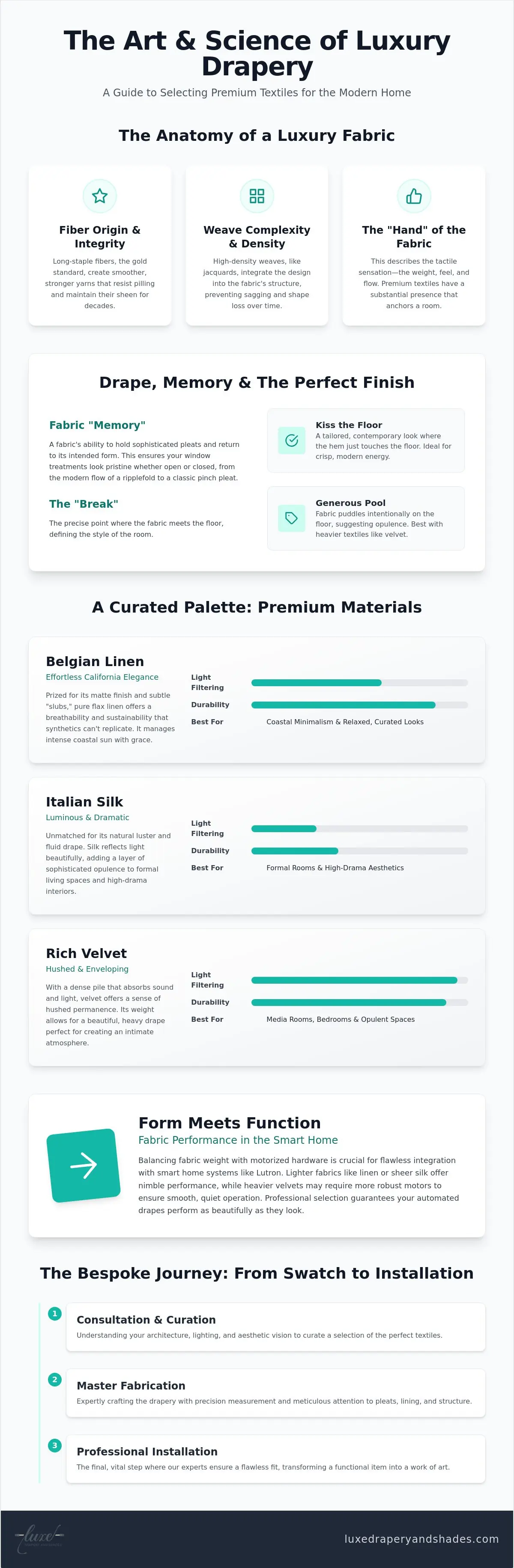
A central concept in high-end design is the “hand” of the fabric. This term describes the tactile sensation and weight of the material as it interacts with your touch and the surrounding air. The hand dictates how a room feels. A crisp, high-integrity linen provides a structured, modern energy, while a heavy, long-staple velvet offers a sense of hushed permanence. Mass-market synthetic blends often feel thin or overly slick because they lack the organic depth of natural fibers. By contrast, premium textiles possess a physical presence that anchors a room’s aesthetic.
Understanding the technical nuances of these materials is essential for achieving a professional finish. As explored in The History and Terminology of Drapery, the way a fabric behaves under its own weight is what separates a work of art from a mere curtain. This behavior culminates in the “break,” the precise point where the fabric meets the floor. A heavier textile allows for a generous, intentional pool that suggests opulence, whereas a lighter weave might just kiss the floor for a tailored, contemporary look.
Fiber Integrity and Weave Density
The durability and luster of luxury drapery fabrics depend heavily on fiber length. Long-staple fibers are the gold standard; they create smoother yarns with fewer breaks, resulting in a fabric that resists pilling and maintains its sheen for decades. Weave density is equally vital. High-density weaves, such as yarn-dyed jacquards, integrate the design into the very structure of the cloth. This internal architecture prevents the fabric from sagging or losing its shape over time, even in the expansive, double-height windows common in Los Angeles estates.
The Importance of Verticality and Drape
A fabric’s “memory” determines how it returns to its intended form after being opened or closed. Premium textiles are engineered to hold sophisticated pleats, whether you prefer the classic structure of pinch pleats or the modern, rhythmic flow of a ripplefold system. This structural memory ensures that your window treatments look as pristine at sunset as they did at dawn. Drape is the fluid movement of fabric under gravity. When a material possesses the correct weight and density, it follows the vertical lines of your architecture with effortless grace, creating a sense of visual order and calm.
A Curated Palette: Premium Materials for the Modern Estate
Selecting the right textile is an exercise in vision and restraint. While the market is flooded with synthetic imitations, authentic luxury drapery fabrics are defined by their organic origins and the sensory experience they provide. These materials do more than cover a window; they act as a lens for experiencing a better lifestyle, framing your view with textures that respond beautifully to the shifting California light. A thoughtful selection balances the tactile “hand” of the fabric with the specific light-filtering needs of your architecture.
In the current design landscape of 2026, the shift toward “quiet luxury” has placed natural materials at the forefront. This trend emphasizes tactile, matte finishes over artificial shine, favoring fabrics that feel as good as they look. Understanding the nuances of these premium categories is the first step in creating a window treatment that feels like a bespoke work of art. Referencing a professional drapery fabric selection guide can help you distinguish between various weave structures and their intended applications in high-end residential design.
Belgian Linen: Effortless California Elegance
Belgian linen remains the gold standard for coastal and transitional luxury in Los Angeles. Prized for its matte finish and the subtle irregularities known as “slubs,” pure flax linen offers a breathability and sustainability that synthetic blends can’t replicate. For estates in the South Bay or the Westside, linen provides a relaxed yet highly curated look. It manages the intense coastal sun with grace, though it requires professional handling to account for its natural tendency to expand and contract with humidity. If you’re seeking a look that is both grounded and sophisticated, exploring custom drapery in premium linen is often the ideal starting point.
Luxury Silks and Satins
For formal dining rooms and primary suites, Italian silk offers an unmatched luminescent quality. The crisp, ribbed texture of silk shantung or the intricate, woven patterns of a damask create a sense of high-drama opulence. However, silk is sensitive to the environment. The Los Angeles sun is unforgiving, making professional interlining a non-negotiable requirement. This hidden layer of protection guards the delicate fibers against UV degradation while adding the necessary weight to achieve a deep, luxurious “break” on the floor.
Architectural Sheers and Casements
Modern architecture often demands a softer touch to balance glass and stone. Architectural sheers, particularly those featuring wool-blends, provide a matte, contemporary finish that filters natural light without sacrificing privacy. These can be used as standalone treatments or layered with heavier drapes for a multi-functional window. This layering, often called “double dressing,” is a defining trend for 2026, allowing homeowners to adjust the atmosphere of a room from airy and bright to hushed and private with ease.
Form Meets Function: Fabric Performance in the Smart Home
In a sophisticated residence, beauty shouldn’t exist at the expense of utility. While previous sections explored the tactile allure of luxury drapery fabrics, their role in a high-performance environment is equally vital. These textiles act as a sophisticated thermal barrier, contributing significantly to a home’s energy efficiency. By selecting high-density weaves, you create a layer of insulation that retains cool air during intense Los Angeles summers and preserves warmth on winter evenings. Beyond temperature control, heavy weaves offer exceptional acoustic benefits, dampening sound in open-concept living areas and creating a sanctuary of quiet comfort.
The environmental challenges of Southern California require a proactive approach to material preservation. The same sunlight that illuminates a beachfront estate can cause irreparable damage to natural fibers over time. High-performance window treatments serve as a first line of defense, protecting your interior art, flooring, and furniture from UV exposure. This functional aspect of design ensures that your living space remains as pristine as the day it was conceived.
Optimizing Fabric for Motorization
The integration of technology requires a deep understanding of material weight and track capacity. Selecting fabrics that work seamlessly with motorized drapery hardware is a technical necessity. Heavy velvets or dense damasks possess a high “stack back,” meaning they take up more horizontal space when pushed open. If the track isn’t properly specified for the fabric’s weight and volume, the motor may experience unnecessary strain. Lutron lighting control systems play a crucial role here. By automating your drapes to close during the peak midday sun, you protect delicate natural fibers from UV degradation, ensuring your investment remains vibrant for years.
Precision is paramount when pairing automation with high-end textiles. A lightweight sheer requires a different motor torque than a triple-lined master suite drape. This specialized knowledge ensures that the movement remains silent and fluid, mirroring the refined atmosphere of your home. It’s not just about moving fabric; it’s about choreographing light and privacy with effortless grace.
Linings and Interlinings: The Hidden Luxury
The true measure of a custom window treatment often lies in what you don’t see. Linings and interlinings are the silent partners of luxury drapery fabrics. A blackout lining is essential for bedrooms, providing total light control for restorative sleep. For living spaces where a soft glow is preferred, dimout linings offer privacy while allowing a gentle luminescence to permeate the room. Professional-grade UV-resistant linings are a standard requirement in Southern California to prevent the “sun-rot” that can destroy unprotected silk or linen.
Adding a flannel interlining is a hallmark of boutique craftsmanship. This middle layer gives the drape a substantial “body,” allowing even lighter fabrics to hang with the authority of a heavier material. It also enhances the thermal and acoustic properties of the treatment, turning a decorative accent into a high-performance architectural element. This attention to hidden detail ensures that your window treatments feel as substantial and permanent as the walls they adorn.
Designing for the Los Angeles Interior: Trends and Styles
Los Angeles is a city defined by its architectural diversity, ranging from the glass-walled modernism of the Hollywood Hills to the historic Mediterranean estates of Hancock Park. In these high-stakes environments, luxury drapery fabrics serve as the essential connective tissue between interior design and the surrounding landscape. Choosing the right textile requires an understanding of how light interacts with local geography, whether it’s the diffused glow of a coastal morning or the sharp, golden hour heat of the valley. A well-considered window treatment doesn’t just block light; it sculpts it to suit the personality of the home.
The prevailing trend for 2026 is “quiet luxury,” a philosophy that favors substance over showmanship. This aesthetic relies on monochromatic palettes where the visual interest comes from varying textile weights and intricate textures rather than loud patterns. By layering different luxury drapery fabrics, such as a heavy linen over a delicate wool-blend sheer, you create a sense of depth that feels both curated and effortless. This approach emphasizes the architectural lines of a room, allowing the quality of the materials to speak for itself.
The Coastal California Aesthetic
For residences in the South Bay and Malibu, the design goal is often to blur the line between the interior and the Pacific horizon. This “Coastal Luxe” style utilizes cool-toned linens and airy sheers that catch the ocean breeze. To achieve a truly organic look, many designers pair these textiles with woven wood shades, creating a rich, layered effect. It’s vital to select salt-air resistant fibers for these properties, as the coastal environment can be taxing on lesser materials. To maintain a seamless transition to your terrace, consider how these interior choices complement your outdoor shades, ensuring a unified aesthetic for indoor-outdoor living.
Traditional Elegance in LA Estates
Historic Los Angeles estates often demand a more formal approach that honors their heritage. Hollywood Regency and traditional Mediterranean styles benefit from the weight and drama of rich velvets, yarn-dyed jacquards, and intricate embroideries. These materials provide the “hand” and luster necessary for high-drama interiors. In many of these homes, plantation shutters serve as a structural foundation, providing privacy and light control while allowing the drapery to act as a decorative frame. This combination offers a timeless elegance that feels grounded in the city’s storied design history.
Whether your home leans toward modern minimalism or traditional opulence, the right fabric choice is the key to a finished space that looks like a work of art. If you’re ready to explore how these textures can transform your environment, you can start your custom design journey with a professional consultation tailored to your specific architectural needs.
The Bespoke Process: From Swatch to Professional Installation
The transition from a conceptual design to a finished architectural element requires more than just a purchase; it demands a standard of service that matches the quality of the materials. The common “order by the yard” model often fails in high-end residential estates because it treats luxury drapery fabrics as a standalone commodity rather than a component of a larger, integrated system. Without professional oversight, even the finest Italian silk or Belgian linen can look underwhelming if the scale, pleating, or installation is mismanaged. A boutique approach ensures that every detail, from the initial measurement to the final fold, is executed with quiet confidence and aesthetic expertise.
The In-Home Design Consultation
Showroom lighting is rarely an accurate reflection of how a textile will behave in your private sanctuary. The unique lighting conditions of Los Angeles, from the cool morning mist of the South Bay to the sharp, golden afternoon glow of the hills, will fundamentally change how a fabric’s color and texture appear. An in-home consultation allows you to evaluate swatches in situ, ensuring the “hand” and luster of the material complement your existing interior palette. It’s also the critical moment to coordinate your choices with existing Lutron home automation systems. Hardware finishes are carefully selected to match the fabric’s undertones, ensuring the motorized tracks and decorative rods feel like a natural extension of the architecture.
Professional Installation and Final Dressing
Technical precision is the hallmark of a truly luxury window treatment. For floor-to-ceiling drapes, a 1/4 inch difference in measurement can be the difference between a perfect, intentional “break” on the floor and an awkward, unintentional gap. High-integrity materials like heavy velvets or triple-lined silks require specialized mounting to ensure the motorized drapery hardware is secure and the movement remains fluid. We don’t just hang the fabric; we integrate it into the room’s infrastructure, ensuring that the weight is distributed correctly and the motor torque is perfectly calibrated for silent operation.
Installation day concludes with what we call “dressing” the window. This meticulous process involves professional steaming and “training” the fabric so each pleat falls with rhythmic consistency from the very first day. We ensure that all motorized components operate with effortless grace, mirroring the refined atmosphere of your home. This commitment to craftsmanship transforms functional household items into a lens for experiencing a better lifestyle, ensuring your finished window treatment looks and performs like a curated work of art.
Transforming Your Perspective with Architectural Textiles
Selecting the right materials is the first step in a journey toward a more refined living environment. We’ve seen how the interplay of fiber integrity and technical performance creates a foundation for both beauty and comfort. From the matte elegance of coastal linens to the sophisticated integration of Lutron motorization, every choice you make serves as a lens for experiencing a better lifestyle. True excellence isn’t just found in the textile itself, but in the precision of a bespoke installation that respects the unique architecture of your home.
As a Licensed and Bonded California Contractor (CSLB #1066068), Luxe Drapery and Shades brings a sense of quiet confidence to every project. We are expert Lutron and smart home integration specialists, providing customized solutions tailored specifically for the most prestigious Los Angeles neighborhoods. By choosing the highest quality luxury drapery fabrics and pairing them with professional craftsmanship, you ensure your window treatments remain a timeless asset to your estate.
The perfect atmosphere is within reach. Schedule a Private In-Home Design Consultation with Luxe Drapery and Shades to explore our curated collections and begin your home’s transformation. We look forward to helping you create a space that is as functional as it is breathtaking.
Frequently Asked Questions
What are the best luxury fabrics for sun-drenched rooms in Los Angeles?
Linen and high-performance architectural sheers are the most resilient choices for rooms with significant southern exposure. While natural fibers like silk offer unmatched luster, they are highly sensitive to UV damage and require heavy interlining. For sun-drenched estates, we recommend luxury drapery fabrics with a tight weave density paired with professional UV-resistant linings to preserve the textile’s color and integrity over time.
How do I choose a fabric weight that is compatible with motorized drapery?
You must match the grams-per-square-meter of your textile with the specific load capacity of your motorized track. Heavier materials like velvet or dense damasks require high-torque motors to ensure silent, fluid movement. Lighter linens are more versatile but still require professional calibration to prevent the fabric from swaying or catching during operation. Consulting a specialist ensures your hardware and fabric weight exist in perfect technical harmony.
What is the difference between linen and Belgian linen for custom drapes?
Belgian linen is a protected designation of origin that guarantees the flax was grown and processed in the historic flax-growing regions of Europe. This specific climate produces longer, stronger fibers that result in a more durable textile with a superior “hand.” Generic linen often uses shorter staples from inconsistent global sources, which can lead to excessive pilling and a less refined drape over time.
Do luxury drapery fabrics require special cleaning or maintenance?
Yes, most high-end textiles are strictly dry-clean only to prevent fiber distortion and shrinkage. We recommend regular, gentle vacuuming with a soft brush attachment to prevent dust from settling into the weave. For large-scale custom treatments, professional in-place cleaning services are often the best way to maintain the fabric’s luster without the risk of removing the drapes from their hardware.
Can I use high-end upholstery fabric for my custom window treatments?
It’s generally not recommended because upholstery fabrics are engineered for abrasion resistance rather than verticality. These materials often have a stiff backing that prevents them from draping or pleating correctly. True luxury drapery fabrics are designed to move fluidly under gravity, ensuring they stack neatly when opened and hang with a graceful “break” when closed.
How does the lining affect the look and longevity of my luxury drapes?
The lining acts as a sacrificial layer, absorbing the brunt of UV radiation to protect the more delicate face fabric. Beyond protection, the lining dictates the “curb appeal” of your home by providing a uniform appearance from the street. It also determines the internal light quality; a blackout lining is essential for restorative sleep, while a dimout lining allows for a soft, filtered luminescence.
Why is professional installation recommended for high-end drapery fabrics?
Professional installation is vital because premium textiles carry significant weight that requires reinforced mounting into the home’s structure. Beyond the technical safety, an expert installer will “dress” or train the fabric. This process involves hand-setting every pleat and steaming the material so its memory holds the intended form, ensuring your window treatments look like a work of art from the moment they are hung.