

True luxury in a media room isn’t found in the pixel count alone, but in the deliberate orchestration of light that allows those pixels to shine. It’s a common dilemma for the design-conscious homeowner: the very windows that offer a stunning vista also create a frustrating mirror effect on your screen. You shouldn’t have to retreat into a dark, shuttered room just to enjoy a midday matinee or the weekend’s big game. We understand that your home should be both a bright, inviting space and a functional private cinema.
This curated guide explores how to reduce glare on TV from windows by blending high-performance window treatments with modern automation. You’ll discover how to eliminate distracting reflections and washed-out colors without compromising the elegant, airy feel of your interior design. We’ll examine the synergy of fabric science and intelligent systems, from the precision of Lutron lighting control to the subtle textures of motorized roller shades. These sophisticated tools ensure your viewing experience remains flawless at any hour, transforming your living space into a perfectly balanced sanctuary for both relaxation and entertainment.
Key Takeaways
- Understand the physics of specular reflection to determine exactly why your screen acts as a mirror during peak daylight hours.
- Learn how to apply the 90-degree rule and utilize tilting mounts to strategically shift reflection points away from your primary seating area.
- Discover how to reduce glare on TV from windows using specialized solar shades that balance fabric openness with high-definition screen clarity.
- Explore the benefits of proactive light management through Lutron automation and scheduled shade adjustments for consistent viewing quality.
- Recognize the value of a tailored design approach to harmonize technical light control with the sophisticated aesthetics of your home.
Understanding the Science of TV Glare and Window Placement
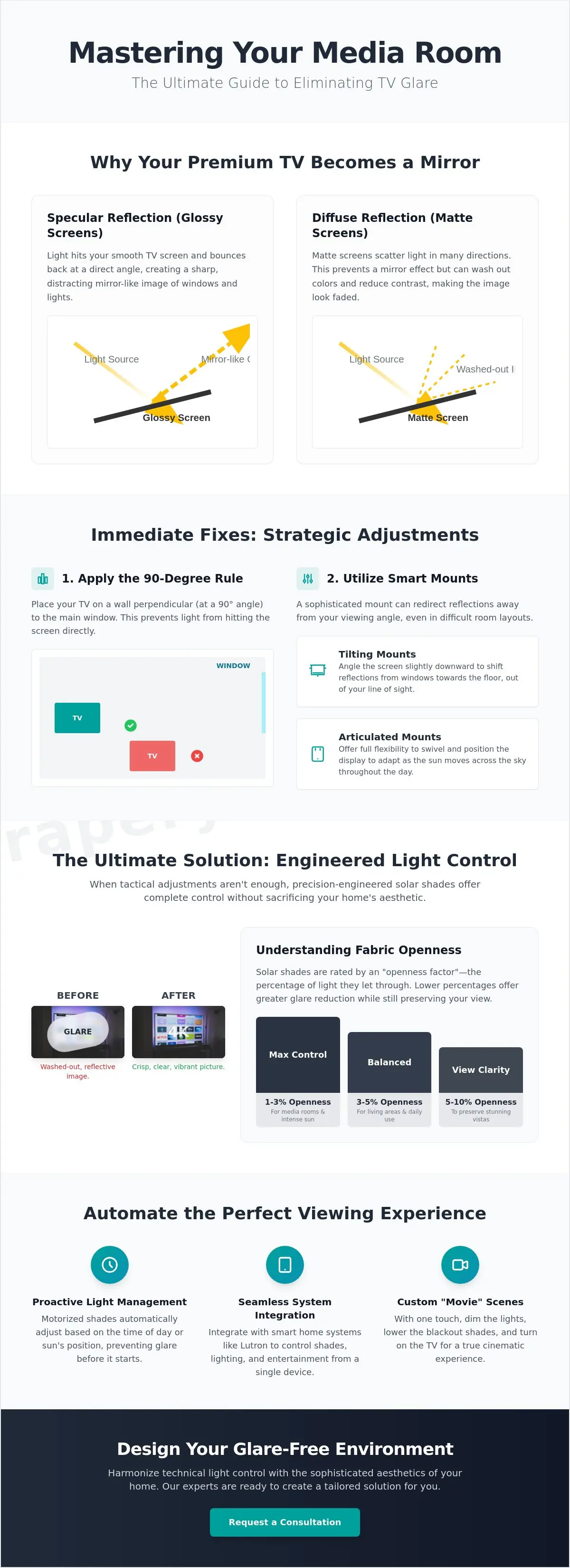
To truly master the art of the home cinema, you must first understand the physics of light within a lived environment. When you’re researching how to reduce glare on TV from windows, you’re essentially solving a problem of specular reflection. This occurs when light hits a smooth, polished surface like a modern glass screen and bounces back at the same angle. This effect turns your premium display into an unwanted mirror, reflecting your backyard or skyline rather than the film you’re trying to watch. In the high-intensity light environments of Southern California, this reflection can become so powerful that it completely masks the image on even the most advanced OLED and LED displays.
The severity of the distraction is dictated by the angle of incidence. Light travels in straight lines; the angle at which sunlight hits your screen will be the exact angle at which it reflects toward your eyes. If your primary seating sits directly in this path of reflection, the picture quality will suffer regardless of the TV’s brightness settings. While it might be tempting to simply close heavy drapes, this often creates a cave-like atmosphere that feels disconnected from the home’s architectural beauty. Achieving a clear picture requires a more sophisticated orchestration of light that preserves your interior aesthetic.
Specular vs. Diffuse Reflection
Glossy screens are prized for their deep blacks and vibrant contrast, yet they are the primary victims of specular reflection. These surfaces reflect light with minimal scattering, creating sharp, distracting images of windows directly on the screen. Many manufacturers lean on the Science of Anti-Reflective Coatings to mitigate this, but the sheer volume of California sun often overwhelms these built-in filters. Diffuse reflection, found on matte screens, scatters light in multiple directions. While this eliminates the mirror effect, it can often result in a washed-out appearance where colors lose their punch and blacks turn to grey. Light-colored interior walls can actually increase secondary glare by reflecting ambient brightness back onto the screen surface.
The Impact of Window Orientation
Window placement determines the timing and intensity of your viewing challenges. West-facing windows in Los Angeles create the most significant late-afternoon obstacles, as the low-hanging sun strikes screens at a direct, harsh angle. Contrast this with North-facing windows, which provide a constant, soft ambient light that is much easier to manage. For homes featuring floor-to-ceiling glass walls, standard solutions usually fall short. These expansive architectural features require specialized shading strategies that can handle massive light volume without sacrificing the room’s open, airy feel.
How to Reduce Glare on TV: Immediate Tactical Adjustments
Before committing to permanent architectural changes, you can employ several Immediate Tactical Adjustments for TV Glare. The most effective starting point is often the simplest: physical orientation. Placing your display at a 90-degree angle to your windows minimizes the direct light striking the panel. This configuration ensures the strongest light sources remain in your peripheral vision rather than directly behind you or in front of the screen. If your floor plan allows, moving the TV to an interior wall is often the most effective way to avoid the backlight issues that occur when a screen is placed directly in front of a window. Learning how to reduce glare on TV from windows starts with this fundamental understanding of spatial geometry.
Physical Positioning and Mount Selection
If your room’s layout is fixed, a sophisticated mount becomes your most valuable tool. Tilting wall mounts allow you to angle the screen slightly downward, which effectively shifts the reflection point of a window away from your eyes and toward the carpets or furniture. For expansive Great Rooms with multiple light sources, an articulated arm mount offers the flexibility to swivel the display as the sun moves across the sky. These physical shifts work in tandem with the physics of reflection; even a three-degree tilt can be the difference between a washed-out image and a crisp picture. If you find that these physical adjustments still don’t provide the clarity you desire, it’s often a sign that your space requires the precision of customized window treatments to truly manage the light.
Optimizing Your Display Settings
Modern displays are more capable of fighting ambient light than ever before. High-end 2026 models, such as the Samsung S95H or the LG OLED evo G6, feature impressive peak brightness levels and advanced anti-reflective coatings that can often overcome moderate glare. Enabling the “Light Sensor” or “Ambient Light” mode allows your TV to automatically adjust its output as the room gets brighter. While “Vivid” mode might seem like an easy fix, it often crushes detail and causes eye strain during long viewing sessions. A better solution is a dedicated “Daytime” preset that balances high contrast with bias lighting. Placing a soft, neutral LED strip behind the TV creates a halo effect that reduces the perceived intensity of reflections. This simple addition tricks the brain into seeing deeper blacks, making the screen much easier to view without cranking the brightness to uncomfortable levels.
Luxury Window Treatments Engineered for Glare Control
When tactical shifts in furniture and display settings aren’t enough, the solution lies in the meticulous selection of high-performance window treatments. While many generic tips for reducing TV glare suggest simply closing the blinds, a luxury home requires a more nuanced approach. Solar shades are the preferred choice for modern estates because they manage light without sacrificing the architectural view. These systems are designed to address how to reduce glare on TV from windows by filtering specific wavelengths of light, ensuring your screen remains crisp while your living space stays connected to the outdoors.
For multi-purpose rooms that transition from bright morning lounges to evening cinemas, a dual-shade system offers the ultimate versatility. This configuration pairs a sheer solar fabric with a secondary blackout shade, allowing you to choose between filtered light and total darkness. This layered approach ensures that your interior aesthetic remains sophisticated, providing a tailored light-control strategy for every hour of the day.
Solar Shades and the Openness Factor
The effectiveness of a solar shade is determined by its “Openness Factor,” which refers to the density of the weave. A 1% openness provides the highest level of glare control, making it ideal for south-facing windows that receive intense, direct sun. A 3% or 5% weave offers a more transparent view, which works beautifully for rooms with softer ambient light. Contrary to popular belief, dark-colored solar fabrics actually provide superior glare reduction and better view-through clarity than lighter tones. These dark weaves absorb more light and heat, effectively neutralizing the “veiling glare” that often washes out TV colors. For a minimalist aesthetic, bespoke roller shades provide a clean, uncluttered profile that disappears into the window frame when not in use.
Bespoke Drapery and Roman Shades
For those who prefer a softer, more traditional texture, custom drapes offer a powerful solution for light management. When equipped with high-quality blackout linings, drapery provides total light blockage, which is essential for dedicated home theaters. Similarly, blackout-lined Roman shades are excellent for eliminating the light “halos” that often creep around the edges of standard blinds. Beyond their visual performance, these premium fabrics serve a protective role, blocking the harmful UV rays that can degrade both your TV panel and your fine furniture over time. Layering delicate sheers with heavy drapes allows for a sophisticated orchestration of light, providing a luxurious atmosphere that adapts to your viewing needs.
Smart Home Integration: Automating the Viewing Experience
Modern luxury is defined by the absence of friction. While manual adjustments offer a temporary reprieve, the most effective answer to how to reduce glare on TV from windows lies in proactive, intelligent automation. Sophisticated systems transform your living space into a responsive environment that adapts to the exterior world in real time. By integrating motorized hardware with professional control platforms, you can ensure that your viewing experience remains pristine without ever lifting a finger. This level of synchronization is why many Los Angeles estates now consider automated shading a standard requirement rather than an optional upgrade.
The true power of Lutron home automation rests in its ability to manage light uniformly across large architectural spans. Motorized shades move in perfect alignment, eliminating the uneven light gaps that occur with manual operation. This precision is especially vital for floor-to-ceiling glass where even a small misalignment can create a distracting sliver of light on your screen. These systems work behind the scenes to maintain the integrity of your interior design while prioritizing your visual comfort.
Proactive Glare Management with Lutron
High-end installations often utilize Lutron Sivoia shades for their whisper-quiet operation and heritage of reliability. These shades utilize hyper-accurate astronomical clocks to track the sun’s specific position in Los Angeles throughout the year. As the sun dips toward the horizon during the “Golden Hour,” the system automatically lowers the shades to the precise level needed to block direct reflections. You have the flexibility to choose between hardwired motorization for new builds or battery-powered options that offer a clean, wire-free look for existing rooms.
Creating the Perfect Media Scene
Automation truly shines when it coordinates multiple elements of your home environment. By integrating your shades with platforms like Josh.ai or Alexa, you can trigger a “Cinema” scene with a simple voice command. This preset simultaneously dims your Ketra lighting, powers on the display, and lowers the shades to a pre-determined position. Beyond the entertainment benefits, these smart systems contribute to significant energy efficiency. By automatically closing during peak heat hours, they reduce solar heat gain and protect your cooling system from overworking. If you are ready to elevate your home media experience, explore our specialized Lutron shading solutions to find the perfect fit for your space.
Designing a Glare-Free Environment: The Luxe Approach
A refined home in Los Angeles deserves more than a temporary fix for visual distractions. It requires an architectural eye that understands how to harmonize high-performance technology with the principles of “Quiet Luxury.” Finding the definitive answer for how to reduce glare on TV from windows requires a shift from reactive fixes to proactive design. While previous strategies focused on display settings and shade types, the final stage of a clearer viewing experience is the precise integration of these elements into your home’s unique footprint. In the Westside and South Bay estates where floor-to-ceiling glass is a signature feature, light management becomes a fundamental element of interior comfort.
Professional consultation is essential for homes with complex architectural glass. Standard solutions often fail to account for the unique light angles found in hillside properties or coastal residences. A curated approach ensures that every window treatment serves as a functional home accent, enhancing the room’s beauty while fulfilling a technical necessity. We believe that a beautiful living space is the lens through which you experience a better lifestyle, and that experience is only possible when every detail, from the fabric texture to the motor’s whisper, is perfectly aligned.
Bespoke Solutions for Unique Architecture
Challenging spaces like sunrooms or rooms with skylights require specialized engineering to maintain screen clarity. For dedicated home theaters, we often utilize custom side channels. These tracks eliminate the light gaps at the edges of a shade that can cause “laser” reflections, which are thin, high-intensity beams of light that are often more distracting than broad glare. Professional installation is the difference between a covered window and a light-controlled environment. By tailoring the hardware to the specific light conditions of your neighborhood, we ensure that your media room remains a sanctuary for entertainment regardless of the sun’s position.
The Final Touch: Expert Installation
DIY window treatments frequently fall short because they lack the precision required for high-end displays. Even a half-inch measurement error can lead to significant light leakage that ruins the contrast of a premium OLED panel. Choosing a licensed and bonded California contractor provides the peace of mind that your investment is handled with care and technical expertise. We invite you to visit our Los Angeles showroom for a hands-on demonstration of our anti-glare fabrics and motorized systems. Seeing these solutions in person allows you to appreciate the transformative power of quality craftsmanship and find the perfect balance for your own viewing environment.
Elevate Your Home Cinema Experience
Achieving the perfect picture is an exercise in intentional design. You’ve explored the technical nuances of light reflection and the transformative power of automated shading systems. By moving beyond simple fixes and embracing the synergy of fabric science and smart technology, you can finally master how to reduce glare on TV from windows without compromising your home’s aesthetic integrity. A truly refined viewing environment doesn’t just block the sun; it orchestrates natural light to enhance both your screen clarity and your room’s atmosphere.
As a Lutron Gold Provider and a licensed California contractor, CSLB #1066068, Luxe Drapery and Shades brings specialized expertise to high-end Los Angeles residential estates. Our team ensures that every installation is a seamless blend of technical precision and quiet luxury. We invite you to Request a Professional Shading Consultation to discover how bespoke window treatments can redefine your leisure time. Your home should be a sanctuary where every detail serves your comfort and style. We’re here to help you see your favorite films in a whole new light.
Frequently Asked Questions
Do solar shades really stop TV glare while keeping the view?
Solar shades are specifically engineered to manage light without creating a closed-off environment. They utilize a precise weave that diffuses incoming sunlight, which effectively addresses how to reduce glare on TV from windows while preserving your connection to the outdoors. By choosing a darker fabric, you’ll enjoy a crisper view of your landscape and a more vibrant screen image than you would with lighter, more reflective materials.
Can I use smart shades to automatically block glare at certain times of day?
Modern automation allows your window treatments to respond intelligently to the sun’s movement. By integrating motorized shades with a system like Lutron, you can schedule specific “scenes” that lower the shades exactly when the sun hits your display. These systems use astronomical clocks to adjust for seasonal changes, ensuring your viewing experience remains flawless throughout the year without any manual intervention.
Are blackout drapes necessary for a living room TV, or are sheers enough?
While sheers provide a soft, elegant glow, they are often insufficient for direct, high-intensity sunlight. For a living room that faces the afternoon sun, custom drapes with a blackout or room-darkening lining are far more effective at preventing washed-out picture quality. A layered approach, combining sheers for daytime ambiance and drapes for dedicated viewing, offers the most versatile and luxurious solution for multi-purpose spaces.
What is the best color for window shades to reduce screen reflections?
Darker tones, such as deep charcoals, bronzes, or blacks, are the most effective colors for reducing screen reflections. These shades absorb more ambient light and provide superior view-through clarity compared to white or cream fabrics, which tend to reflect light back into the room. This absorption helps maintain the deep black levels and rich contrast of your television, creating a more immersive cinematic experience.
How much does it cost to install motorized shades for a home theater?
The investment for motorized home theater shades depends on several bespoke factors, including the dimensions of your architectural glass and the specific fabric performance required. Because each installation is tailored to the unique light conditions of your residence, a professional assessment is the best way to determine the scope of your project. We focus on providing high-quality, durable systems that offer long-term value and effortless control for your media environment.
Will anti-glare window film damage my window glass or view?
Professionally installed window treatments are a safer and more aesthetic alternative to permanent window films. While some films can reduce glare, they are often difficult to remove and may not provide the same level of UV protection for your furniture as high-quality roller shades or drapes. Choosing a retractable solution allows you to enjoy the full clarity of your glass whenever the TV is not in use, maintaining the architectural integrity of your home.
Can I integrate my existing TV remote with my window shades?
You can certainly coordinate your window shades with your media controls through a unified smart home platform. Many homeowners use systems like Lutron to link their lighting and shades to a single interface, which can often be triggered by sophisticated universal remotes or voice commands. This integration allows you to transition your room into “Movie Mode” with one touch, lowering the shades and dimming the lights simultaneously for a perfect viewing setup.
What is the “openness factor” and how does it affect my TV picture?
The openness factor refers to the density of the fabric’s weave, expressed as a percentage of light that passes through. For optimal TV viewing in bright rooms, a lower openness factor of 1% or 3% is recommended to provide the highest level of glare suppression. This tighter weave ensures that distracting light points are diffused before they reach your screen, resulting in a much clearer and more detailed picture than a looser weave would provide.