

The most sophisticated architectural element in a luxury Southern California home isn’t always the stone or the cabinetry; it’s the intentional way you filter the Pacific light. While you might worry that natural materials feel too casual for a high-end interior, professional-grade woven wood shades serve as the organic anchor for a truly refined space. You’ve likely spent years perfecting your home’s aesthetic, so the fear of window treatments looking “boho” or failing to protect your flooring from UV damage is a valid concern for any serious collector of fine interiors.
We believe that high design should never force a choice between tactile beauty and technical performance. This guide reveals how to elevate your home with bespoke craftsmanship that adheres to the June 1, 2024, safety regulations requiring cordless or inaccessible cord designs. You’ll learn how to pair hand-woven textures with Lutron automation for a home that responds to your lifestyle at a touch. We’re exploring how these artisanal solutions provide energy-efficient sun control while integrating perfectly with the modern, coastal-inspired aesthetic that defines the Los Angeles landscape.
Key Takeaways
- Understand the distinct aesthetic and durability differences between bamboo, jute, and exotic grasses to select the perfect texture for each room’s specific needs.
- Learn how to balance organic beauty with modern functionality by integrating woven wood shades with custom privacy linings and seamless smart home motorization.
- Discover how to tailor natural textures to your home’s architectural style, from light-toned Coastal Modern to the rich, dark tones of Spanish Colonial design.
- Ensure your home remains both beautiful and compliant with the June 2024 safety standards regarding cordless window treatment designs.
- Explore why professional measurement and curated material sourcing are essential for achieving a flawless, bespoke fit in high-end Los Angeles interiors.
What are Woven Wood Shades? Defining the Organic Aesthetic
Woven wood shades are more than simple window coverings; they represent a tactile expression of the natural world brought indoors. Often referred to as natural shades, these handcrafted treatments are composed of renewable materials that offer a distinct departure from synthetic alternatives. While mass-market bamboo blinds often feel thin or repetitive, the bespoke natural wovens found in luxury Los Angeles estates are defined by their weight, complexity, and artisanal origin. These pieces use sustainable reeds, exotic grasses, and natural jute to create a bridge between refined interior spaces and the organic beauty of the Southern California landscape.
Texture plays a decisive role in modern interior design, especially in minimalist or coastal aesthetics where color palettes remain neutral. High-end designers use these materials to add depth and visual interest without cluttering a room. By introducing the raw, varied surfaces of earth-grown fibers, you can soften the hard edges of stone countertops or glass walls, creating a more balanced and inviting atmosphere that feels both curated and comfortable.
The Anatomy of a Natural Woven Shade
The construction of a premium shade involves an intricate weaving process where horizontal slats of bamboo or wood are interlaced with vertical threads. This technique is a modern evolution of the aesthetic found in traditional Japanese screens, which have long been used to filter light while maintaining a connection to the outdoors. Unlike machine-made fabrics, these materials contain natural variations in color and thickness. These slight “imperfections” aren’t flaws; they are the hallmarks of authenticity that define a luxury product.
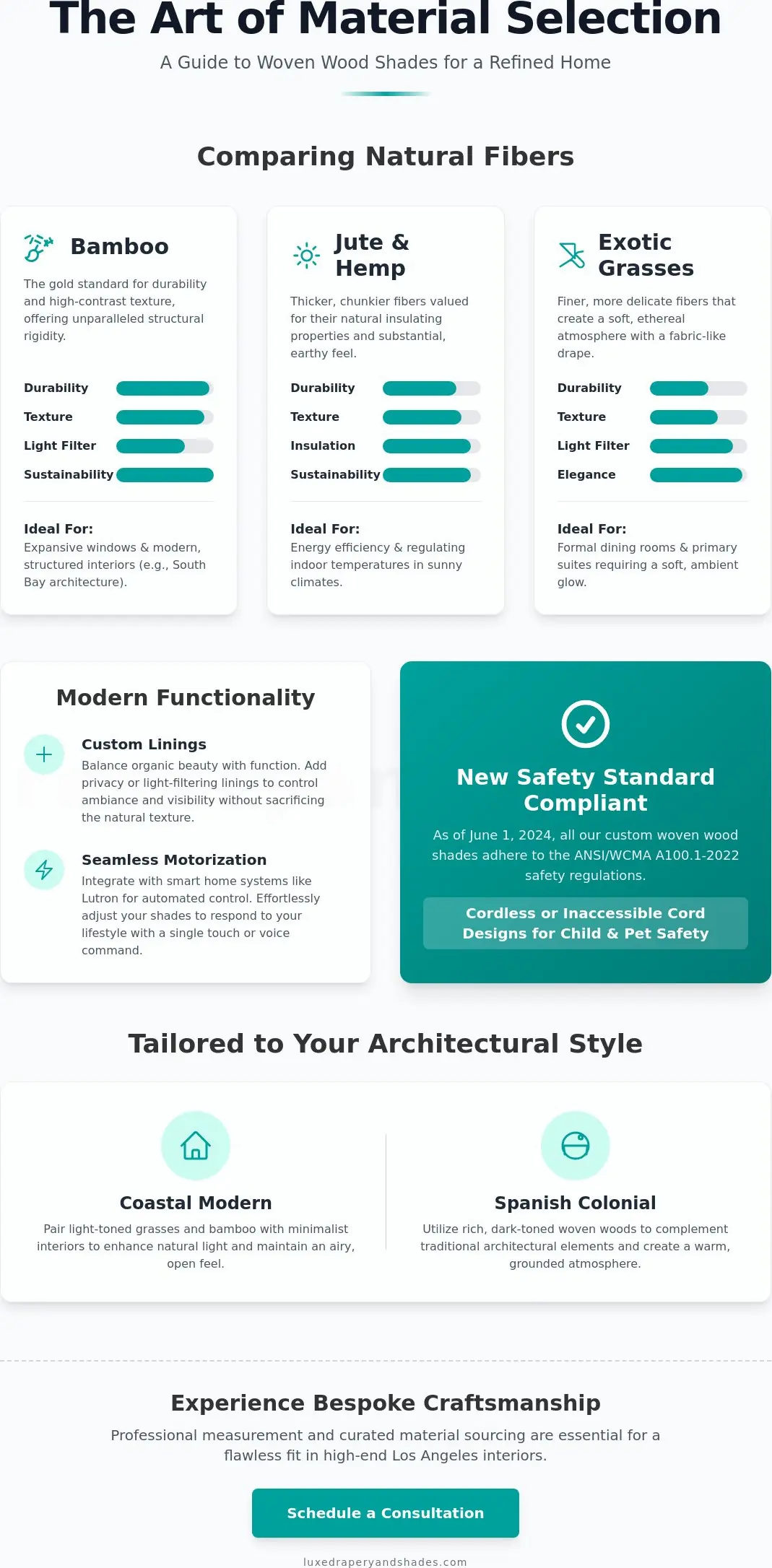
Safety and functionality have also evolved significantly. As of June 1, 2024, new safety standards (ANSI/WCMA A100.1-2022) require that most window coverings, including custom woven wood shades, be designed as cordless or with inaccessible cords. This shift has pushed the industry toward sleeker, motorized solutions that prioritize child and pet safety without sacrificing the sophisticated look of the weave.
Woven Woods vs. Traditional Roman Shades
Choosing between material types often comes down to the architectural goals of your home. Traditional Roman shades are typically made from soft fabrics like linen or silk, offering a structured, draped appearance. In contrast, woven wood shades utilize rigid materials that maintain their shape while providing a unique semi-translucent quality. When unlined, these shades allow dappled sunlight to filter through the gaps in the weave, creating a warm glow that fabric cannot replicate. For those who appreciate the fold of a Roman shade but desire the texture of the earth, these natural options offer the perfect stylistic compromise.
The Art of Material Selection: Bamboo, Jute, and Exotic Grasses
Selecting the right material for your window treatments is a decision that balances sensory appeal with structural integrity. While the term “natural” is broad, the specific fibers used in woven wood shades dictate how light enters a room and how the window interacts with your furniture. Bamboo remains the gold standard for homeowners seeking durability and high-contrast texture. It offers a structural rigidity that holds its shape over large spans, making it ideal for the expansive windows found in South Bay architecture. Beyond its strength, scientific research from the University of Massachusetts Amherst highlights the sustainable attributes of bamboo, noting its rapid maturation cycle of 3 to 8 years and efficient carbon sequestration. This makes it a leading eco-conscious choice for the 2026 home.
If your design goal leans toward a softer, more ethereal atmosphere, exotic grasses provide a fabric-like drape that suits formal dining rooms or primary suites. These fibers are typically finer than bamboo, allowing for a more delicate weave that filters light into a soft, ambient glow. For those prioritizing energy efficiency, jute and hemp offer a thicker, chunkier profile. These materials possess natural insulating properties that help regulate indoor temperatures, a vital feature for maintaining comfort during the warmer months in Los Angeles. To see how these textures look in a finished space, you might explore our curated collection of natural weaves which features artisan-grade fibers sourced globally.
Texture and Tone: Matching Materials to Your Room
Every room has a unique light profile that requires a specific density of weave. Light-filtering grasses are the preferred choice for breakfast nooks and sunrooms where you want to maximize natural illumination without the harshness of direct glare. In contrast, dense bamboo weaves are better suited for home offices or media rooms where reducing screen glare is a priority. Because these materials are harvested organically, you’ll notice natural color variations within a single shade. These shifts in tone from honey to deep amber reflect the plant’s life cycle and ensure that no two installations are ever identical.
Durability in the California Sun
The intense UV exposure common in Westside LA and coastal neighborhoods can be punishing on interior finishes. While all natural fibers develop a slight patina over time, bamboo and certain treated grasses are particularly resilient against “bleaching” from the sun. To ensure longevity, we recommend edge binding for your woven wood shades. This involves sewing a high-quality fabric border along the edges of the shade to prevent the natural fibers from fraying due to daily operation. Maintenance is remarkably simple; a light dusting or a low-suction vacuum attachment once a month keeps the fibers vibrant and free of allergens, preserving the organic beauty of the material for years.
Customization for Function: Linings, Privacy, and Motorization
Customizing your window treatments requires a balance between the organic texture discussed earlier and the practical demands of a modern estate. While the raw material defines the style, the lining and operating system define the lifestyle. Many homeowners opt for the unlined look in common areas like the living room or foyer. This allows woven wood shades to filter light into soft, dappled patterns, creating evocative silhouettes that change as the sun moves across the sky. However, for rooms where light control is paramount, adding a functional layer is essential.
A sophisticated solution for the discerning client is the “Two-in-One” shade. This system pairs a natural woven front with an independently operated roller shade in the back. It offers the best of both worlds: the artisanal beauty of a natural weave during the day and the complete privacy of a solid shade at night. This dual-layer approach provides a level of versatility that a single fixed lining simply cannot match, allowing you to adapt your environment to the shifting California light.
Lining Options for Every Level of Light
Privacy linings act as a translucent barrier, filtering harsh UV rays while obscuring the view from the street. They’re a staple for street-facing rooms where you want to maintain a bright, airy feel without sacrificing seclusion. For master suites or dedicated home theaters, blackout linings are the standard. These opaque layers block nearly 100% of incoming light, ensuring a restful environment regardless of the time of day. Unlike mass-market options, our liners are color-coordinated to the material. This ensures that when viewed from the exterior of the estate, your windows present a uniform, polished appearance that enhances curb appeal.
Smart Home Integration with Lutron
The transition to motorized operation has elevated natural textures to the standard of “Quiet Luxury.” Since the June 1, 2024, safety regulations mandated cordless designs for most custom coverings, motorization has become the preferred choice for high-end Los Angeles homes. It’s particularly vital for hard-to-reach windows in double-height entries or behind large furniture pieces. Automation removes the need for manual adjustment, preserving the delicate fibers of the weave from the oils on your hands.
By integrating your wovens with Lutron home automation, you gain granular control over your home’s atmosphere. You can schedule “Sunset Scenes” that automatically lower the shades as the California sun dips below the horizon, protecting your fine art and flooring from the late-afternoon glare. This seamless integration ensures your woven wood shades are not just beautiful objects, but active participants in your home’s smart ecosystem.
Styling Woven Woods in Los Angeles Homes
The unique quality of Southern California light requires a thoughtful approach to interior styling. In the South Bay, where Pacific views define the home’s character, light-toned grasses and bleached reeds are the preferred choice for a Coastal Modern aesthetic. These materials mimic the textures of sand and driftwood, creating a seamless transition between the coastline and the living room. Conversely, for the iconic Spanish Colonial architecture found throughout Los Angeles, dark bamboo provides a necessary visual weight. The deep umber and mahogany tones of the wood create a striking contrast against white plaster walls and wrought iron fixtures, grounding the room in a sense of history and permanence.
For those pursuing a Minimalist Chic look, woven wood shades often serve as the primary “art” in a room. In a space with clean lines and a restrained palette, the intricate, irregular patterns of a hand-woven reed become a focal point. This organic complexity prevents a minimalist room from feeling sterile, adding a layer of warmth that synthetic materials cannot provide. To explore how these styles can be tailored to your specific architectural needs, we invite you to schedule a private design consultation with our Los Angeles team.
Layering Wovens with Drapery
A significant trend in luxury design is the “hard and soft” pairing. Designers frequently layer the structured, tactile surface of woven wood shades with the flowing elegance of custom drapes in Los Angeles. This combination offers superior light control and a high-end, finished appearance. When planning this look, proportions are critical. We often recommend an inside-mount for the woven shade to keep the window frame visible, while the drapery hardware is mounted “high and wide” to frame the window and add height to the ceiling. Using a neutral woven base allows you to experiment with bolder, patterned drapes without overwhelming the room’s visual balance.
Room-by-Room Design Guide
Each living space demands a different functional priority. In kitchens, moisture-resistant bamboo is superior to traditional fabric treatments. It doesn’t absorb cooking odors and can withstand the humidity of a busy culinary space while remaining easy to clean. Living rooms, however, benefit from the scale of oversized natural textures. Large-scale weaves create a sense of grandeur in rooms with high ceilings, acting as a tactile anchor for the entire floor plan.
Bedrooms require a delicate balance between an organic feel and the necessity of total darkness. By utilizing the blackout functionality discussed in previous sections, you can enjoy the rustic beauty of a natural weave during the day and a restorative, light-free environment at night. This versatility ensures that every room in your estate reflects a consistent standard of curated luxury while meeting the specific demands of your daily routine.
The Luxe Drapery Experience: Bespoke Woven Wood Solutions
Luxury window treatments require more than just high-quality materials; they demand a standard of execution that respects the architecture of your home. While online retailers often suggest that measuring for blinds is a simple weekend task, the reality of a high-end installation is far more complex. At Luxe Drapery and Shades, we understand that a discrepancy of even 1/8th of an inch can be the difference between a flawless inside mount and a shade that allows distracting light gaps. Our process begins with professional measurement, ensuring your woven wood shades fit with surgical precision, regardless of the unique architectural quirks found in older Los Angeles estates.
Curated material sourcing is another pillar of the Luxe experience. We provide access to artisan weaves and rare fibers that aren’t found in big-box stores. This exclusivity ensures your home remains a unique reflection of your personal style. During our white-glove installation, our technicians treat your property with the utmost care, using protective coverings and ensuring every component is secured correctly. The “Luxe” guarantee is our commitment that your investment will function perfectly within your existing smart home ecosystem from day one. Luxury demands precision.
Why Professional Installation is Non-Negotiable
The physical properties of natural materials present unique challenges during setup. Oversized natural woven panels can be surprisingly heavy. They require specialized mounting hardware and reinforced brackets to prevent sagging over time. Achieving a perfectly level mounting is essential for maintaining the visual symmetry of the room, especially when multiple shades are installed side-by-side. Technical expertise becomes even more critical when motorization is involved.
Our team provides expert programming for advanced motorized systems like Lutron Sivoia. We ensure your woven wood shades move with the near-silent precision that defines the Lutron brand, synchronizing multiple windows to rise and fall in perfect unison. This level of technical calibration transforms a functional item into a seamless part of your luxury lifestyle. It’s a difference you’ll feel every morning.
Start Your Design Journey in Los Angeles
Your path to a more beautiful home begins with a private consultation at your estate. During this curated design process, we bring the showroom to you. This allows you to see how different artisan weaves interact with the specific lighting and color palette of your rooms. We listen to your goals for privacy, light control, and automation, providing professional guidance that simplifies the decision-making process. See the quality of life through the drapery with Luxe Drapery and Shades, and discover how our specialized expertise can elevate your living space into a sanctuary of organic texture and modern convenience.
Elevate Your Interior with Curated Organic Design
Transforming a high-end estate requires a deliberate blend of artisanal craftsmanship and modern technical precision. We’ve explored how the intentional selection of bamboo, jute, or exotic grasses provides a tactile anchor for your rooms while adhering to the June 1, 2024, cordless safety standards. By pairing your woven wood shades with high-performance linings and Lutron automation, you ensure your window treatments are as functional as they are beautiful.
Luxe Drapery and Shades has served the Westside, South Bay, and Greater Los Angeles area since 2020. As a Licensed California Contractor (CSLB #1066068) and specialists in Lutron Smart Home Integration, we offer a level of technical expertise that mass-market solutions simply can’t replicate. We invite you to Request a Private Design Consultation for Your Los Angeles Home to begin your transformation. It’s time to see the quality of life through the drapery in a home that truly reflects your standard of living.
Frequently Asked Questions
Are woven wood shades the same as bamboo blinds?
Woven wood shades are a broad category that includes bamboo, but also encompasses sustainable reeds, jute, and exotic grasses. While mass-market bamboo blinds often use a single, repetitive material, our curated collection features intricate blends of various earth-grown fibers. This diversity allows for a wider range of textures and colors that can be tailored to the specific architectural requirements of your Los Angeles home.
Do woven wood shades provide enough privacy at night?
Unlined shades offer a semi-translucent view that doesn’t provide full privacy at night when interior lights are on. To achieve complete seclusion, you must add a privacy or blackout lining. These secondary layers protect your interior from street-level visibility while maintaining the organic aesthetic of the natural weave on the front of the treatment.
Can I motorize natural woven wood shades with Lutron?
Yes, you can seamlessly integrate woven wood shades with Lutron lighting control systems for a fully automated environment. We specialize in configuring these natural materials with Lutron Sivoia technology, allowing for near-silent operation. This integration is particularly useful for managing the intense afternoon sun in coastal neighborhoods without requiring manual adjustments.
How do I clean and maintain natural wood shades?
Maintenance is straightforward and requires only regular dusting or a low-suction vacuum with a brush attachment. You should avoid using water or harsh chemical cleaners, as moisture can cause natural fibers like jute or hemp to swell or discolor. For localized spots, a dry cloth is usually sufficient to preserve the material’s integrity and artisanal finish.
Will woven wood shades stretch or sag over time?
Natural fibers possess an inherent flexibility that may lead to a minor “break-in” period where the shade stretches slightly, typically between 1% and 2% of its total length. To minimize this effect, we recommend professional measurement and the addition of edge binding. This fabric border provides structural support that helps the shade maintain its shape and prevents fraying over years of daily use.
Are woven wood shades energy efficient for the California heat?
Natural materials are excellent thermal insulators that help reduce heat gain during the peak of the California summer. When paired with a high-quality liner, woven wood shades can significantly improve a room’s energy efficiency by blocking UV rays before they warm the interior air. This helps maintain a consistent temperature in sun-drenched areas like the South Bay.
Can I layer woven wood shades under custom drapery?
Layering these treatments under custom drapery is a hallmark of luxury interior design. This “hard and soft” combination allows you to use the woven shade for light filtration and the drapery for added insulation or a formal aesthetic. For the best results, we usually perform an inside mount for the shade to keep the window’s architectural lines visible behind the fabric panels.
How do I choose between an inside mount and an outside mount for wovens?
The choice depends on your window’s depth and your desired aesthetic. An inside mount offers a clean, integrated look that highlights the window casing, provided there is at least 2 inches of depth for the hardware. An outside mount is preferable if you want to hide unattractive trim or make a small window appear larger by mounting the shade several inches above the frame.