

Last Tuesday, a Malibu homeowner watched as a salt-corroded rod finally gave way under thirty pounds of custom velvet. It’s a common heartbreak in coastal Los Angeles, where the salt air can tarnish standard finishes within eighteen months of installation. You likely agree that window treatments should serve as the jewelry of a room, yet the technical demands of high-end drapery hardware often clash with the aesthetic vision you’ve carefully curated. When hardware fails under the weight of luxury fabrics or refuses to sync with your smart home, the entire design loses its luster.
We’ll show you how to select the perfect hardware that bridges the gap between historic Los Angeles architectural heritage and the silent precision of modern smart-home automation. You’ll discover how to achieve a look that lasts a lifetime while enjoying the ease of whisper-quiet motorization. This guide explores the essential balance between marine-grade durability and the sophisticated, custom aesthetic that allows you to see the quality of life through your drapery.
Key Takeaways
- Understand how to treat window treatments as structural design elements that bridge the gap between Los Angeles architectural heritage and modern aesthetics.
- Learn to select high-performance materials and finishes specifically engineered to withstand Southern California’s unique UV exposure and coastal conditions.
- Explore the seamless integration of premium drapery hardware with smart-home automation to achieve the “Quiet Luxury” of whisper-quiet motorized tracks.
- Master professional placement techniques, such as the “High and Wide” rule, to maximize natural light and harmonize finishes with your home’s existing architectural details.
- Discover the transformative impact of a bespoke, curated sourcing service and why expert installation is vital for the longevity of your high-end window treatments.
The Architectural Significance of Drapery Hardware in Los Angeles Homes
In the context of high-end interior design, drapery hardware acts as the essential jewelry of a room. It provides the finishing flourish that elevates a window treatment from a simple fabric covering to a curated architectural feature. For decades, the humble curtain rod was viewed as a purely utilitarian object, often hidden behind valances or tucked out of sight. Modern Los Angeles architecture has transformed these components into integrated structural design elements. In Westside estates where ceiling heights often reach 12 to 15 feet, the scale and placement of hardware determine the visual volume of the entire space. Choosing bespoke hardware instead of ready-made options ensures that the proportions align with the grand scale of Southern California’s most prestigious residences.
Hardware as a Design Statement
Finials and brackets represent the final layer of detail in a custom project. These elements bridge the gap between the soft textures of the fabric and the hard lines of the architecture. While hidden track systems offer a minimalist, recessed look favored in contemporary Bel Air villas, decorative rod-and-ring sets provide a traditional elegance that commands attention. Drapery hardware serves as the definitive anchor that secures room symmetry and balances the visual weight of window openings. By selecting finishes like hand-forged iron or brushed brass, designers create a cohesive narrative that connects the window treatments to other metallic accents in the home, such as lighting fixtures or cabinetry pulls.
The Premium Advantage: Custom vs. Retail
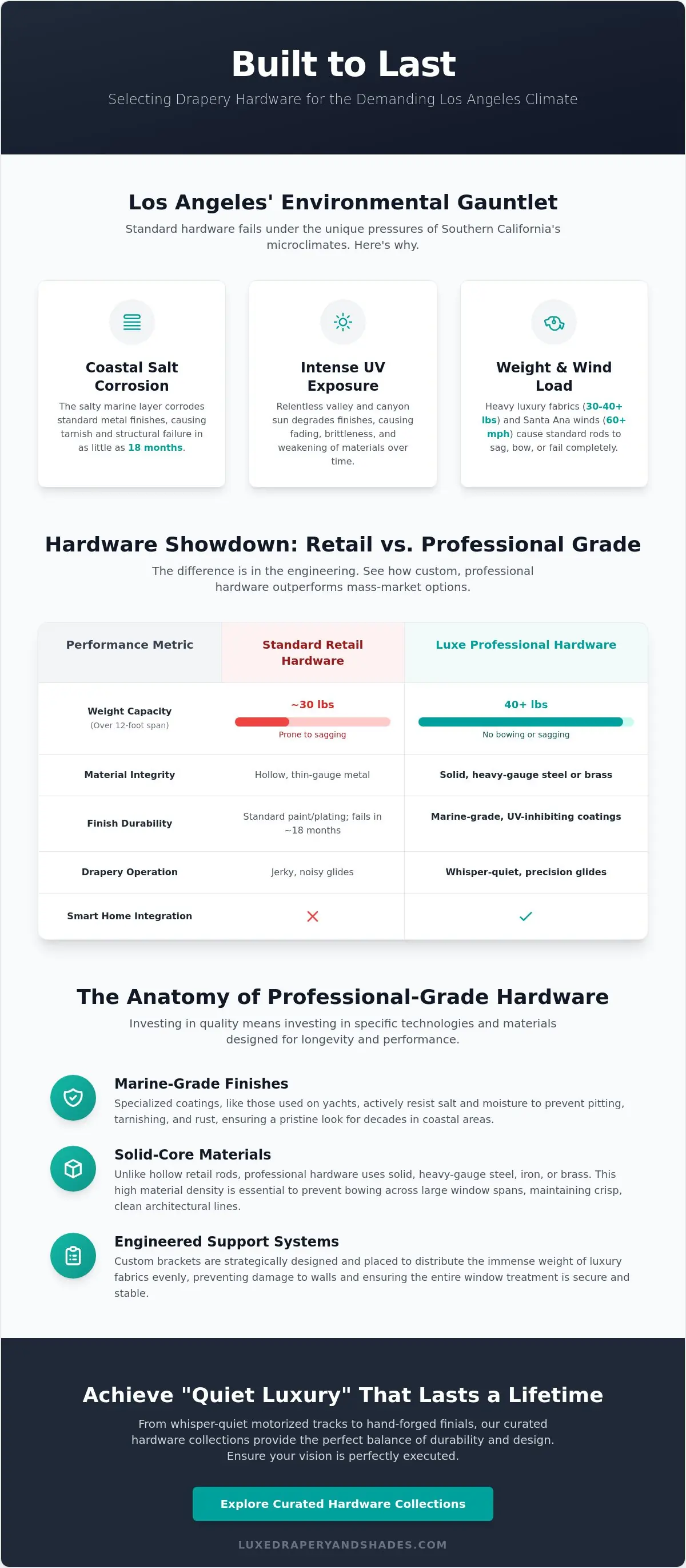
Retail rods frequently collapse under the physical demands of high-end textiles. A standard 1-inch retail rod typically bows when tasked with supporting custom drapes los angeles homeowners prefer, especially when those drapes feature heavy interlining for thermal control or light blockage. Professional-grade hardware utilizes solid metal or high-density wood to ensure long-term durability and smooth operation. This isn’t just about looks; it’s about the physics of the window wall.
- Material Integrity: Custom hardware uses heavy-gauge steel or solid brass that won’t warp over a 20-foot span.
- Support Systems: Specialized brackets are engineered to distribute weight evenly across large-scale window walls, preventing damage to drywall or plaster.
- Precision Engineering: Custom tracks utilize high-performance glides that allow even the heaviest velvet panels to move with a light touch.
In a city where floor-to-ceiling glass is a standard feature, the stability of the hardware is a safety requirement as much as an aesthetic choice. Investing in premium drapery hardware prevents the common “sag” seen in mass-market installations. This maintains the crisp, vertical lines that define luxury interiors and ensures that your investment in fine textiles is properly supported for years to come.
Selecting Materials for the Los Angeles Climate: From Coastal Estates to Valley Heat
Southern California’s microclimates demand more from drapery hardware than simple visual appeal. In a city where a home might sit on a salt-sprayed cliff or under the relentless sun of a canyon, the structural integrity of your fixtures is paramount. Santa Ana winds, which can reach speeds of 60 miles per hour, put immense pressure on window treatments in open-concept hillside homes. Large-span windows, a hallmark of 21st-century architecture, require hardware with high material density to prevent bowing under the weight of custom textiles. Professional installers, often following guidelines from the Window Coverings Association of America, prioritize metals that balance aesthetic warmth with technical resilience.
Balancing structural integrity with aesthetic warmth is a hallmark of high-end design. For a 12-foot wide window in a Bel Air estate, the rod must support up to 40 pounds of fabric without sagging. Choosing a heavy-gauge steel or a reinforced aluminum track ensures the silhouette remains crisp. This level of precision transforms a functional necessity into a statement of quality. It’s about ensuring the hardware performs as beautifully as it looks, year after year.
Coastal Considerations: Malibu and Santa Monica
The Pacific breeze carries salt particles that act as a corrosive agent on standard finishes. Within 500 yards of the shoreline, salt air can pit unprotected aluminum or oxidize low-grade steel in less than 24 months. This chemical reaction ruins the smooth glide of rings and tracks. Opt for marine-grade stainless steel or solid, hand-polished brass treated with specialized clear-coat lacquers. To maintain the “Luxe” finish, wipe hardware every 90 days with a microfiber cloth and a pH-neutral cleaner to remove salt buildup before it etches the surface.
Heat and UV Resistance: The San Fernando Valley
Inland regions experience thermal fluctuations that reach 100 degrees Fahrenheit, creating a greenhouse effect behind glass. Intense UV exposure causes low-quality wood to warp and plastic brackets to become brittle and snap. Forged iron and high-performance powder coatings offer the best defense against thermal expansion. Designer-grade metal finishes utilize UV-stable pigments that resist fading and chalking even after 5,000 hours of direct solar exposure. These robust materials ensure your investment remains a functional centerpiece of the home. Discover how these curated hardware solutions elevate your interior design while standing up to the California sun.
To avoid the pitfalls of brittle materials, high-end systems often incorporate industrial-grade components designed to withstand extreme conditions; learn more about Slideways, Inc. to discover how these high-performance plastic extrusions and guide rails provide lasting durability.
Rods, Tracks, and Motorization: Navigating the Technical Landscape
The engine of a window treatment is its hardware. Los Angeles homes often feature expansive glass walls that demand robust support. Selecting the right drapery hardware involves more than matching a finish to a faucet; it’s about managing weight, reach, and light. Your choice between a manual rod and an automated track defines how you interact with your space every morning and evening. It’s the difference between a physical chore and a seamless transition.
Manual Systems: Decorative Rods and Rings
Decorative rods remain a staple for transitional or traditional interiors. They provide a tactile, grounded feel to a room. When spans exceed 96 inches, designers often encounter the bracket problem, where center supports block the travel of the curtain. The C-ring solution solves this by using open-back rings that glide over specialized bypass brackets. This allows a single pair of drapes to cover a 20-foot window without interruption. It’s a practical fix that maintains the classic aesthetic of rings on a pole.
Current trends in Southern California favor matte black steel and brushed brass for metal options. Wood remains popular for library settings, though 65% of our recent custom installations favor sleek metal for its durability under heavy fabric loads. Beyond aesthetics, properly installed Energy Efficient Window Coverings can reduce heat gain by up to 77% when closed during sunny hours. The hardware must be positioned to allow the fabric to seal against the wall for maximum thermal benefit. This precision ensures your home stays cool during a Santa Ana wind event while looking impeccably tailored.
The Gold Standard: Motorized Drapery Hardware
Quiet luxury is best defined by movement that’s felt but barely heard. High-reach windows or heavy, blackout-lined velvets make manual operation difficult and can lead to fabric wear over time. Investing in motorized drapery hardware ensures that even the most delicate silks move with fluid, touchless grace. These systems eliminate the need for pull cords, creating a safer environment for children and pets while maintaining a clean, minimalist look.
Modern automation integrates perfectly with the Lutron smart home ecosystem. You can schedule your drapes to open at sunrise or close automatically when the afternoon sun hits its peak. For those seeking total voice control, Josh.ai offers a privacy-focused way to manage your environment without lifting a finger. There are two primary ways to achieve this look:
- Internal motor tracks: The motor is tucked behind the fabric, making the technology completely invisible. This is ideal for contemporary recessed pockets.
- External decorative motorized rods: These combine the beauty of a traditional metal rod with the power of an internal drive belt. You get the visual impact of drapery hardware with the convenience of high-end automation.
Choosing a motorized system means you’ll see the quality of life through the drapery. It’s about making the environment work for you, rather than you working for the environment. Whether you prefer the click of a remote or a simple voice command, the technical landscape of window treatments has never been more sophisticated or accessible.
Designer Guidelines for Hardware Placement and Style in LA Interiors
Achieving a curated look in a Los Angeles home requires more than just beautiful fabric; it demands a strategic approach to drapery hardware placement. Designers in Southern California prioritize the “High and Wide” rule to maximize natural light and frame the city’s iconic views. By mounting the rod 4 to 6 inches above the window frame, or even just below the ceiling line in rooms with 10-foot heights, you create an illusion of architectural grandeur. This technique draws the eye upward, making the space feel expansive and airy while ensuring the window remains the focal point.
Consistency is the hallmark of a well-designed home. When selecting drapery hardware, look to the existing metal finishes in your space. If your kitchen features unlacquered brass cabinetry pulls or your bathroom utilizes matte black plumbing fixtures, carry those elements into your window treatments. This creates a cohesive narrative that feels intentional rather than accidental. For grand rooms, a rod diameter of 1.5 to 2 inches provides the necessary visual weight, while smaller guest rooms or dens benefit from a more delicate 1-inch profile.
Style Matching: Architecture and Hardware
Los Angeles architecture is diverse, and your hardware should honor the home’s original soul. Each style requires a specific aesthetic touch to feel authentic:
- Spanish Colonial: Heavy wrought iron in oil-rubbed bronze or rustic wood finishes with hand-carved finials complement the thick plaster walls and arched doorways found in Santa Monica or Pasadena estates. The structured folds of pinch pleated drapes pair beautifully with these ornate hardware profiles, adding a layer of tailored elegance that honors the home’s traditional character.
- Mid-Century Modern: For the clean lines of a Hollywood Hills post-and-beam, opt for minimalist tracks or slim-profile rods in satin nickel or brushed aluminum. These finishes mirror the era’s fascination with industrial materials.
- Contemporary Estates: Modern builds often utilize hidden recessed tracks. These are built directly into the ceiling, creating a “floating” drapery effect that emphasizes a sleek, tech-forward lifestyle.
Technical Placement and Scale
Precision is what separates a DIY project from a professional installation. To maintain a luxe appearance, mount your hardware high. In a room with standard 8-foot ceilings, placing the rod 2 inches below the ceiling is a common designer secret to add height. If you have vaulted ceilings, aim for 8 to 12 inches above the window trim to balance the proportions of the wall.
Calculating “stack back” is vital for preserving your view. As a general rule, the rod should extend 8 to 12 inches beyond the window frame on each side. This allows the fabric to rest against the wall when open, covering only the trim and not the glass. For heavy materials like velvet or interlined silk, increase this distance to ensure the view remains unobstructed. Proper support is equally critical for longevity:
- Space brackets every 48 inches for standard steel or iron rods.
- For heavy-duty custom drapes or wooden rods, place a bracket every 36 inches to prevent sagging.
- Always ensure a center support bracket is used for any span exceeding 60 inches.
Explore our curated hardware collections to find the perfect match for your home’s architectural story and see the quality of life through the drapery.
Elevating Your Space with Luxe Drapery’s Curated Hardware Collections
At Luxe Drapery and Shades, we believe that the right drapery hardware serves as the foundation for an exquisite interior. Our sourcing process bypasses mass-market options to provide a curated selection of finishes and materials that reflect the unique architectural spirit of Southern California. We approach each project with a commitment to the “Quality of Life,” recognizing that window treatments are more than just fabric. They’re essential elements that control light, privacy, and the overall mood of your home. By integrating refined aesthetics with functional excellence, we transform standard windows into focal points of sophisticated design. Our team sources everything from hand-forged iron to sleek, minimalist tracks, ensuring every detail aligns with your home’s character.
The Luxe Installation Process
Professional installation is the difference between a system that works and one that inspires. Our team provides a white-glove service specifically tailored for the demanding requirements of Westside LA and South Bay properties. For motorized systems, precision is non-negotiable. We ensure that every bracket is perfectly leveled to prevent motor strain and ensure a silent, fluid motion. Heavy drapes, which often weigh 40 pounds or more per window treatment, require specialized mounting into structural studs to maintain long-term safety and performance. As a licensed and bonded provider, we offer the security that comes with knowing your investment is handled with technical mastery. We don’t just hang rods; we calibrate the entire system for perfect tension and smooth operation.
Bespoke Customization Options
Standard solutions rarely fit the ambitious architecture found in Los Angeles homes. We specialize in custom-bent rods designed to follow the exact radius of bay windows or curved walls. This level of customization ensures that your drapery hardware feels like an organic part of the room’s structure rather than an afterthought. Our clients gain exclusive access to designer-only hardware lines that aren’t available in retail stores, featuring hand-applied finishes and unique finial designs that serve as the jewelry of the room. When paired with the timeless structure of pinch pleated drapes in Los Angeles, these bespoke hardware elements create a cohesive, finished look that elevates the entire window wall. To begin your journey toward a more beautiful and functional living space, schedule your custom hardware consultation in Los Angeles today. We’ll work together to find the perfect balance of form and function for your specific project needs.
Transform Your Perspective with Architectural Precision
Choosing the right drapery hardware is the final, essential step in defining the architectural character of your Los Angeles home. It’s a decision that balances the delicate aesthetic of hand-finished rods with the functional demands of the California climate. Whether you’re shielding a coastal estate from salt air or managing the intense sunlight of the Valley, your hardware must be as resilient as it is beautiful. At Luxe Drapery and Shades, we treat every installation as a masterclass in design and engineering. As a licensed and bonded California contractor (CSLB #1066068), we bring structural expertise to every project. Our team includes expert Lutron-certified automation specialists who integrate seamless technology into your daily environment. We prioritize your peace of mind by providing white-glove professional installation across Los Angeles, ensuring every track and finial is perfectly placed. You deserve a home that reflects your standard of living through every curated detail. It’s time to experience the harmony of form and function in your own space.
Discover our curated collection of luxury drapery hardware in Los Angeles and see the quality of life through the drapery.
Frequently Asked Questions
How do I choose the right diameter for my drapery hardware?
Choosing the right diameter depends on the scale of your window and the weight of your fabric. For standard 8 to 9 foot ceilings, a 1.25 inch or 1.5 inch diameter rod provides a balanced look. If you’re working with grand 12 foot windows in a Los Angeles estate, a 2 inch or 2.25 inch rod ensures the hardware isn’t dwarfed by the architecture. Heavier velvet drapery requires these thicker diameters to prevent bowing over long spans.
What is the best finish for drapery hardware in a coastal Los Angeles home?
High grade stainless steel or specialized powder coated finishes are the best choices for coastal Los Angeles homes. Salt air in neighborhoods like Malibu or Santa Monica can corrode standard plated metals within 12 to 24 months. Opting for 316-grade stainless steel ensures your drapery hardware remains pristine against the marine layer. These materials resist the pitting and oxidation common in humid, saline environments.
Can I motorize my existing drapery hardware?
You generally cannot motorize existing manual rods because automated systems require internal belt drives or specialized tracks. While some add-on retail motors exist, they often fail to move heavy custom panels smoothly. To achieve a true luxe experience, we replace manual rods with dedicated motorized drapery hardware tracks from brands like Somfy or Lutron. These systems integrate the motor directly into the header for a seamless, quiet operation.
How much weight can a standard luxury drapery rod hold?
A high end luxury drapery rod typically supports between 30 and 50 pounds when properly anchored into wall studs. If your window span exceeds 60 inches, you must install a center support bracket to maintain structural integrity. For exceptionally heavy blackout linens that exceed 60 pounds, we utilize heavy duty I-beam tracks. This prevents the rod from sagging or pulling away from the drywall over time.
What is the difference between a traverse rod and a standard curtain rod?
The main difference lies in the internal mechanics; a traverse rod uses a hidden track and cord system to move pleats while a standard rod uses rings that slide over a pole. Traverse systems are ideal for wide spans or heavy fabrics because they utilize carriers that don’t get stuck on brackets. Standard rods offer a more traditional aesthetic where the drapery hardware is a visible design element. Many modern Los Angeles interiors favor decorative traverse rods for a blend of style and function.
Should my drapery hardware match my light fixtures?
Your hardware doesn’t need to match your light fixtures exactly, but it should coordinate within the same color family. If your chandeliers are aged brass, choosing a warm gold or bronze for your rods creates a cohesive 360-degree design. Mixing metals is a common practice in luxury homes; 70 percent of designers now prefer a coordinated mix over a strict match. This adds depth and prevents the room from looking like a showroom set.
How high should I hang my drapery hardware for 10-foot ceilings?
For 10 foot ceilings, you should hang your hardware approximately 4 to 6 inches below the ceiling or just below the crown molding. This high and wide placement draws the eye upward and maximizes the perceived volume of the room. If your window ends significantly lower, aim for the midpoint between the top of the window frame and the ceiling. This technique ensures the fabric creates a dramatic, vertical line that emphasizes the height of your Los Angeles home.
Are motorized drapery tracks loud?
Modern luxury motorized tracks are exceptionally quiet, often operating at noise levels below 40 decibels. This is roughly equivalent to the sound of a library whisper. Premium motors feature soft start and soft stop technology that prevents the jarring mechanical clicks found in older systems. When installed correctly within a recessed pocket, the movement is nearly silent. You’ll notice the elegant movement of the fabric long before you hear the motor.